
Both archipelagos promise white sand and warm Indian Ocean water. Yet they stage luxury in fundamentally different ways. The Maldives concentrates a holiday around one carefully chosen resort; Seychelles rewards movement through granite mountains, beaches, Creole life and several islands. The better choice begins not with the prettiest photograph, but with the way you want your days to feel.
Two different ideas of an island escape
From the air, this can look like a contest between two shades of turquoise. On the ground, the contrast is much sharper. In the Maldives, the resort generally becomes the complete world: villa, restaurants, reef, spa and activities occupy one island. In Seychelles, even an exceptional hotel is often a base for coves, mountain roads, trails, markets and other islands. One destination perfects retreat; the other combines retreat with discovery.
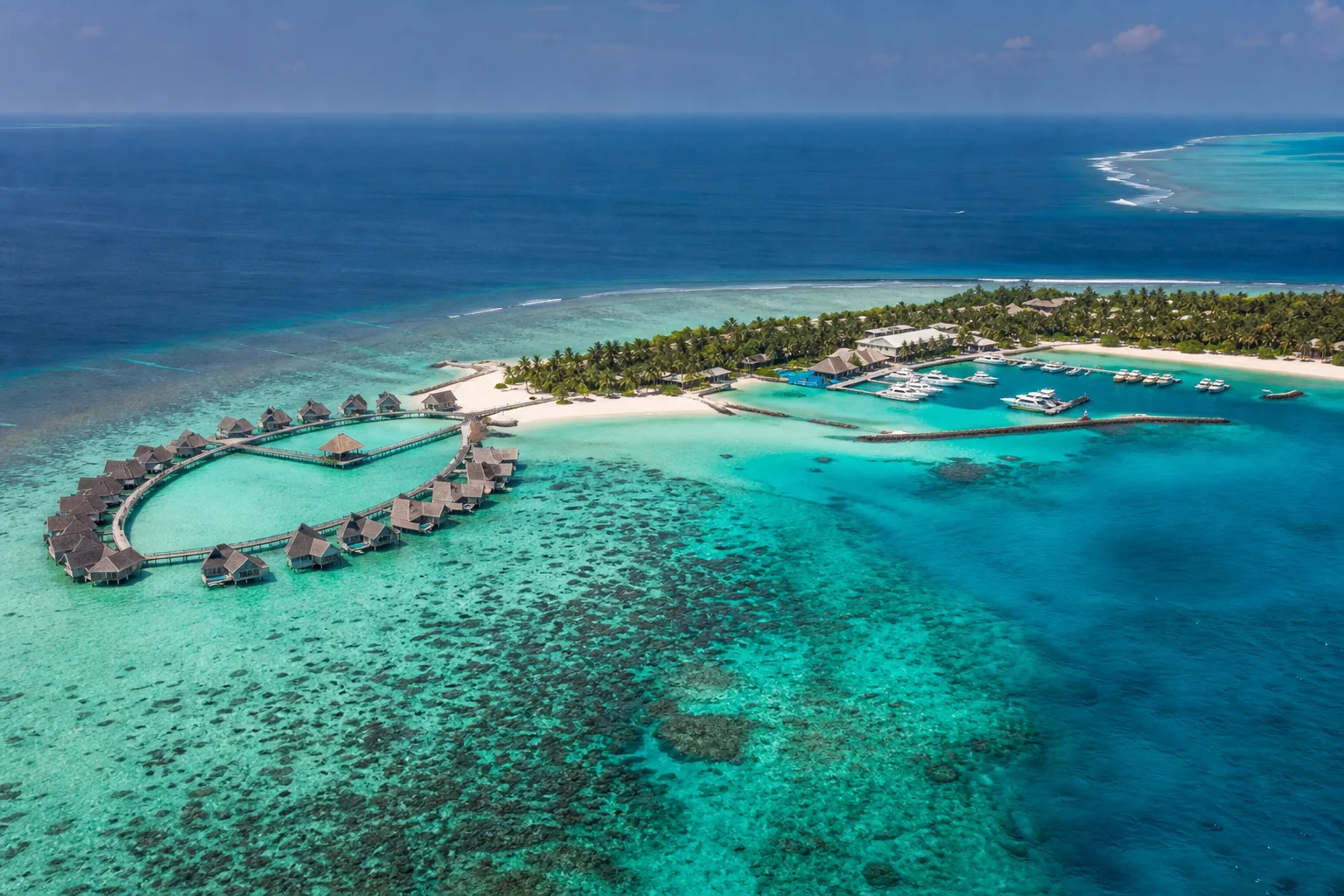
The decision in three sentences: Choose the Maldives when water, villa privacy and an effortless resort routine should form the centre of the journey. Choose Seychelles when you want dramatic landscapes, different beaches, excursions and Creole culture within the same week. If both appeal, decide which matters more: an intense, self-contained island experience or the freedom to make each day visibly different from the last.
The defining luxury model is usually one island, one resort. That makes it possible to select a very precise atmosphere: adult and hushed, family-led, culinary, barefoot or more polished. Once guests arrive, they remain inside that curated ecosystem. This can be wonderfully liberating, but it makes advance selection critical. If the social mood, reef or food is wrong, one cannot simply walk to another hotel or book dinner across town.
Mahé rises from the sea into forested granite peaks; Praslin combines coves with the palm forest of Vallée de Mai; La Digue slows travel to the pace of a bicycle. A hotel can be an important part of the trip without defining all of it. Cars, drivers, ferries and short domestic flights create alternatives.
Even guests staying in a private villa or island resort should decide how much of the archipelago they want beyond the terrace.
The Maldives feels horizontal: low islands, lagoons, reefs and a horizon that dominates almost every view. Seychelles is more sculptural. Massive boulders frame beaches, mountains create viewpoints and dense forest approaches the water. Travellers who want uninterrupted ocean perspectives and the sensation of a small world often prefer the Maldives. Those who love topography, photography and changes in landscape will find more visual layers across Seychelles.
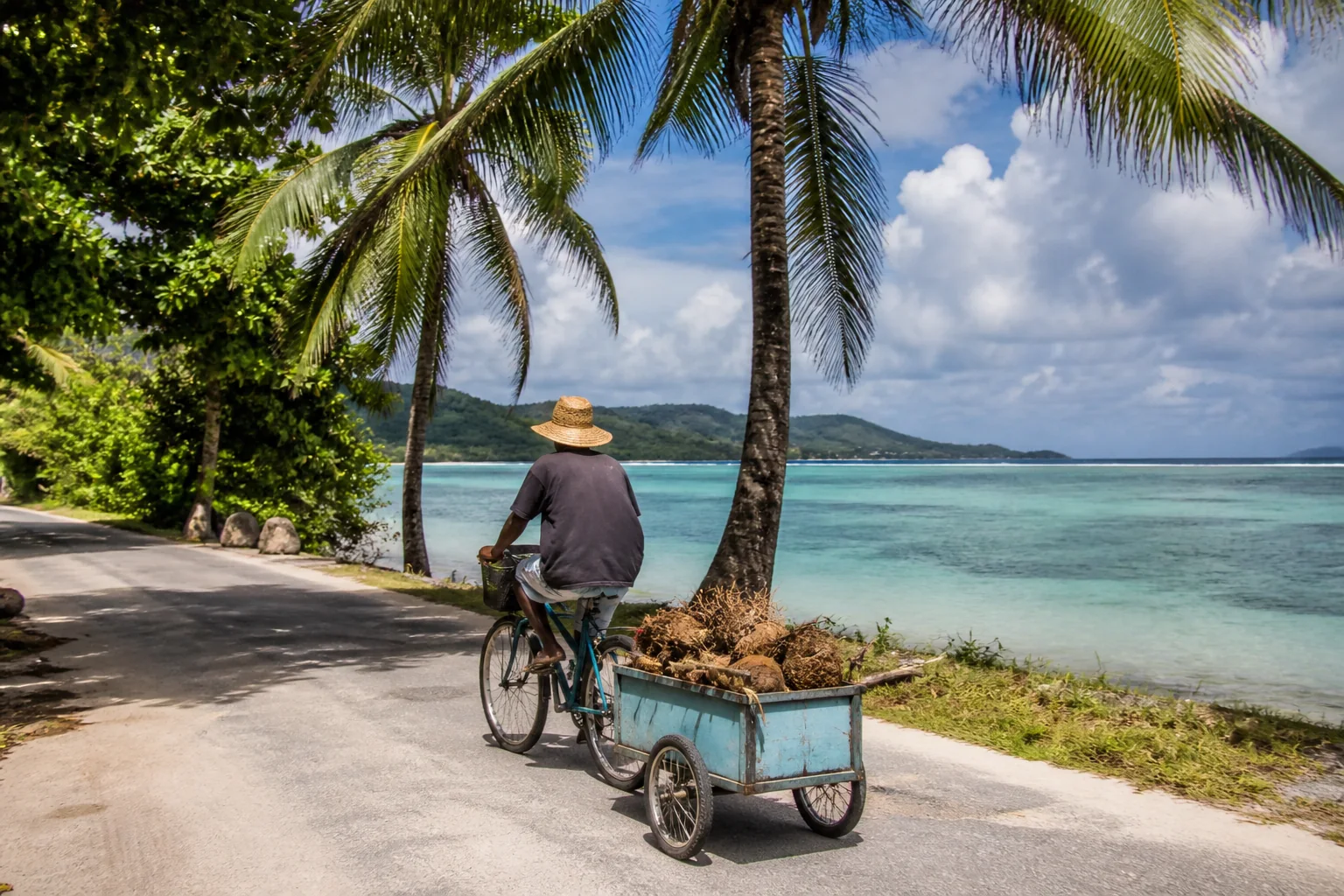
Neither destination delivers a perfect, calm swimming beach everywhere and throughout the year. On Maldivian islands, sand width, current and water access can vary by side and season. In Seychelles, exposed coasts respond noticeably to trade winds, swell and tide. A famous beach is not necessarily the safest or easiest place for a daily swim. Travel dates, hotel position, preferred depth and the difference between beauty and usability must all be considered.
For travellers who want to step directly from their deck into a lagoon, the Maldives offers the deepest and most refined choice: compact water villas, vast residences, private pools and remote jetty positions. Overwater does not automatically mean private or quiet, however. Angles, neighbours, boats, wind and reef access matter. In Seychelles, the overwater villa is not the defining product; luxury is more often expressed through hillside, beachfront and landscape-integrated villas.
A strong Seychelles villa uses elevation, rock, vegetation and the curve of a bay. The panorama can be extraordinary, although stairs, buggy journeys and distance from the beach belong to the product too. Beach villas offer immediacy but may not be completely screened. Both private islands and larger resorts can provide high exclusivity. The selection must balance view, level access, privacy and mobility rather than comparing room categories in isolation.
In the Maldives, privacy comes from distance over water, planting or a lightly occupied island. Opposite villas, jetties and excursion boats can still enter the sightline. In Seychelles, large estates, slopes and granite create seclusion, while public beaches and access paths bring local life closer. Guests seeking absolute visual separation should inspect routes and angles. Others may find that this discreet permeability gives the destination warmth rather than diminishing its luxury.
On Mahé and Praslin, plans can change at breakfast: drive to another bay, reserve a restaurant outside or follow a different road home. La Digue creates a slower version of that freedom by bicycle. On a Maldivian resort island, the choice may be excellent but remains geographically finite; outside alternatives are rarely spontaneous. That is a virtue when retreat is deliberate. Restless travellers may experience the same concentration as restrictive after several days.
Arrival and island changes shape the journey
Visit Maldives notes that resorts near the main airport are normally reached by speedboat, while more distant islands may require a seaplane or domestic flight connection. The resort generally coordinates the transfer. International arrival time, daylight, possible waiting, baggage limits and weather can shape the first day. On a short stay,
a theoretically superior resort can be the poorer choice if reaching it consumes too much of arrival and departure day.
On Mahé, guests leave the international airport by road. Praslin is accessible by small aircraft or fast ferry, while Cat Cocos links Mahé, Praslin and La Digue. Choice creates freedom, but also decisions about sea conditions, luggage, connections and stopovers. A late international arrival often favours a first night on Mahé. Travellers prone to seasickness should not choose the ferry merely because it sounds romantic.
The first holiday day: In the Maldives, the moment a boat reaches the jetty or a seaplane descends can produce immediate detachment. Once ashore, most logistics are finished. In Seychelles, arrival often feels like the beginning of a route: collect a car, cross a mountain road, perhaps change islands later. The Maldivian concentration soothes tired travellers. For curious guests, seeing everyday Mahé life on the first afternoon can generate a different and equally valuable energy.
Mahé, Praslin and La Digue complement one another: greater infrastructure and mountains; palms and access to small neighbouring islands; then an almost motor-free pace. Two islands are often enough to avoid turning every other day into transit. A Maldives split stay is possible, but is more complex and often expensive. The move makes sense only when the second resort delivers a genuinely different experience, not simply another beautiful water villa.
Water, land, culture and food
A good house reef permits short, independent snorkels without a boat. Not every island offers easy reef access; some are stronger for lagoon and sandbank instead. Current entry points and coral conditions must be checked. Seychelles has rewarding snorkelling and marine parks, yet conditions are more often beach-, weather- or excursion-dependent.
Guests who want to enter a reef every day without joining an outing should select their Maldivian island specifically for that purpose.
Both archipelagos offer serious underwater experiences, but region and season are decisive. In the Maldives, atolls, channels, current and potential pelagic encounters shape the plan. Seychelles adds granite formations, different island groups and several departure points. A luxury hotel is not necessarily an excellent dive hotel. Experienced divers should examine journey times, boat standards, Nitrox, group size and site suitability before choosing the room.
Vallée de Mai on Praslin protects an extraordinary coco de mer palm forest; on Mahé, trails enter Morne Seychellois National Park. Viewpoints, small communities, galleries and markets add further dimensions. Maldives resorts provide sport, wellness and excursions, but the natural drama remains concentrated around sea and shore. Anyone who wants to hike, drive and explore after three quiet days will find a broader land-based stage in Seychelles.
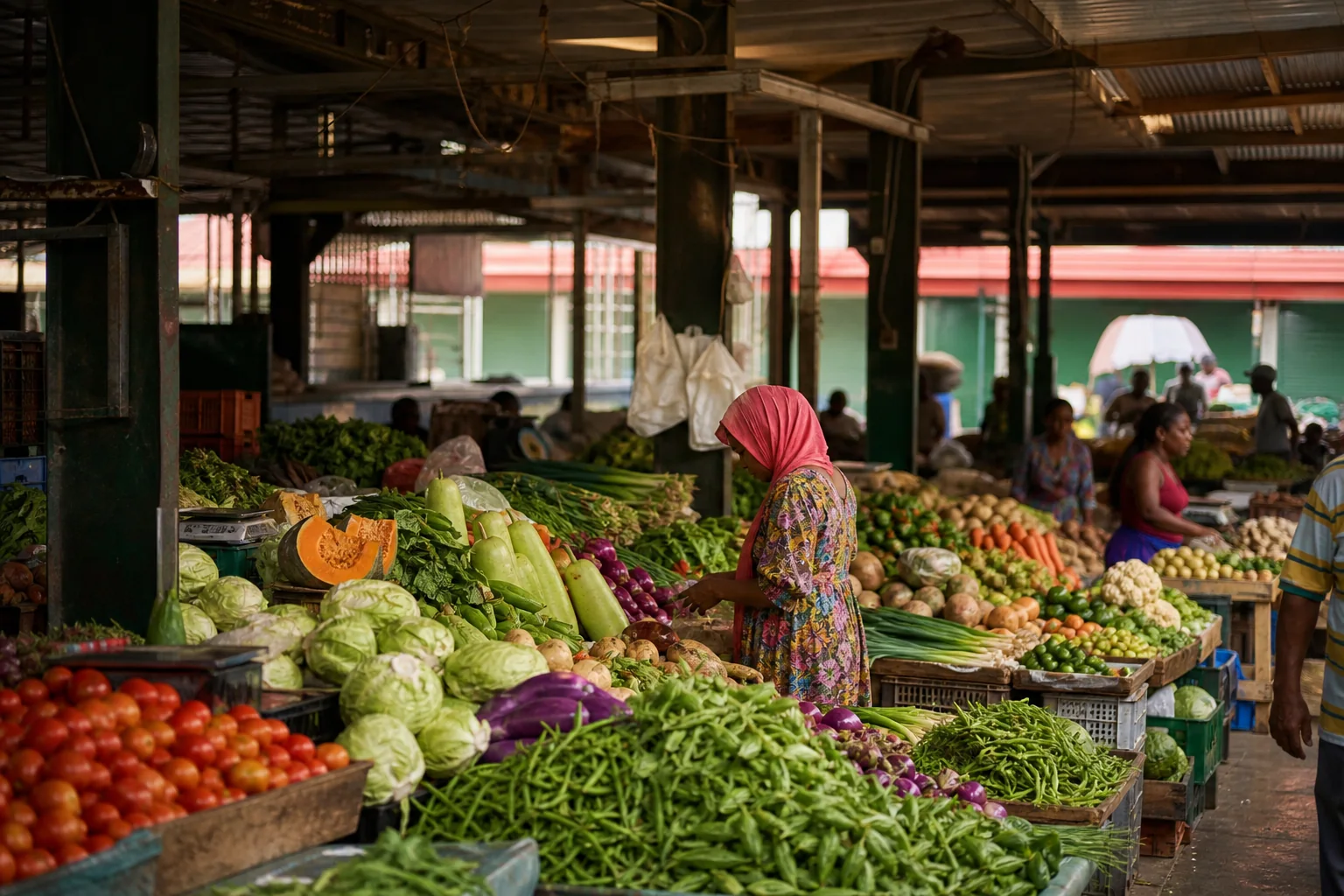
Victoria, Creole cooking, architecture and inhabited islands make social life visible without requiring every contact to be staged. In the Maldives, a local-island guesthouse provides a different perspective from the resort model; at a classic luxury resort, contact remains more curated. Culture should not be sold as decoration. The relevant question is whether guests genuinely want to leave the hotel world, dedicate time to doing so and engage respectfully.
A Maldives resort must carry an entire week's dining. Restaurant variety, quality within meal plans, reservation rules and import-driven drinks prices are therefore central. On Mahé and Praslin, a good hotel can be supplemented by local restaurants if location and transport work. Seychellois food draws on Creole, African, Asian and European influences. In both destinations, the number of outlets matters less than whether their style and rhythm suit the guest.
Romance, family and wellness
The Maldives offers the classic arc: water villa, private deck, few decisions and abundant time together. It excels when retreat is the purpose. Seychelles suits couples who build memories through discovery: a road across Mahé, a forest walk, bicycles on La Digue, then a quiet dinner.
Couples with different appetites for activity need a programme that consciously balances private time and movement rather than assuming beauty will resolve the difference.
In the Maldives, short paths and a strong kids' club reduce daily organisation; overwater decks, water depth and transfer times require careful checks. Seychelles offers larger villas, cars and varied days, but winding roads, ferries and changing beach conditions add planning. Children's ages matter more than a generic family label. Toddlers, confident snorkellers and teenagers each need a different island, beach and daily pattern.
Maldives spas often perfect the self-contained cocoon: overwater treatment rooms, quiet, ocean views and few distractions. In Seychelles, wellness can connect more closely with forest, hillside, walking and active days. Either can be restorative if the schedule is not overfilled. Examine therapist qualifications, treatment setting, hydrotherapy and actual acoustic privacy. A photogenic pavilion reveals little about the depth or consistency of the programme.
Climate is a question of island and coast
The Maldives Meteorological Service broadly identifies a drier northeast monsoon from January to March and a wetter southwest monsoon from mid-May to November, with transition periods between. These are climate tendencies, not daily promises. Atoll, wind, showers and sea state vary. Planning should therefore define priorities rather than chase a perfect month: sunshine, a calmer transfer, diving, surfing, value or lower humidity.
Tourism Seychelles and the Meteorological Authority describe the cooler, generally drier southeast trade-wind period mainly from May to September; exposed coasts can experience livelier seas then. Transition months such as April and October are often calmer, without guarantees. Other bays respond during the warmer northwest phase. “Best time to visit” is too blunt: the month, island and exact beach orientation must be read together.
Luxury planning should not airbrush nature. Stronger wind can refresh a terrace, disrupt a boat crossing or make a beach less comfortable. Seaweed and washed material can appear seasonally; resorts manage shores differently. Neither archipelago offers a perfect guarantee. A good proposal identifies the more sheltered likely options, explains alternatives and records what should be checked again shortly before travel. Candour is more valuable than a blanket promise of sun.
Seven nights and the complete price
Seven nights in one well-matched Maldives resort can feel ideal because there is no internal pressure to relocate. In Seychelles, the same duration suits either one island in depth or a disciplined two-island combination. Three islands in one week often feels like a checklist. With four or five nights, short transfers gain importance. Beyond ten nights, both destinations can introduce more contrast without sacrificing the restorative purpose of the journey.
A Maldives rate can expand through transfer, food, drinks, excursions and resort taxes. Seychelles adds cars, ferries or domestic flights, restaurant transport and perhaps several hotels. A cheaper night is not necessarily better value. Compare equivalent villa quality, meals, flight logic, transfers and intended activities. For families in particular, child policies and meal plans can alter the result more significantly than the publicly displayed room price.
Which kind of escape genuinely fits
Choose it for a journey built around water, couple time, snorkelling, diving, wellness and a controlled rhythm. It works particularly well after an intensive itinerary or at a point in life when fewer decisions feel luxurious. It is less suitable for guests who want spontaneous villages, museums, changing restaurants and long days on land. The chosen resort must then be exceptionally well matched, because it will carry the entire stay.
Choose it when a beach day can sit beside a drive, a forest path or a second island. It rewards travellers who want to move through beauty rather than observe it only from the villa. It is less obvious for guests determined to avoid every transfer decision and remain in a resort cocoon for seven days,
unless a private-island stay fulfils exactly that wish. Again, the specific hotel model matters more than the country label.
In the Maldives, guests too often reserve the most photogenic villa without assessing reef, food or transfer. In Seychelles, they treat a celebrated beach as a perfect year-round swimming bay or overload one week with three islands. In both cases, imagery becomes a shortcut. The correction is simple: profile first, then season and logistics, followed by hotel and room. Never reverse that order.
State the duration, flight times, desired activity, swimming and diving interests, children's ages, mobility, dining style and sensitivity to boats. Then rank five priorities: privacy, landscape, beach, underwater life and freedom beyond the resort. Once two clearly dominate, the decision usually becomes visible. If it remains open, compare two concrete itineraries with total costs and realistic daily rhythms, rather than two collections of promotional images.
The Maldives is not a better Seychelles, and Seychelles is not simply a more varied Maldives. They speak different languages of luxury. The Maldives reduces the world to one island and can feel complete precisely because of that concentration. Seychelles expands a beach holiday into mountains, roads, culture and movement. Deluxetargets recommends neither by fame, but by how its logistics, landscape and rhythm fit this particular journey.