
A contemporary spa may be sleep hotel, training room, laboratory, technology studio and sanctuary at once. That mixture demands unusual clarity. A sensor does not turn wellness into medicine, a white coat does not prove evidence and a full day does not guarantee recovery. The strongest retreat separates experience, coaching and clinical care—and knows when less measurement and more quiet is the more sophisticated service.
Responsibility must sit behind the label
The word can cover sleep routines, strength, cold, light, breathing, supplements, infusions and medical devices. These do not share one evidence base or risk level. A retreat should name each component by purpose, provider, product, dose, risk and resulting decision. Futuristic language cannot replace definition. Claims of cellular repair, age reversal or a neurological reset carry an exceptional burden of proof; marketing imagery is not a clinical outcome.
“Recovery” may mean less fatigue, steadier sleep timing, reduced training load or distance from work. Without an aim, every treatment can be declared successful afterwards. Define a realistic outcome: waking more rested, moving with confidence, learning two routines or resolving a medical question. Feeling better for a day can be worthwhile without proving durable health effects. Good programmes distinguish subjective experience, measured signal and clinical outcome.
First comes hospitality: quiet room, satisfying food, massage, nature and time. Second sits coaching and low-risk general wellness. Third is medicine with diagnosis, treatment, regulated products, consent and clinical accountability. The FDA distinguishes healthy-lifestyle wellness functions from those intended to diagnose, prevent or treat disease; Europe regulates devices and diagnostics by intended purpose.
Local law determines the precise boundary, but the principle travels: the larger the claim, the clearer authorisation, qualification and responsibility must become.
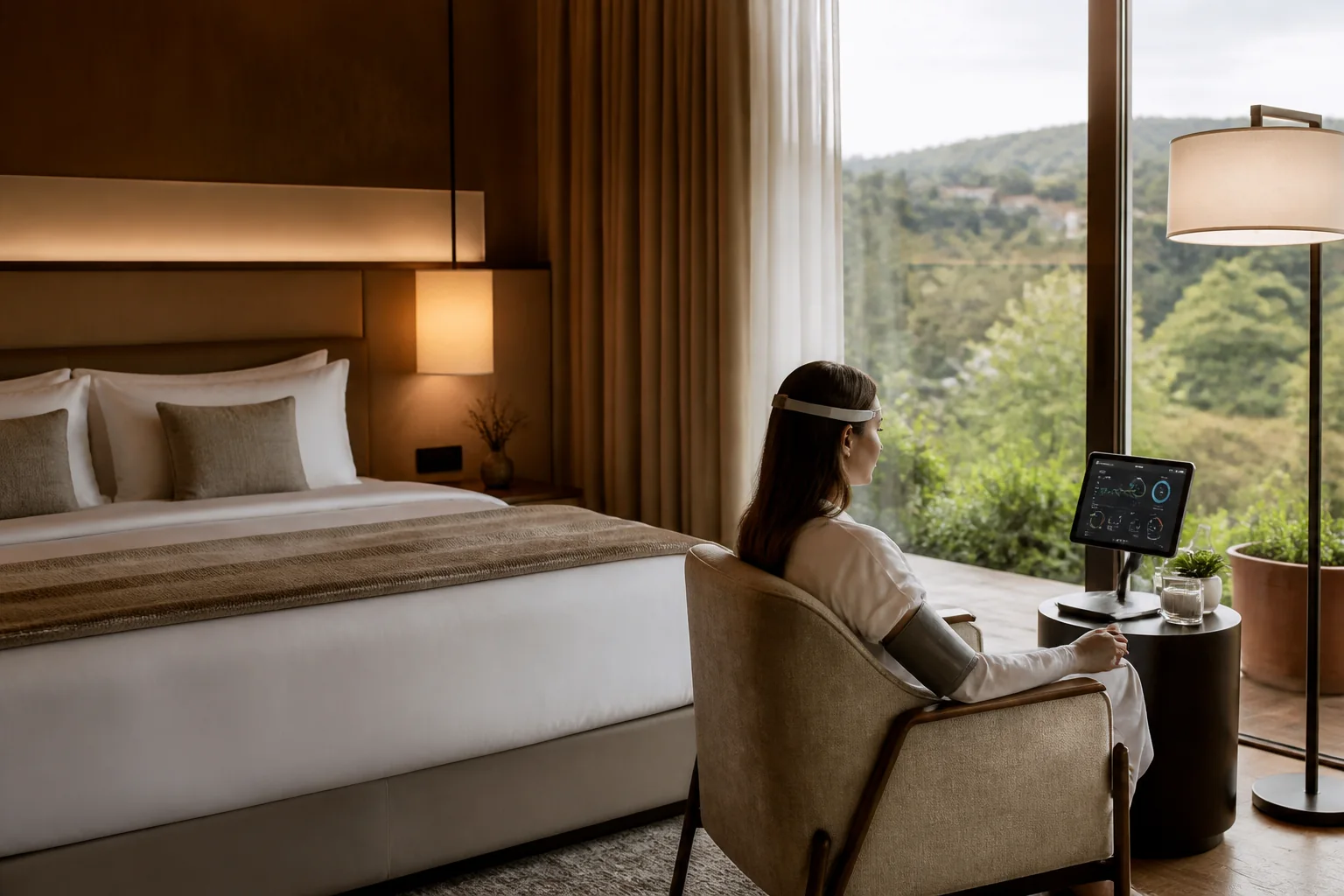
Where medicine appears, a licensed institution and practitioner should own history, indication, consent, delivery and follow-up. Who responds to an abnormal result or adverse reaction Which hospital receives an emergency Trainer, spa therapist, nutrition professional and concierge stay within their roles. A hotel manager should not explain laboratory findings; a device representative should not replace an independent clinical recommendation. Elegant organisation makes responsibility clear without forcing the guest to coordinate it.
“Supports longevity” becomes: which measurable effect, in whom, after what intervention and for how long “Anti-inflammatory” requires a marker, clinical relevance and comparison. “Detoxifies” needs a named substance and valid method. US FTC guidance expects objective health and safety claims to be truthful, non-misleading and supported by competent, reliable scientific evidence; other jurisdictions have their own rules. The traveller can still use the logic: the more specific the promise, the more specific the proof and disclosure.
Diagnostics should change a decision
This is not another test catalogue. The governing question is what changes if a result is high, low or uncertain. Without a plan, confirmation and accountable clinician, testing may be theatre or a sales device. Reference ranges, measurement error and travel effects belong in interpretation. A biological-age number or proprietary score may look compelling, but must disclose method, validation and consequence. Data accumulation is not a treatment objective in itself.
Jet lag, dehydration, alcohol, unfamiliar food, poor sleep and altered training affect wellbeing and some measurements. A baseline the morning after long haul may describe the journey. A thoughtful retreat allows arrival time, standardises conditions and postpones demanding tests when appropriate. It identifies which readings are only directional. For trends, comparability matters more than architecture.
Sometimes ordinary-life measurement at home is the sounder baseline and the spa should remain a place for recovery rather than testing.
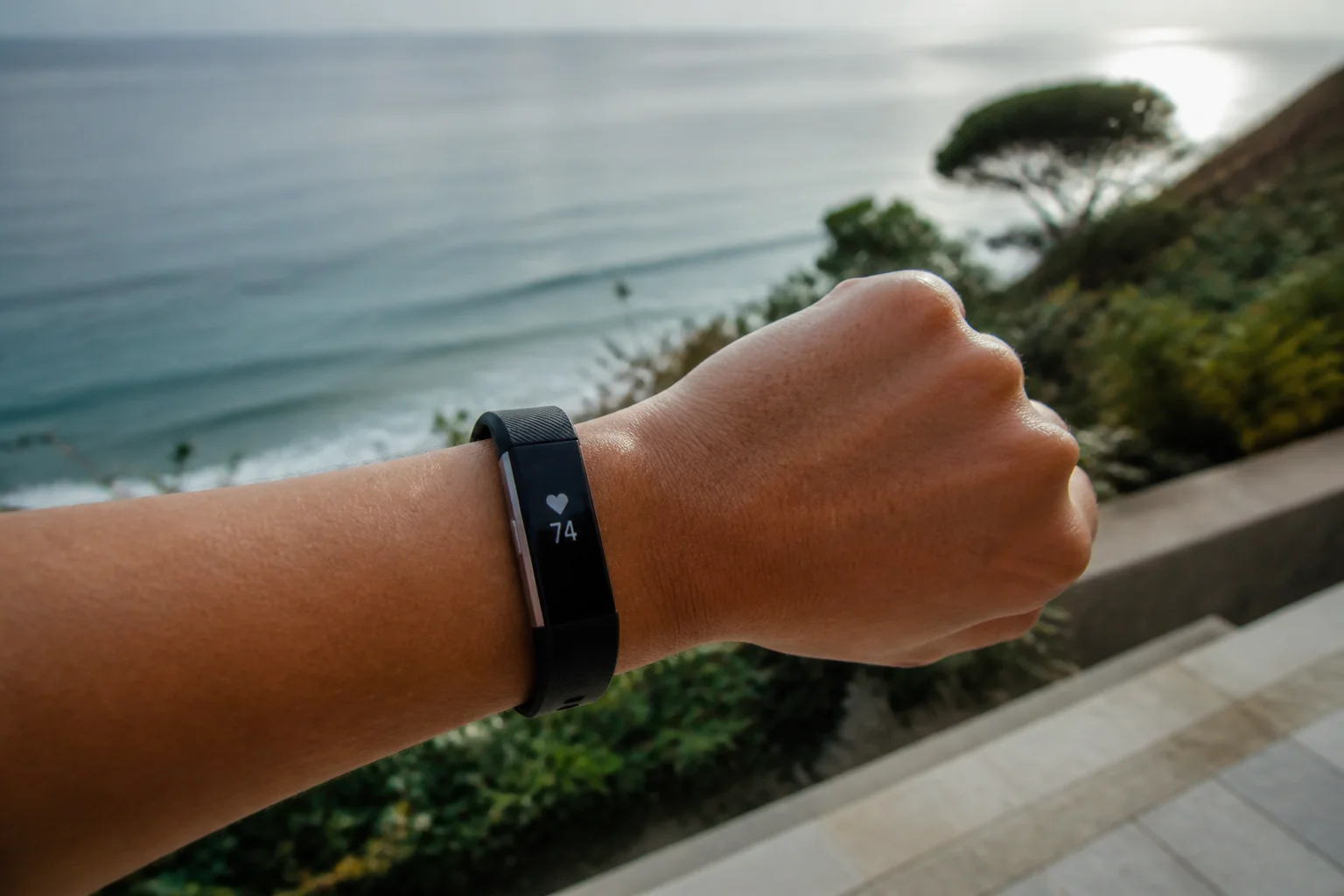
Sleep duration, heart rate, activity and temperature trends may reveal patterns. Algorithms, sensor placement and devices differ; a score is not a clinical judgement. The programme should name model, data quality and intended decision. Consumer technology must not be used for medical tasks it was not designed to perform. A red number should not frighten a guest,
nor a green one overrule symptoms. A wearable earns its place through one simple behavioural experiment and reflective use, not continuous surveillance.
Every intervention needs purpose, dose and limits
Bright light for timing, red light sold for skin or recovery, and clinical phototherapy are different interventions. Wavelength, intensity, distance, duration, eye protection, skin, medication and device determine benefit and risk. A red-lit room is not automatically a therapeutic dose. The retreat should identify manufacturer, model, intended purpose and responsible oversight. A qualified professional assesses disease or photosensitising medication. A luminous wall is not an indication.
Ice immersion, local cold and whole-body cryotherapy differ. Temperature, exposure, skin protection, supervision and contraindications must be known. Cardiovascular or circulation problems, neuropathy, pregnancy, acute illness and some medicines may matter. A guest can stop without being told the programme has failed. Short-lived alertness or altered muscle sensation does not prove broad health benefit. Extreme cold deserves stronger safety systems, not bravery language.
Sauna, infrared and steam differ in temperature, humidity and load. Several rounds after exercise, travel or alcohol may compound dehydration and circulatory stress. A responsible programme asks about illness, medication and present condition, then provides fluid, cooling and rest. Population associations should not become an individual treatment promise. A pleasurable sauna may be valuable without being advertised as cardiac therapy. Wellbeing needs no exaggerated medical justification.
Pneumatic sleeves, massage guns, underwater treadmills and electrical stimulation can play different roles in training or rehabilitation. Device, setting, purpose and operator competence should be explicit. Clot risk, vascular disease, injury, skin problems or recent surgery may require assessment. An athlete with a defined training load poses a different question from an exhausted office worker.
Sports equipment should not become generic wellness scenery. Comfort and short-term sensation are not the same as faster healing.
Hyperbaric chambers, supplemental oxygen, altitude tents and breathing coaching are often blended in marketing despite different purposes and risks. Pressure, concentration, indication, fire and ear risk, and clinical supervision require exact answers. Genuine hyperbaric oxygen treatment is not a casual spa add-on. Someone seeking calmer breathing does not automatically need equipment. Product identity, authorisation, professional team and emergency process matter more than the chamber's futuristic appearance.
Vitamin, mineral and other drips are invasive. History, indication, dose, sterility, interaction, kidney and liver function, consent and monitoring belong to responsible medicine. A standard “energy drip” is not a diagnosis. A credible centre accepts review by the traveller's own doctor and does not make infusion a condition of package value. Without a clear need, documented product and follow-up, omission may be the more sophisticated decision.
Powders, botanicals, hormones and nootropics can bring dosing error, interaction, contamination and regulatory differences. The retreat requests all medicines and supplements, stops nothing unilaterally, and documents product, manufacturer, batch and duration. A laboratory number does not automatically justify a sale. Longer use requires someone to assess benefit and harm. Personalised packaging is not personalised evidence. Food remains foundational; supplements are not hotel souvenirs.
The US National Center for Complementary and Integrative Health finds no compelling evidence that detox diets remove toxins or manage weight durably. Severe restriction, laxatives, colon cleansing and unpasteurised juice can carry risk. A week without alcohol, with sleep, regular meals and walking may still feel excellent. Call the benefit structure and recovery, not cleansing.
If a provider names toxins, it must identify substance, measurement, intervention and clinical meaning. Metaphor does not belong in a laboratory report.
Slow breathing, meditation and quiet surroundings may relax. Intensive protocols, sensory deprivation, strong stimulation or devices with neurological claims are another category. Credentials, contraindications, mental-health history and the ability to stop matter. Trauma, panic, epilepsy or severe psychiatric symptoms do not belong with an unqualified coach.
A retreat may offer a regulating experience without describing the nervous system as a machine that can be reset. Illness needs appropriate care.
Sleep, movement, food and empty time
No sensor compensates for noisy air conditioning, corridor light or a six o'clock schedule. Room position, blackout, temperature, bed, service traffic and meal timing are the first sleep intervention. Wearables can prompt reflection but should not turn nights into performance reviews. Persistent severe sleepiness, breathing pauses or symptoms need clinical assessment.
A luxury retreat demonstrates a calm rhythm and two changes that can survive at home; it need not grade every sleep stage.
The WHO identifies regular activity, less sedentary time and strength as established foundations. The retreat translates these into safe, repeatable practice. Technique, baseline, injury and medication determine load. An underwater treadmill or altitude room may suit a defined problem but is not inherently superior to walking, strength and balance. Guests need a home plan without specialist apparatus. Pain and unusual symptoms must not be reframed as a mental barrier.
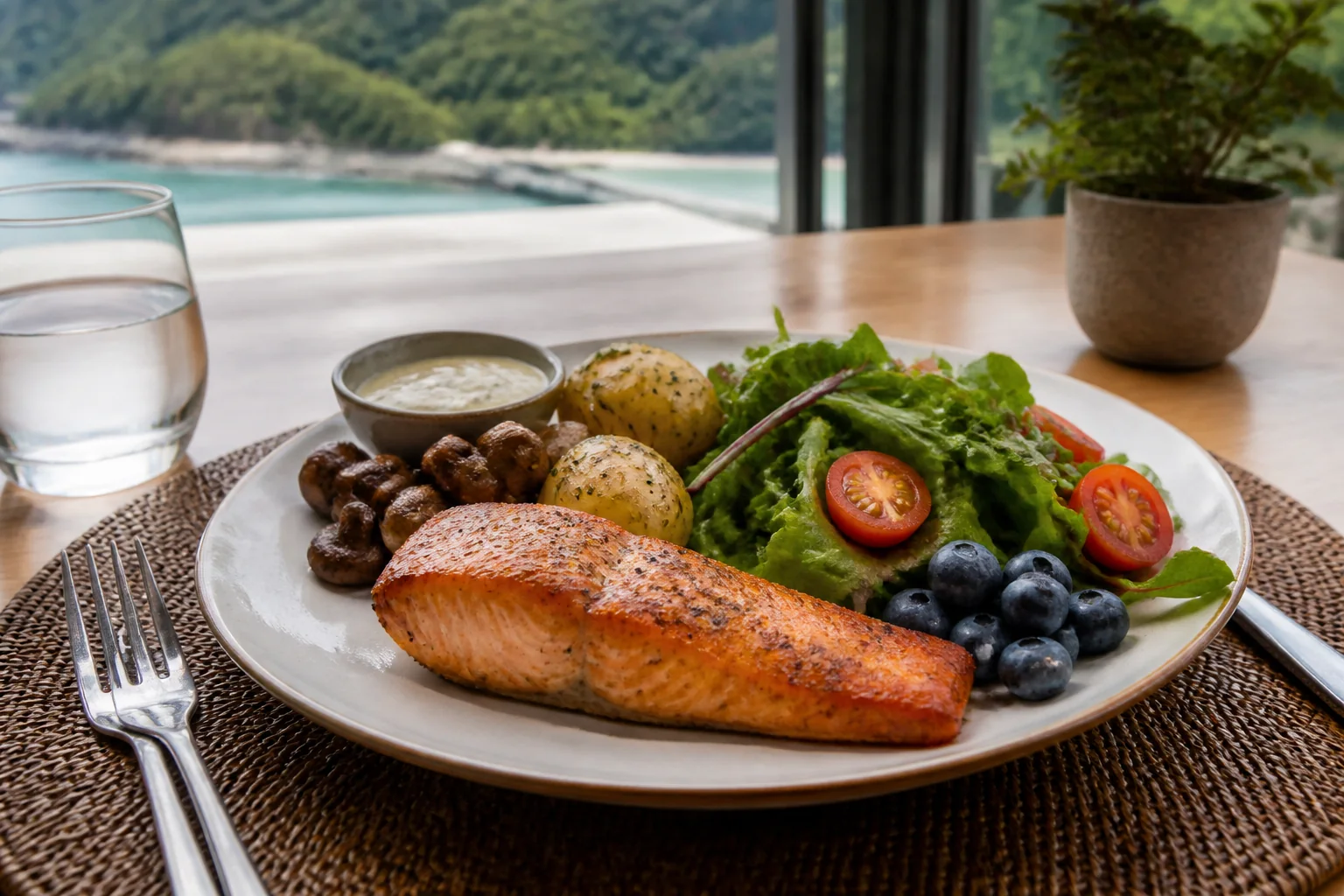
There is no single universal healthy diet; WHO principles include adequacy, balance, moderation and diversity. The retreat should serve satisfying food, teach repeatable patterns and separate allergy from preference. Persistent hunger, moral food lists and one macro target for everyone are not precision. Diabetes, eating disorder, kidney disease and medication require qualified individualisation. A “diagnostics breakfast” remains breakfast—and can excel by doing that honestly.
Moving from measurement to cold, training, drip, massage and breathing can produce the opposite of recovery. Request a sample day with walking, changing, meals and rest. At least one open block permits sleep, nature or processing. Treatments should not be stacked because they are in the package. Declining must remain possible without pressure. Luxury is the right not to justify an empty interval—and a team that values dose over utilisation.
Exclusions, data and adverse events
Acute illness, unstable symptoms, pregnancy, recent surgery, eating disorder, severe mental-health crisis or certain medication may require adaptation, medical clearance or another setting. The list depends on intervention and should not be guessed. What matters is a confidential pre-arrival form genuinely reviewed by a qualified person. A retreat that excludes nobody may not understand its risks. A clinically justified refusal should be explained respectfully and recorded securely.
Laboratory, genetics, wearables, apps, cameras, sleep and questionnaires create sensitive information. Clarify the controller, storage, vendors, access, retention, copy and deletion. Will data support research, algorithm training or marketing Consent to care is not consent to every secondary use. The concierge does not need a diagnosis. Discretion is more than a quiet entrance; it is a sparse data architecture.
Who responds to fainting, burns, allergy, panic or an abnormal result A phone number alone is insufficient. Staff need authority, equipment, documentation, transfer hospital and language protocol. The guest receives an incident record. A device also needs maintenance and reporting structure. A retreat with no visible complications may be excellent—or simply record poorly. Quality is revealed by preparation for the unlikely case.
The hotel remains the primary recovery technology
An excellent bed, quiet architecture, adaptable food, warm service, nature and frictionless movement work every day. Clinical competence cannot compensate for a restless room; a wonderful spa cannot replace accountable medicine. Assess hotel and programme separately and together. Can a non-participating partner enjoy the stay Is there privacy without isolation The most convincing technology works in the background. A guest should feel cared for, not continuously examined.
Room, diagnostics, physician time, devices, treatments, food, transfers and later calls may sit in different modules. Obtain a written schedule of inclusions, additions, external laboratories, repeat work, medication and early exit. Who pays to investigate an incidental finding Is an unsuitable intervention refunded An expensive machine does not justify a premium without a clear benefit. Compare retreats by aim, qualification, time and continuity—not the number of technologies.
Home should not receive twenty scores and twelve supplements. A strong discharge prioritises no more than three actions, assigns ownership and separates medical follow-up from lifestyle. Records pass securely to the traveller's clinician. Behaviour may benefit from contact at two, six and twelve weeks. Devices and apps remain only when their purpose is understood. The retreat succeeds when ordinary life becomes simpler, not when recovery feels impossible without returning.
The one page before enquiry
The brief includes realistic objective, history, medication, exclusions, preferred clinical intensity, existing results, travel load, room and sleep needs, openness to devices, clear refusals, duration and budget. Add five tests: accountable professional, evidence for the core claim, exact device or product, emergency route and follow-up. Deluxetargets can compare hotel, journey and programme; qualified clinicians retain responsibility for medical suitability. Technology then becomes a tool rather than the reason to travel.
Editorial note: This article provides general evidence-informed travel information, not diagnosis or personal treatment advice. Individual decisions should be discussed with the traveller's own qualified clinician before booking.