
A cabin is more than its floor area. Bed arrangement, bathroom, daytime conversion, storage and the number of nights shape life on board. Above all, names are not standardised: a Pullman Cabin in Asia, a Pullman Suite in southern Africa and a Historic Cabin in Europe are different products.
Choose the train before the cabin
Start with the route, season and exact departure. Venice Simplon-Orient-Express, Eastern Oriental Express, Rovos Rail, Andean Explorer and Royal Scotsman each have their own carriages, plans and vocabulary. Even a familiar train may operate with different formations or inclusions. Searching for a Grand Suite before selecting the journey compares labels rather than experiences. The relevant question is what the operator confirms on that train and date.
The historic term now covers unrelated arrangements. On Eastern Oriental Express, a Pullman Cabin changes from daytime seating into upper and lower berths. Rovos Rail uses Pullman Suite for its own category with a different plan and bathroom. The current entry accommodation on Venice Simplon-Orient-Express is called a Historic Cabin.
A headline that ranks Pullman below Suite and Grand Suite therefore creates a hierarchy that does not exist across operators.
A useful matrix records five essentials: beds, private bathroom, daytime seating, storage and service. Then add floor area, windows, climate control, carriage position and connecting possibilities. Those facts reveal whether an upgrade changes daily life. A grand name without ground-level beds or a workable shower may suit a guest less well than a modestly named cabin with the right layout.
Request the current carriage plan, not only a gallery. Marketing photographs often mix categories without identifying every room, while lenses exaggerate depth. Match each image to a cabin and mark what is guaranteed. Timber, textiles or colour details may vary; the booked bed and bathroom remain material. A disciplined comparison separates confirmed equipment, representative decoration and a non-binding preference. It prevents one exceptional press photograph from becoming the traveller’s expectation for every compartment in the grade.
Cabin terminology is always train-specific
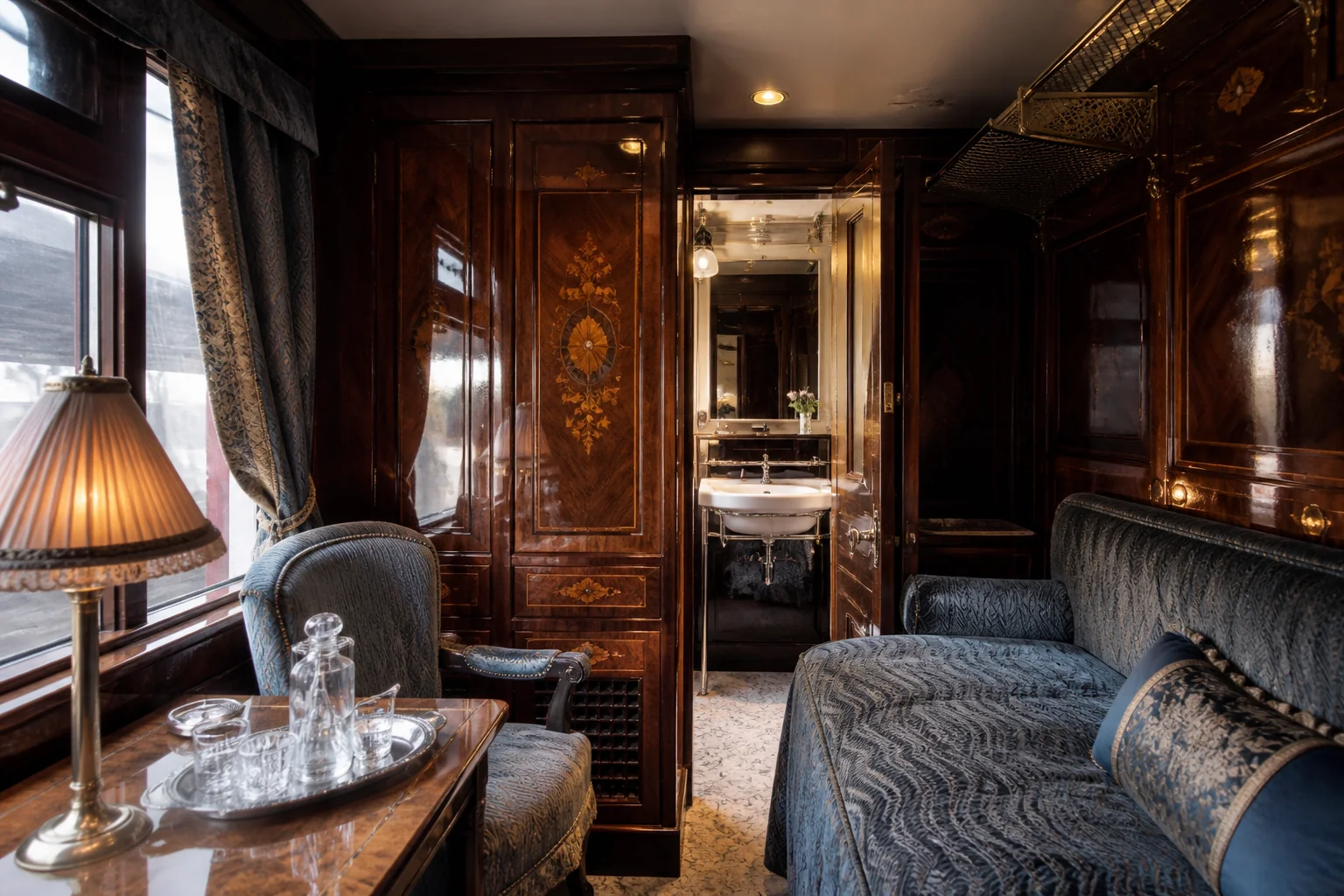
Belmond currently lists Historic Cabins, Suites, Grand Suites and the full-carriage L’Observatoire. A Historic Cabin preserves the classic sleeper ritual: banquette by day, upper and lower berths at night, a washbasin in the cabin and shared lavatories at the end of the sleeping car. It delivers intense period atmosphere, not a hotel bedroom on rails. For guests who value authenticity, that distinction may be the attraction.
The Suite offers a double or twin arrangement, a daytime lounge and a private marble bathroom according to Belmond. Night-time trips to a shared lavatory disappear, and two guests can organise themselves more easily. It remains accommodation inside a heritage train: doors, corridors and circulation should not be imagined as those of a large hotel. Verify the plan and confirmed bed setting rather than relying on a category photograph.
Grand Suites combine a larger living zone and private bathroom with enhanced service. The current operator description includes butler service, private in-cabin dining and arrival and departure transfers. The premium is most persuasive for guests who value retreat, private facilities and time in their suite.
Travellers who intend to spend every waking hour in the bar and dining cars will use less of what they have bought.
L’Observatoire is a private carriage with multiple rooms, a bathroom featuring shower and freestanding bath, and its own service proposition. It is not simply the next size above a Grand Suite. For ordinary cabin comparisons it should appear as an exceptional private-travel product. Routes, occupancy, availability and current inclusions require an individual proposal.
On Eastern Oriental Express, the Pullman Cabin turns a bright seating area into upper and lower berths. The atmosphere is intimate and unmistakably railway, but one guest must climb. The State Cabin provides two single beds at floor level at night. For friends, older travellers or light sleepers, that physical difference can matter more than fabrics, finishes or category prestige.
The State Cabin adds circulation and two ground-level beds. The Presidential Suite increases space, bathroom provision and benefits; Belmond currently cites a larger bathroom, 24-hour onboard service and transfers among its features. A State Cabin may be exactly right for two friends. A couple wanting a private lounge and broader service may use the Presidential premium well. Neither should be selected by title alone.
Rovos Rail describes Pullman, Deluxe and Royal Suites. They are not equivalents of Belmond accommodation. Take the current layout, bed option, bathroom, dimensions and daytime configuration from the documents for the departure being sold. On a longer southern African itinerary, the decisive luxury may be the ability for two people to store clothes, dress and rest without constantly rearranging the room.
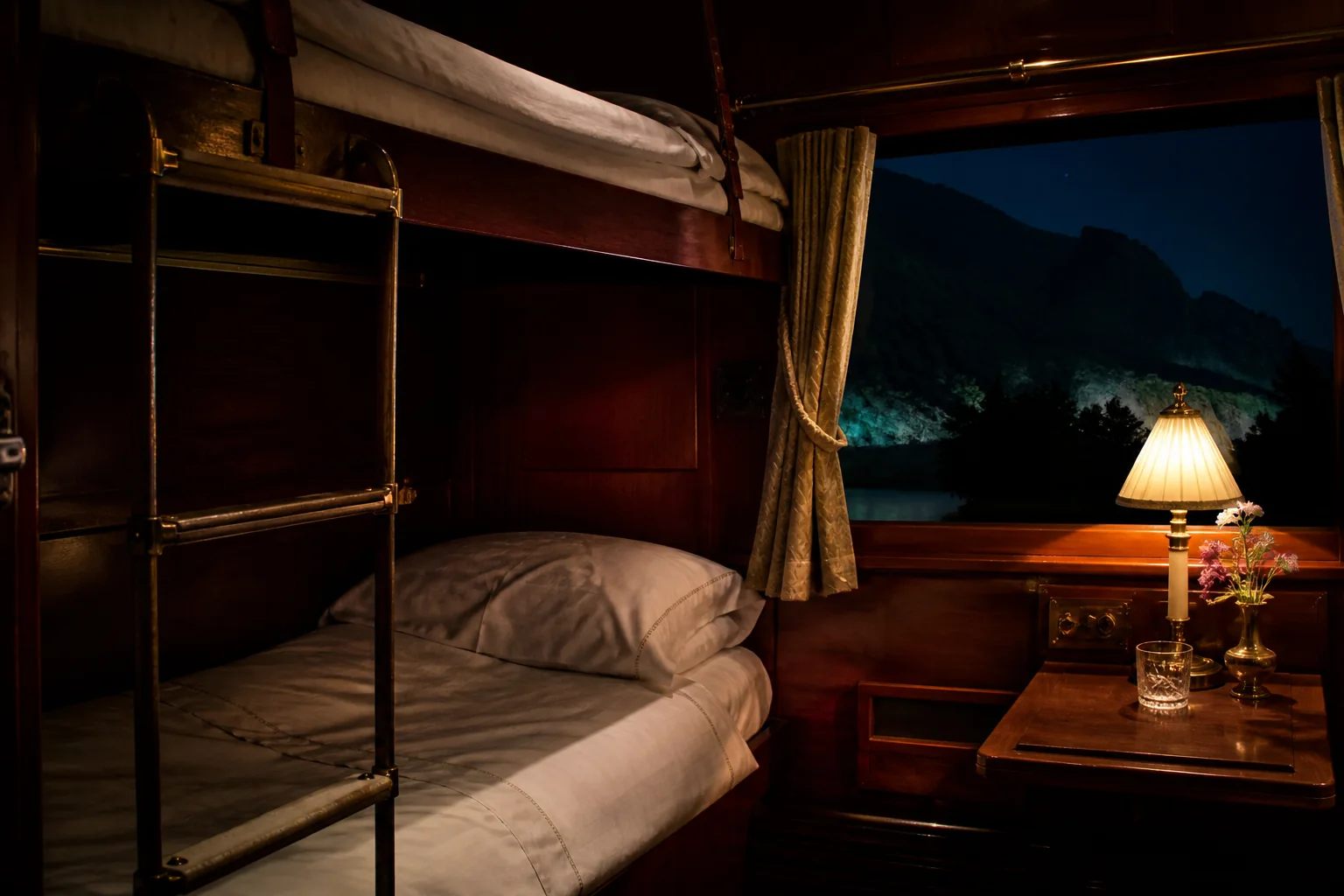
Belmond currently presents Bunk Bed Cabins, Twin Bed Cabins and Suite Cabins. All three described types have a private bathroom with shower, basin and WC, but their dimensions and sleeping plans differ substantially. The Bunk Bed Cabin converts a banquette into upper and lower berths; the Twin provides two floor-level singles; the Suite has a double bed and seating area. Bed logic, not the word suite, remains the useful comparison.
Royal Scotsman offers Twin Cabins, Double Cabins and Grand Suites. The operator describes floor-level beds and en-suite shower rooms in the regular cabins, with more space and additional benefits in Grand Suites. Since itineraries include substantial time off the train and the train travels to a stabling point overnight, a well-chosen cabin may be sufficient. A Grand Suite gains relevance when private repose and in-suite dining matter.
Duration, bed, bathroom and storage shape daily life
On a one-night celebration, the cabin may be used mainly to change and sleep. After three or four nights, storage, bathroom access, daytime conversion and privacy are repeated daily. Upgrade value grows with lived time, not merely square metres. Consider the early start and onward journey too. After a full itinerary, an effortless private bathroom can matter more than it did during a short overnight escape.
Many heritage cabins are rebuilt each morning from bedroom to lounge and again in the evening. Ask when stewards perform the change and whether the cabin remains available. A fixed bed allows an unplanned nap; a day configuration creates better seating. A traveller who rests at midday,
works or may need privacy when unwell requires a different plan from someone who lives in observation cars and excursions.
Climbing must feel safe at night while the train moves. Height, joints, balance and sleeping habits belong in the discussion. Romance is no substitute for a practical check. Request details of ladder, protection and headroom, and consider two cabins where appropriate. If either traveller cannot use the upper berth confidently, two ground-level singles are usually the more elegant solution.
Width, wall clearance and access from one or both sides vary. Guests who are tall or wake frequently should confirm measurements and entry. Twin beds may deliver better sleep even when the photograph feels less romantic. Can they be joined Is the requested configuration guaranteed Record the answer in the booking rather than discovering on board that “double or twin” described possibilities, not a promise.
A washbasin, private WC, compact wet room and larger shower room represent very different routines. Ask separately about toilet, shower, hot water, ventilation and storage. “En suite” does not describe usable space. Guests with limited mobility need to understand the threshold, support and use while moving. In a historic carriage, a compact bathroom is a structural reality rather than failed hospitality.
The carriage sways, the wet room is tight and water behaves differently from a hotel. Some guests prefer a longer stop or arrival. Check whether the itinerary and onboard systems permit that rhythm. Even a large suite remains on a train. Non-slip footwear, an organised hanging washbag and minimal bottles make the experience calmer. Thoughtful packing creates more luxury than filling every ledge.
Large hard cases consume a narrow compartment. Operators often limit onboard luggage or place trunks elsewhere. Confirm dimensions, weight, access and forwarding. A soft weekender per person is frequently ideal. Edit dinner clothes and shoes severely. If a large suitcase must be opened twice a day, it occupies the floor area purchased through an expensive upgrade.
One or two cabins for the actual travellers
Friends, parents with older children and couples with different sleep patterns may gain privacy and two bathrooms from separate cabins. Adjacent or connecting placement is not automatic. Request a carriage plan and a written guarantee where possible. Two historic cabins create separation but no shared sitting room; a Grand Suite reverses that balance. Compare total price and function rather than names.
A compact cabin can feel generous for one, while a suite offers a private bathroom and meaningful retreat. Single occupancy supplements and scarcity influence the equation. Consider whether communal tables, excursions and the bar provide the desired level of company. A solo guest travelling to meet people needs less private salon than one using the journey for writing, reflection or recovery.
Age policies, occupancy and extra sleeping arrangements differ by train. Heritage corridors, carriage connections and long dinners require supervision. Confirm which category may accommodate a child and how the beds work. Neighbouring cabins may be safer than an improvised third berth. The question includes night-time bathroom access and the atmosphere expected by fellow passengers, not simply whether a child technically fits.
Steps, narrow doors, moving floors and carriage connections are inherent to historic rail. Wheelchair access and adapted bathrooms cannot be assumed. Describe specific abilities: step height, walking distance, transfers, toilet use and assistance. The operator must confirm what is realistic on the train and route. Extra suite space does not remove platform access or the passages between public cars.
Carriage position, climate, service and excursions
Proximity to the bar, kitchen, crew area, carriage end or bogies affects sound and motion. Formations are operational and a preferred location may not be guaranteed. Ask what can be fixed, and carry earplugs if sensitive. The most luxurious category can still occupy an active position. Equally, many travellers regard the rhythm and railway sound as an essential part of sleeping on a train.
Windows may be sealed; heating, cooling and airflow vary. Confirm individual controls and seasonal conditions. Tropical humidity in Malaysia, the Scottish climate and the Peruvian altiplano create different cabins. Oxygen on request is an operator feature of Andean Explorer, not a replacement for medical guidance. Guests sensitive to dry or chilled air should prepare rather than assume hotel-style controls.
Butler service, 24-hour assistance, private dining, minibar, transfers or a special welcome may attach to one grade. Identify what is included, on request or subject to availability. “Presidential” on one train does not promise another operator’s benefits. Put each material inclusion in the file and reconfirm before travel. Volatile prices and changing amenities do not belong in a permanent universal ranking.
A programme with long daily excursions leaves limited cabin time. Scenic daytime running and free afternoons make a private lounge more valuable. Read the timetable as carefully as the floor plan. When does the train move in daylight How long are meals and outings Is there an observation car Upgrade only when the space corresponds to hours the traveller will actually use.
Judge the premium per waking hour
Do not divide the supplement only by nights. List what it changes: private bathroom, ground-level beds, privacy, transfers or service. Three practical improvements may justify a significant premium; decorative distinctions rarely do. Compare the wider alternative too. A better flight, an extra hotel night or private transfers may add more comfort to the complete journey than the largest available cabin.
The advisor records train, route, date, category, cabin number where available, beds, bathroom, conversion, luggage, mobility and inclusions. Traveller height, sleep sensitivity, dietary needs and desired privacy belong beside the plan. Photographs must match the current category. Verbal assurances become written confirmations. A romantic title is thereby turned into a product that can be checked.
Choose a Historic Cabin or Pullman deliberately for intimacy and classic sleeper character. Upgrade for ground-level beds, private facilities or workable circulation. Select Grand or Presidential when retreat and service will truly be used. The right cabin is not automatically the largest. It is the one whose plan works at night, whose space matters by day and whose value survives the exact itinerary.