
A luxury train can give a family one of its most memorable journeys. It is not, however, a family resort on rails. Success depends on an exact fit between the child, the train, the cabin, the length of the trip and the adults' expectations.
Not every luxury train is a family journey
The finest luxury trains are built around slowness: watching a landscape unfold, dressing for dinner, talking to unfamiliar people and hearing the rhythm of the rails. That can enchant a child. It can also bore one profoundly. The useful question is therefore not whether luxury trains are broadly child-friendly. It is whether this particular child will enjoy this particular train and route, in a world that has not been staged primarily for children.
A curious eight-year-old who enjoys long meals, reading quietly and observing new places may be a better fit than an impatient teenager. Conversely, a toddler might delight in a short day journey but find several nights overwhelming. Maturity, sleep, appetite for movement, eating habits and the ability to accept boundaries reveal more than a universal age recommendation. The operator's own age and booking rules nevertheless remain decisive.
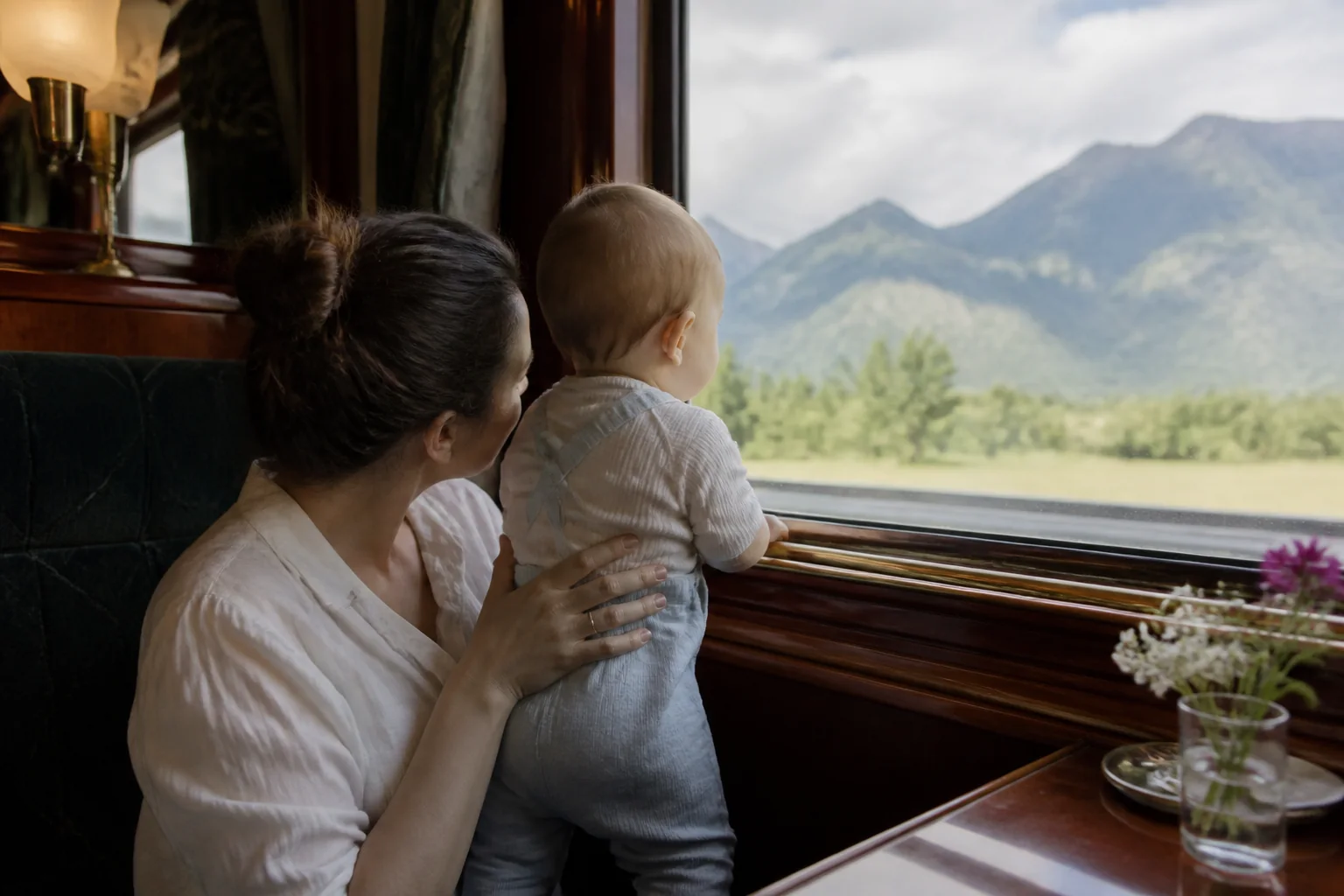
Policies vary significantly and may change. Belmond's current FAQs welcome children on several trains and set particular conditions for infants. Golden Eagle states that it has no general age restriction while cautioning that some tours may not suit young children. Rovos Rail publishes a separate child policy. Before committing, obtain written confirmation of minimum age, fare, permitted occupancy and supervision terms for the exact train, route and departure.
A single night between Paris and Venice compresses the magic: departure, dinner, sleeping car, breakfast and arrival. On a multi-day journey through Africa, Australia or Central Asia, the train becomes daily life. Repeated formal meals, quiet periods, excursions, wardrobe changes and limited private space begin to matter. A first family rail journey need not be the longest one to feel significant. The shorter trip can be the more concentrated and elegant choice.
Promising signs include curiosity about trains and landscapes, pleasure in shared meals, a dependable sleep routine and an ability to play or read independently for a while. A child need not impersonate an adult. They should understand that dining cars, lounges and narrow corridors are shared. Children who already enjoy small hotels, extended restaurant meals or intimate cruises often arrive with useful experience. Interest in the journey itself matters more than polished manners performed under pressure.
Teenagers rarely embrace a journey presented solely as their parents' dream. It becomes more compelling as a photography project, a piece of living history, a culinary expedition or the route into a destination they helped select. Let them choose elements such as dinner clothes, a camera, reading or one excursion. Be candid, too: connectivity may be inconsistent and conventional nightlife does not exist. Participation creates anticipation more effectively than persuasion.
The cabin is family architecture
Hotels can sometimes improvise an extra bed. A historic train cannot: every centimetre belongs to a fixed carriage plan. Beds, private toilet, shower, daytime conversion and storage decide whether family life works after dark. A glamorous category name reveals little. Request the current carriage plan and a written description of the booked accommodation. For a family, the cabin that functions best will almost always feel more luxurious than the cabin that photographs best.
A two-berth cabin does not become a triple because the third guest is small. Bed count, operational rules and safety determine legal occupancy. Confirm whether an infant, third person or separate child bed is allowed and which fare applies. Even a travel cot cannot simply appear at check-in. The correct solution may be a larger suite,
a second cabin or another train. Assumptions made on the telephone should become precise written confirmation before money changes hands.
Two cabins create privacy but do not guarantee a connecting door or even immediate proximity. Historic sleeping cars have individual plans, numbering and sometimes differing layouts. Parents need to know whether they would have to cross a corridor at night and whether that separation is appropriate. Confirm the carriage, cabin numbers, door arrangement and distance. A request noted as a preference for nearby cabins is not a dependable family arrangement.
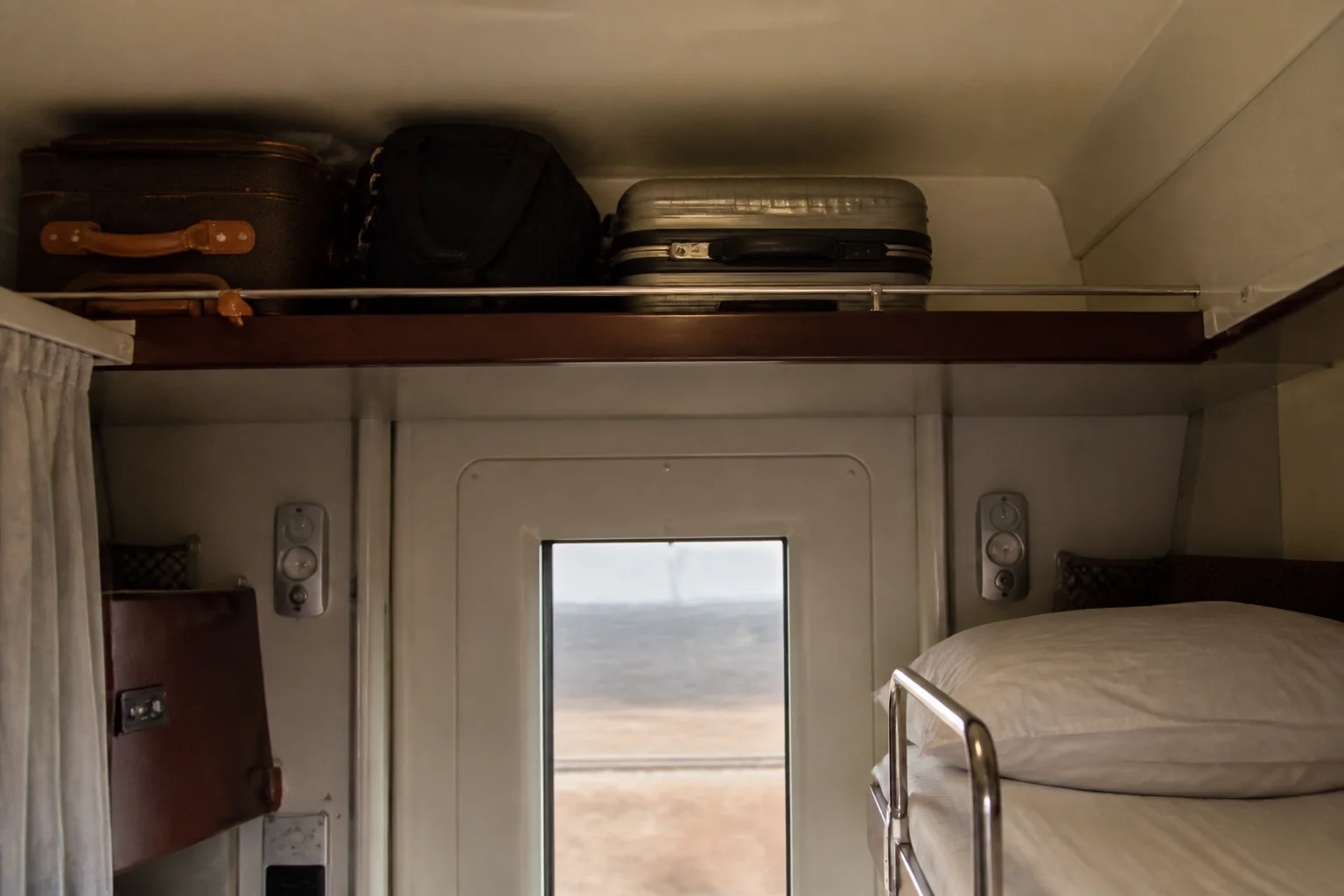
For an older child, the top berth may become the favourite detail of the trip. It still requires a confident climb when the carriage is moving and the child is half asleep. Ask about the ladder, guard, headroom and whether berths may be reassigned. Toddlers and restless sleepers need a different answer.
Choose from the child's coordination and night habits and from the exact cabin design, not from a romantic picture of polished wood and crisp linen.
Some historic categories have a washbasin in the cabin but shared lavatories at the end of the car. Adults may accept this as part of the period experience; with a tired child it can become a repeated night walk. A private bathroom may then deliver more real value than extra decoration or elevated service. Establish whether toilet and shower are genuinely inside the cabin, and how much floor area remains once the beds are made.
Narrow passages, heavy doors, steps and moving vestibules are part of the train. Children should not roam between carriages without an adult. Agree simple rules before departure: hold the rail, do not run, open inter-car doors only with an adult and always ask for company at night. This is thoughtful choreography rather than alarm.
Clear boundaries make movement more relaxed for everyone, while the crew's specific safety briefing always takes precedence over general advice.
Dining and the lounge are part of the product
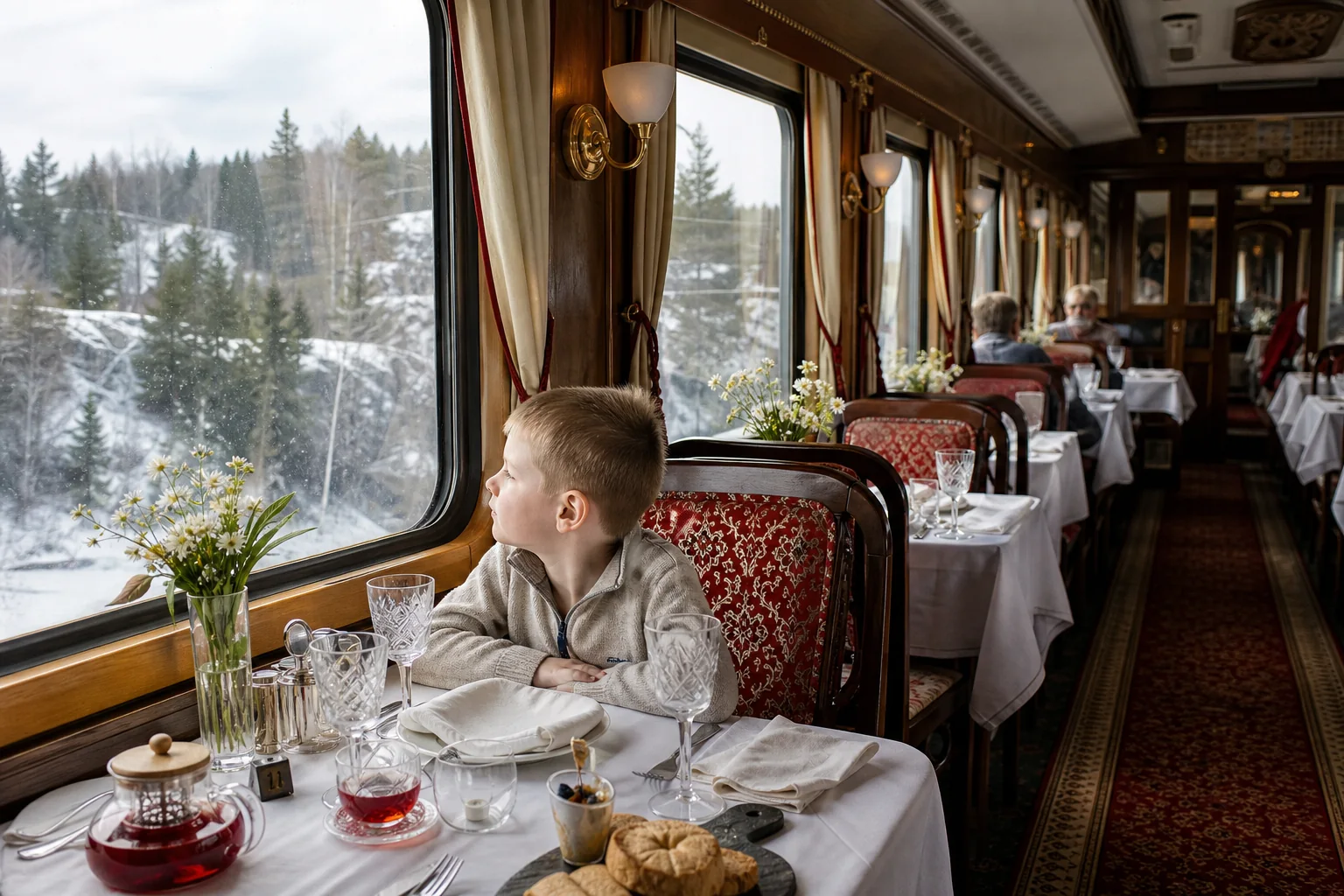
A multi-course meal in the dining car is one of the journey's principal events. Two hours at the table can feel magnificent or endless to a child. Ask about sittings, table size and whether an earlier or simpler meal can be arranged, without assuming it will be. A sketchbook or compact card game helps discreetly.
Unmuted videos and constant laps of the carriage, by contrast, erode precisely the atmosphere other guests have travelled to experience.
Report allergies, intolerances and strong preferences well in advance. Ask what children's dishes are realistically available and whether parents must supply infant food. A luxury kitchen can be highly adaptable, but a railway galley works with finite storage and a choreographed service. Familiar approved snacks belong in hand luggage for selective eaters. The aim is not a private menu performance at every meal; it is calm, safe dining without a last-minute compromise.
An observation car may hold a child's attention for hours: tracing the map, spotting wildlife, taking tea or speaking to a pianist. It is still not a playroom. Sound, seats and movement are shared with other passengers. Bring quiet activities and know where to retreat before fatigue becomes a scene.
Using the cabin for a private pause gives the child relief and preserves the composure that makes a small train feel special to everyone on board.
Many children enjoy dressing for an occasion when the clothes remain comfortable. Choose soft fabrics, secure shoes and a small number of pieces that combine easily. The train's current dress guidance governs; “smart” and “formal” do not mean precisely the same thing everywhere. Keep a spare top accessible. A family can look considered without turning a child into a costume. Elegance comes from confidence and ease, not from maintaining an immaculate pose.
Sleep, motion and offline time
Rail joints, braking, shunting and station lights belong to the night. Some children sleep instantly; others wake at every change in sound. A modest overnight train can be a useful test before an expensive long-distance booking. A familiar pillowcase, sleep mask, gentle ear protection and the usual bedtime ritual help.
Ask when stewards convert the cabin and whether a daytime rest remains possible once the room is arranged as a lounge.
Trains move differently from cars and ships, but can still prompt nausea or uncertainty. Parents usually have clues from earlier journeys. When unsure, select a shorter route and discuss health concerns with an appropriately qualified professional. Fresh air is not always freely available in a sealed or historic carriage. Medication and dosage do not belong in generic travel copy; they require individual medical advice informed by the child's own history.
Wi-Fi and mobile coverage may fade with the landscape or play little part in the operator's concept. Download books, audio, music and maps before leaving. Headphones, a power bank and a compact analogue kit of pencils, journal and games are more useful than a suitcase of toys. Screen time can still be a sensible tool.
Luxury here is not enforced digital abstinence; it is technology that is charged, quiet and available without becoming a negotiation.
Large rigid cases sit awkwardly in historic sleepers and may be stored beyond reach. A soft bag holding only the train wardrobe is usually the neater solution. Children need less choice but easy access to a change of clothes, medication, entertainment and bedtime essentials. Strollers, cots and child seats should be declared in advance.
Journey Beyond currently lists several baby and child items among permitted extras; every operator applies its own measurements and access rules.
Excursions, climate, altitude and supervision
Multi-day itineraries combine rail travel with coaches, walks, museums, safaris or early departures. Examine duration, toilet access, terrain, heat and the possibility of returning early for each activity. “Included” does not automatically mean suitable for every age. Sometimes one adult and the child will have a better afternoon on board or at the hotel. Skipping an excursion does not diminish the journey. An unstructured rest may rescue the evening.
Tropical humidity on the Eastern Oriental Express, dry heat in southern Africa and wide temperature shifts in Australia demand different clothing and pacing. Air conditioning may behave differently across historic carriages or while stationary. Plan layers, sun protection and regular drinks. Consider the entire itinerary rather than the sleeping compartment alone. A child who adores the train may still reach a limit during a long, exposed excursion in unfamiliar weather.
On rail routes through the Peruvian Andes, significant altitude becomes part of the physical journey. Children and adults respond individually; an elegant suite cannot prevent altitude-related symptoms. Route, prior acclimatisation and medical suitability require professional consideration before booking. Families should not treat a magazine article as a diagnosis. The operator supplies the current itinerary and elevations; a qualified clinician assesses the traveller's circumstances.
If one adult must leave every meal, accompany every night walk and adapt each excursion, that person is taking a different holiday from their partner. Discuss this beforehand. Two children of contrasting ages or temperaments may demand more adult attention than expected. Most luxury trains do not provide a children's club or guaranteed childcare.
Families bringing a nanny must confirm that the operator accepts the arrangement and book suitable accommodation for every member of the party.
Private carriage, first journey and honest exclusions
For a multigenerational journey or family celebration, exclusive carriages or a charter may work better than a collection of separate reservations. Private rooms create flexibility around meals, volume and programme. Not every train offers this, and operational, safety and route rules still apply. A charter is not permission to disregard the railway.
It earns its premium when the family will genuinely use the privacy and shared time, rather than merely stage a spectacular photograph.
A birthday, graduation or journey with grandparents gives the trip emotional weight. A discreet surprise, a family portrait and a beautifully set table may be enough. Discuss cake, decoration and music with the operator; candles, bulky objects or unannounced productions may be restricted. The memory that endures is often a quiet one at the window. Good planning protects room for that moment instead of turning every hour into an event schedule.
Luxury day trains and shorter panoramic journeys provide service, heritage carriages and an occasion meal without the complexity of sleeping aboard. For younger children, that can be the ideal trial. The family sees how the child responds to an extended meal, unfamiliar guests and limited movement. If it works, one night can follow later. Booking the longest icon first bundles the maximum risk with the maximum prestige.
We would pause if operator rules fit only after optimistic interpretation, the child needs constant physical activity, sleep requires total silence or the adults expect an uninterrupted couples' escape. An invalid cabin occupancy, unresolved altitude concern or programme with no retreat are equally clear warnings. Advice proves its worth through selectivity, not through securing every reservation. A resort paired with a luxury day train may be the better family journey.
The family brief and the final test
A serious enquiry includes age at travel, height, sleep pattern, dietary needs, allergies, mobility, preferred beds, maximum trip length and previous rail experience. Add desired route, dates and budget. The advisor can then verify current child policy, cabin occupancy, carriage plan, bathroom, excursions, dress code, luggage and cancellation terms in writing. These details are not administrative clutter. They turn an attractive idea into a journey a family can actually inhabit.
Do not picture only the family portrait in the dining car. Picture 10pm, with beds made, a child needing the bathroom and an early excursion the next morning. If that scene still feels manageable, the trip may genuinely fit. Deluxetargets compares train, departure and cabin, confirms the current rules and is equally prepared to recommend a shorter route or a later year. The most luxurious decision is the one that survives real life after the photograph.