
The calmest journey begins with honest motion
No captain and no stabiliser can guarantee a calm sea. Yet motion sickness need not rule out every journey on water. Planning route, season, vessel motion, cabin position and personal prevention together replaces hope with decisions that can withstand the weather.
Susceptibility is personal, never embarrassing
Motion sickness follows conflicting sensory information and affects seasoned travellers too. Previous reactions are the most useful clue for the next briefing.
A useful history records the vessel, passage duration, weather, cabin position, first symptom, food and alcohol, any remedy used and whether alertness changed. “I was once seasick” is too little; the pattern helps an advisor and medical professional separate a short tender problem from sustained open-water exposure.
Route comes before brand
An excellent ship may move considerably on an exposed passage; a smaller vessel may feel comfortable in sheltered water. Voyage profile precedes brochure.
Wind, waves, swell, heading and speed change. Even a statistically favourable period cannot guarantee conditions on a particular day.
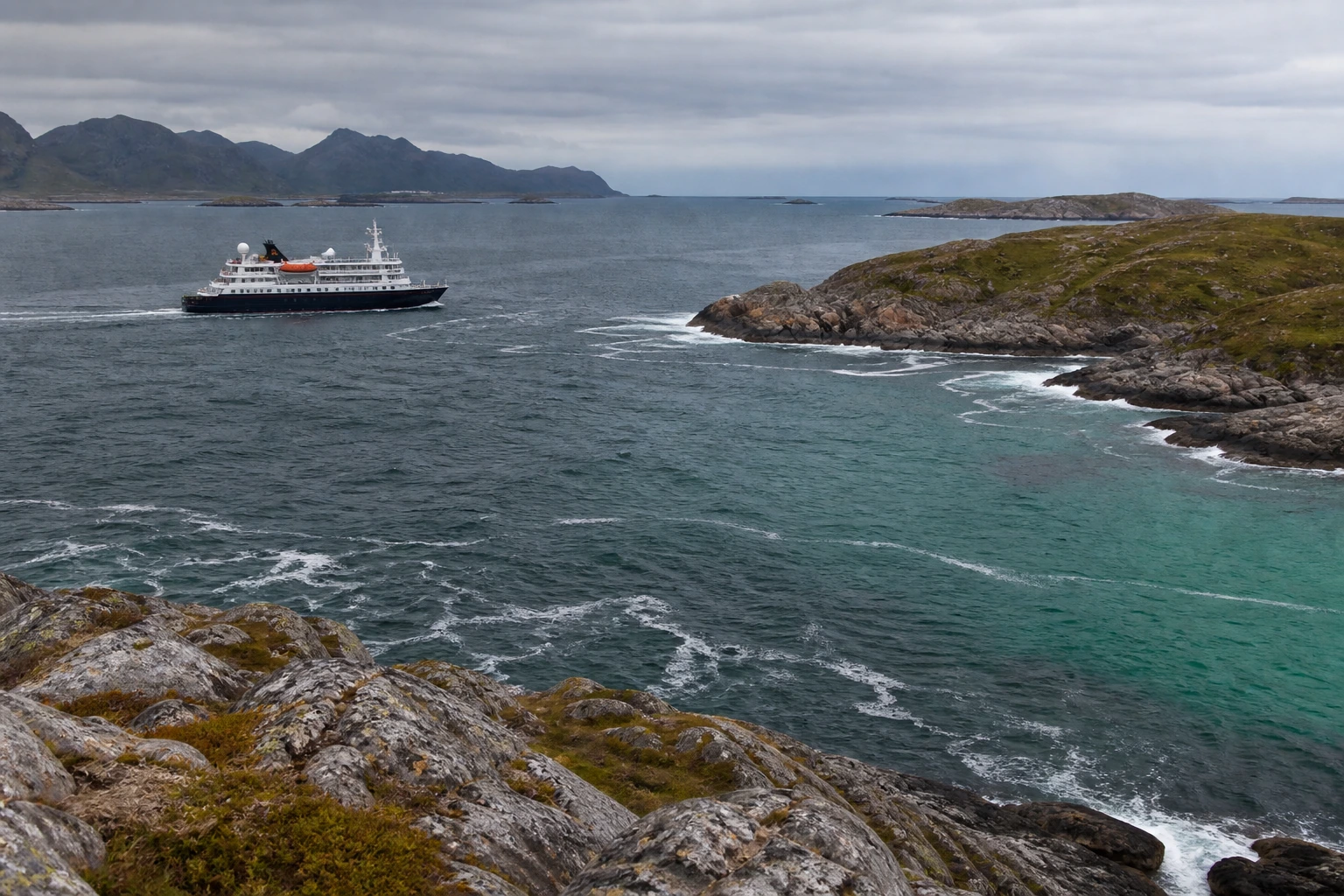
Fjords, island chains and coastal channels can limit open-sea effects. Estuaries, crosswinds and exposed connecting legs remain possible motion zones.
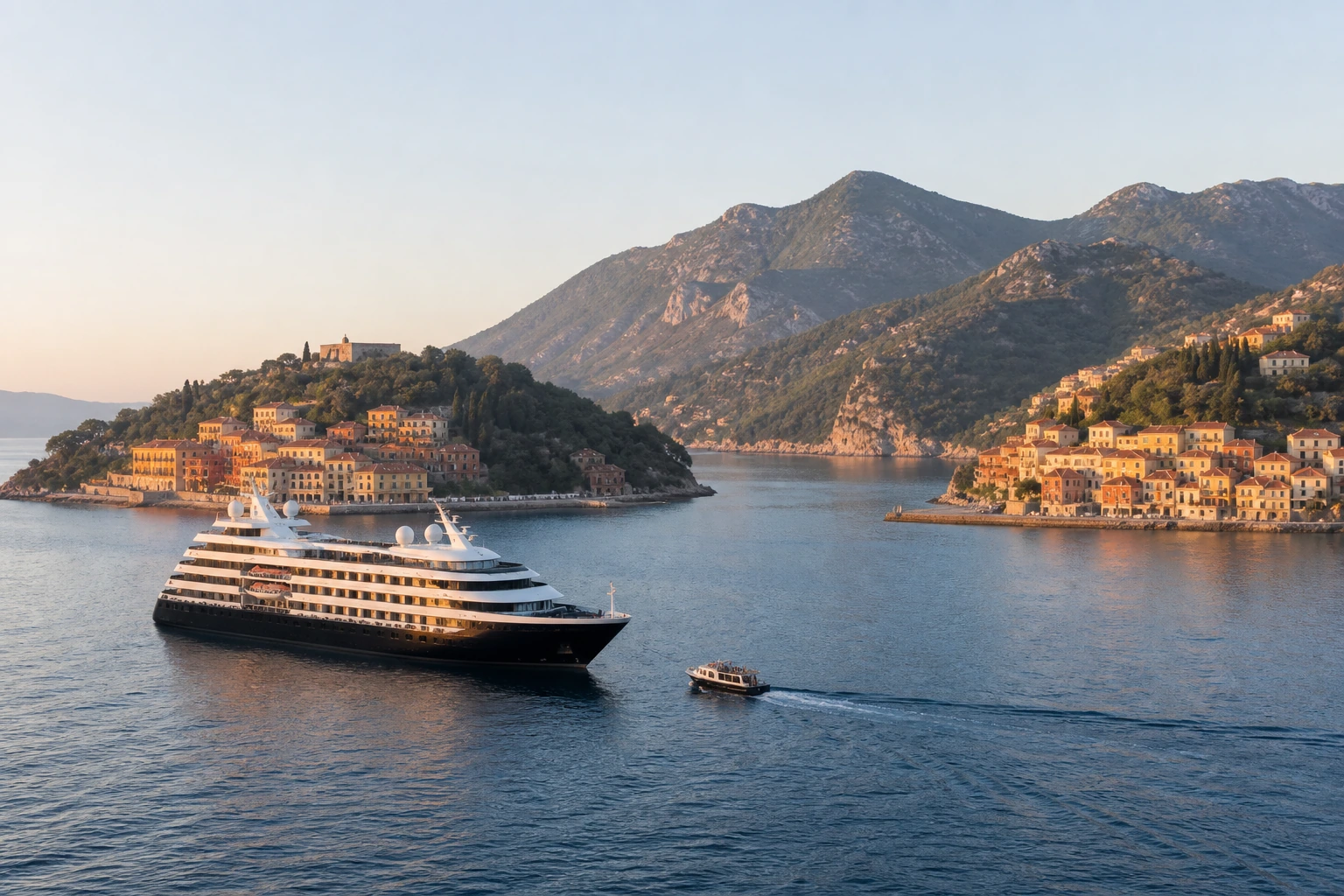
Many sections are more protected, while gulf crossings and approaches may be open. The precise itinerary says more than the regional label.
Mistral, meltemi, bora and local sea can create short, sharp motion. Island-hopping and coastal proximity are not automatic reassurance.
The open crossing defines a classic Antarctic voyage. Fly-cruise models alter exposure but remain weather- and flight-dependent, and still operate in polar waters.
Travellers strongly prone to sickness can experience water through a different pattern on rivers. Locks, wind and harbour manoeuvres may still be felt.
Transatlantic and positioning itineraries combine many sea days with few land breaks. A shorter, port-rich route is often wiser for a first attempt.
Turn the itinerary into an exposure table. For every leg, note hours underway, open or sheltered water, overnight sailing, tender use, next possible landing and whether a missed port creates another sea day. The least flexible passage, not the prettiest anchorage, should govern the choice.
Season is probability, not promise
Historic weather windows inform selection but cannot replace a current forecast. Shoulder periods may combine attractive pricing with more dynamic seas.
Wind wave and swell are different
Local wind sea does not behave like long swell from a distant weather system. Height, period and direction shape motion together.
Size alone does not choose the ship
Length, beam, draught, hull, loading, speed and heading interact. “Bigger is calmer” is a broad tendency, not a rule.
Roll is lateral; pitch is strongest toward bow and heave is vertical. A system that reduces roll cannot remove every other movement.
Active fins can reduce roll when the vessel has speed through water. Manufacturer, sizing and operating envelope must suit the ship.
Some systems are designed for stationary or very slow conditions. “Stabilisers fitted” does not establish that this function exists or is active.
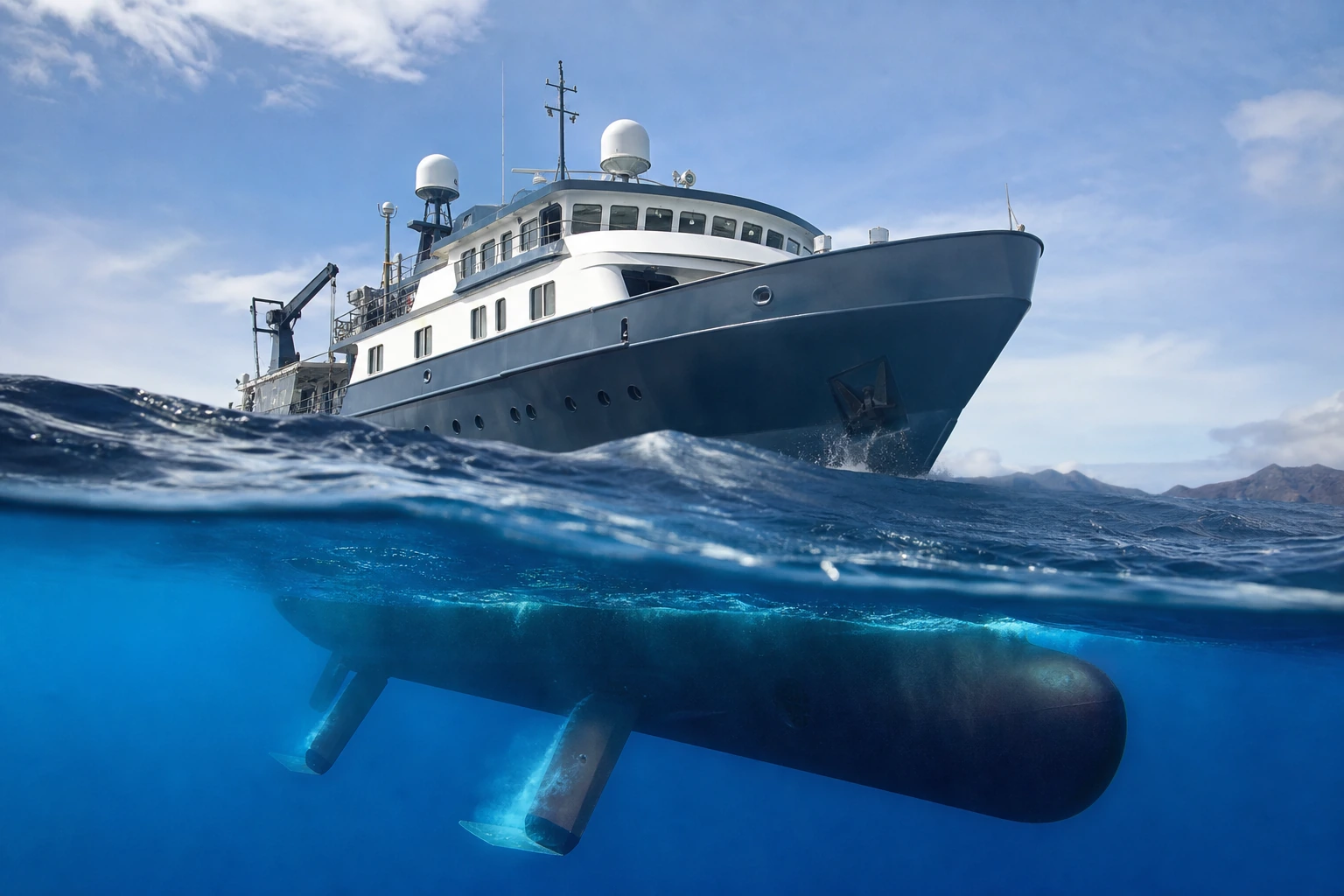
A gyroscope can reduce roll without an external fin but has capacity and operating limits. It cannot turn rough water into a hotel room.
The technical request should name the installed system, not merely repeat “state-of-the-art stabilisers”. Ask which motions it addresses, whether it works underway, at low speed or at anchor, what limits its use and who decides deployment. Only the vessel operator can confirm the current installation and policy.
A lower midship cabin is usually the starting point
Closer to the centre of motion, excursions are often smaller. The trade may be less view, different noise or a longer walk to public spaces.
Pitch can feel stronger forward; vibration or propulsion noise may matter aft. Deck plan, machinery and individual sensitivity belong together.
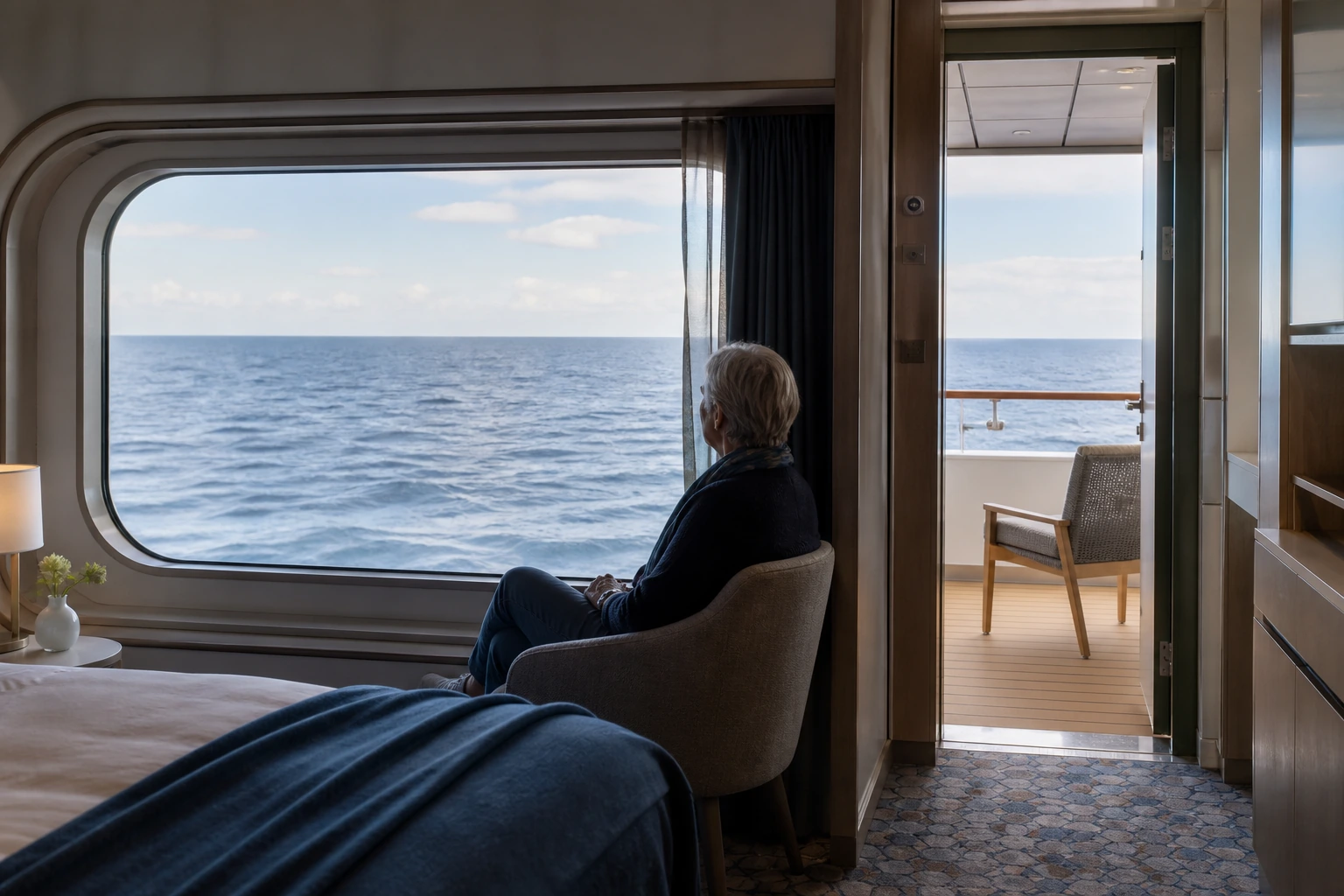
Window, deck access and a forward view give the brain matching visual information. A dark inside cabin will not suit every susceptible guest.
Trace the route from bed to fresh air before assigning the cabin. Long internal corridors, lifts and enclosed stairwells may become difficult once symptoms begin. A low midship room is strongest when it also offers prompt horizon access, ventilation, a nearby quiet seat and discreet crew support.
Tenders create a separate exposure
Small craft move differently and may wait beside the ship. Duration, boarding, spray and alternatives should be reviewed before booking.
Land days shorten continuous exposure and provide confidence. A cancelled port can still alter the pattern.
A captain can often adjust route, bay or departure time. Safety, distance, berth and weather impose limits; the guest does not command the course alone.
Early symptoms deserve attention
Unease, pallor, cold sweat, fatigue and nausea can build. Tell crew or companion early, before drinking and acting become difficult.
A steady position, fixed visual reference and reduced conflicting movement may help. Safe crew instruction takes precedence.
Close screen focus can intensify sensory conflict for some people. Audio, horizon view and short tasks may be more comfortable.
Light familiar meals and sufficient fluid can support comfort. Alcohol and very heavy food are not prevention strategies.
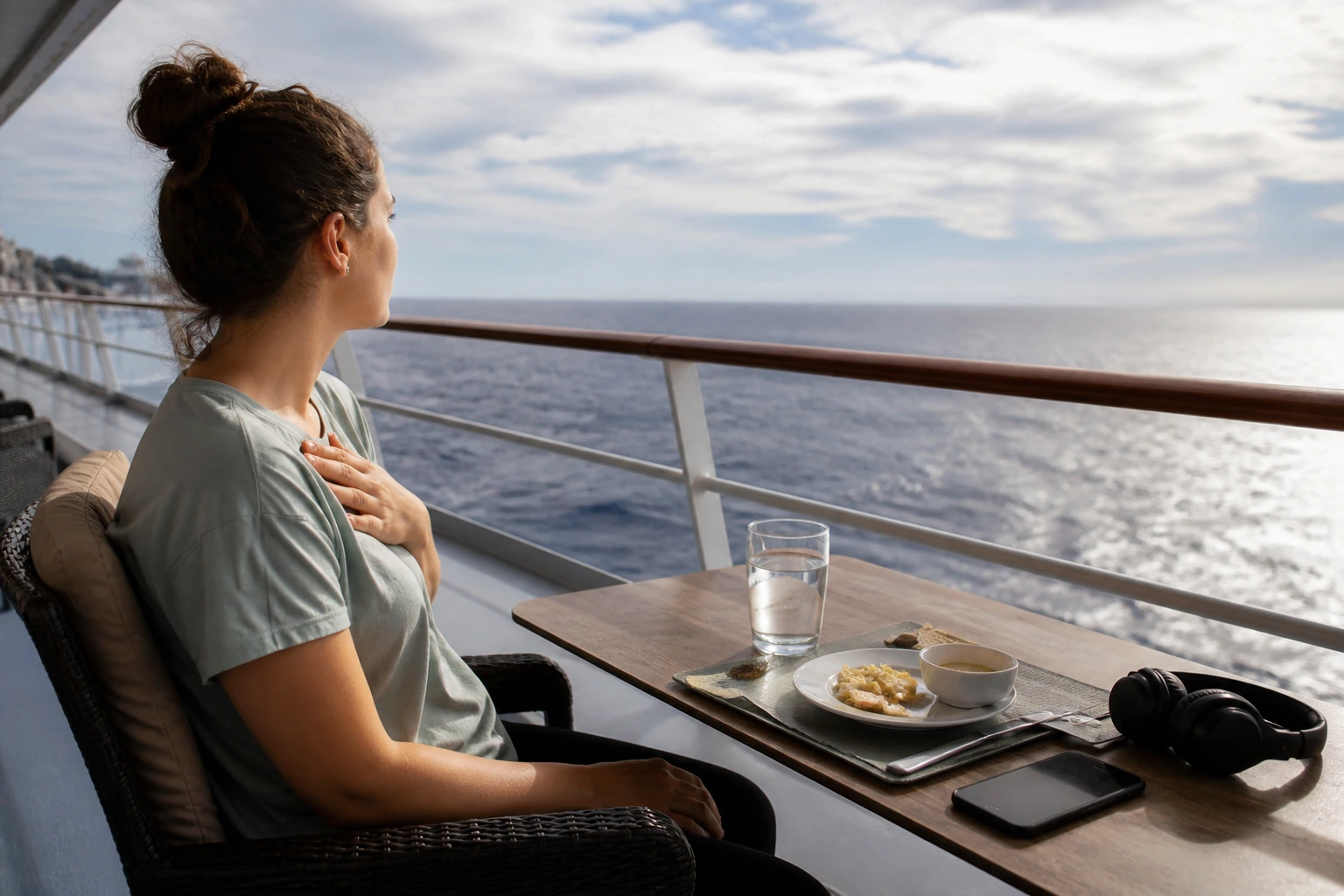
Medication often works better before exposure
Agent and timing are individual. A doctor or pharmacist should consider conditions, other medicines, pregnancy, age and required alertness.
Many agents can cause drowsiness, dry mouth or visual effects. Driving, tendering and same-day activities need to fit.
The pre-travel consultation should produce a personal, written plan: what the traveller may use, when professional advice says to use it, relevant interactions and side effects, storage requirements, activities to avoid and whom to contact if symptoms persist. Persistent vomiting, dehydration, altered consciousness or other concerning signs require prompt medical help.
Patches and children require special review
Scopolamine patches are not suitable for everyone; heat and adverse effects warrant current professional advice. Children must never receive improvised adult dosing.
The Deluxetargets recommendation
Begin with a port-rich, more sheltered route, select low and midship, and verify the exact stabiliser type. Discuss prevention before departure – and keep an equal land plan.