
The best luxury train route is not necessarily the most famous. Some journeys derive their power from a single night; others from days of landscape in motion. This is a considered edit by character, not a beauty contest.
Choose the route before the train
Paris to Venice, the Canadian Rockies and Australia's Red Centre cannot sensibly share one podium. Their light, duration, cabins, excursions and social mood are entirely different. Beauty might mean a mountain pass, a silent desert horizon or dinner staged with exquisite confidence. We therefore do not nominate a universal winner.
We identify the desire each route answers most precisely—and the traveller for whom even an illustrious name may prove the wrong journey.
A glamorous carriage cannot redeem the wrong geography. Begin with the landscape you want, the number of nights you are prepared to sleep aboard and the balance between rail time and excursions. Only then choose the train, departure and cabin. Establish how much of the advertised distance is actually visible in daylight. A formidable mileage may pass largely after dark. Thoughtful planning separates the legend of a route from the view and product the guest will truly experience.
Europe’s concentrated icons
The Venice Simplon-Orient-Express between Paris and Venice is a tightly composed European night: departure, aperitif, formal dinner, bar car, sleep and arrival in a city that already resembles a set. Landscape is not the uninterrupted star; atmosphere and railway history are. It suits a celebration, a first luxury sleeper or a pairing of two excellent hotels. Travellers expecting several days of panoramic spectacle have bought into the legend without understanding the product.
Longer VSOE departures to Istanbul fundamentally change the narrative. Multiple countries, hotel stays and guided visits give the historic connection geographical depth. The train becomes one chapter in a Grand Tour rather than the stage for a single night. This is for travellers who enjoy company, formal evenings and changing cities. Departures are scarce and route-specific,
so the current itinerary, hotel component and actual nights aboard must be compared in writing before any conclusion is drawn.
La Dolce Vita Orient Express leaves Rome for a range of Italian landscapes and cultural regions. It references mid-century Italian design without attempting to recreate the historic Orient Express. Matera, coastlines, vineyards and cities may lead different departures. The train is compelling for guests who place design and gastronomy beside railway romance. The individual itinerary matters more than the brand umbrella: beneath one polished identity lie several quite different portraits of Italy.
Belmond's Britannic Explorer currently travels from London towards Cornwall, Wales, the Lake District and other British regions. It is not nostalgic transport to continental Europe, but a modern sleeper serving as a base for a British house-party journey. Landscape, regional cooking and excursions are interwoven. For travellers wishing to combine London with a few days in the country, the logistics are elegant. Coast, gardens, walking, culture and season should determine which regional route wins.
Royal Scotsman travels through Scotland on a notably small scale. Its strongest moments occur between moor, loch, country house and dining car, rather than through record-breaking distance. Depending on the itinerary, walking, whisky, gardens and historic properties shape the days. It suits guests who enjoy a sociable country-house mood and accept mercurial weather. Those seeking anonymity or a vast private suite may feel freer on a carefully designed Scottish road trip.
Renfe's El Transcantábrico Gran Lujo links San Sebastián and Santiago de Compostela across northern Spain. Coast, old towns, regional restaurants and touring matter as much as the train. This is a more culinary and cultural experience than a pure panorama. Several nights give the route depth, but require enthusiasm for a guided rhythm. For anyone whose Spain ends with Madrid, Barcelona and Andalusia, the journey reveals a cooler, greener and remarkably independent northern identity.
Canada and Australia measure distance differently
Between Zermatt and St Moritz, the Glacier Express crosses the Swiss Alps as a panoramic day train. Excellence Class adds a window seat for every guest, multi-course dining and elevated service. Passengers sleep in hotels at either end, not aboard. It is ideal for those who want to see every hour of landscape and avoid a compact sleeper cabin.
Zermatt and St Moritz should be treated as part of the composition rather than as stations at which to change vehicles.
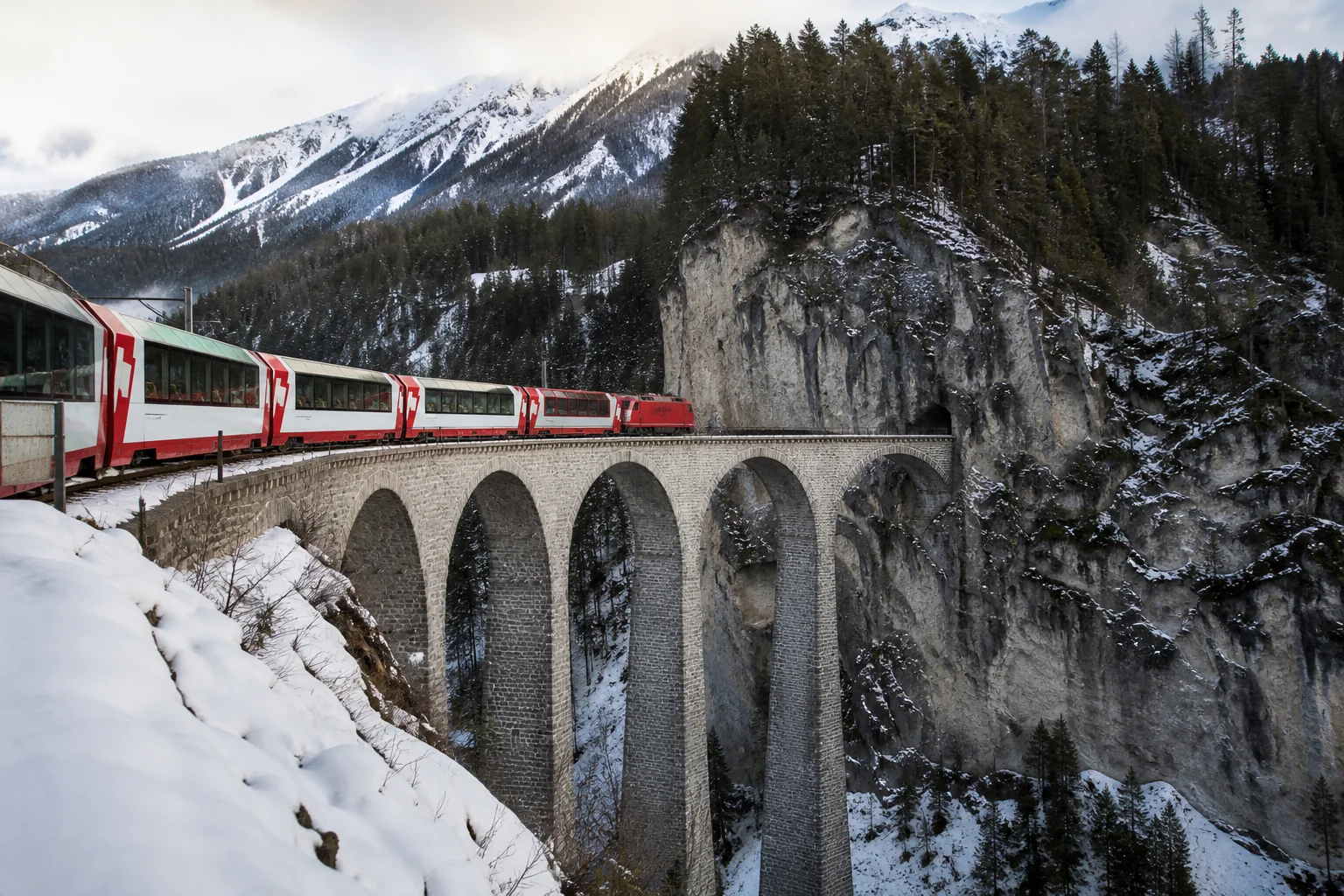
Rocky Mountaineer's First Passage to the West runs between Vancouver and Banff or Lake Louise through mountain passes, canyons and the Spiral Tunnels. The train travels by daylight, with guests sleeping in a hotel. Little scenery is surrendered, although this is not a traditional sleeper journey. GoldLeaf changes the sightlines through its raised glass dome and offers a distinct service rhythm. The route suits landscape-led travellers who deliberately want polished rail days and proper hotel nights.
Journey Through the Clouds approaches Jasper, while Rainforest to Gold Rush travels through Whistler and Quesnel for a longer, more varied arrival. Rocky Mountaineer has announced that Rainforest to Gold Rush will end after the 2026 season, so later availability must not be assumed. Jasper feels wilder and less manicured than Banff. Choose according to national park, hotel style, onward itinerary and desired rail time—not from the fiction that every Rockies programme is interchangeable.
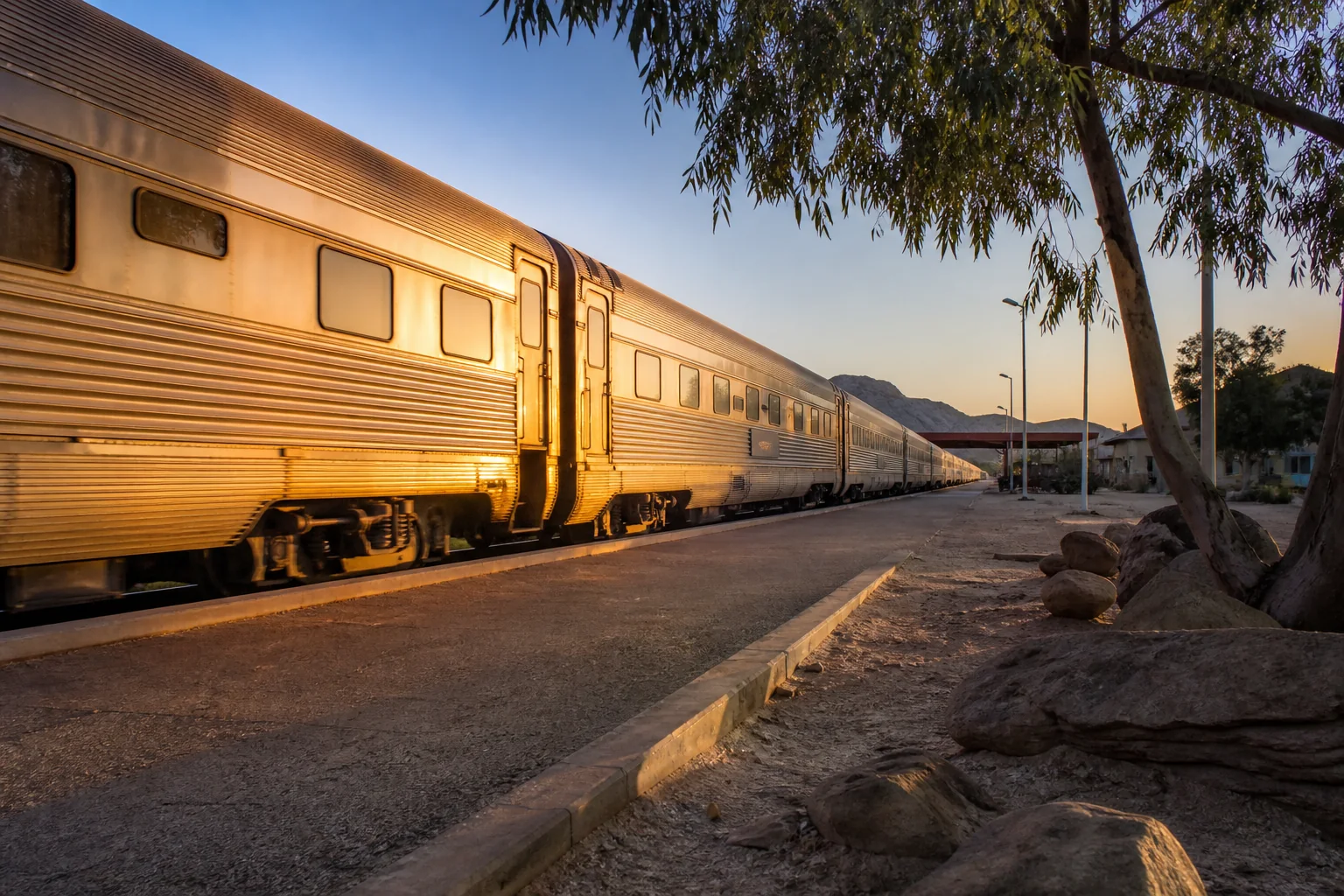
The Ghan links Darwin and Adelaide through the Red Centre. On the longer Expedition format, substantial Off Train Experiences are part of the central narrative. Tropical north, red earth and arid interior change on a continental scale. The route suits travellers drawn to space and geography who enjoy an inclusive, sociable operation.
It feels less like an intimate nostalgia train than a comfortable expedition crossing a landmass, with the train providing continuity between remote encounters.
Indian Pacific joins Sydney, Adelaide and Perth, crossing Australia from ocean to ocean. The Blue Mountains, Nullarbor and sheer distance create a slower, more contemplative journey than an alpine itinerary. Anyone demanding constant dramatic peaks may miss the beauty of emptiness. This is for guests who value long conversation, changing light and the physical scale of Australia. Direction, season and included stops alter the choreography enough to merit a line-by-line comparison.
African trains connect journey and arrival
Rovos Rail links Pretoria and Cape Town through the Highveld, Karoo and South Africa's interior. Period salon aesthetics, formal meals and selected stops create the experience. It is long enough to understand the rhythm of the train without committing to a fortnight. Cabin category, climate control and dress code deserve deliberate choices. Combined with Cape Town,
the Winelands and safari, it becomes an excellent South African itinerary in which the train remains a chapter rather than the entire book.
Rovos' journey towards Victoria Falls crosses north through southern Africa according to the precise routing of the selected departure. The falls give the finale unusual emotional force. Train and destination should be planned together: water levels, season, lodge, transfers and safari possibilities all influence value. Reaching the viewing path and leaving immediately forfeits context. The most rewarding version leaves time beside the Zambezi before or after the train.
Rovos Rail's longer Southern Cross itinerary currently incorporates the Panorama Route and game viewing in Kruger National Park among its experiences. Its achievement is not simply scenery through glass, but connecting several regions without daily packing. The trade-off is a more structured schedule. It suits travellers who appreciate guided excursions and sociable evenings;
committed individualists should add private time before or after. Current countries, hotels and off-train details must be taken from the booked departure.
The Blue Train also operates on the Pretoria–Cape Town axis, but brings a different aesthetic, train scale and service culture. Comparing only the line misses the product. Rovos leans into the feeling of a historic club; the Blue Train has its own South African cabin and lounge identity. Schedules and operations have changed in previous periods,
making current confirmation especially important. These are alternative interpretations of the journey, not interchangeable carriages attached to the same promise.
South America and Asia follow their own dramaturgy
Andean Explorer travels between Cusco and Arequipa across Peru's high plateau, with itineraries incorporating Lake Titicaca. Altiplano light, immense space and volcanic horizons provide some of South America's most powerful railway images. Significant altitude is not decorative context, however. Acclimatisation and medical suitability require individual professional consideration. For travellers who tolerate the route well, it offers a rare union of sleeper train, landscape and pre-Columbian culture.
Belmond's Hiram Bingham connects the Cusco region with Machu Picchu as a luxury day experience. It does not replace a thoughtful Peru itinerary or careful planning for the archaeological site. Its value is in service, atmosphere and an elegant journey through the Urubamba Valley. It works well for some time-sensitive travellers; others prefer to stay nearby or combine different rail products. Entry tickets, circuits, timings and current access rules must be coordinated separately.
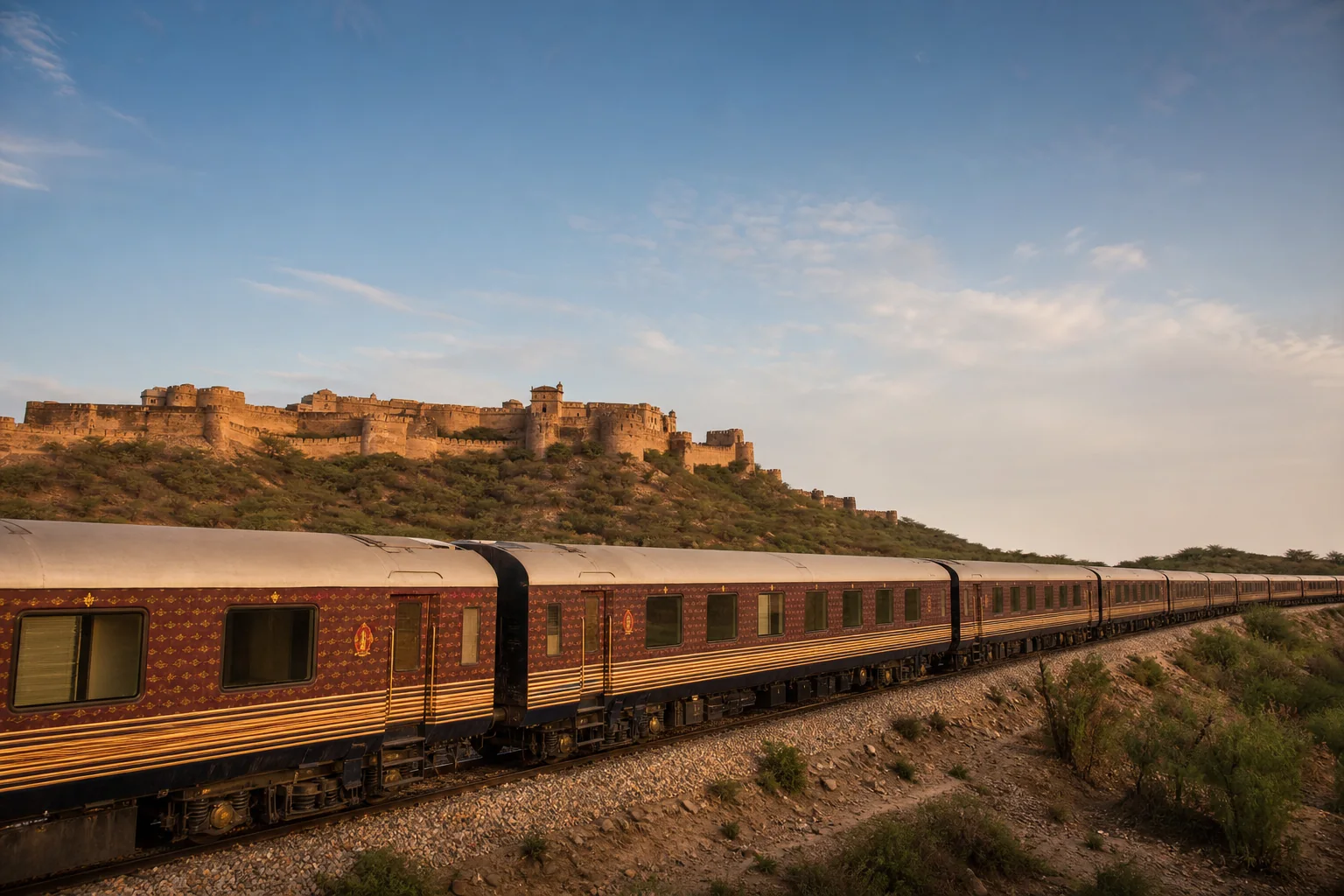
The Maharajas’ Express Heritage of India currently runs from Mumbai via Udaipur, Jodhpur, Bikaner, Jaipur, Ranthambore and Fatehpur Sikri to Agra and Delhi. Rail solves substantial distances and repeated hotel changes, but the itinerary is dense. Palaces, forts, wildlife and the Taj Mahal compete for attention. It is persuasive as a comfortable first arc through India. Travellers who want to understand one place deeply should protect several unhurried hotel days before or afterwards.
Seven Stars in Kyushu travels through the southern island's seven prefectures on a very small scale. The operator currently describes ten guest compartments for ten pairs; application and booking processes may be highly controlled. Craft, ceramics, timber, food and regional encounters carry as much weight as the track. It suits travellers who already know Japan or deliberately seek a deeper regional lens. Availability and the exact seasonal route must be resolved well before the wider itinerary is built.
JR East's Train Suite Shiki-shima operates changing programmes through eastern Japan. Futuristic observation cars and suites meet carefully curated regional visits. It is not a spontaneous reservation: application windows and limited inventory require lead time. The experience is for guests who value precision, seasonal cuisine and understated service.
The right departure depends more upon time of year and the regions visited than on a single universally famous line.
Eastern Oriental Express begins in Singapore and explores Malaysia on its current programmes. Tropical landscape, heritage sleeping cars, food and off-train experiences make a concentrated short journey. Nature and culture are weighted differently between itineraries, so the title alone is insufficient. The train forms a striking contrast with Singapore and a beach or rainforest stay. Cabin dimensions and humid conditions should be considered consciously rather than discovered once aboard.
Golden Eagle's Republics of the Silk Road and longer programmes travel across Central Asia. Uzbekistan, Tajikistan, Kazakhstan and Kyrgyzstan—or the countries on the precise departure—are joined through train nights, hotels and touring. The appeal is cultural density and the sensation of real distance. It is long and guided; cabin, hotel nights, border processes and excursions must be evaluated as one product. For pure train nostalgia it is excessive. For an expedition, that is exactly its strength.
Day train, sleeper, direction and season
Glacier Express and Rocky Mountaineer maximise visible scenery and move sleep into hotels. VSOE, Rovos and The Ghan make the night aboard central to the memory. Neither is inherently more luxurious. A generous hotel room, large bathroom and unbroken daylight view may outweigh a historic berth. Yet without the sleeper comes no private moment of pausing in darkness and waking to a different landscape. The right answer depends on what the traveller imagines when saying “train journey”.
A route may run both ways and still feel different. Departure time, light, sequence of excursions, border formalities and arrival city alter the narrative. Venice has another emotional effect as a finale than Paris; Victoria Falls makes a stronger culmination than an early transfer. Compare both directions day by day. The right endpoint also influences flights, jet lag and hotel pairings, occasionally making the apparently secondary direction the much more graceful trip.
Scotland is shaped by day length and weather; Australia by heat and tropical seasons; Victoria Falls by water level; Canada by snow, long evenings and current environmental conditions. Japan stages blossom, intense green, autumn colour and winter with equal conviction. A generic “best time” is inadequate. Decide which landscape you want and which compromise you accept. Operating periods, engineering work and climatic risk should be checked again at booking and shortly before departure.
The most beautiful line disappoints if an upper berth is unsuitable, the bathroom too constrained or every day becomes a long coach tour. A less famous route may triumph through a spacious suite, excellent guides and humane pacing. Compare bed, bathroom, daytime conversion, storage, train nights, hotel nights and the real duration of each excursion. Exterior photographs should never obscure the question of how many hours the traveller spends in which room.
A strong shortlist begins with three sentences
State three priorities before choosing: “We primarily want landscape”, “This is a formal celebration” or “We want to connect regions without changing hotels”. Add one limit, such as no upper berth, no more than three train nights or no significant altitude. Many icons will fall away for good reasons. Twenty famous names become two or three credible journeys. Prestige may remain part of the pleasure, but it should never replace practical fit.
A luxury train is rarely an isolated reservation. The previous night, transfers, luggage, onward flight and hotels determine whether it feels effortless. Deluxetargets therefore compares more than names: visible rail hours, cabin, excursions, season and the quality of the journey on either side. The answer may be Paris to Venice or a Silk Road expedition—as long as landscape, rhythm and expectation are telling the same story.