
The Venice Simplon-Orient-Express is not a neutral benchmark. It is a meticulously staged piece of European railway history. Royal Scotsman, Rovos Rail, Andean Explorer, Rocky Mountaineer, Eastern Oriental Express, The Ghan and La Dolce Vita Orient Express tell different stories. Choosing well begins with landscape, nights, cabin reality and the balance between the train and the destination—not with the most famous name.
The right alternative is not an imitation
A traveller chasing the same Art Deco fantasy on a different date will rarely be satisfied by an arbitrary luxury train. The worthwhile alternatives deliberately change the proposition: Scotland rather than continental Europe, African scale rather than theatre, the Peruvian altiplano rather than grand-hotel nostalgia, or daylight viewing rather than sleeping on rails. First identify the part of the myth that matters.
Belmond operates historic carriages, overnight sectors, formal evening rituals and itineraries between European cities. Historic Cabins preserve the original character most strongly; Suites and Grand Suites solve space and bathroom comfort more generously. Life on board is the point. Travellers wanting informal days, contemporary proportions or extensive private space should compare a genuinely different product rather than expect the train to behave like a hotel.
Royal Scotsman and Rovos Rail tell distance differently
Royal Scotsman makes sense for guests who appreciate Belmond's service language but want landscape and a small company to lead. Official material describes a tightly limited guest count, two dining cars, an observation lounge and a spa carriage. Scottish excursions and convivial evenings create something closer to a private country-house gathering than the grand international stage associated with the classic Orient Express.
This train suits whisky, gardens, castles, walking and long conversations under shifting skies. It becomes more meaningful inside a considered Scotland itinerary. Those seeking formal glamour, famous stations and the drama of an iconic European night train may still prefer Venice Simplon-Orient-Express. Those who value proximity, nature and a quieter social scale are likely to remember Royal Scotsman more vividly.
Rovos Rail is not a brief nostalgic interlude. Its official programme ranges from journeys of roughly 48 hours to 16 nights across southern Africa. Three suite types are listed from seven to 16 square metres, all with private bathrooms. The attraction lies in duration, changing terrain and the sensation of crossing a region slowly. This is a travel chapter, not merely a glamorous transfer.
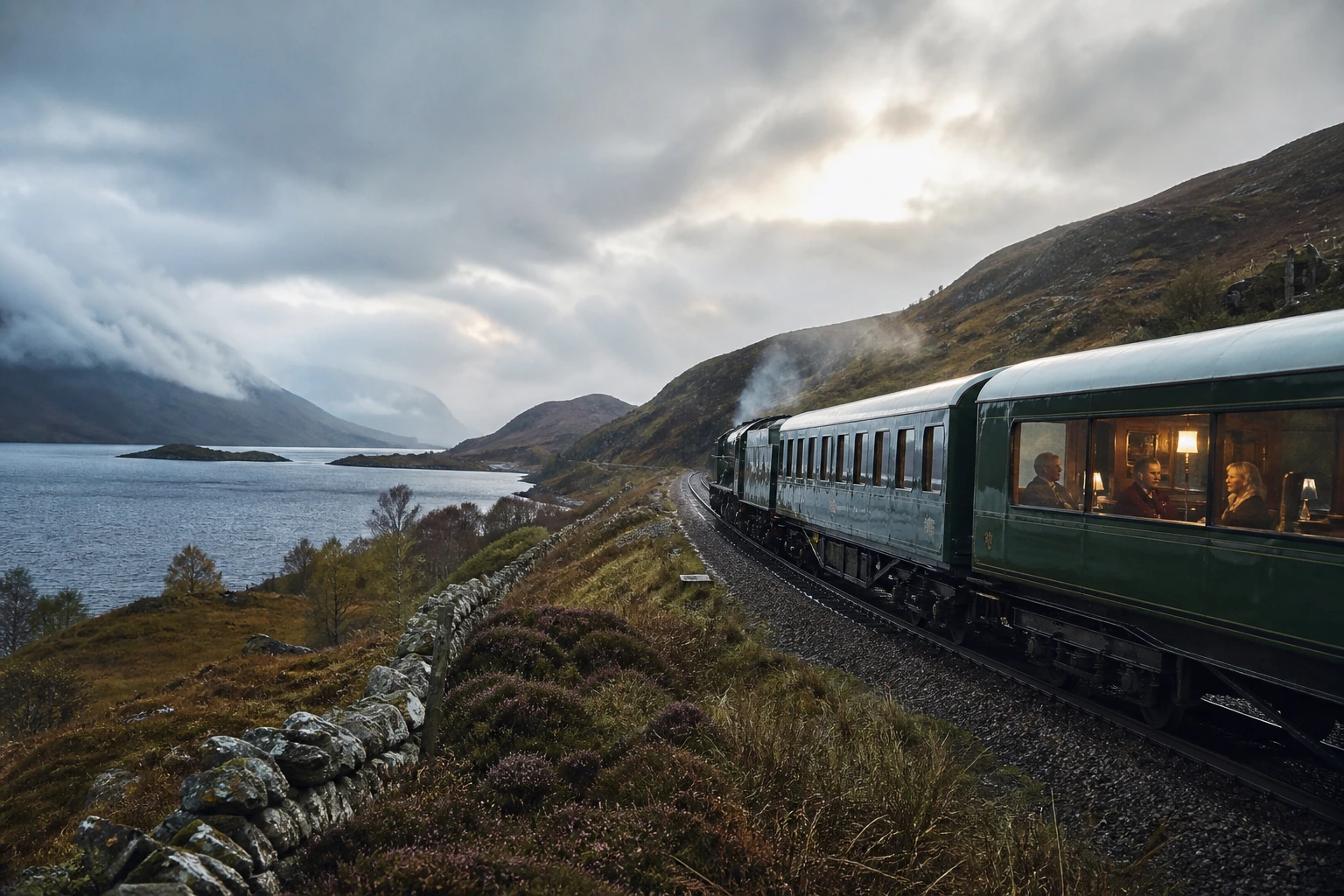
Cape Town, Victoria Falls, Namibia and the long Dar es Salaam journey produce entirely different experiences. More nights do not automatically mean more romance: border procedures, excursions, seasonal landscapes and long rail sectors shape the pace. Select the geography and time of year first, then the accommodation. A larger bathroom cannot rescue the wrong itinerary.
The Andes and Rockies require different forms of travel
Belmond presents Andean Explorer as a sleeper travelling one of the world's highest railway routes. Cusco, Lake Titicaca and Arequipa bring extraordinary daylight together with physical elevation. It works for Peru travellers who want landscape, archaeology and gradual transitions. It is a poor surprise for anyone sensitive to altitude or arriving without suitable acclimatisation.
The railway should not be compressed between long-haul flights. Acclimatisation, the Sacred Valley, Machu Picchu, Cusco and Arequipa need a sensible sequence. The finest cabin is irrelevant if a guest is struggling on departure day. A serious plan therefore considers elevation, luggage, hotel nights and health advice with the same care as menus and views.
Rocky Mountaineer is the essential counterpoint to the sleeper-train idea. Its trains travel through Canadian and selected American landscapes in daylight; passengers sleep in hotels. The company explicitly describes this day-viewing, night-rest structure. It protects panoramas and offers a conventional bedroom at night, while surrendering the private ritual and sounds of an overnight train.
Service level changes windows, dining format, movement and cost. On eligible Canadian routes, GoldLeaf uses a bi-level glass-dome coach with a separate dining room, while SilverLeaf integrates the experience differently. Prestige alone should not decide. Height, stairs, hours seated, photography and appetite for sociability determine which carriage is genuinely more comfortable.
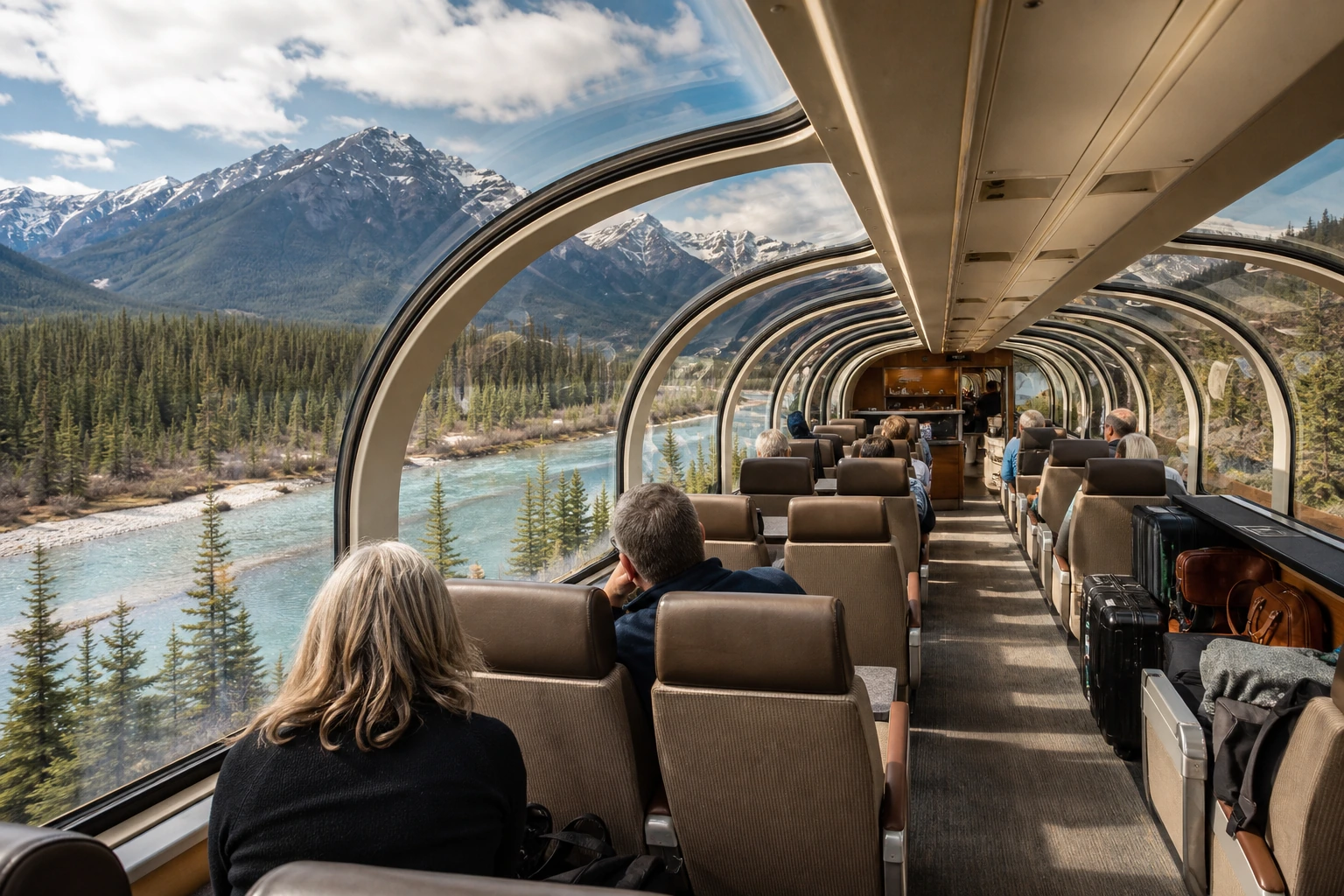
Luggage moves between train and hotel, but room category, location and the standard of the midpoint stay need to be understood. A superb viewing day can be diminished by a rushed arrival or a poorly chosen extension. Rocky Mountaineer is strongest for travellers who want to surrender the day to scenery and still recover in a stable hotel room each night.
Southeast Asia, Australia and the new Italy
Eastern Oriental Express combines polished wood, Asian textiles, air-conditioned cabins and Malaysian landscapes. Current programmes must be checked directly with the operator; the modern product should not be assumed to replicate an old Bangkok–Singapore timetable. Tropical light, the observation platform, food and curated moments ashore give it a sensuous, compact and destination-led identity.
Pullman, State and Presidential cabins differ in space, bed configuration and daytime use. In a warm climate, air conditioning, bathroom function, storage and the walk through the train become particularly noticeable. A smaller cabin may be charming for a short itinerary; personal space grows more valuable over longer occupancy. Obtain current inclusions and excursions in writing.
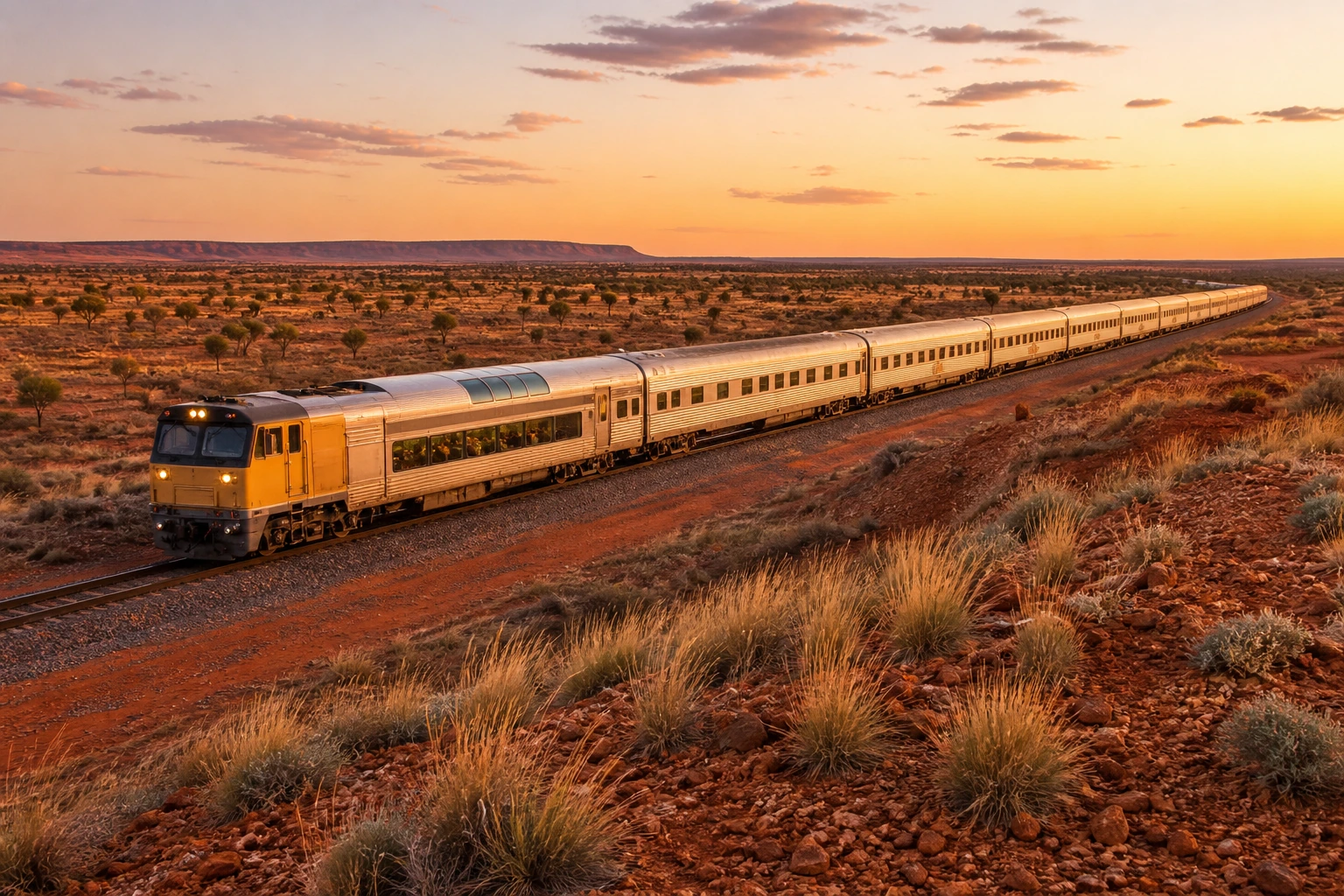
The Ghan links Adelaide and Darwin, with variations and sectors through Australia's interior. Journey Beyond describes private cabins, dining and Off Train Experiences as one integrated product. This is less grand-hotel theatre than a traverse of an enormous country. Red earth, distances and remote stops carry the narrative; the train is their composed frame.
Categories differ in more than sleeping space and decoration: lounges, dining, transfers and service details may also change. Newer Gold Premium cabins offer a more contemporary interpretation, while Platinum aims at greater personal room. Confirm bed dimensions, night conversion, bathroom, storage and mobility. On an Australian crossing, ergonomics matter more than the most attractive rendering.
La Dolce Vita Orient Express draws on twentieth-century Italian design and operates a range of itineraries from Rome. The company lists Deluxe Cabins and Suites alongside programmes built around Italian regions, cities and food. It is a younger, stylistically independent proposition—suited to guests wanting Italy in a concentrated design-led form rather than a purist recreation of historic CIWL travel.
New products and routes tend to evolve more quickly in their early seasons. Confirm the exact departure point, schedule, formation, excursion and running time for the booked date. Marketing imagery expresses a design intention; it cannot document every operational detail. Protect the journey with a calm night before and after rather than a tight, irreversible connection.
Seven questions about cabin, motion and excursions
How many nights do you truly want to sleep on a train How much private space is essential Is formal dress a pleasure or an obligation Should landscape be absorbed through glass or explored ashore Can you tolerate altitude How important is a generous private bathroom Are you collecting an icon or trying to understand a country The answers outperform any ranking.
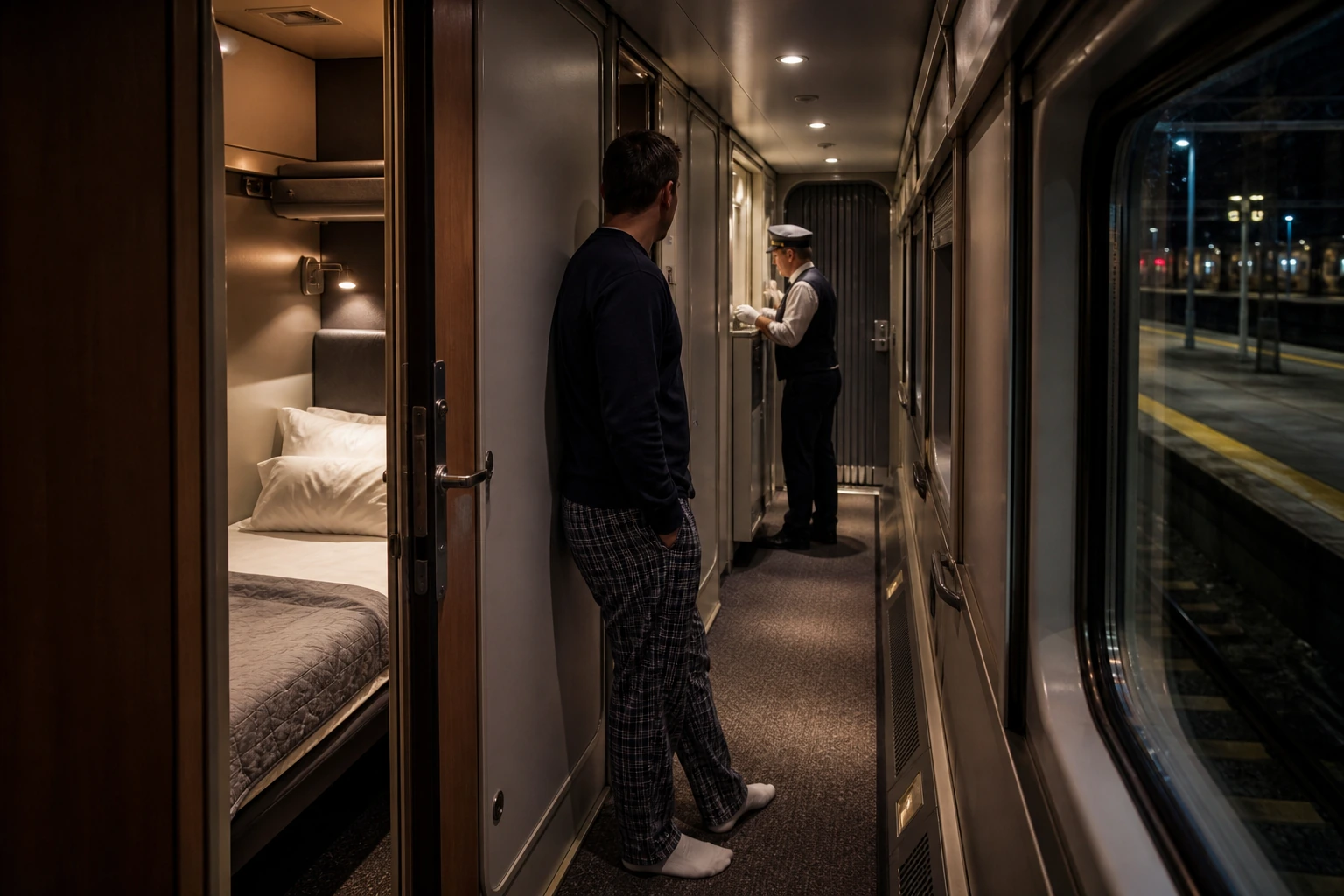
Brochures show daytime layouts, polished surfaces and immaculate bedding. Night conversion, access to the bathroom, temperature, luggage and the movement of two people are more revealing. Ask for the exact configuration and floor plan of the booked category. A compact historic cabin can be delicious for one famous night; every centimetre becomes functional on a longer journey.
Rail joints, braking, shunting and station pauses are not service failures. Some passengers sleep beautifully; others do not. Position in the train, connecting doors and overnight operations can affect the experience but never remove movement entirely. Guests highly sensitive to noise may find a daylight train with hotel nights the more luxurious answer.
Formal evening wear is integral to Venice Simplon-Orient-Express; other trains are more relaxed without being careless. The relevant question is whether the ritual suits the travellers. Luggage limits, garment bags and the surrounding itinerary must support it. Dressing for dinner is a delight when chosen willingly and a burden when treated as an unexpected rule.
On Rovos Rail, The Ghan, Royal Scotsman and Andean Explorer, time ashore may provide much of the substance. Group size, walking level, drive time, exclusivity and weather alternatives differ. Travellers with mobility constraints need a specific plan before booking. An included outing is not automatically the best one; a private pre- or post-journey can sometimes provide more depth.
Freight traffic, infrastructure, weather, borders and operating decisions can alter times. Arrival days require slack, particularly before long-haul flights, cruises or non-refundable arrangements. An elegant itinerary ends with a good hotel night at the destination, not a nervous airport sprint. That reserve is part of luxury, not wasted time.
Solo travel, family and season reshape the choice
Occupancy, single cabins and supplements vary, but the social architecture is equally important: communal tables, lounges, excursions and total guest count. Royal Scotsman's small company may feel naturally connective; a larger train can offer anonymity. A solo traveller should define whether the priority is meeting people, retreating, or moving comfortably between both.
Compact cabins, upper berths, extended dinners, formal evenings and limited room to move demand the right age and genuine curiosity. Current age and occupancy rules must be checked. Rocky Mountaineer's daylight model may be simpler, though it still involves long seated days. A single rail segment within a private family itinerary can be wiser than several nights aboard.
Scottish weather, southern African dry periods, Andean elevation, Canadian snow, Southeast Asian rain and Australian heat create radically different windows. Season also changes excursions and road access. Instead of asking for a universally best month, define the desired scene: green highlands, crisp mountain visibility, wildlife, autumn colour or dry continental scale.
Luxury rail does not begin at the platform. A well-positioned hotel, early luggage handling, an unhurried arrival and a free evening protect the ritual from stress. The end needs similar space to change pace and time zone. In Peru, southern Africa and Australia especially, a carefully composed wider itinerary turns the train from a trophy into a meaningful passage.
What must be confirmed in writing before booking
Verify the precise train, route, date, stations, cabin name, bed arrangement, bathroom, meals, drinks, excursions, transfers, luggage, dress code, mobility provision, insurance implications and cancellation terms. Where hotels are included, establish their category and location. Similar brand language can conceal very different realities; the itemised service description is what protects expectations.
For European ritual, Venice Simplon-Orient-Express remains singular. Royal Scotsman leads with intimacy and Scotland; Rovos with time and Africa; Andean Explorer with altitude and Peru; Rocky Mountaineer with panorama without sleeper cabins; Eastern Oriental Express with tropical theatre; The Ghan with Australian scale; La Dolce Vita with contemporary Italy. Fit matters more than rank.
Luxury on rails always involves a bargain: finite historic space, movement, a fixed line and a shared choreography. That is where its magic begins. Travellers who understand and even welcome those constraints experience something far beyond transport. Those expecting a stationary hotel suite are paying for an image the real train was never designed to fulfil.
We would first establish the occasion, landscape, number of nights, cabin tolerance, appetite for formality and the onward journey. Usually only two or three trains remain. Then we compare the exact departures, rather than their reputations. The result is not simply an iconic reservation, but a journey in which train, country and rhythm tell the same story.