
Luxury at sea
The yacht offers a private social world and a plan that can move. The ship offers an entire infrastructure. Asking only about privacy misses the more important choice.
Yacht and cruise are two kinds of freedom
On a yacht, a family asks the captain whether to remain in the bay. On a cruise ship, a couple opens the curtains on another city. One journey alters its own rhythm; the other brings range and choice to the suite.
A yacht organises one private party around vessel, crew and route. A luxury cruise combines private accommodation with restaurants, spa, entertainment and other guests. Each can feel intimate, but by entirely different means.
No strangers does not guarantee quiet. Family and friends share meals, decisions and weather days at close range. A successful charter party has compatible expectations and enough physical space for withdrawal.
On a fine cruise, a guest may breakfast alone, visit the spa and meet friends later. Public life remains optional. Travellers combining varied company with personal retreat may feel freer here than inside one fully private group.
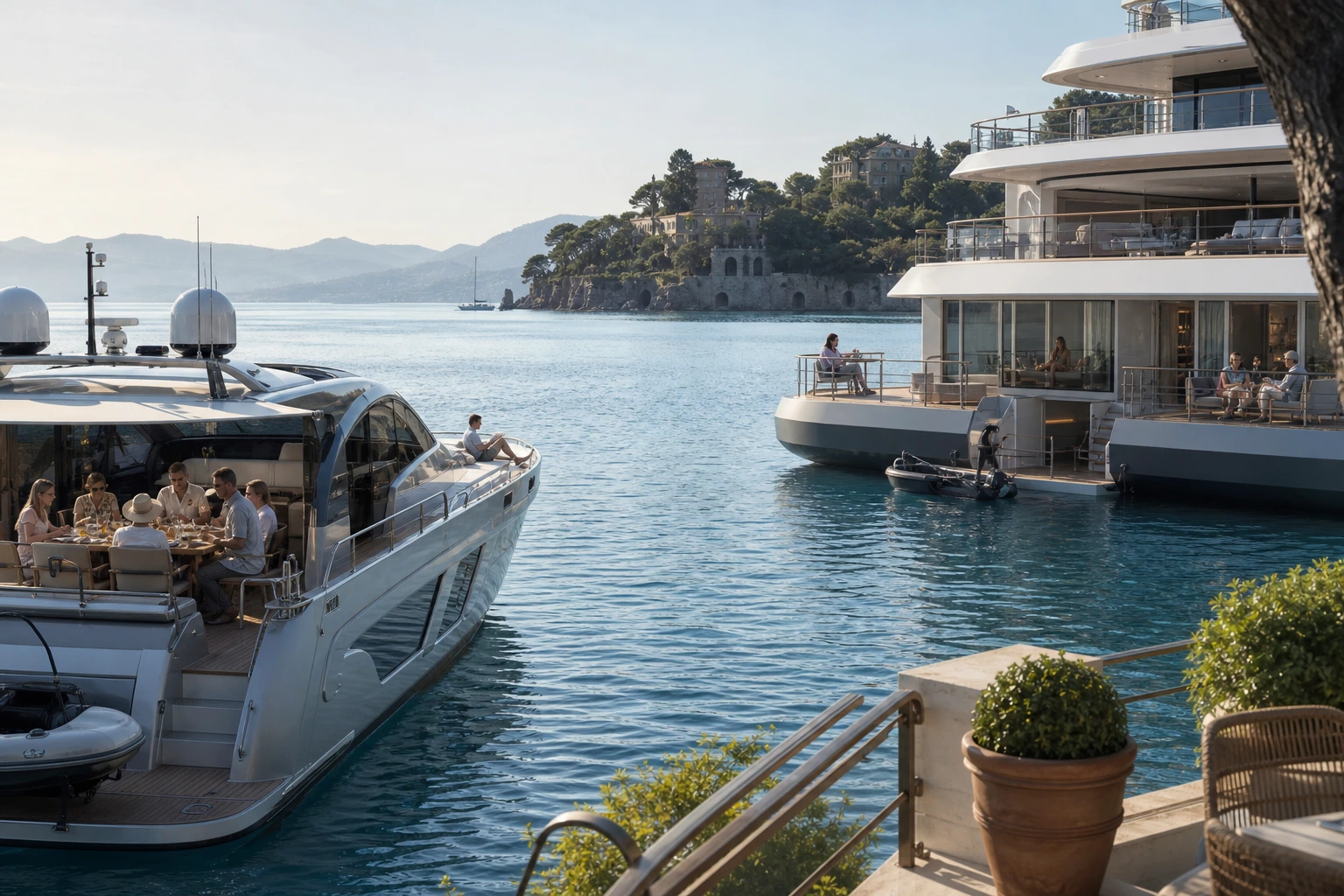
Weather, safety, ports, draft, range, crew rest and authorities shape every plan. The captain remains responsible. Flexibility means choosing alternatives within those boundaries, never purchasing exemption from them.
A published itinerary connects distant ports efficiently and sets expectations. Weather, harbour conditions and operations can still alter calls and times. No luxury line controls the sea.
A yacht excels where coves, islands and coastline form one coherent cruising ground. A ship covers greater distance overnight and links several regions without repeated flights and hotel changes.
Cabin, crew and institutional depth
Master, VIP and guest cabins frequently differ in size, position, light and bathroom. Couples paying equally need a fair allocation. A yacht with enough berths is not automatically right for every party.
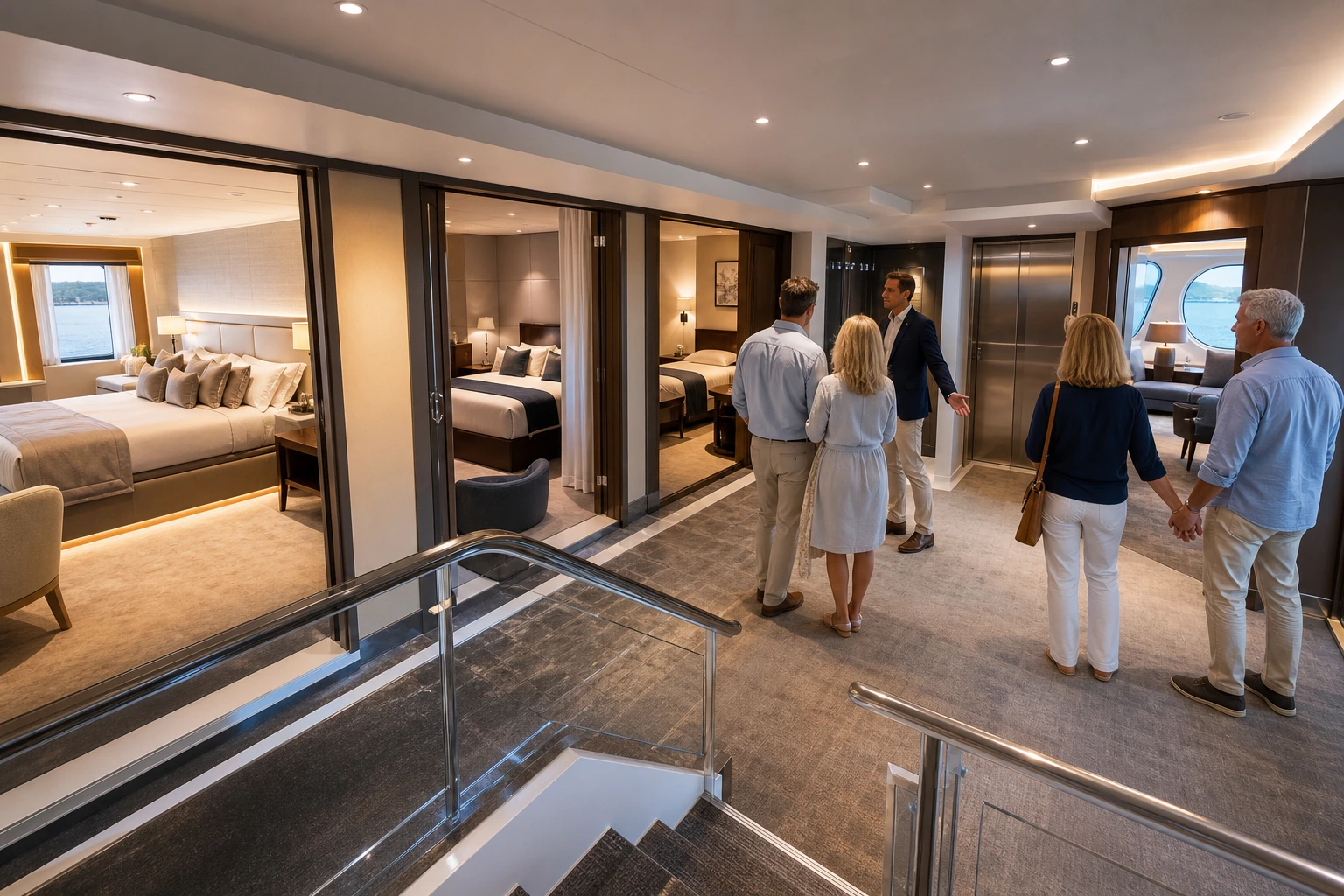
Suites of different sizes, connections and deck positions create range. Lift, corridor, neighbours, public rooms and movement influence location. Category names are no substitute for studying the deck plan.
Captain, chef, stewards and deck team learn preferences quickly. A thoughtful preference sheet clarifies diet, allergies, rhythm and interests. Service becomes personal, but it also remains present: crew are part of life aboard.
Multiple kitchens, engineers, housekeeping, spa, medical structure and replacement staff distribute responsibility. The individual bond may be less exclusive, yet the system is more resilient when several needs arise together.
Food, water access, motion and medical reach
Menus follow guests, markets and onboard logistics. Galley size, provisioning, allergies and crew hours still set limits. A small kitchen can be brilliant without spontaneously offering five restaurant concepts.
Restaurants, bars, room service and different dining times allow guests to separate. Speciality venues, reservations, supplements and included beverages vary by line and fare and require current confirmation.
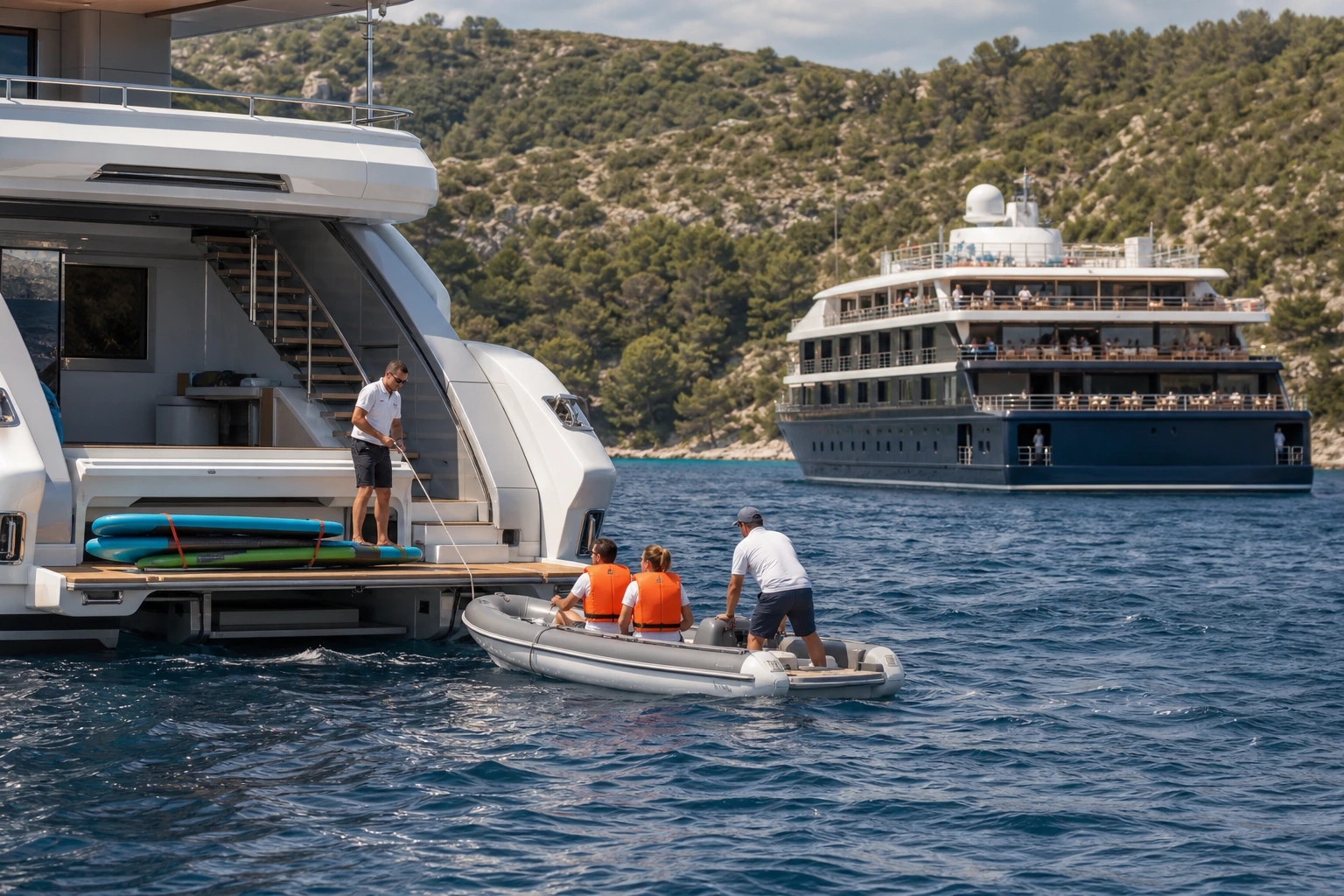
Tenders, boards, kayaks or other equipment may launch directly. Use depends on inventory, crew, weather, location and insurance. A brochure icon does not promise every toy at every anchorage.
When wind or rain affects shore plans, spa, gym, lectures, restaurants and interior rooms remain. On a yacht, the quality of a weather day depends more heavily on size, stability and salon design.
Hull, size, stabilisation, course and sea state influence movement. Large ships still move; smaller vessels are not always uncomfortable. Susceptible guests need medical advice and realistic route design.
At-anchor and underway systems differ, as does their effect. Confirm the exact yacht’s equipment. Weather and the captain’s judgement remain more important than one technical label.
Luxury cruises normally publish a defined onboard medical structure whose scope varies by vessel. A yacht relies on trained response, communications and evacuation planning. Guests with relevant needs must compare the actual provisions.
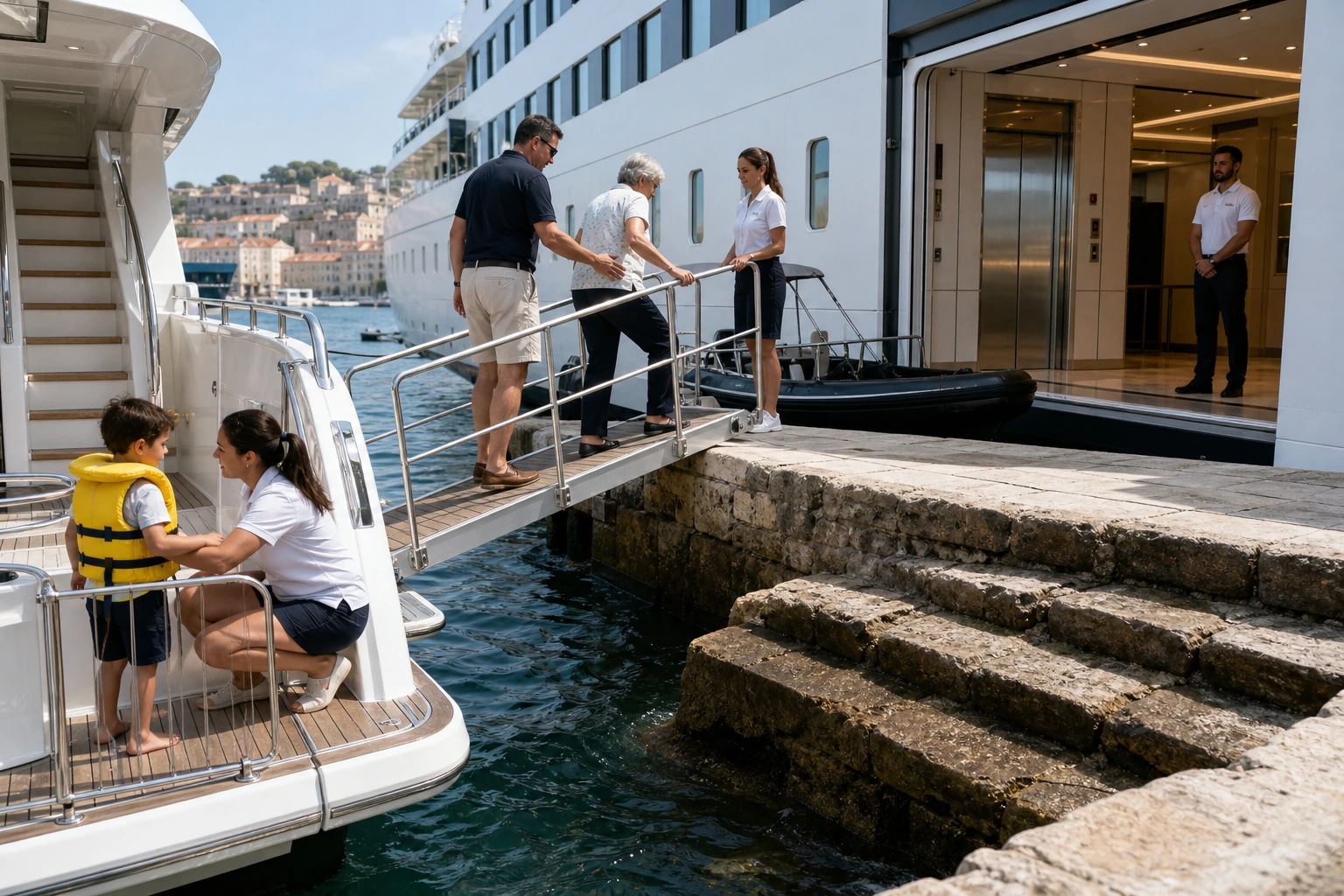
On a yacht, gangway, stairs, compact cabins and tender boarding dominate. On a ship, accessible suite, lifts, corridor width and shore excursion matter. An accessible vessel cannot make every port accessible.
The yacht gives families shared time and direct water access while requiring active supervision. A ship may offer clubs, peers and programmes. Age rules, safety equipment and childcare remain product-specific.
Time ashore follows two different machines
A driver, restaurant or guide can be arranged privately if arrival and berth cooperate. The crew is not automatically a destination-management company. Local transport and experiences need separate confirmation.
Lines organise transfers, guides and several activity levels. Groups, coaches and fixed hours may be part of the model. Private arrangements need enough time in port and a credible return plan.
A yacht may fail to secure a berth and anchor outside. A ship may use a terminal or tender. Wind and swell affect access. “In the heart of town” must be proven for the exact call.
Total cost, party size and technical redundancy
Charter fee, APA, fuel, food, berthing, tax and crew gratuity may be separate. Contract and cruising area govern treatment. A generic percentage cannot replace a full quote.
Drinks, speciality dining, excursions, spa, Wi-Fi, transfers, taxes and gratuities vary by line and fare. Compare total cost at the same service level rather than entry prices.
A yacht is paid for as a whole and may become logical for the right group. Two guests carry almost all the same infrastructure alone. Cruise pricing by suite often suits couples more naturally.
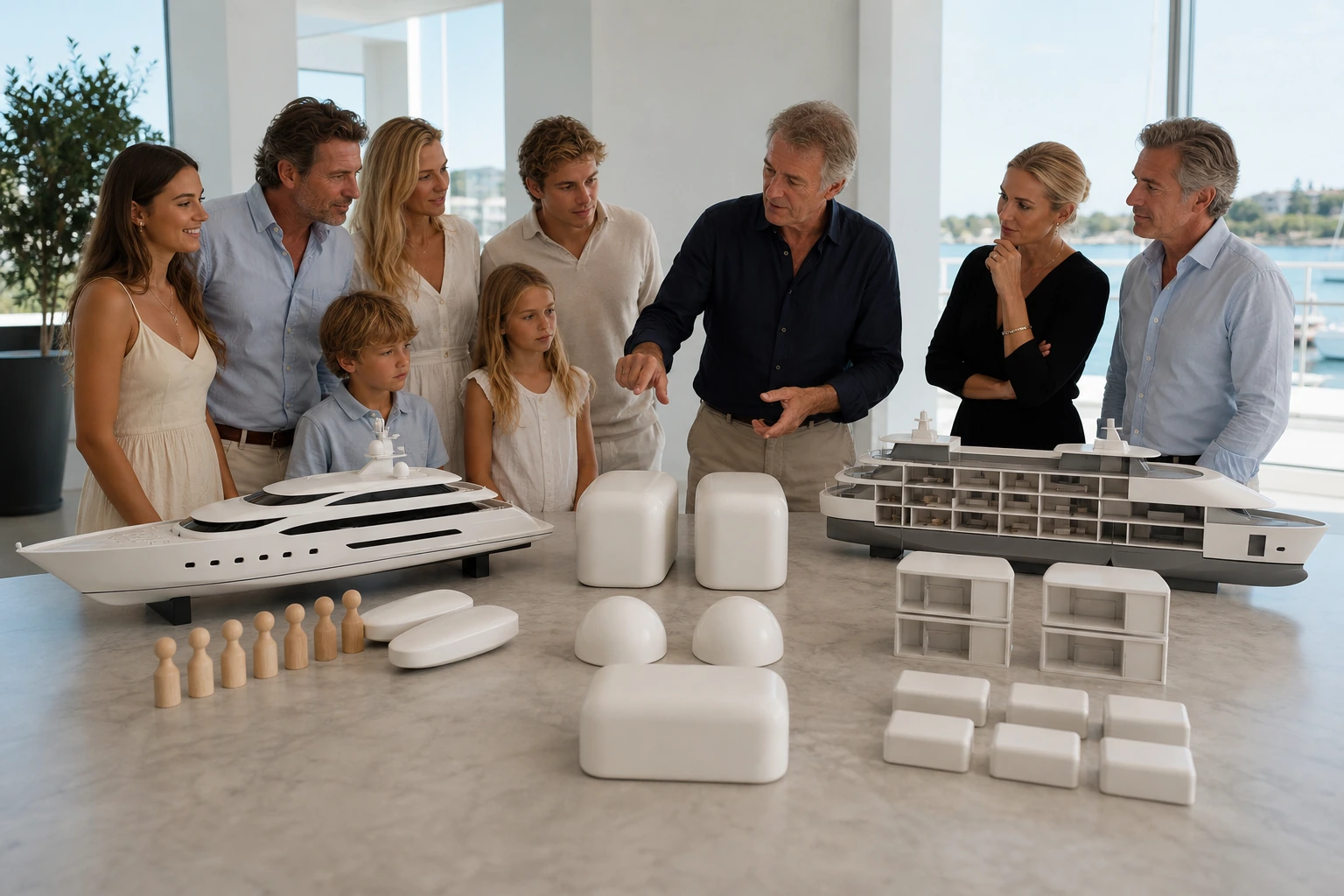
A large ship contains more systems, expertise and alternatives. One yacht failure can change the programme more sharply. Maintenance, backup, insurance and contractual remedy deserve attention.
When yacht or cruise wins convincingly
A harmonious family or group of friends seeking time together, water access, personal service and a flexible coastal rhythm can use a yacht fully. The vessel becomes part of shared life.
Couples, divergent interests, long distances, restaurant and spa choice, medical depth or independent days often favour the ship. Privacy then comes from the right suite and intelligent use of the vessel.
We compare operation, party and sea—not status. A yacht creates freedom through a common plan; a cruise through choice. The right journey is the one whose limits suit its guests.