
Provence at the right pace
Provence does not become luxurious by connecting the greatest number of beautiful names. It does so when the right property, a small number of landscapes and reserved encounters are given time.
Two bases are enough for a clear Provence journey
Choose the rhythm first: Luberon villages and markets, art and wine near Aix, the Alpilles around Saint-Rémy, or a quiet vineyard base. Only then does the right property become clear.
Winding roads, summer traffic and long lunches make distances larger than the map suggests. Two stays of several nights provide more depth than a procession of one-night hotel changes.
The city brings markets, architecture and restaurants together with sensible arrival logistics. It suits travellers who want culture and an urban evening rhythm before committing to the stillness of the countryside.
Between Aix and the Luberon, the hotel sits within an organically farmed wine estate devoted to art, architecture and wellness. It is a destination in itself, not simply an elegant village-touring base.
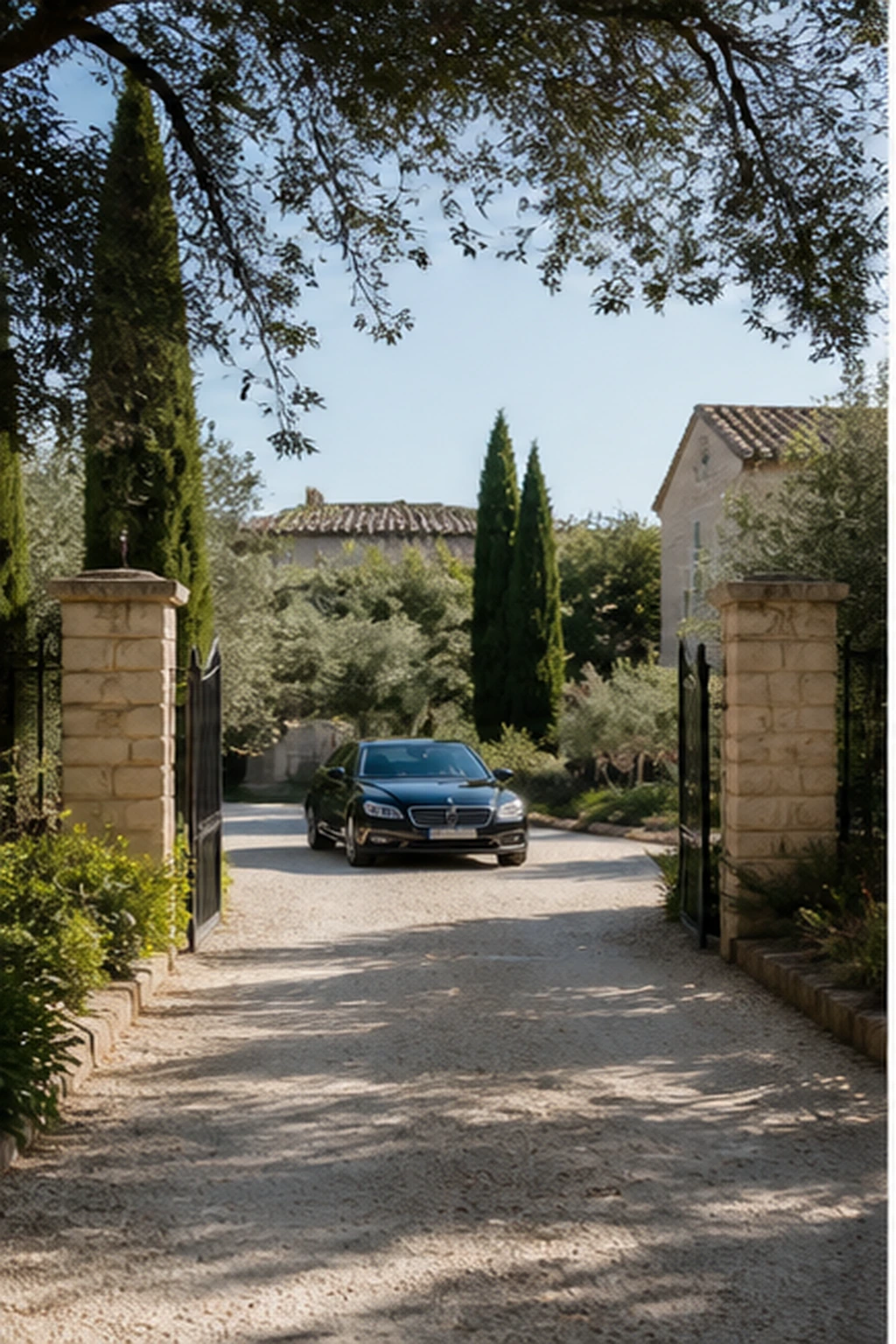
La Bastide de Gordes occupies the historic hill village above the Luberon. Guests who want to inhabit the view and village edges gain atmosphere; those seeking deep seclusion should choose a rural estate.
Before day visitors arrive and after they leave, lanes and terraces belong to overnight guests again. In return, steps, access, parking and compact rooms may require more scrutiny than at a modern resort.
Domaine de Fontenille describes a Provençal farmhouse and its vines in the Luberon. This style of stay suits guests willing to make cellar, garden and dinner the centre rather than chase a daily checklist.
Saint-Rémy, olive groves and pale limestone feel more compact and graphic than the Luberon. The area supports markets, art sites and dining, but not as a casual detour every second day.
Lavender is agriculture, not a stage set
Fields are cultivated and harvested. Tracks, entrances and plants deserve respect. A private visit with a producer explains varieties, distillation and economic reality better than a sequence of identical photographs.
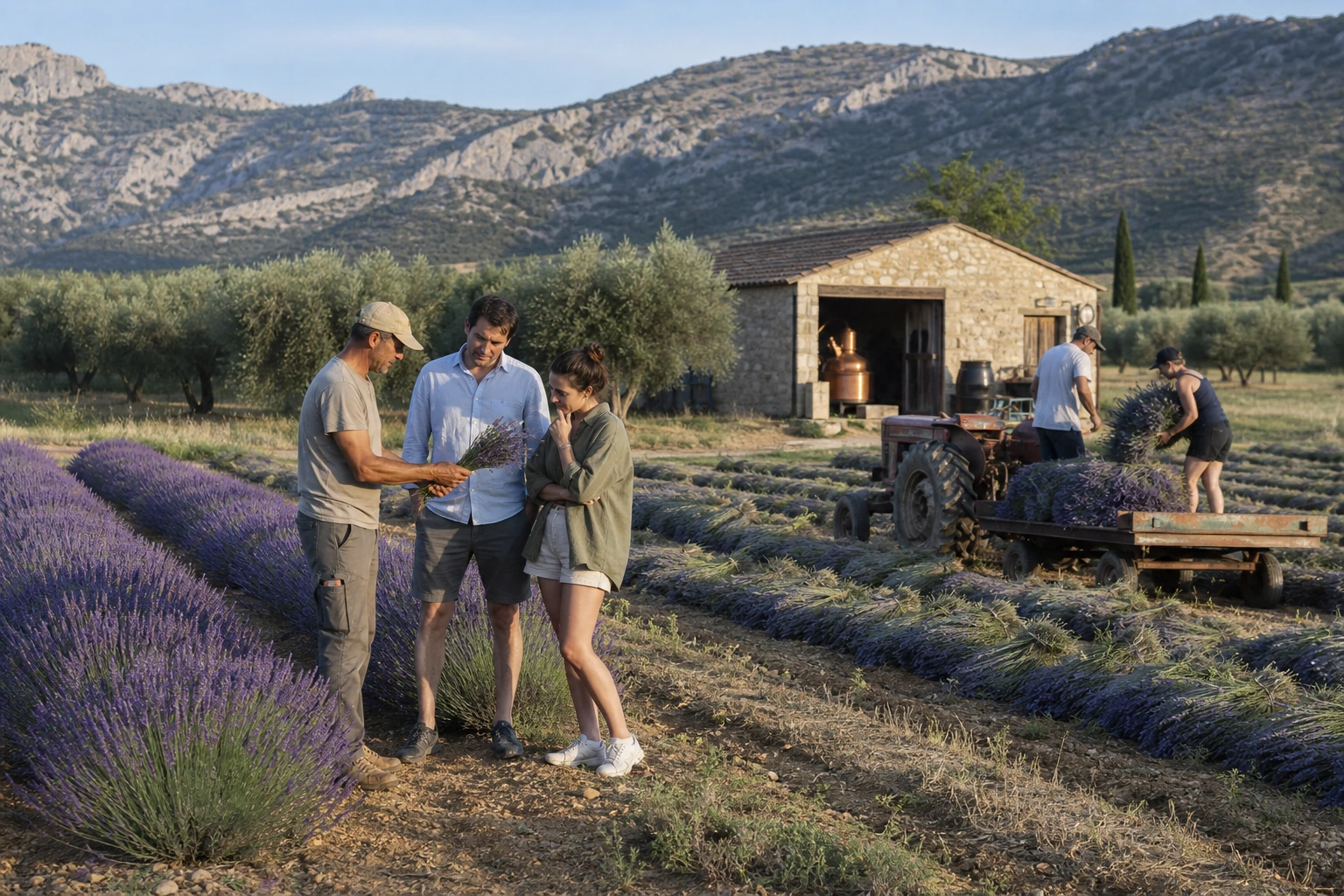
The Routes de la Lavande gives mid-June as a guide for lower areas such as the Luberon and Valensole, extending to late July at higher Sault. Weather and harvesting can move that window.
The plateau is known for long lines and open horizons. At peak time, viewpoints are shared. An early departure, driver and a few chosen stops feel more polished than an improvised circuit.
Higher ground may flower later and can be linked with producers, small settlements and landscape. It is not a quick addition to Gordes; the road itself becomes part of the day.
Spring brings green growth; autumn brings harvest and softer light. Travellers who release lavender as a condition often gain quieter villages, easier restaurant logic and more attention from hosts.
Heat and Mistral write the daily plan
In high summer, villages, markets and walks belong to morning. Midday asks for shade, pool or a long lunch; evening comes alive again. Effective air-conditioning then matters more than rustic romance.
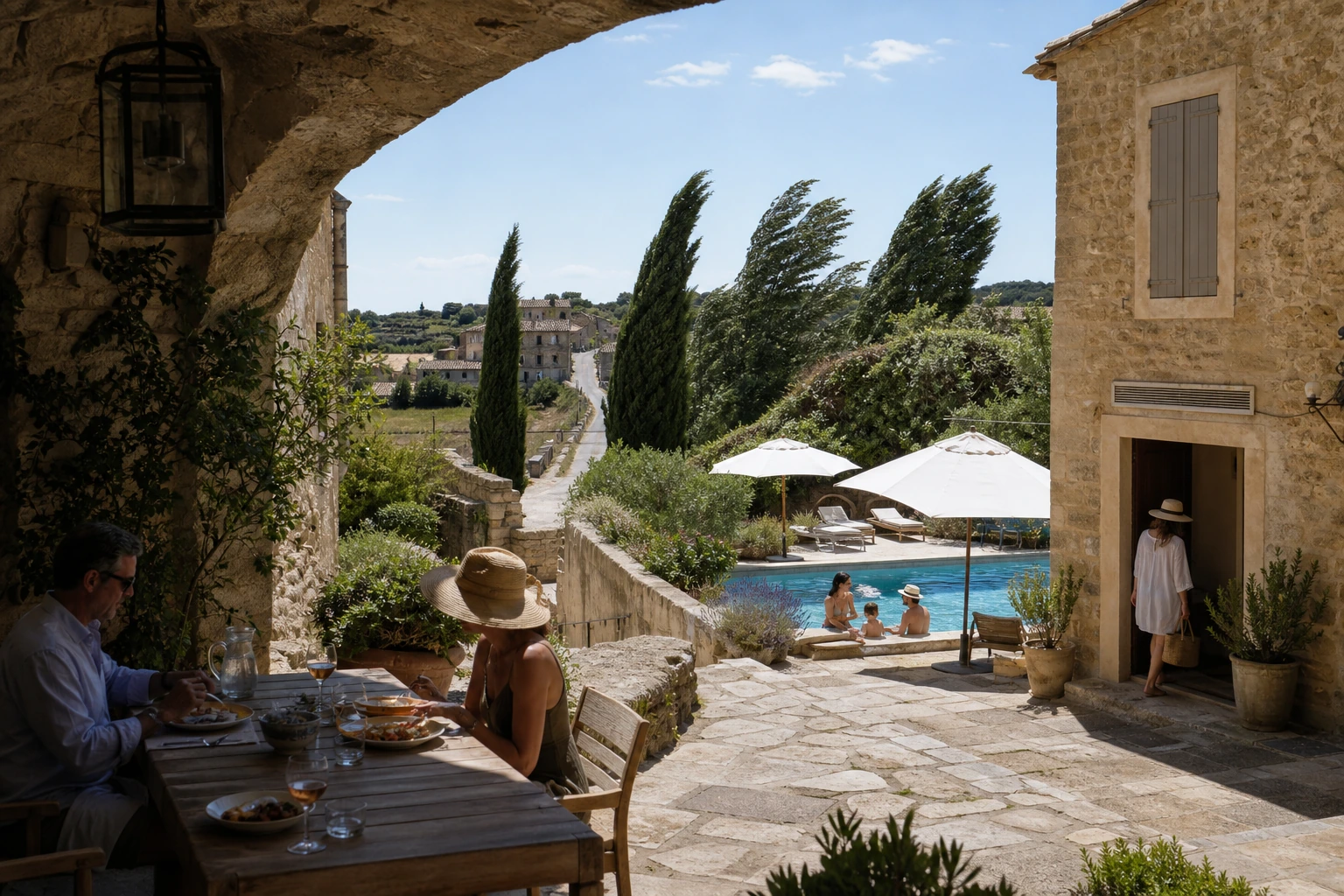
Wind can affect temperature, terraces, cycling and pool days while creating crystalline views. A capable property responds with sheltered spaces and flexible advice, not a promise of endless calm.
Wine, markets and lunch require selection
Vins de Provence identifies Côtes de Provence, Coteaux d’Aix-en-Provence and Coteaux Varois en Provence as three appellations. A serious wine day names area, style and producer rather than merely “rosé”.
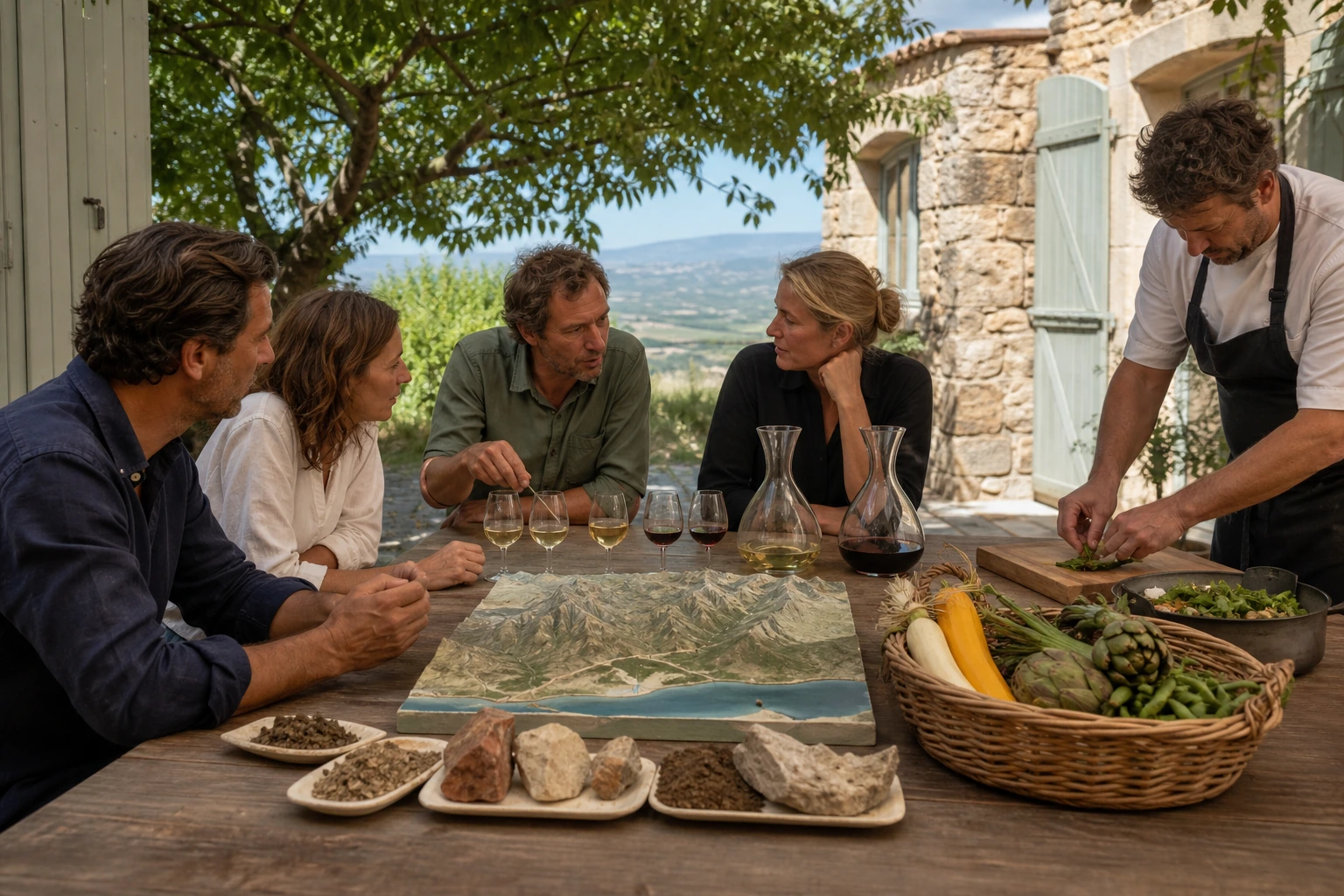
Wine estates are working farms. Opening, language, duration, vintages and private tasting must be confirmed. An agreed visit with a clear statement of interest is more generous than arriving unannounced.
Narrow roads, alcohol and leisurely lunches make improvised self-driving a poor combination. A local driver adds safety and realistic sequencing, although vehicle, access and waiting arrangements still need advance confirmation.
White and red wines, soils, altitude and coastal influence broaden the picture. The finest tasting places a small number of wines accurately rather than marching through an endless series of similar glasses.
A useful market visit joins producers and season to a purpose: picnic, cooking session or provisions for the house. Three markets in three days usually repeat the same surface experience.
Terraces, kitchen hours and approach shape the whole day. A long reservation should not be squeezed between lavender fields and cellar appointments. Choose one landscape, one visit and one very good meal.
Hotel, pool and villa must solve a task
Village access, absolute quiet, wine, art and family life are distinct functions. Antique furniture and scented gardens are insufficient; room position, cooling, noise, stairs and service hours must fit.
Size, shade, quiet, children's rules, service and wind protection decide. Guests planning a deliberate afternoon beside the water should verify these details rather than infer rest from a wide-angle photograph.
Kitchen, daily support, cooling, pool protection, access and response time determine quality. A well-run villa can be ideal for several generations; for two guests, a strong hotel often provides greater freedom.
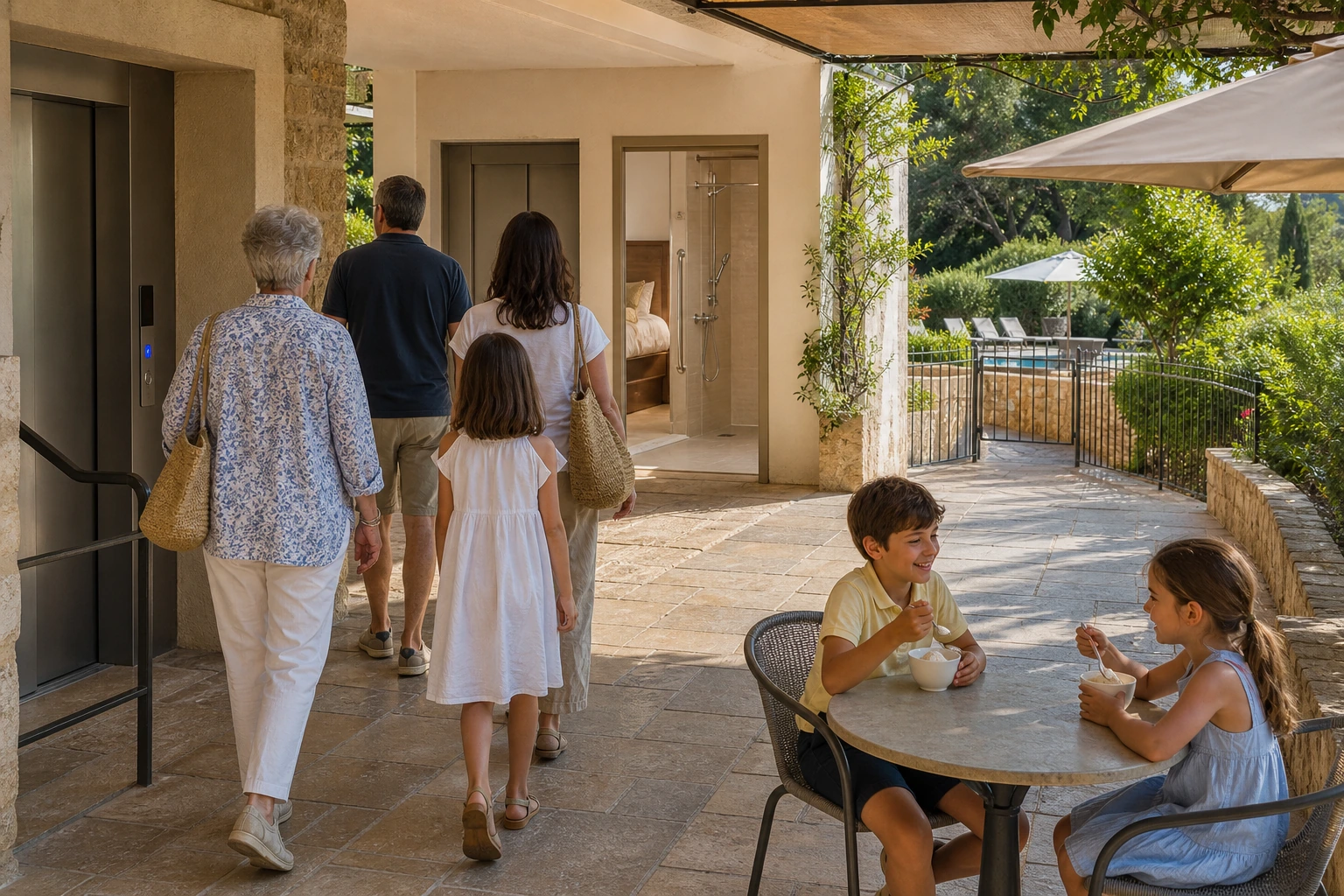
Children enjoy pools, ice cream and short discoveries, not the ambition of an adult route. One base with garden, flexible food and nearby outings delivers more Provence than daily hours in a vehicle.
Hill villages and historic houses can be steep, stepped and uneven. Confirm accessible room, lift, shower, restaurant route and vehicle approach specifically. The word “accessible” alone proves too little.
Arrival, departure and the arc of a week
Flights, TGV trains, car collection and summer traffic do not support a crucial cellar booking that afternoon. Keep the first reservation close and flexible; keep the last dinner within the final base.
Spend three nights near Aix for city, art and wine, followed by four in the Luberon or Alpilles for villages, landscape and stillness. Reverse the sequence if desired; preserve the concentration.
Travellers who need daily sightseeing counts, spontaneous peak-season tables or lavender guaranteed regardless of weather and harvest will fight the region. Provence rewards reservations and composure.
Select two landscapes, two properties with different roles and a few confirmed encounters. Leave open time between them. That is where an attractive Provence trip becomes convincing luxury travel.