
A serious wine journey rarely fails because of what is in the glass. It fails through three tightly timed visits, a late lunch, slow country roads and a chauffeur whose duty should have ended hours ago. Good logistics does not make the day denser; it makes it calmer.
Chauffeur, hotel base and subregion form the day
A driver is more than an alternative to self-driving. Vehicle, duty hours, local knowledge, parking and communication determine which estates can sensibly share one day.
The location of the base matters more than the region's most famous name. Map the real journey from the hotel entrance to each estate gate before committing to the accommodation.
Moving among distant zones morning, noon and afternoon turns a wine journey into a road trip. A compact radius leaves time for cellars, conversation, landscape and lunch without clock-watching.
Many visits are by appointment, seasonally restricted or reserved for confirmed guests. An impressive driveway is not a reservation, and a driver cannot improvise missing access.
Route planners omit the hotel forecourt, departure, estate gate, security, parking and the walk to reception. Scheduling should measure ready-to-received time, not just moving time.
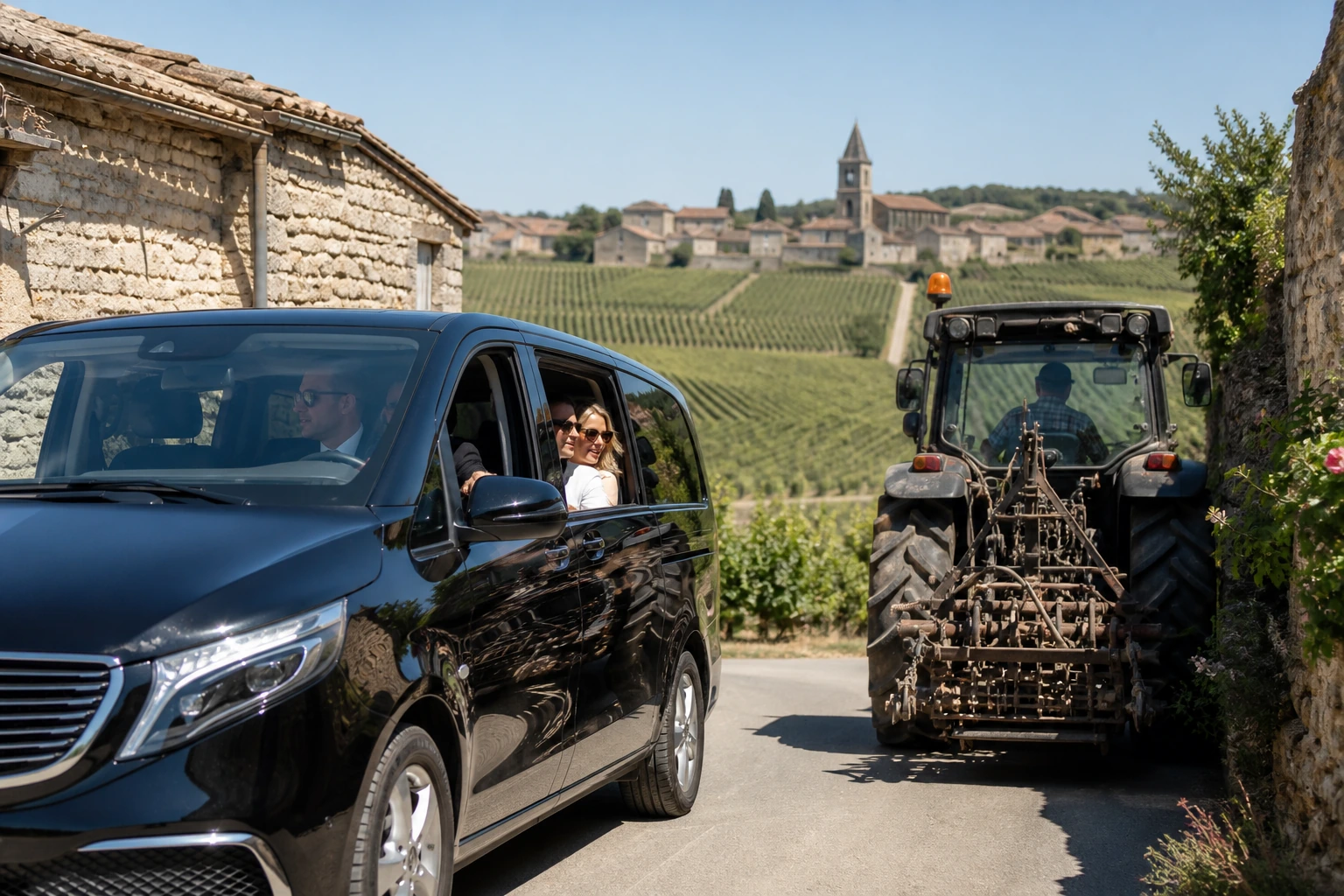
Narrow lanes, harvest vehicles, market traffic, roadworks and slow villages stretch short distances. A local operator checks the route for the actual vehicle and date.
Two visits, a clear format and an anchoring lunch
A hosted visit through vineyard and cellar can last far longer than a tasting-room appointment. Two substantial encounters and lunch usually deliver more than a hurried third badge.
A tour, technical tasting, library-wine session and producer lunch are different products. Duration, language, host, wines and any purchase expectation should be confirmed in writing.
An estate cannot endlessly move its team or other guests. Build a credible buffer before each appointment without depositing the party implausibly early at the gate.
After a late arrival or long dinner, an early technical tasting is rarely elegant. A later start, short introduction or free morning protects concentration and mood.
Restaurant location, service pace, menu and parking shape the afternoon. A formal wine-paired meal requires a different plan from a light pre-ordered lunch near the next estate.
Lunch with a producer may be the highlight, but often occupies several hours and cannot be replaced casually. Transfer, menu, drinks, dietary needs and finish time deserve main-appointment status.
A chauffeur does not remove responsibility around alcohol
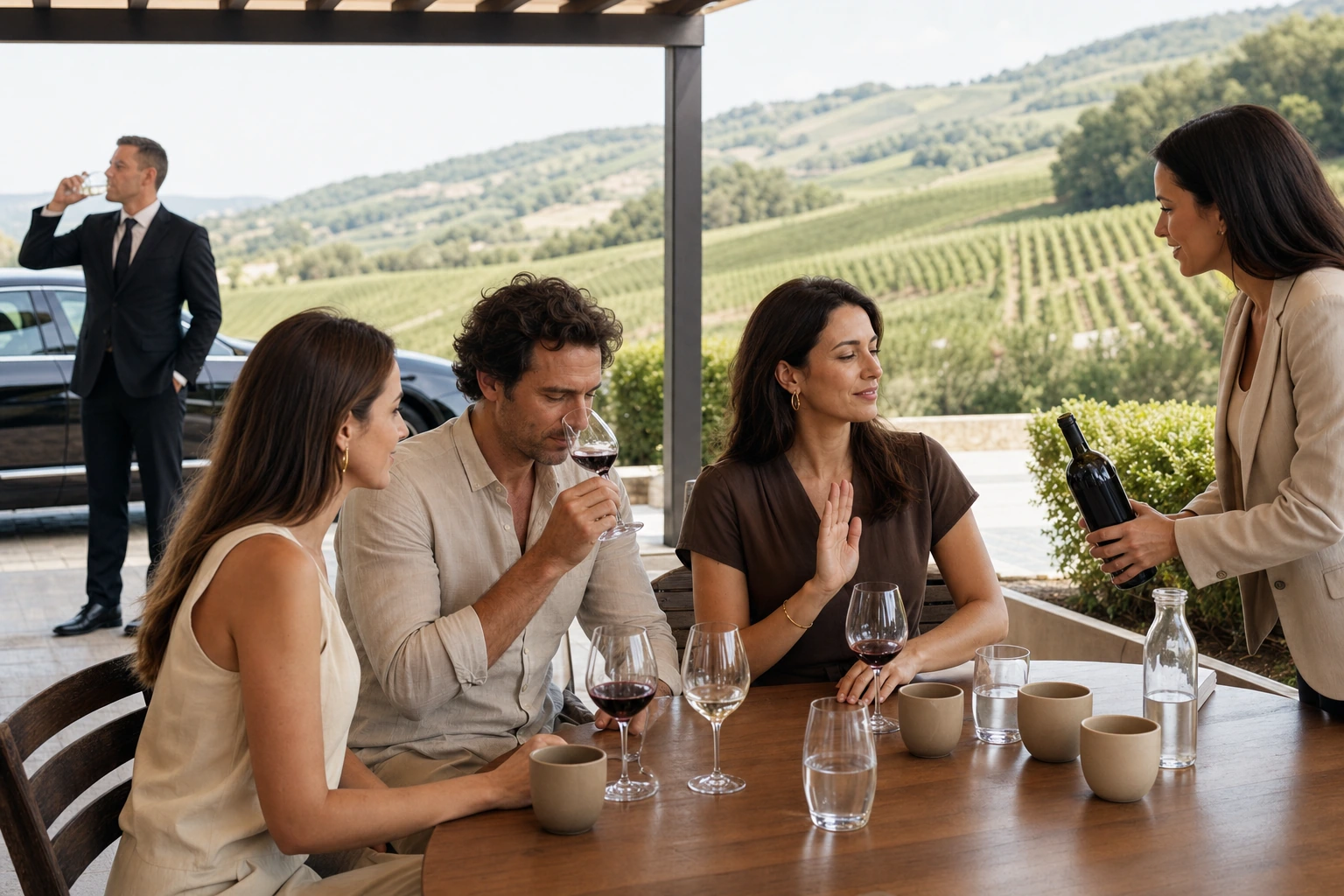
Guests need not drive, but alcohol remains psychoactive and is not risk-free for health. Water, food, small pours, spitting and alcohol-free participation are normal in a professional tasting.
Good hosts provide water and spittoons and respect a refusal. An itinerary should never turn quantity or pace of drinking into a test of commitment.
The role, operator's alcohol policy and accountability must be unambiguous. A supposedly polite sample for the chauffeur has no place in a professional driving day.
Private-hire, passenger-transport and commercial-insurance rules vary. The supplier should identify the operator, authorisation, cover and party responsible when something goes wrong.
Vehicle, luggage, accessibility and children
Four guests, day bags and wine cases do not automatically fit comfortably in a saloon. Seats, boot capacity, access, air-conditioning and load restraint should reflect real quantities.
Extra room can become a liability on tight approaches, in old towns and in small car parks. The local operator confirms height, length and turning circle for the route.
Legroom, suspension, a quiet cabin, individual temperature and accessible water matter more than a prestigious model name. The quoted vehicle—or a defined equivalent—belongs in the proposal.
High steps, gravel, cellars and long walks may exclude a visit. Mobility aids, safe seating and step-free alternatives require confirmation from both estate and transport operator.
Child restraint, age, weight, supervision and estate admission must be resolved in advance. A tasting is neither automatically family-friendly nor a childcare arrangement.
Driver, wine guide, working time and overtime
Road knowledge is not the same as informed interpretation of soils, vintages and style. Anyone promising both should explain qualifications, language and safe division of attention.
A separate wine guide can interpret the region and accompany hosts while the chauffeur focuses on road and vehicle. Their roles should complement rather than duplicate each other.
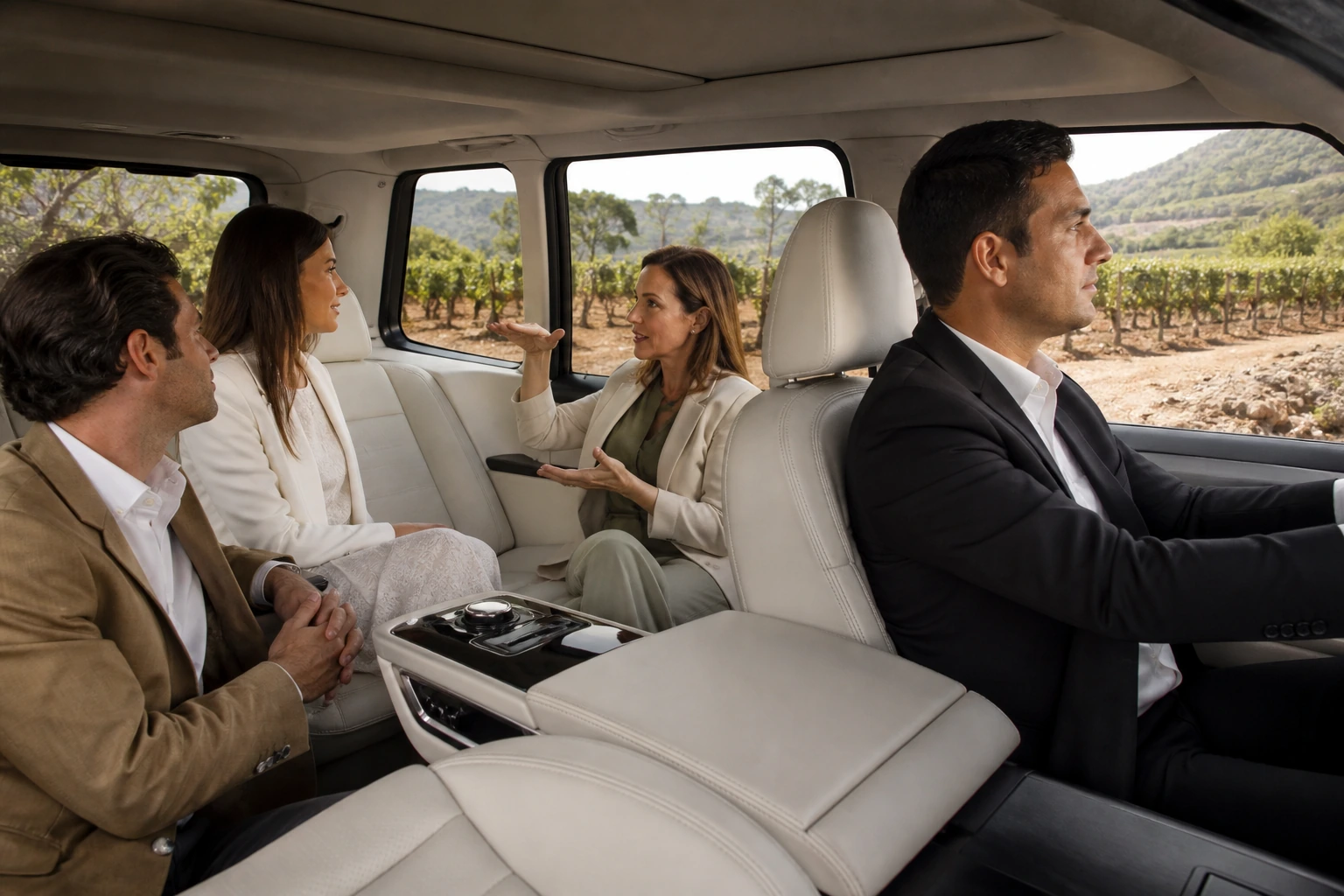
The driver does not disappear from the cost while guests taste. Waiting, parking, meals, availability and short-notice changes should be transparently priced.
Professional services may be subject to working, driving and rest rules depending on jurisdiction and vehicle. The operator determines applicability and schedules breaks or relief.
Early collection, three visits, a long dinner and return can create an unreasonable duty. A shorter day, nearer lunch or change of driver is often the more elegant solution.
Rate changes, minimum hours, supplements, driver meals and latest return are visible before confirmation. A keen day rate may look different after a delayed dinner.
Hotel choice, split stays, season and weather
A well-placed inn, village hotel or property with a thoughtful cellar reduces transfers and gives the evening repose. Not every night must be spent in the regional capital.
On a longer trip, two bases may outperform repeated returns. Move only when time saved clearly exceeds packing, check-out and luggage-transfer friction.
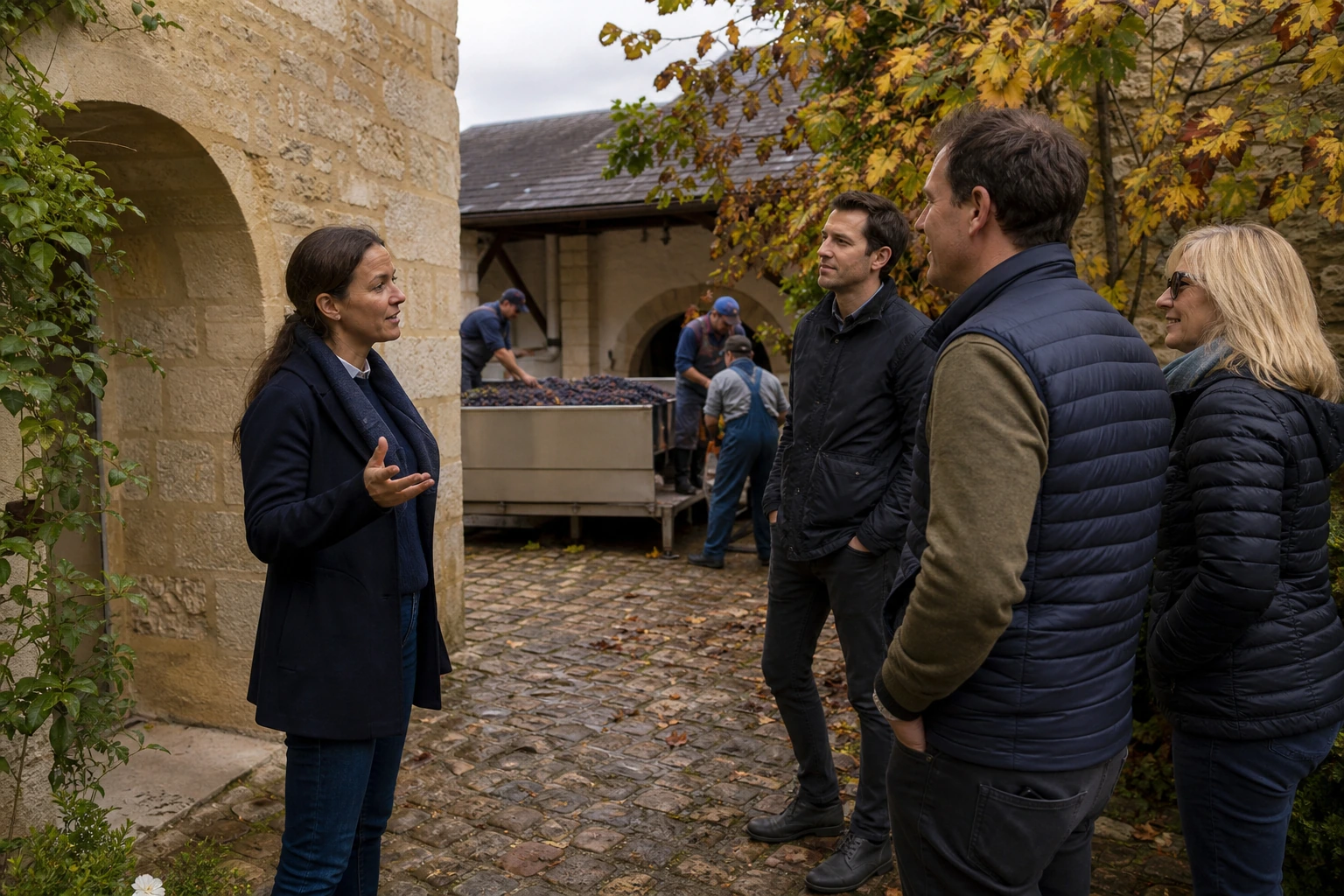
Harvest, blending, events and annual closures alter the availability of teams. Reconfirm time, host and content shortly before travel.
Sundays, Mondays and public holidays affect estates, restaurants and merchants differently. Search-engine hours are not a substitute for direct current confirmation.
Heat, heavy rain, snow, smoke or wind can change vineyards, access and journey time. A cellar session, covered lunch or early hotel return should be ready as a genuine Plan B.
Bottles need heat protection, records and a shipping plan
Wine should not remain in a hot vehicle or roll loose among luggage. Shade, temperature, upright protective packaging and a clear hotel handover are part of the operation.
Record producer, wine, vintage, quantity, price, receipt and intended transport. This prevents confusion and supports later shipping, insurance and customs questions.
An estate may deliver locally, export, or not ship at all. Before purchase, verify destination, lawful route, tax, customs, insurance, temperature control and claims process with the responsible provider.
Airline, airport, security and import rules differ and change. Packaging, quantity, weight and declaration require direct confirmation immediately before departure.
Diet, pauses, winding roads and missed appointments
Allergies, intolerances, pregnancy, medication and alcohol-free preferences should be addressed discreetly and early. An estate meal may accommodate them, but not without confirmation.
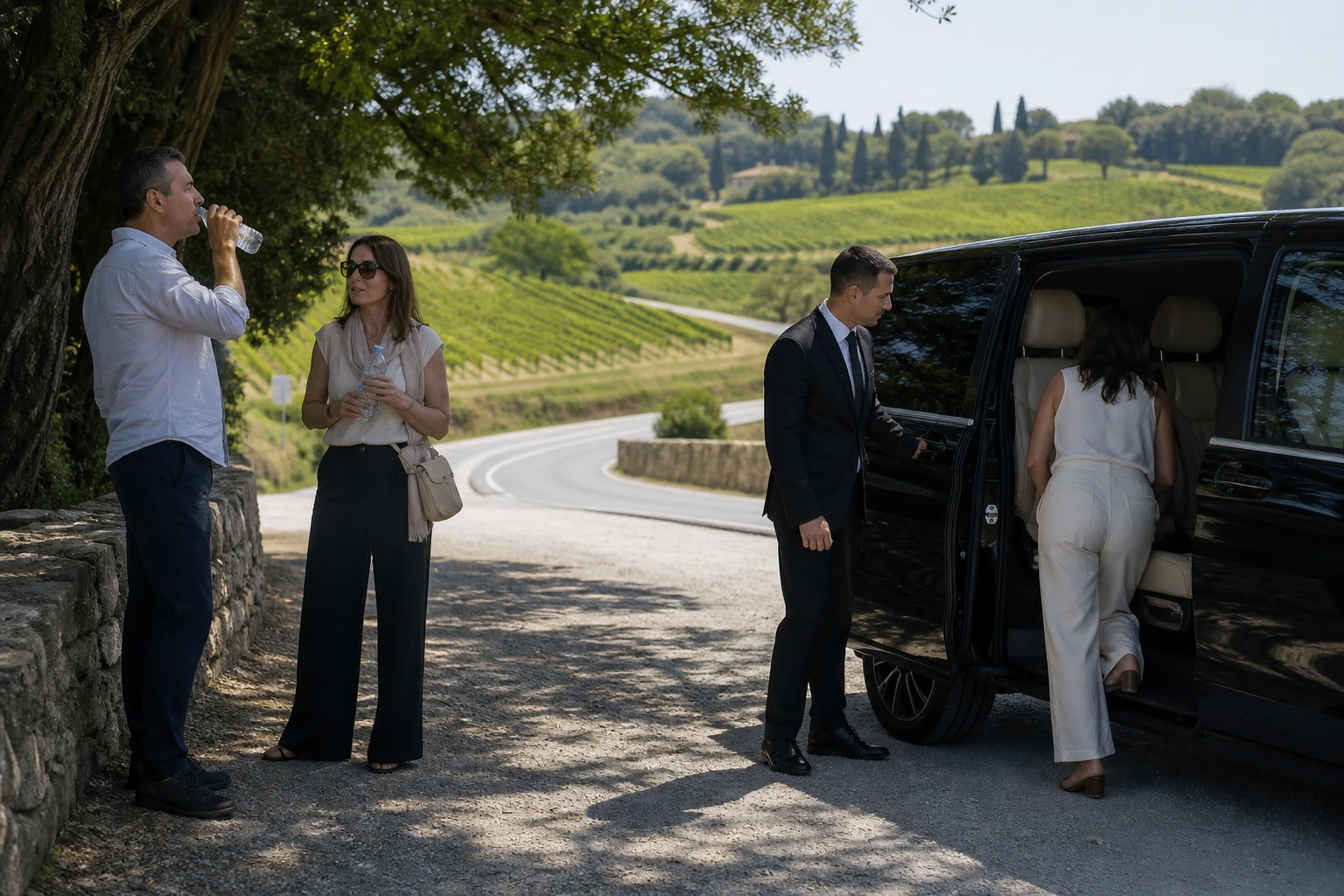
Drinking water, comfort stops and shade seem trivial until absent. The chauffeur knows suitable stops; the planner asks about needs without infantilising guests.
Motion sickness, back discomfort and fatigue can intensify on lanes. Seating, driving style, pauses and a more direct route should be discussed before the first appointment.
Who calls the estate, restaurant, driver and guests when a road closes Cancellation terms, discretion, replacement plan and decision authority should exist before pressure rises.
Quotation, sample day and questions before the deposit
Vehicle, driver, hours, kilometres, fuel, tolls, parking, waiting, overtime, night supplement, driver meal, lodging, tax and gratuity policy belong in one cost matrix. Vague extras are not luxury.
A ten o'clock departure, one deep morning visit, light lunch, second appointment and return before evening may be enough. Exact times follow region, season, hosts and roads—not a universal template.
Who operates and insures the service Which vehicle and relief driver What hours apply Are waiting, parking and tolls included How are breaks, overtime, night work, luggage, children, mobility, bottles, failures, data and emergencies handled
Self-driving does not replace curation
It may suit an alcohol-free journey, familiar roads and a loose plan. When tasting, unfamiliar lanes, tight appointments or fatigue combine, professional transport is usually the more responsible design.
A flawless car cannot turn three ordinary appointments into a great day. Selection, sequence, hosts and room for surprise remain the real editorial work.
The verdict
The best wine journey feels unorganised because it is organised precisely. A realistic radius, two worthwhile visits, a wise lunch, a lawful and rested chauffeur, and a credible Plan B give wine, people and landscape the space they deserve.