
Luxury without an audience
Quiet luxury is not an interiors trend. It begins when a hotel handles time, sound, personal data and transitions so carefully that the guest is not continually reminded of the effort.
Status appears in feeling, not a logo
Logos and floor area say little about a night. Acoustics, sleep, temperature, light, privacy and confidence that an agreement will hold are stronger signals.
A quiet property may be colourful, historic or opulent. Quiet luxury is the absence of pressure to perform, not a compulsory palette of stone, linen and beige.
Luggage in the correct room, suitable pillows, a prepared driver and a discreet bill depend on people and systems. Good invisibility must not erase their value.
Silence, data and recognition need technology and judgement
Insulation, door seals, lifts, night operations, connecting doors and terrace position matter. “Quiet” in marketing cannot replace an exact room assignment.
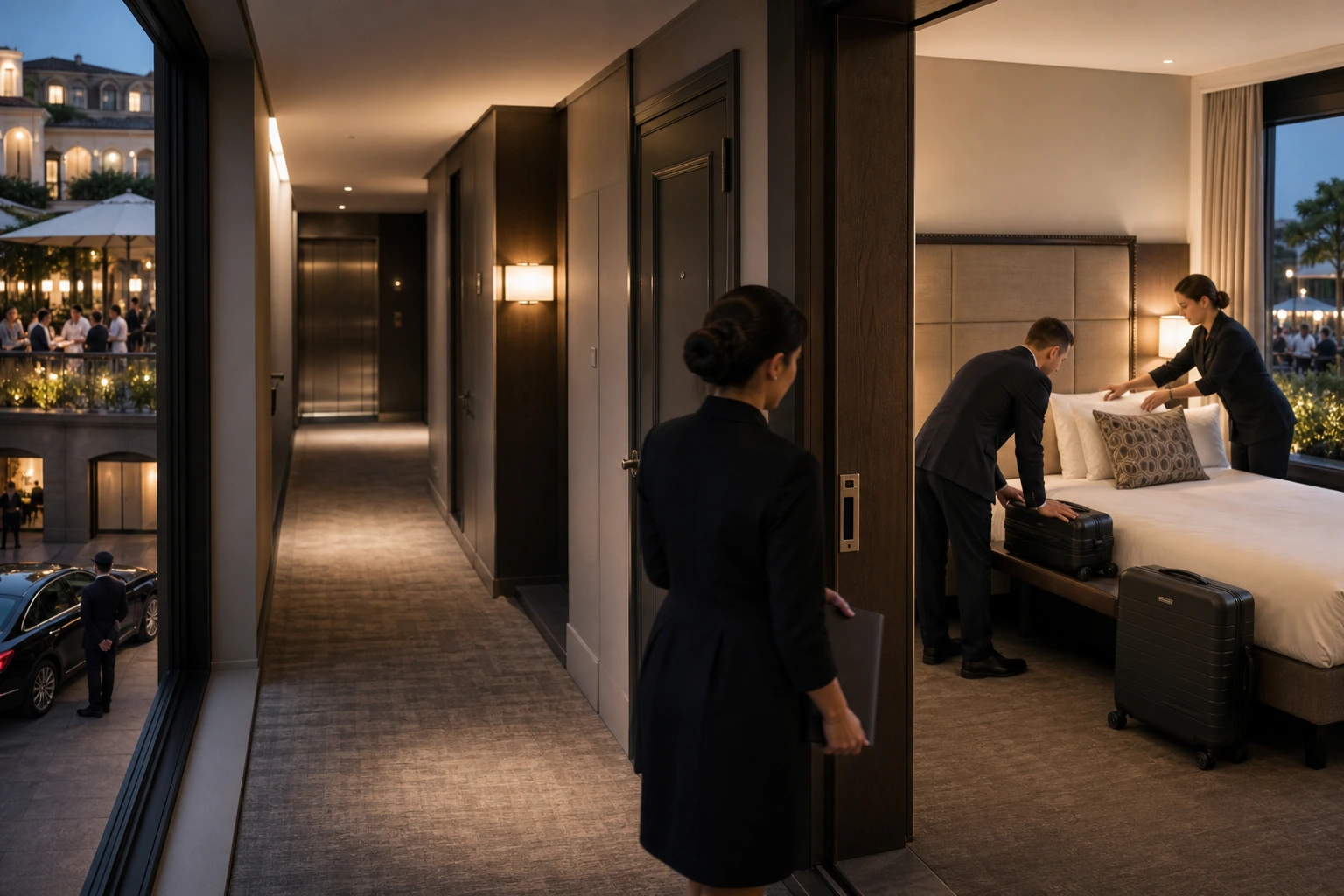
Names on signs, messaging channel, vehicle details, companions and special requests should travel only through the necessary circle. Discretion is a process, not a doorman's expression.
EU principles require purpose limitation and collection only of necessary personal data. Remembering a preference may help; storing it indefinitely without a transparent purpose is not luxury.
A favourite drink may delight; unexpectedly detailed knowledge of private habits may not. Strong hospitality distinguishes welcome from surveillance.
A private entrance can reduce exposure. Identity, security, customs and local registration remain. Elegance reduces friction, not responsibility.
The pre-arrival preference note should have an owner, purpose and expiry. Separate operational facts such as allergies or mobility from optional tastes, and let the guest correct or remove them. The most discreet recognition is accurate, proportionate and invisible to colleagues who do not need the information.
Material, place and sustainability without theatre
Some exceptional spaces appear modest in images and complete in person. Changing light, material under the hand and true quiet are harder to post than experience.
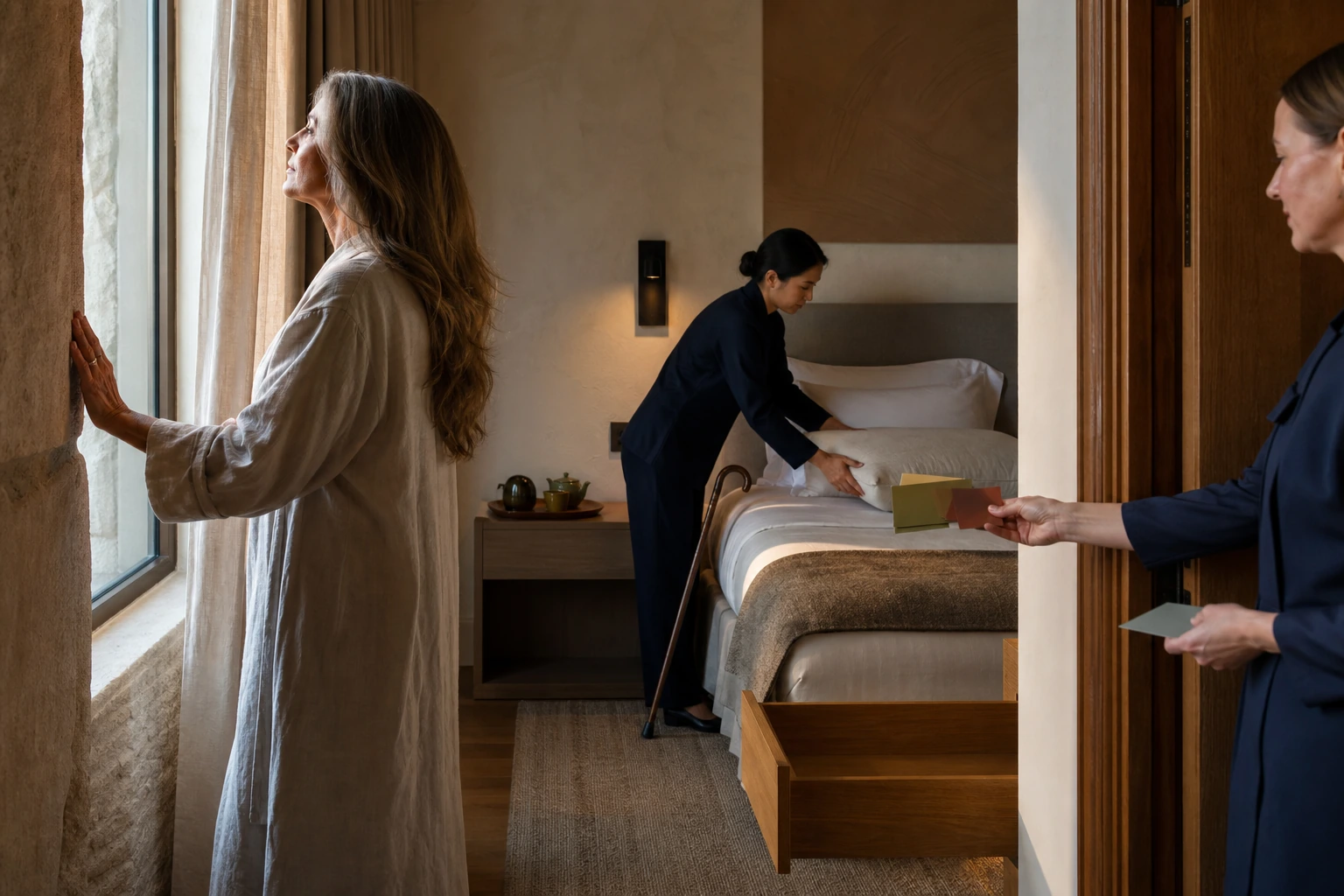
Natural, handmade and local remain claims until source, workshop and care are explained. Patina can show quality; artificial ageing merely supplies scenery.
A few objects in a salon prove no relationship with place. Local employment, purchasing, craft and respectfully interpreted history offer stronger evidence.
Low occupancy, large spaces and private transfers may be resource-intensive. GSTC separates sustainable management, community benefit, cultural heritage and environmental impact into distinct criteria.
A cared-for chair, refinished timber and repaired hardware reveal attention. Constant renovation for the next trend may express the opposite of permanence.
Ask for evidence at the level of the claim. “Local” may mean designer, maker, material or merely visual inspiration; “sustainable” may refer to one product while ignoring energy, water or labour. A serious hotel can name suppliers, repair practices and community relationships without turning them into moral theatre.
Service recognises the right moment
Not every pause needs a question. A capable team reads whether the guest wants direction, speed or quiet while remaining easy to reach.
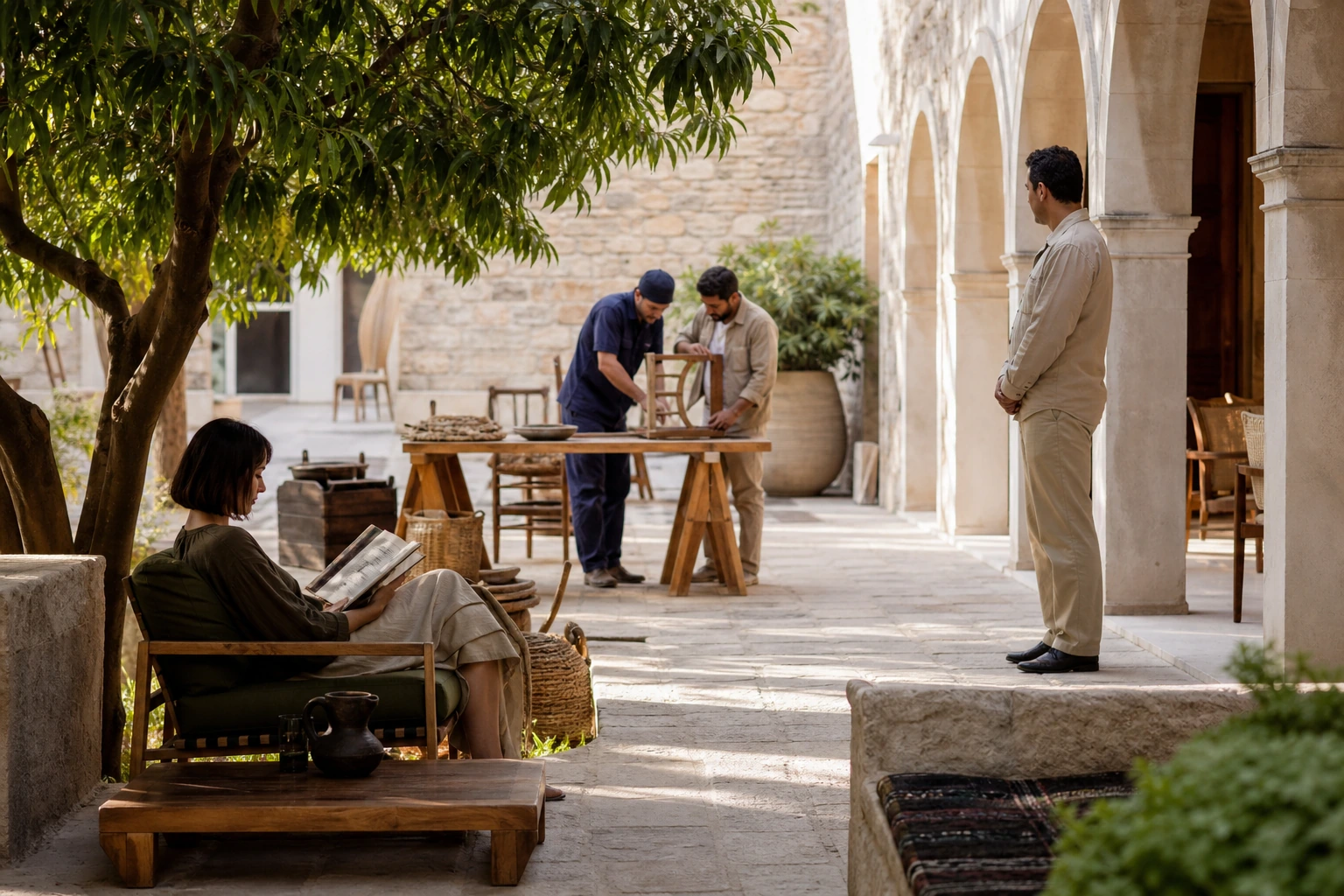
Initials on every object and excessive surprises direct attention back to the hotel. Precise personalisation solves a real need and then recedes.
Quiet luxury appears in a calendar that does not need to prove its exclusivity. Open hours do not diminish driver, spa or restaurant; they enlarge the stay.
Its quality becomes clearest after failure. A noisy event, missed transfer or exposed pool cannot always be prevented, but ownership should be immediate: one contact, a credible alternative, no repeated explanation and a follow-up proportionate to the disruption. Recovery without drama is a discreet form of status.
Test suite, pool, restaurant and villa spatially
The largest category may sit above the bar, beside the main path or opposite a viewing terrace. Position, sight lines and sound outweigh the grandest room name.
Views from paths, neighbouring rooms, drones and opposite slopes require checking. Service access and pool maintenance belong to real privacy too.
Table spacing, acoustics, light and a bill without theatre matter more than constant explanation. A discreet table can still possess atmosphere.
Arrival, changing, relaxation space and treatment timing shape privacy. A private room helps little if the path to it crosses a crowded pool.
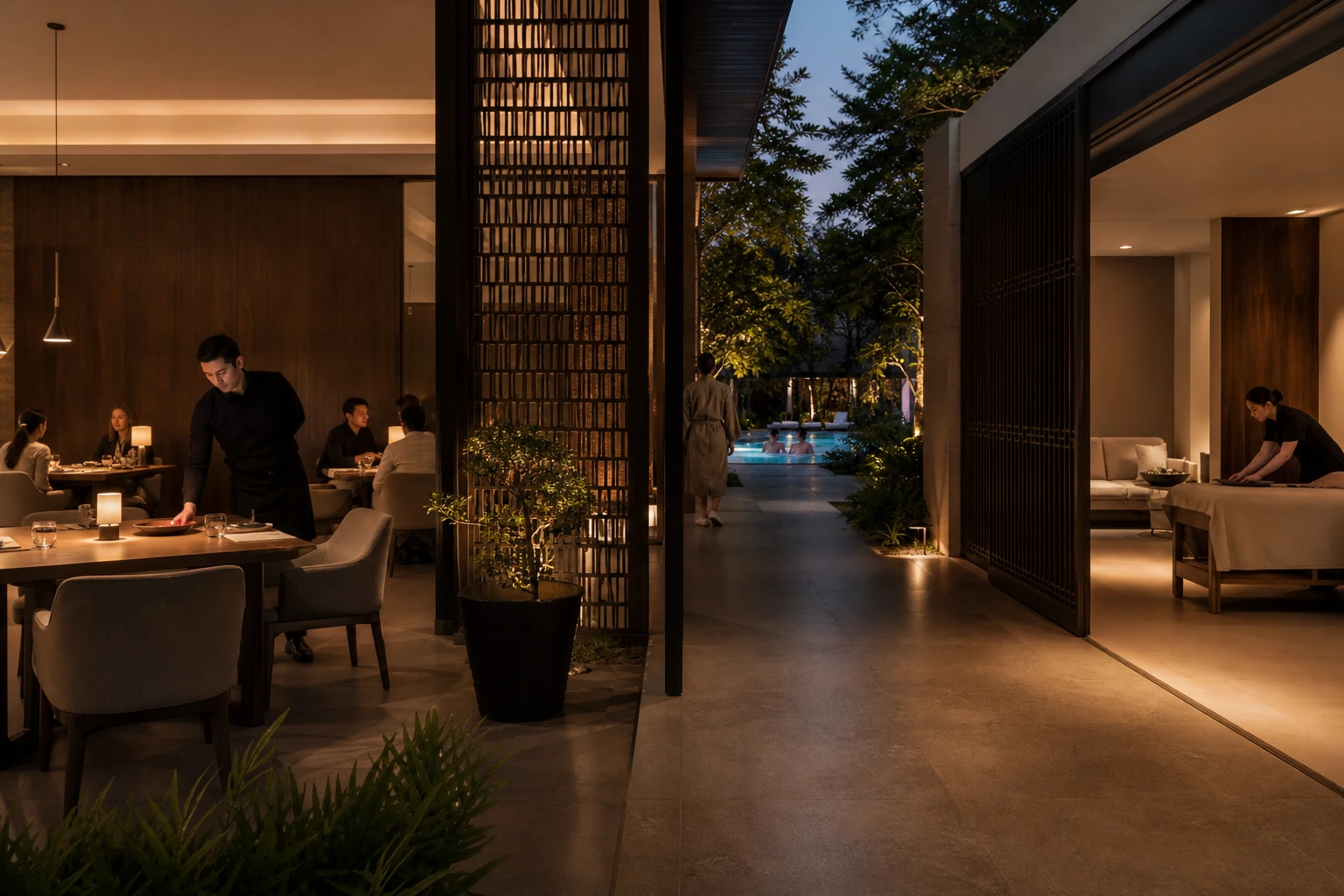
It offers control of space while requiring staff planning, security, kitchen and response. Invisible service only works with clear boundaries and respectful employment.
Exclusivity prevents neither generators, boats, music nor works. Remoteness and acoustic calm deserve separate assessment.
For sleep-sensitive guests, request the exact room stack and map likely sound by hour: deliveries, breakfast preparation, lifts, connecting doors, terrace closing, pool service and morning housekeeping. A daytime inspection or generic decibel claim cannot represent the full night; position and operating schedule belong together.
Vehicle signage, conversation, telephone calls, route and waiting position require tact. The finest driver knows much and displays little.
Family, clothing, price and visible luxury
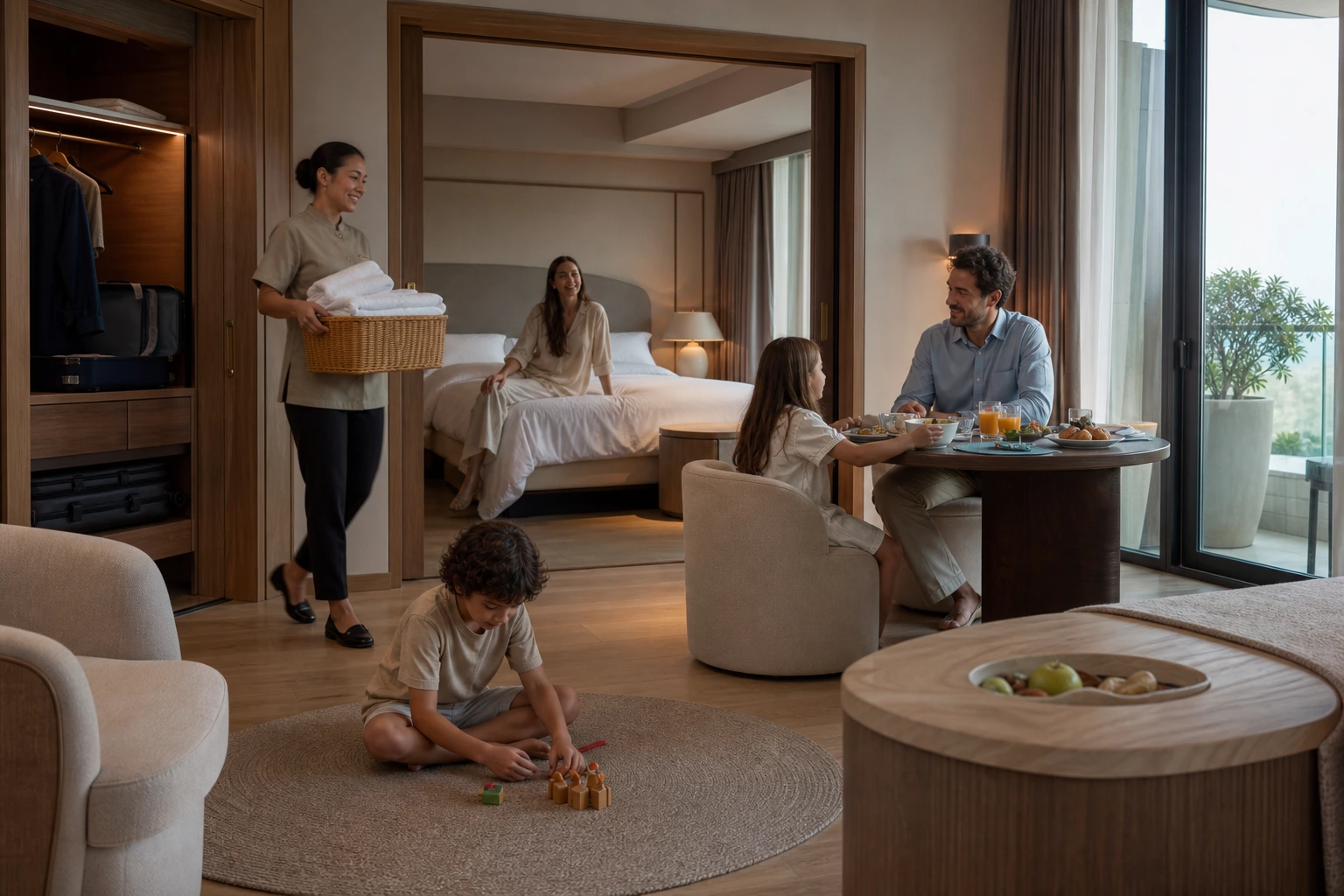
Discreet family luxury means nearby rooms, flexible food, safe space and staff without visible irritation. Silence should not arise from constant fear of disturbing others.
A logo-free wardrobe may be pleasing but does not define travel quality. Ease of arrival, careful laundry and possession without display matter more.
Quiet luxury is neither cheaper nor automatically better. It justifies price only when calm, space, service, provenance and reliability are genuinely stronger.
A grand lobby, gala, beach club or legendary bar may be the reason to travel. Discretion is a preference, not a moral rank.
The questions behind the slogan
Which room is acoustically calm Who overlooks terrace and pool How are preferences stored Where do materials originate Who benefits locally What happens after a failure
The brief records communication, names, arrival, room position, publicity and boundaries of personalisation. It remains as concise as possible and as precise as necessary.
Do not seek a hotel claiming quiet luxury. Seek one that treats sound, data, people, material and time with judgement. Status then resides in experience, not proof.