
Slow travel is not about moving at low speed or surrendering comfort. It gives a journey enough time for sights to become relationships and context. The real luxury is not inactivity, but a rhythm in which place, people and the traveller’s own attention regain their weight.
Fewer stops do not automatically create depth
A week in one hotel can be as superficial as a rapid circuit. Depth appears when duration, daily radius and access support one another. A guest completing a different private excursion every morning may not change rooms, yet still travels according to the logic of a checklist.
A vacant diary is not inherently rewarding. Thoughtful planning gives each day a light structure: a conversation, market, path, studio or recurring lunch. Space remains between those anchors without turning boredom into a compulsory virtue.
Why does this particular place deserve more time Architecture, music, food, landscape, craft or family history may provide the answer. Without a personal line of enquiry, “more nights” becomes a mathematical rule. With one, the stay gains internal direction.
The right duration belongs to the place
Four nights can feel generous in a compact wine region and merely introductory in a metropolis. Islands, national parks and remote valleys also lose time to access and weather. The useful measure is not a universal minimum but the number of undivided days between arrival and departure.
A five-night stay often contains only four complete days. A late flight, room access, jet lag and early onward journey reduce it further. Count usable days rather than hotel nights. Honest time arithmetic is the first discipline of slow travel.
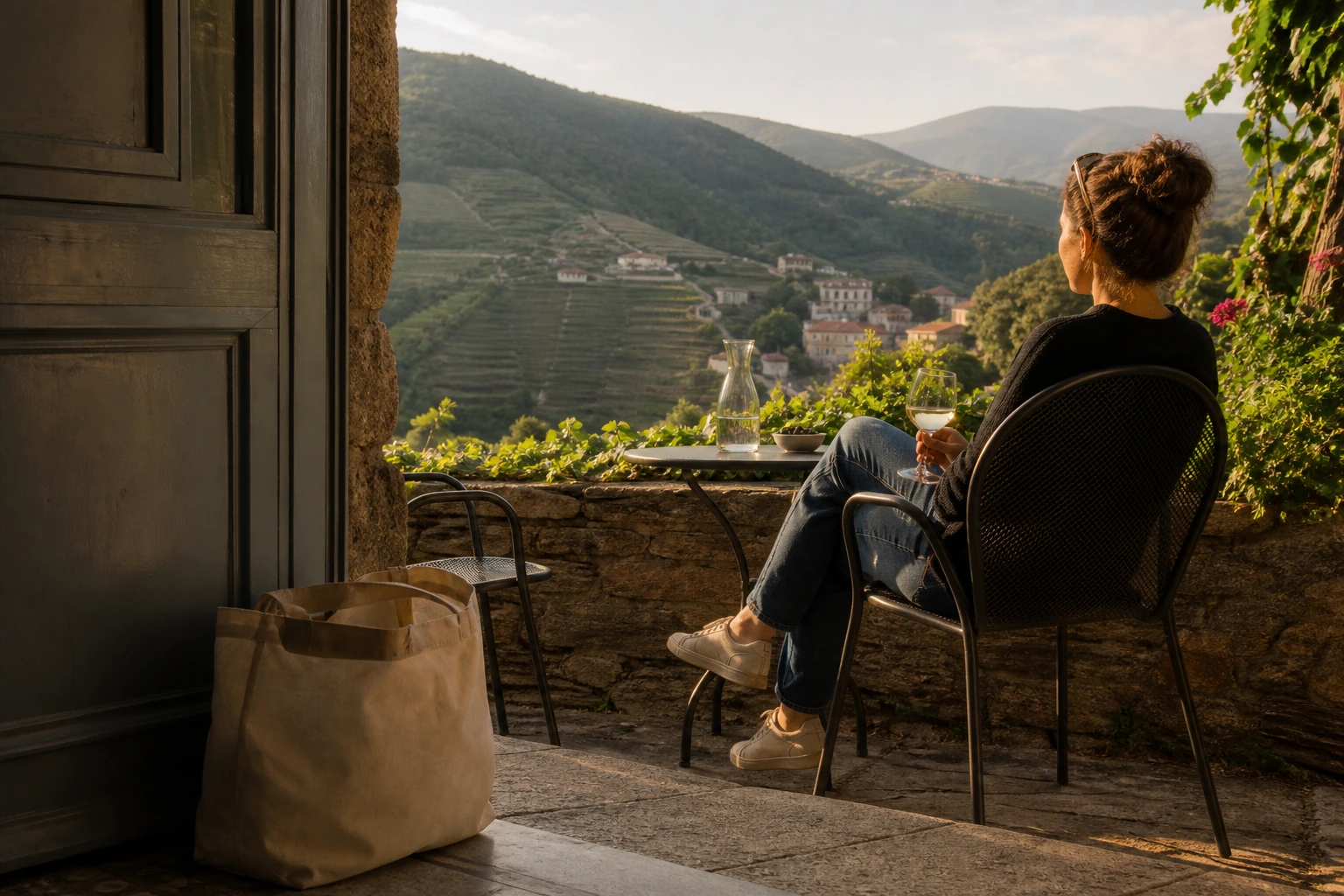
A base requires more than a beautiful hotel
The ideal base is not necessarily the most theatrical property. It joins quiet, walkability, food and a sensible radius. A remote retreat encourages depth when landscape is the subject; it prevents it when every encounter with local life requires a long transfer.
Define how far an ordinary day should travel. Thirty minutes may open a city and its hinterland; two hours each way makes every meeting an expedition. A small radius creates repetition, and repetition is often where a place begins to feel intelligible.
The second breakfast in one café changes the relationship. The table, hour and perhaps a name become familiar. Luxury travel was long sold through constant novelty; slow travel allows recognition itself to become a privilege.
A good host protects the diary from excess
Concierges and guides should not fill every gap. Their value lies in opening the right door and then stepping back. Ask them to identify what is time-critical, what can remain spontaneous and what may be abandoned. A responsible itinerary includes hours no one has tried to sell.
Meeting the same informed person across several days removes the need to restate interests. Discussion can move from facts to patterns. Continuity only works when expertise, temperament and language fit the travellers; exclusivity alone proves nothing about quality.
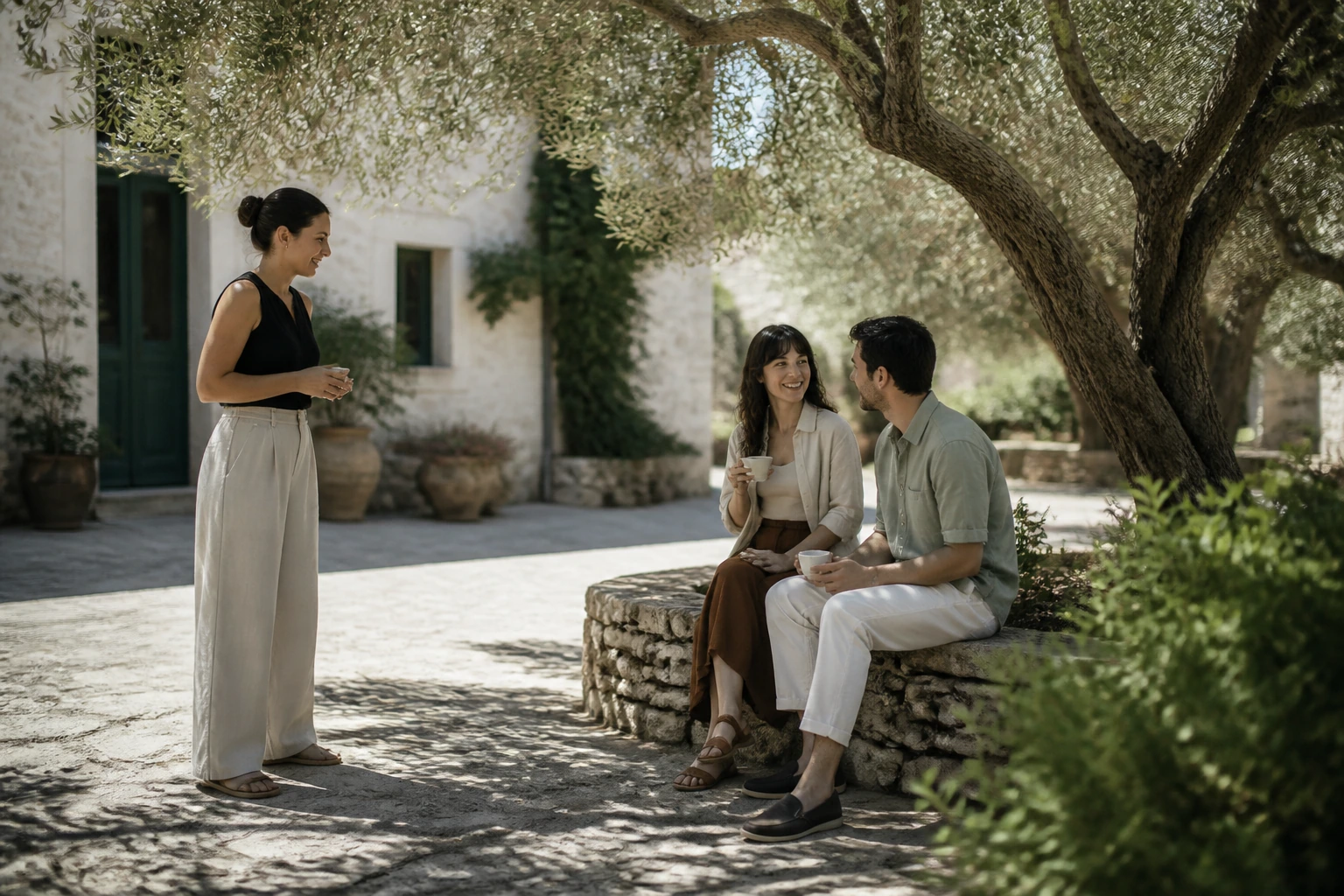
Begin with a walk, map and unhurried meal rather than the densest tour. Establish neighbourhoods, opening patterns, distances and local habits. Guests can then move independently and decide which thread deserves to be followed.
Cultural access must respect a working place
Studios, archives, religious buildings and private homes are not stages that open on command. Confirm host, rooms, duration, language, photography and any sales expectation. Genuine access respects working hours, ritual and boundaries; it does not require a famous person to validate it.
A workshop visit improves through precise preparation. Which technique interests the guest What may be handled Is interpretation needed Can work be purchased Avoid staged authenticity in which production is repeated only for cameras. The visit should not distort the enterprise it claims to honour.
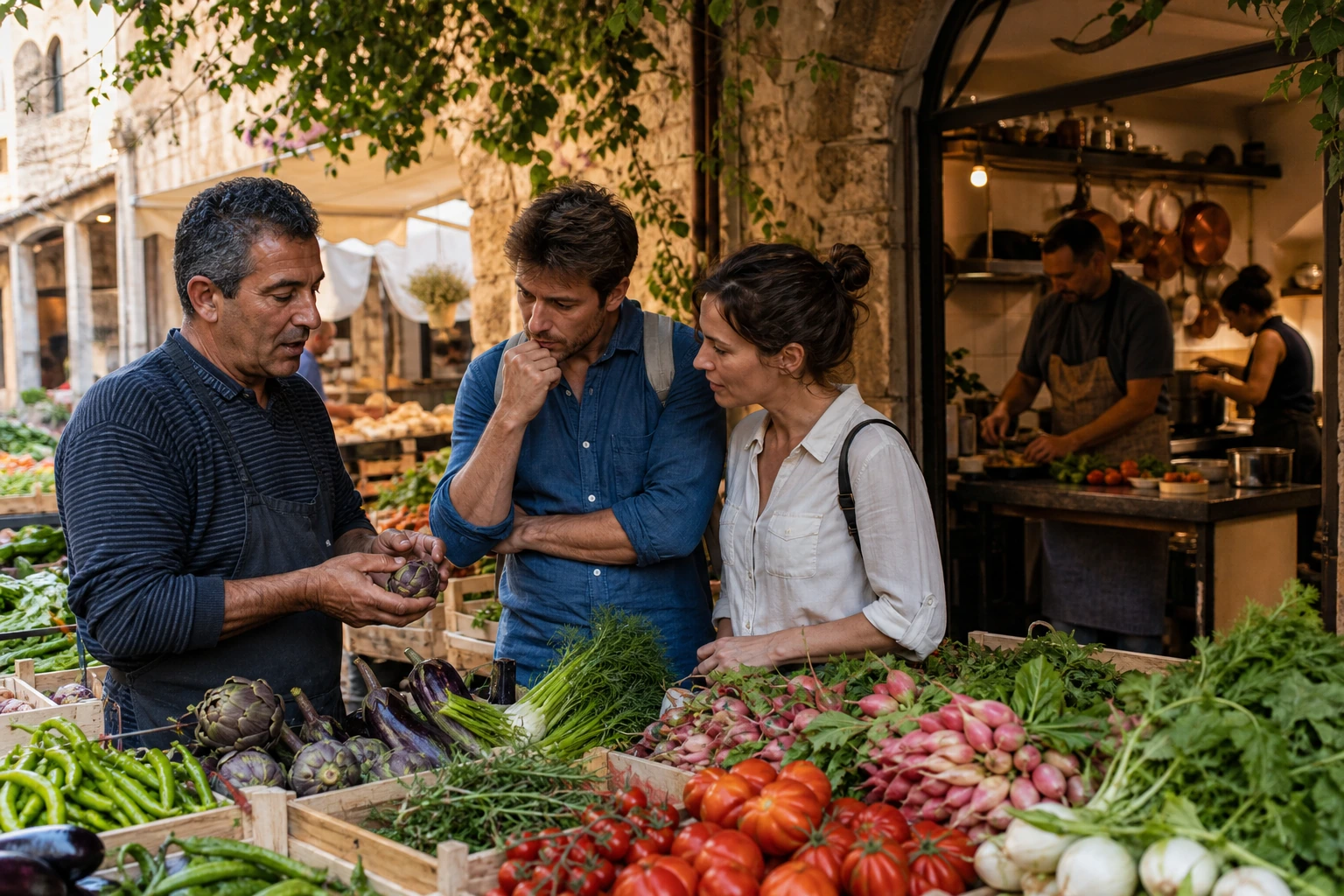
Without explanation it remains a colourful backdrop. With a chef or knowledgeable resident, season, origin, price and eating habits become visible. Not every sample needs to become a souvenir. Observation followed by one shared dish can reveal more than a bag of products.
Meals grow more interesting when connected to season, landscape and producers. Do not schedule only prestige tables. A recurring neighbourhood restaurant, family operation and shared cooking moment may together form a more precise portrait than a procession of formal dinners.
Season is not background scenery
Harvest, heat, rain, snowmelt, religious calendars and local holidays reshape opening hours and daily life. Slow travel does not demand universal off-season travel. It asks the visitor to understand the chosen moment and not romanticise an empty town as an undiscovered privilege.
Fewer visitors can bring calm and better conversation. Hotels, ferries, restaurants or mountain lifts may also close. Confirm what actually operates, how weather affects the stay and whether a supposedly private experience requires staff to be mobilised purely to preserve an illusion of solitude.
Rail can turn transit time into place time
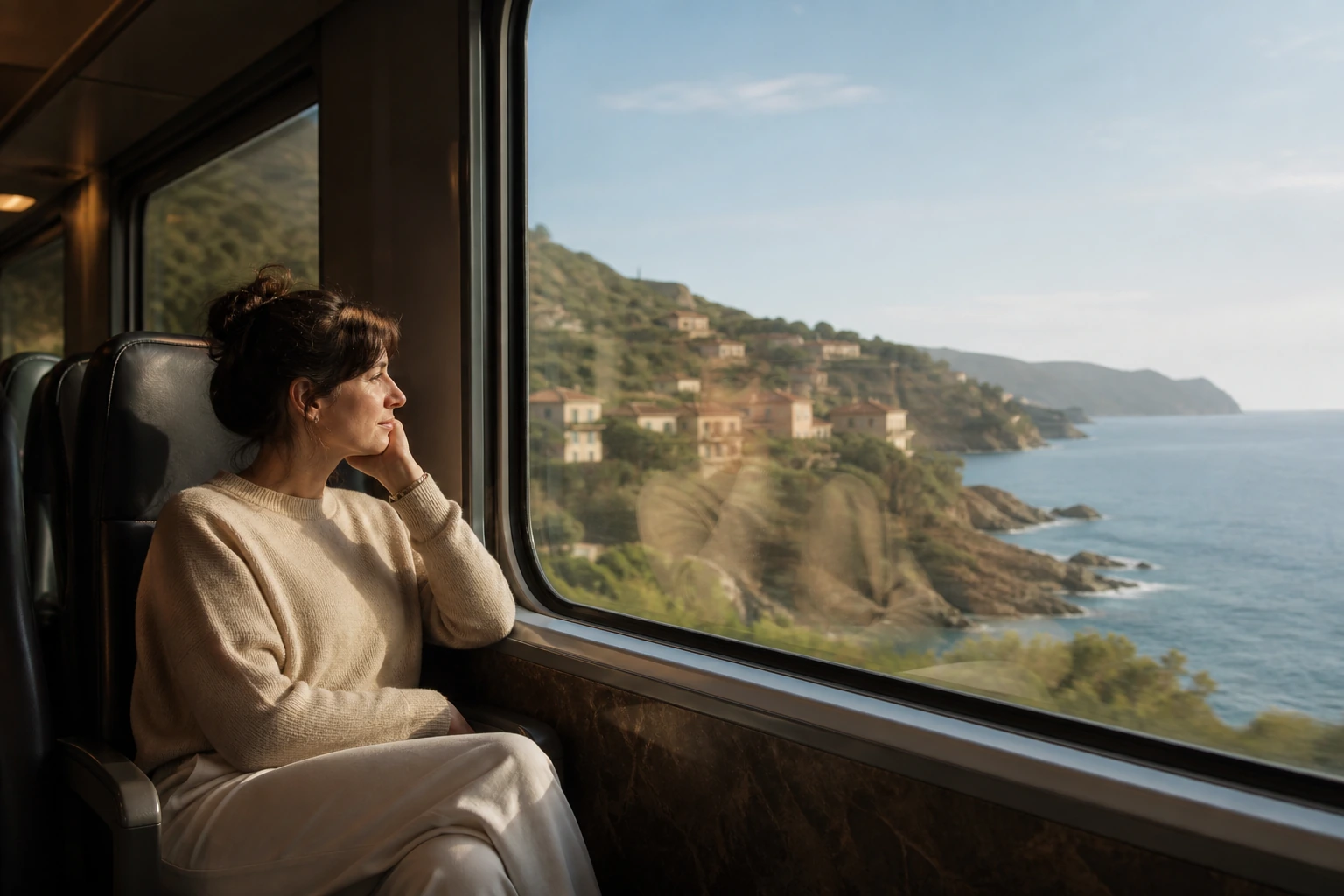
The right train reveals landscape, permits movement and often arrives centrally. It is not automatically superior for every route. Timetable, changes, luggage, accessibility and disruption matter. Compare door-to-door time and comfort rather than adopting a transport ideology.
Every additional flight, check-in and vehicle fragments attention. A direct connection followed by a longer stay can reduce friction and repeated logistics. Its climate effect should not be asserted casually: route, cabin, load, vehicle and methodology require defensible data.
Packing, settling bills, travelling and learning a new building consume mental energy. Even a short move breaks rhythm. A second hotel should unlock a distinct landscape or purpose, not merely provide another design language for the camera.
City and coast, highland and valley, mainland and island can offer a meaningful contrast. Each base still needs enough time to establish its own rhythm. A split stay is compatible with slow travel when it deepens two different environments rather than collecting five addresses.
The room must support inhabiting, not just sleeping
Over seven nights, storage, daylight, a proper chair, laundry, quiet and usable outdoor space matter more than a photogenic bath. Ask whether the property is designed for staying in. A smaller but genuinely liveable room may be the more luxurious category.
Daily calls make a journey partly ordinary life. That can be legitimate if planned through time zone, private workspace, connectivity and boundaries. A workation is not automatically slow travel; permanent availability can remove every gain in attention.
Children discover depth through repetition
The same pool, bakery and familiar guide create confidence. Fewer transfers reduce fatigue. Culture must still meet the child's age and curiosity. For a family, an empty afternoon may be what allows the next shared visit to be enjoyed rather than endured.
An adapted suite is insufficient when old streets, vehicles or venues fail. Verify the full chain from station to restaurant and the possibility of opting out without isolation. Depth exists only when participation remains self-directed.
Local benefit is not a marketing label
Booking a local guide or producer does not automatically prove fair impact. Ask who holds the contract, which intermediaries participate and whether the visit fits normal operations. Avoid invented percentages. Transparent relationships are more credible than broad promises to “give back”.
Fewer transfers, longer use of one room and seasonal food can be sensible, but they do not certify an entire trip as sustainable. Energy, water, waste, arrival transport and local pressure remain material. Slow travel is a useful structure, not an environmental seal.
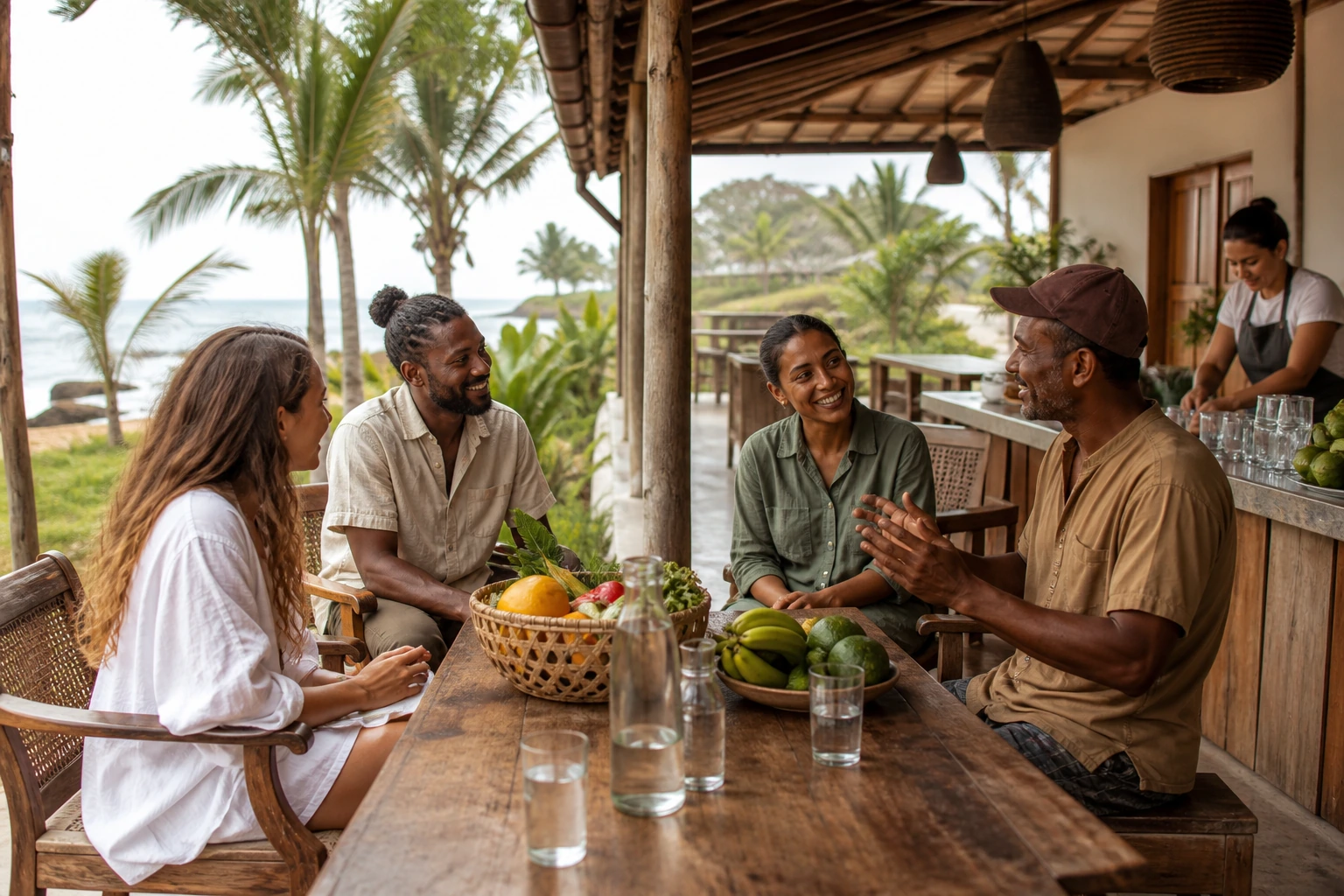
Early private opening and privileged access may avoid crowds while creating extra operations. Respect capacity, residential neighbourhoods and local rules. The best hour is not necessarily the one in which a visitor appears to own the place, but the one in which tourism and daily life coexist.
The art of the incomplete itinerary
Mark a few anchors: arrival orientation, two deep encounters, one movement through landscape and a significant meal. Everything else remains an option. The aim is not to experience less, but to stop experiences competing against one another.
What enquiry gives the place meaning How many full days remain What radius feels easy What deserves repetition Which encounter needs preparation What survives a change in weather Which reservation may be dropped Answering these questions produces a more exact journey, not merely a slower one.
The editorial verdict
Slow travel is the confidence not to extract every value from a destination immediately. A place may repeat, a conversation may continue and an afternoon may remain open. For discerning travellers, the result is not deprivation but a rare quality: memory with texture instead of a collection of perfect proofs.