
A design hotel is not identified by how many chairs demand to be photographed. Good design organises arrival, light, quiet, material and service into a stay that feels natural. The photo set ends at the edge of the frame; a serious hotel still works at two in the morning, with luggage, a wet coat and a desire to sleep.
The short quality test
- Architecture
- Responds to place, climate and use
- Guest room
- Works in daylight and at night
- Operation
- Service routes support rather than interrupt
- Material
- Ages with dignity and is visibly maintained
- Warning sign
- Powerful imagery but vague answers on comfort and operation
Design is a chain of decisions, not scenery
The label is used freely: a known architect, sculptural lobby, local ceramics, low light. Design begins earlier. How does a guest find the entrance Where does luggage disappear Can someone return wet from the pool without crossing the restaurant Can housekeeping work without blocking the corridor each morning
A strong hotel solves these questions together. Form and operation tell the same story.
| Area | Substantive design | Photographic set |
|---|---|---|
| Arrival | Legible entrance, shelter, seating and discreet luggage route | Dramatic door without a coherent process |
| Room | Good movement, light, storage, sleep and intuitive controls | Objects dominate while daily needs remain unsolved |
| Material | Matches touch, climate and wear | Fragile surface designed for opening day |
| Place | Architecture translates climate, culture and neighbourhood | Interchangeable “local” decoration |
| Service | Space permits presence without operational noise | Staff compensate for planning errors every day |
The first ten minutes reveal a great deal
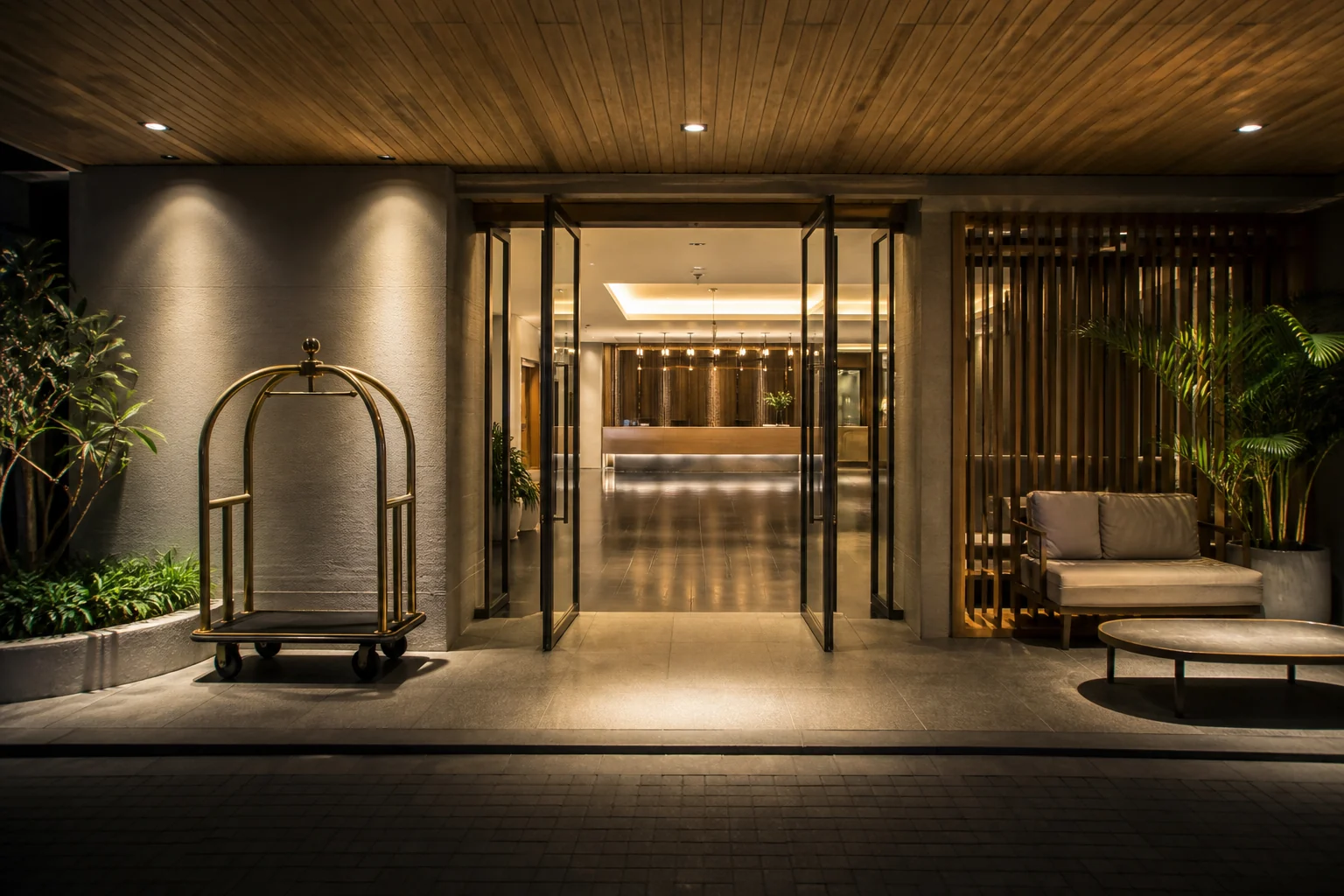
Arrival should provide orientation without requiring a lecture. Changes in light, sightlines and material can lead the way. It also needs ordinary things: weather protection, a seat, an accessible reception and a route for luggage.
If the scene consists of scent, music and a spectacular staircase while suitcases must be lifted over steps, the image has defeated the operation.
A room must master three states
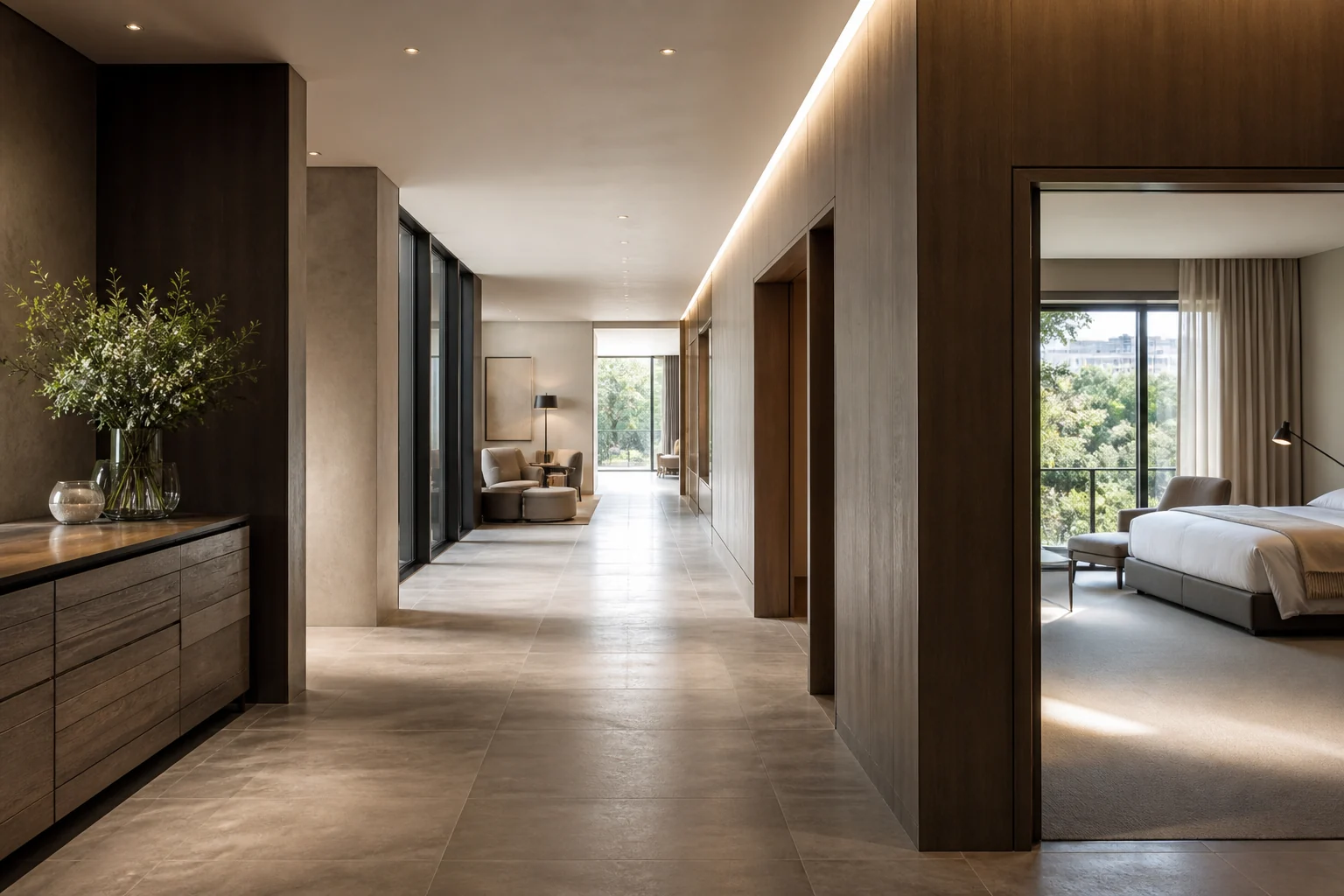
By day, daylight, view and the ability to read or work matter. In the evening, the room needs atmosphere without darkness at mirror, wardrobe and luggage bench. At night, blackout, quiet machinery, a reachable switch and the route to the bathroom decide comfort.
A well-designed room moves between those states without instruction. An app for every light is not automatically advanced; a clear switch may be the more elegant technology.
Acoustics are invisible luxury
Photography cannot show noise. Lift, bar, street, connecting door, plant room and housekeeping store still govern the night. Carpet does not repair a weak door seal, and heavy curtains do not correct vibrating ventilation.
Room position can matter more than design category: floor, orientation, proximity to lifts or nightlife and scheduled events belong in the enquiry.
Materials must be allowed to age
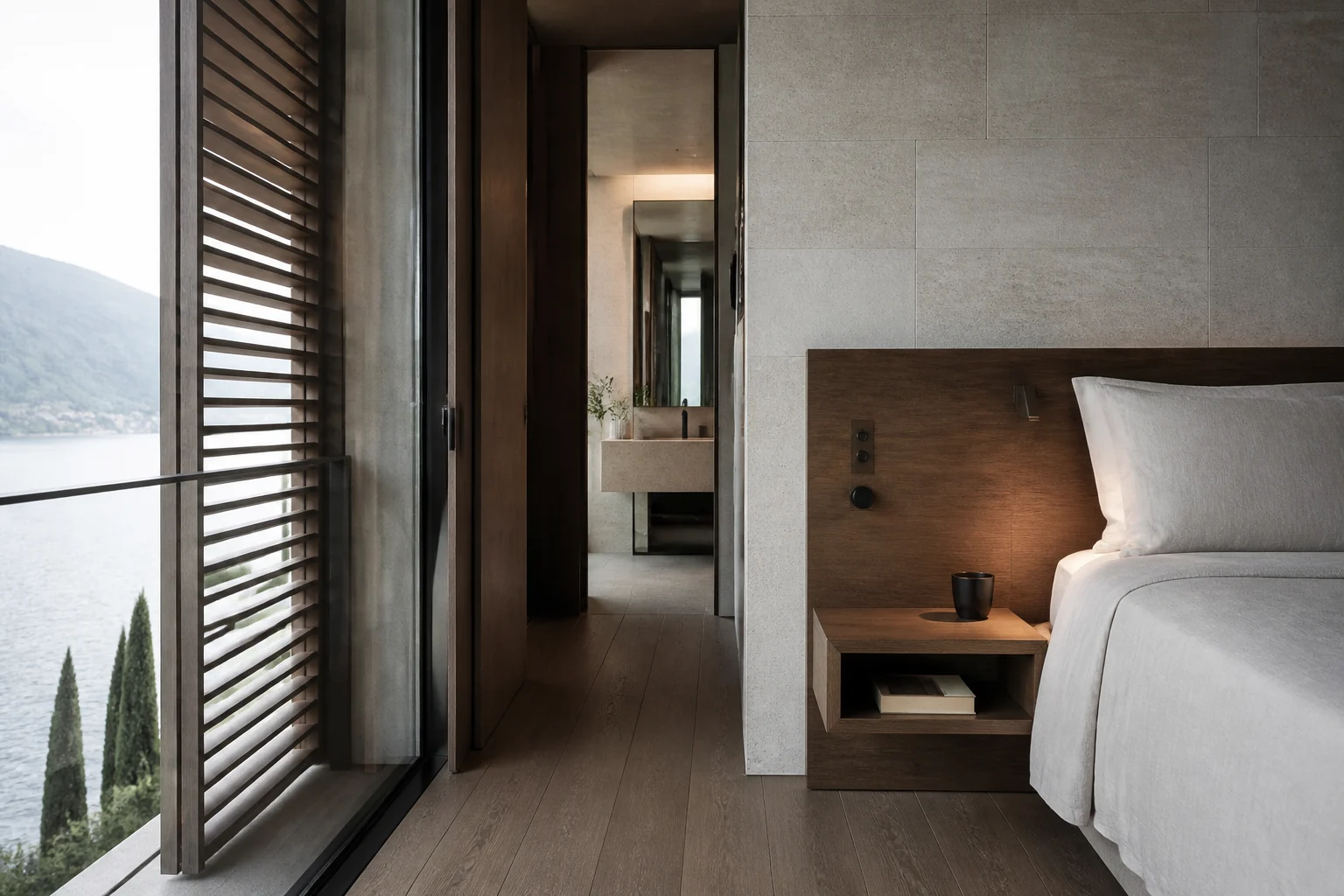
Stone, timber, metal and textiles gain from honest tactility. They must suit use. Unsealed surfaces in wet areas, sharp furniture or delicate floors soon produce stains, repairs and caution instead of pleasure.
Patina can be beautiful; neglect cannot. Good operators know the difference and build maintenance, spare parts and repair into the concept.
Local character without costume
Cultural grounding does not come from three souvenirs in the lobby. It may live in construction, shade, garden, craft, menu or the hotel’s relationship with the street. Design Hotels describes its independent properties through owner vision and their connection with the history, culture and nature of their surroundings.
The strongest hotel may therefore appear restrained. It does not borrow an aesthetic; it answers a particular place.
Service, accessibility and sustainability belong in the plan
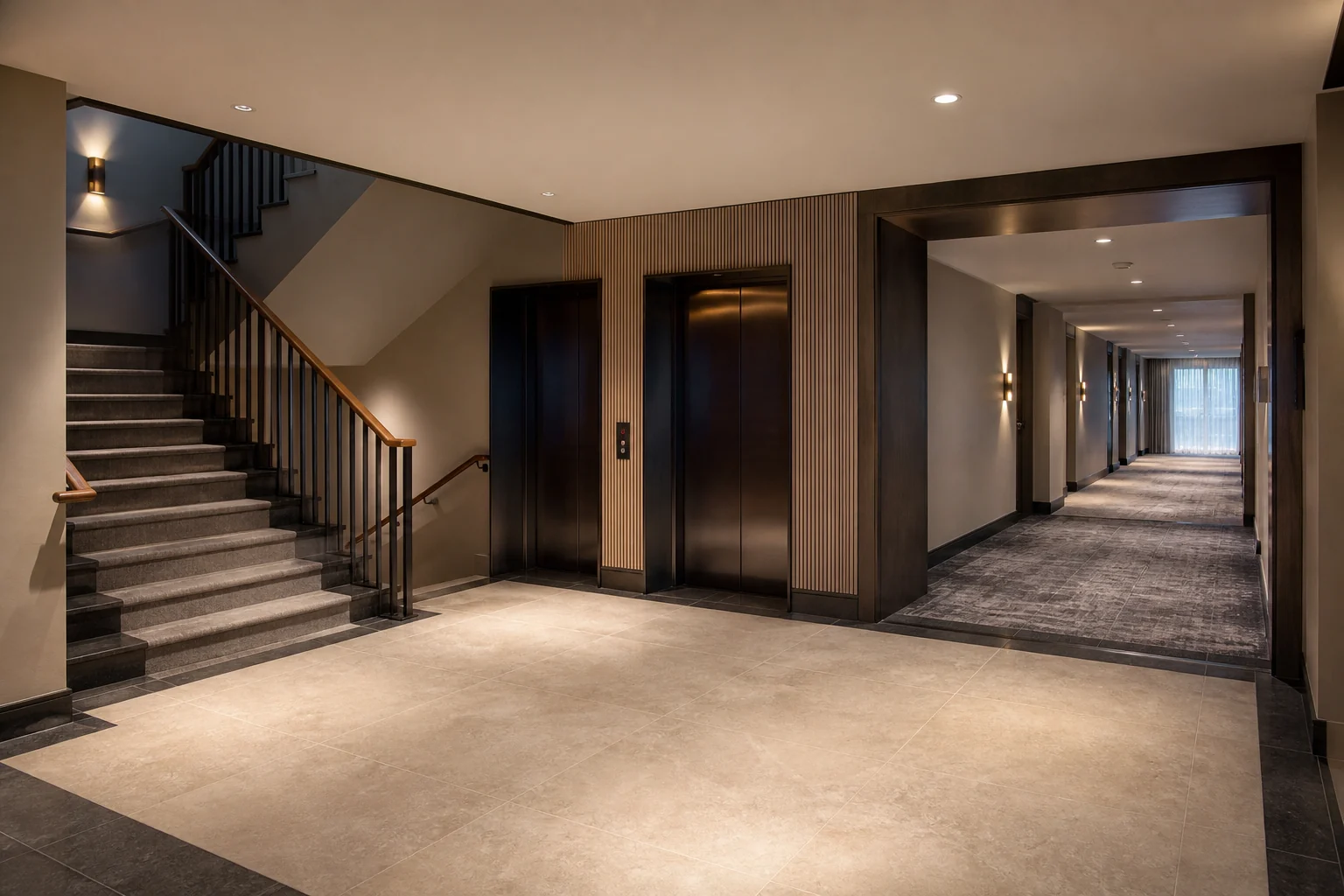
Good service requires storage, short routes, handover points and acoustic separation. Without them, staff become visibly hurried: linen trolleys in guest corridors, breakfast trays by the lift, queues at an undersized reception.
Excellent employees can disguise weak planning for a time. Strong design allows them to be attentive rather than compensatory.
ISO 21902 treats accessible tourism as the interaction of infrastructure, products and service. For a hotel this extends beyond one “accessible room”: step-free arrival, door widths, turning space, bathroom, wayfinding, communication and trained staff must align.
A traveller with specific needs should have the actual route from entrance to bed, restaurant, pool and evacuation path confirmed in writing. Style must never conceal or obstruct access.
Sustainability needs operational evidence
Earth-toned paint, bamboo and a refillable bottle do not constitute proof. Building reuse, energy, water, sourcing, waste, labour and community impact matter. Frameworks such as the Global Sustainable Tourism Council’s hotel criteria therefore examine management and operation, not simply visible materials.
A credible hotel describes measures, limits and, where possible, verifiable outcomes. “In harmony with nature” is not sufficient.
How to read hotel photography
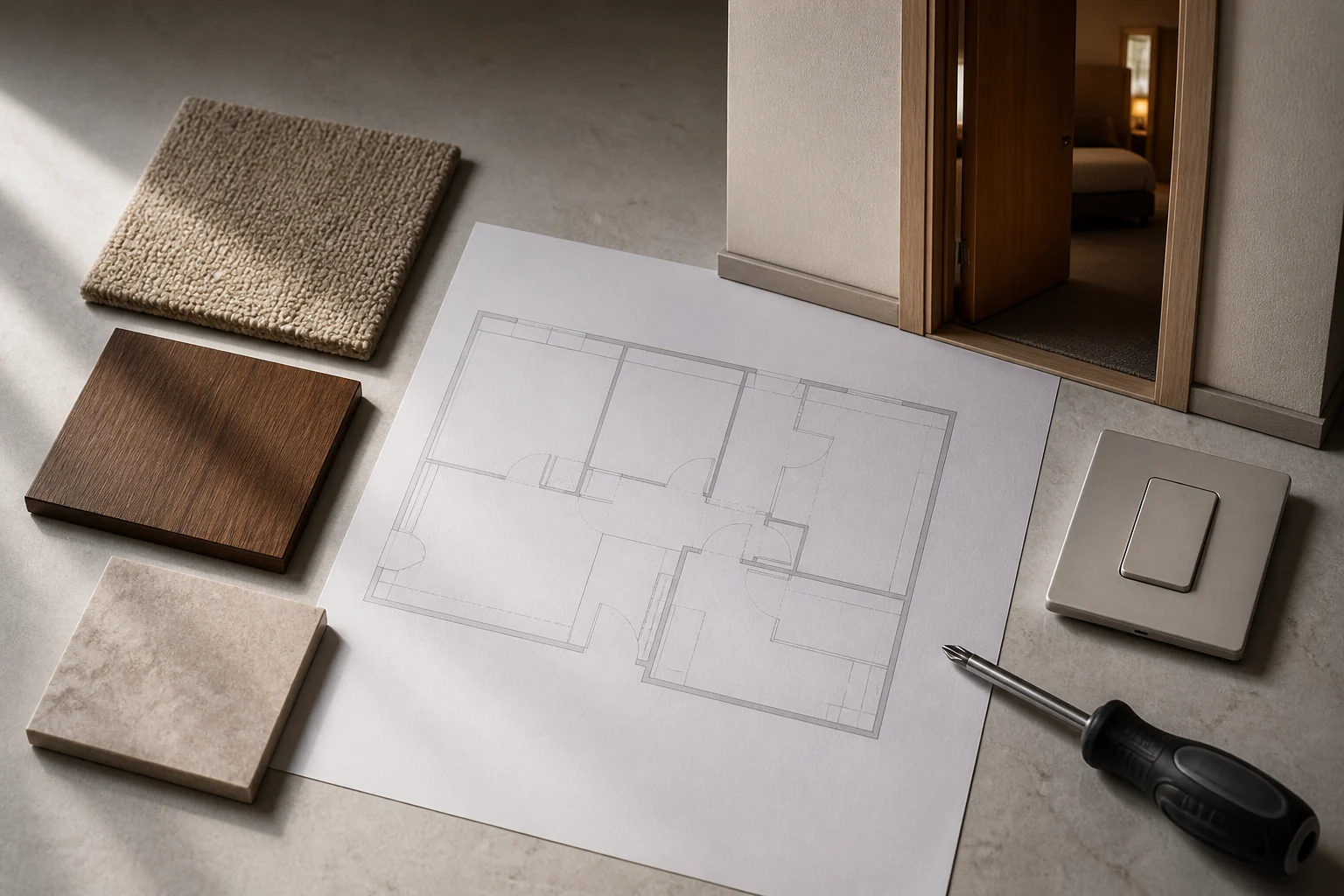
Ultra-wide lenses enlarge rooms; night images conceal daylight and outlook; object studies avoid plan and neighbourhood. Useful evidence includes normal viewpoints, bathroom and storage, the view from the exact category, and a floor plan.
Compare several sources and notice when the same suite appears repeatedly. The common booking error is to confuse the architecture of the hotel with the room actually reserved.
Questions before reserving
- Which room position is quietest, and why
- Do the photographs show the precise confirmed category
- Can light, temperature and blackout be controlled manually
- Which areas were renovated, and when
- What is the step-free route to relevant facilities
- Which sustainability statements have concrete evidence
- Who operates the hotel and how does that shape service
The Deluxetargets recommendation
Do not book a design object; book a well-designed stay. The finest hotel binds architectural idea, sleep, service and place so closely that no element competes for attention. If a property is brave only in photographs, it remains scenery. When it improves the guest’s daily life, design becomes hospitality.