
The person who turns landscape into meaning
A lodge provides the bed, kitchen and location. The guide shapes what you see, understand and experience responsibly. Quality appears not in extravagant promises but in judgement, curiosity and the composure to do nothing at exactly the right moment.
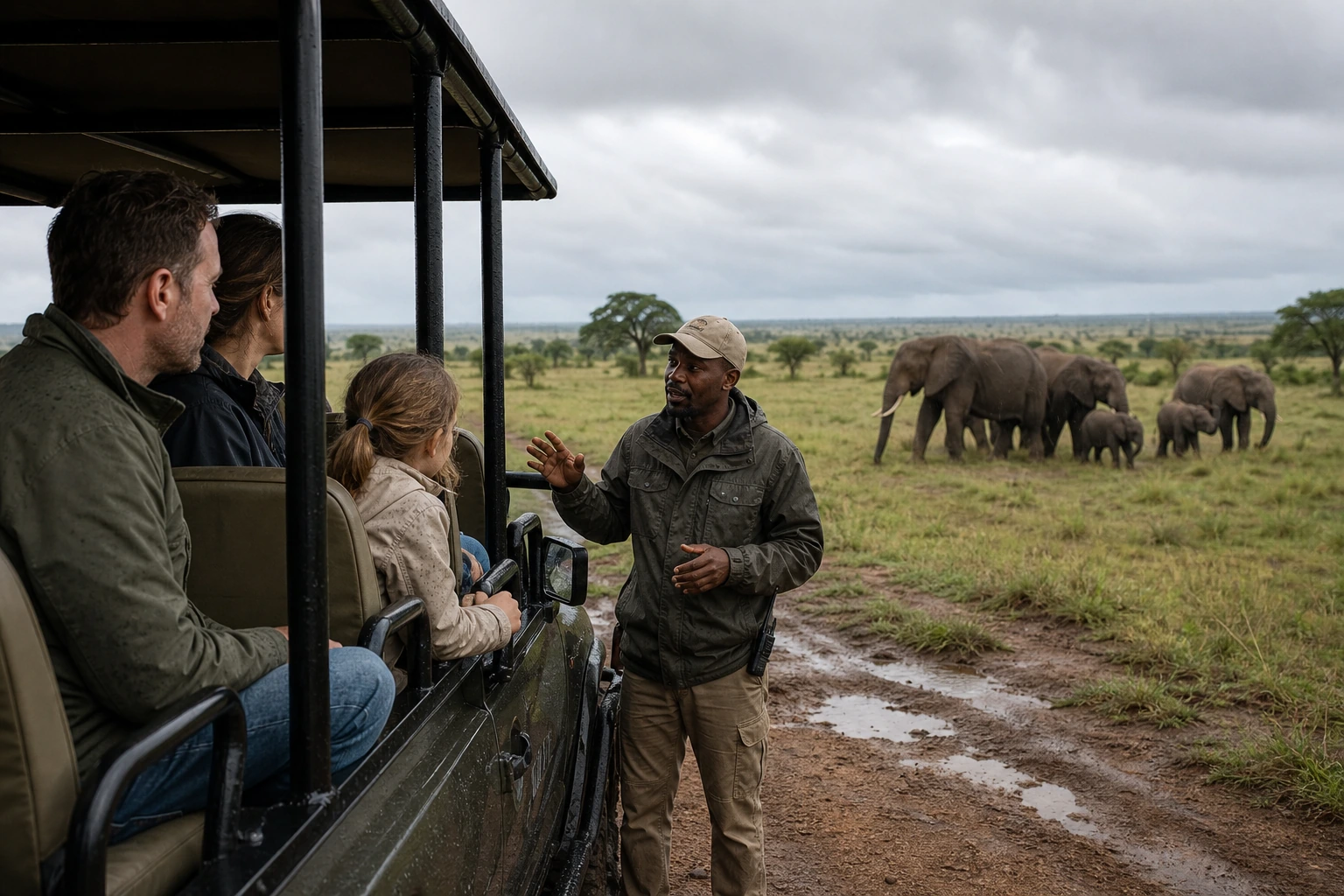
A guide is not just a driver
The role connects behaviour, tracks, plants, people and landscape into a legible story. Circulating between familiar sighting points barely begins to use that expertise.
Reserve, access rights, vehicle policy and operations define the guide's possibilities. An exceptional professional cannot undo poor rules, yet can reveal far more within a strong ecosystem.
Qualification is where evaluation starts
A licence or certificate demonstrates a defined standard, not automatic fit with a guest. Training, local authority, current practice and role must suit the country and exact activity.
In southern Africa, FGASA distinguishes trails qualifications for areas with potentially dangerous game. A gifted vehicle guide is therefore not automatically qualified to lead a demanding walk.
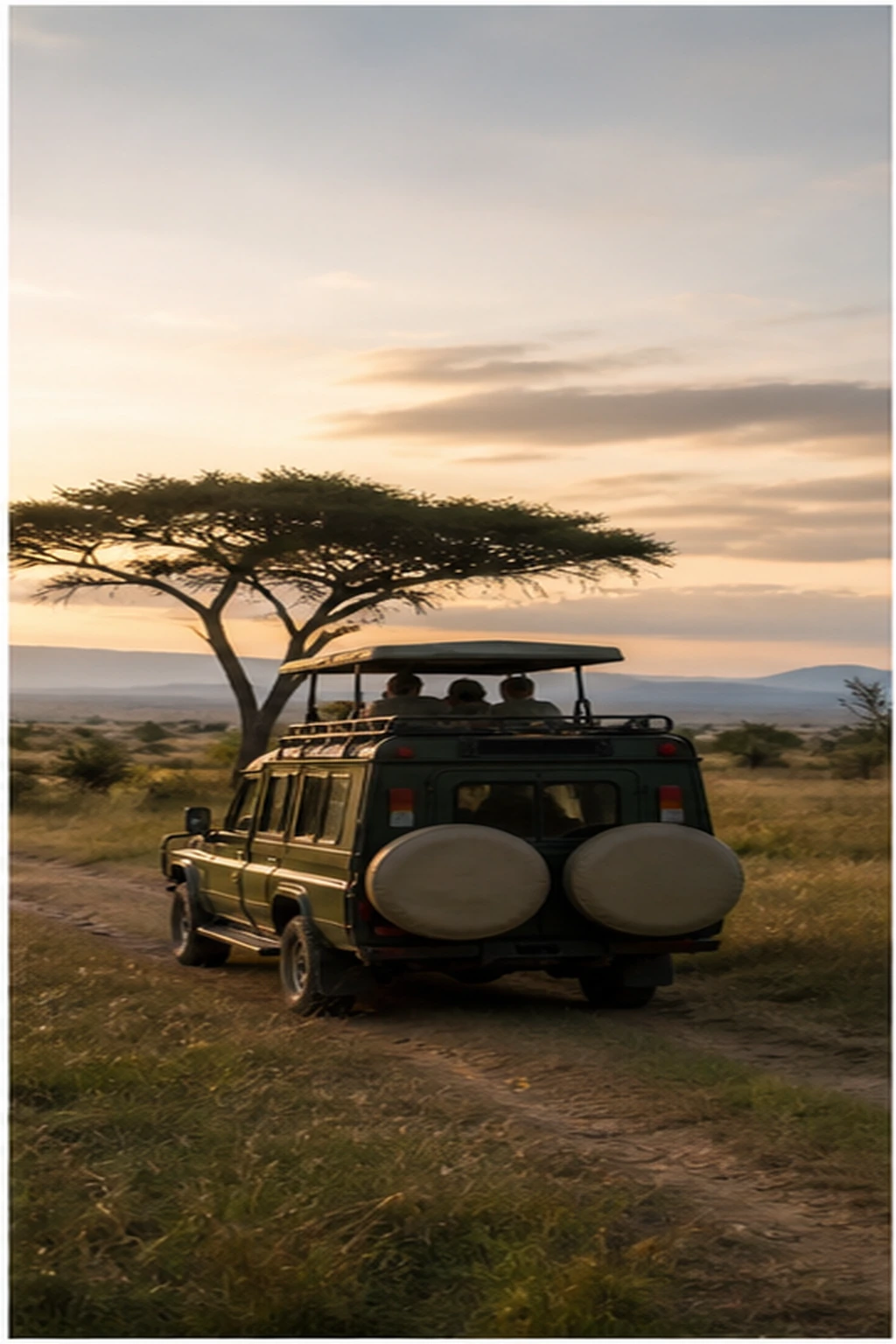
Someone who knows an area across seasons can read water, wind, fire, breeding and animal routes together. Naming species does not explain why the search belongs here today.
Judgement appears in restraint
A guide withdraws when an animal shows stress, terrain becomes unsafe or vehicles crowd in. Refusing to force a sighting is a stronger mark of quality than engineered proximity.
Track, alarm call, scent, shadow and changed behaviour all carry evidence. Guests learn how a sighting develops instead of merely arriving at a finished lion.
In some regions, guide and tracker form a practised team with distinct knowledge. Both roles, their experience and their recognition deserve attention in the briefing.
A strong guide tests prior knowledge, explains without condescension and senses when silence is better. The requested language should be confirmed rather than inferred from a general lodge description.
The first briefing reveals much
Questions about interests, fitness, photography, children and boundaries show genuine listening. An immutable stock speech suggests the coming days may be equally standardised.
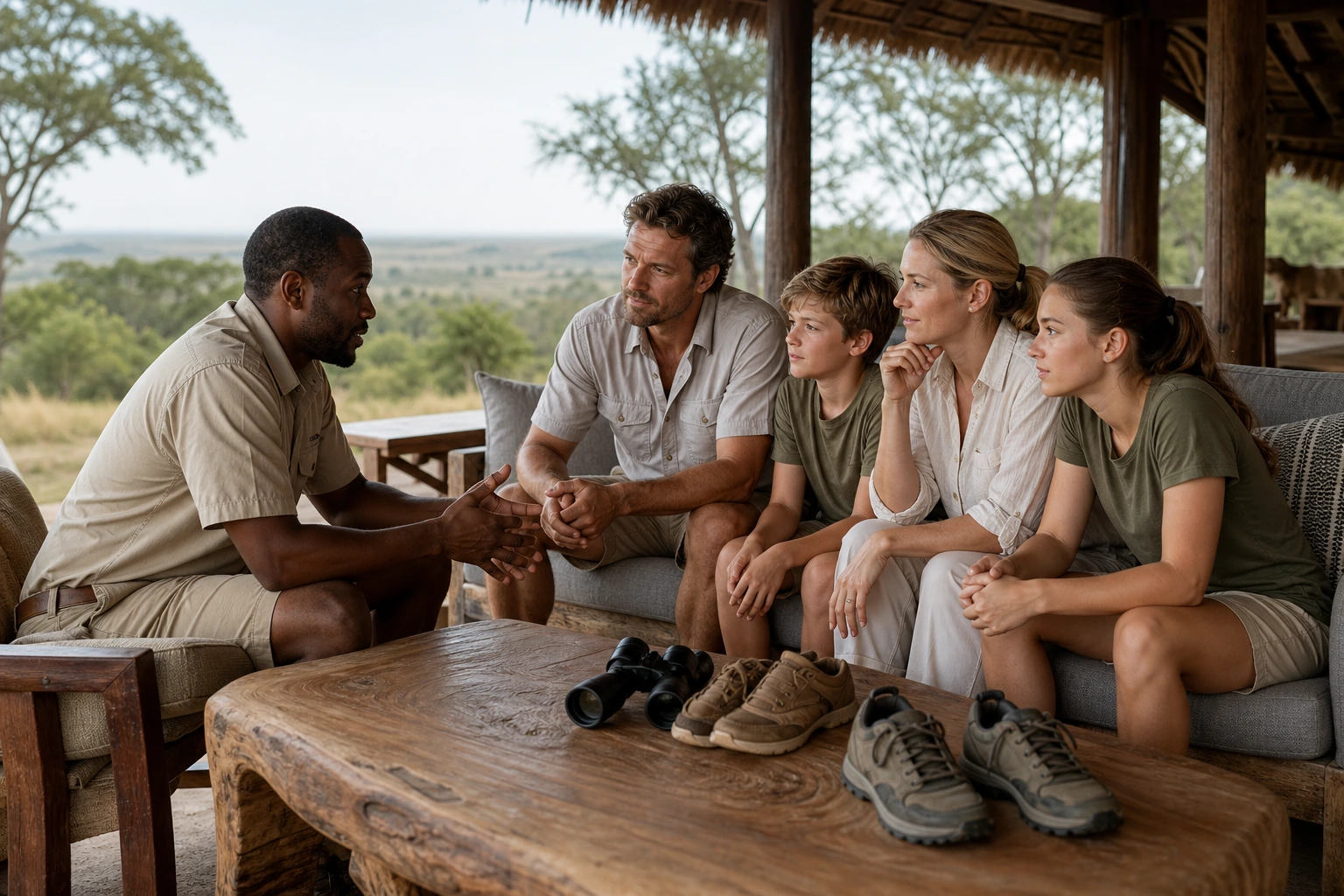
No one knows every plant, feather or track. Credible guides acknowledge uncertainty, research later and correct themselves rather than improvise with authority.
Communication can coordinate sightings and reduce vehicle pressure. Chasing every call, however, turns safari into a frantic pursuit of other people's reports.
Wind, light, escape route, behaviour and other vehicles determine where to stop. Good guides think several movements ahead without taking space from animal or colleague.
Direction of light, background, eye level, focal length and patience are understood. The guide does not simply chase subjects but creates a stable, ethically defensible situation.
Non-photographers deserve equal regard
A binocular view, bird call or long observation may matter more than the next frame. The drive should not belong entirely to the loudest cameras.
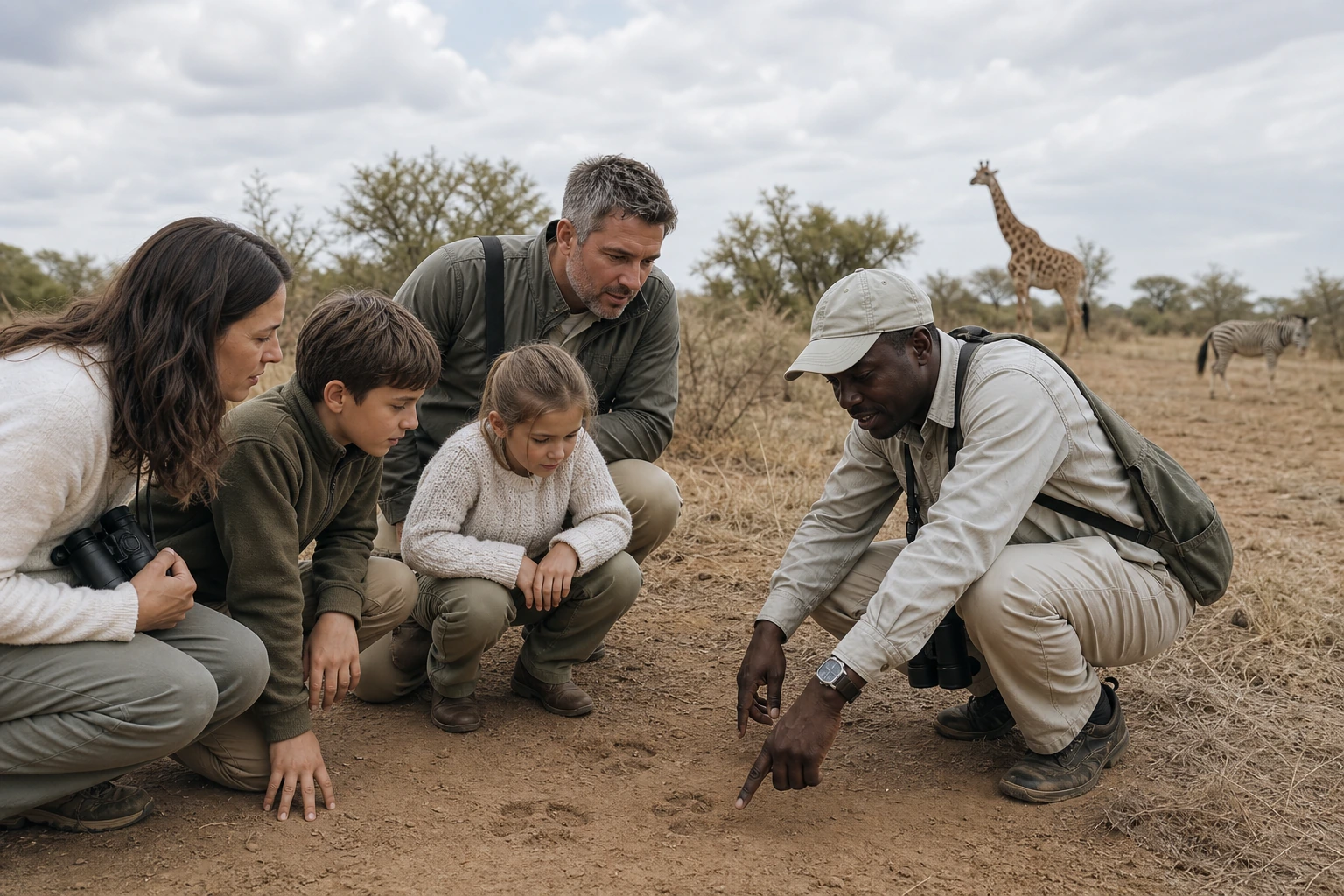
Questions, tracks and small tasks hold attention without reducing wilderness to a lesson game. Drive length, age and safety rules still govern the experience.
Boarding, seat, pauses, toilet access and walking distance are planned plainly. A good guide protects dignity and participation rather than narrating every limitation to the group.
Rules have reasons, emergency pathways are understood and decisions stay clear. Machismo, needless proximity and promises to bend regulations for guests are warnings.
A private vehicle is not a private guide
Having a vehicle at each lodge does not create one continuous relationship. Travellers seeking continuity need a named guide with route, accommodation and replacement terms confirmed.
A through-guide understands pace, interests and limits after the first day. Local camp guides may offer exceptional depth in their own terrain; each model serves a different purpose.
Early starts, heat, night drives and guest care demand concentration. Sensible off-duty time and a qualified replacement protect quality and safety better than permanent availability.
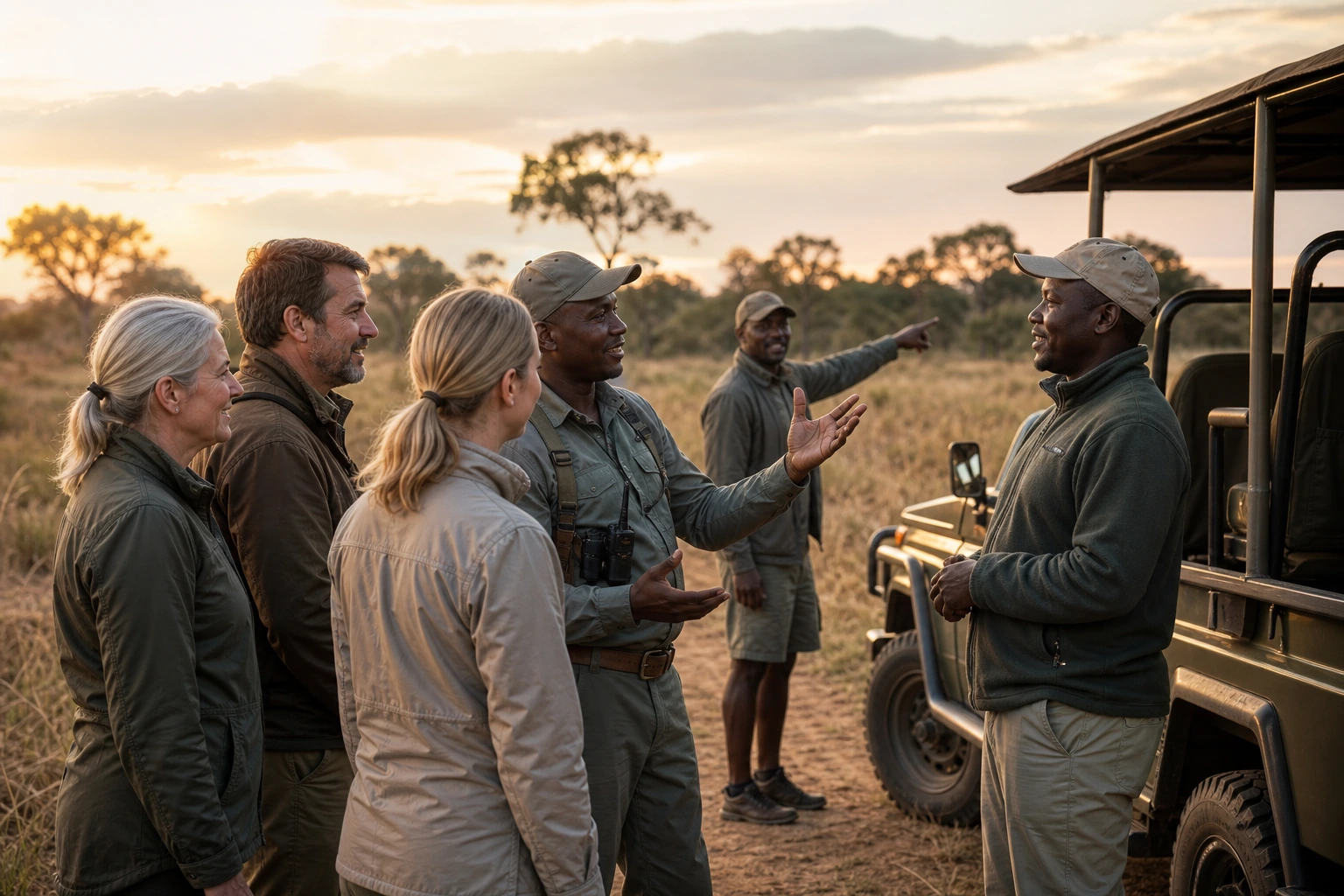
In a full vehicle the guide must reconcile competing priorities. Guests with specialist interests or a slow rhythm should solve that structurally through occupancy, not through disappointment later.
Ethics are shown in small decisions
Engine position, distance, noise, litter, routes and treatment of communities reveal values. A conservation lecture carries little weight when daily practice contradicts it.
Migration, predator action and rare species remain unpredictable. Expertise and time improve the chance, but nature is never sold as a commissioned performance.
Who is the intended guide, what qualification and local experience do they hold, which language do they speak and which activities may they lead Add vehicle, tracker and backup.
Friendly or knowledgeable says little. Useful feedback describes judgement, communication, skill with children or photographers and conduct under difficult conditions.
Local guidance, lodge practice and journey context shape the form. A tip recognises excellent work; it should neither buy rule-breaking nor romanticise insecure pay structures.
Excess speed, thin explanation or communication problems should be discussed after the first drive in concrete terms. Professional camps may adjust style, seating or guide when availability permits.
Judge a lodge by its guiding system
Recruitment, training, local advancement, tracker partnership, guest feedback and rest planning all belong in the assessment. One celebrity guide cannot substitute for a healthy culture.
Adjust precisely after the first drive
Personal fit and professional quality are not identical. A skilled, highly verbal guide may delight guests who want every detail explained yet tire a photographer who watches in silence. After the first drive, name two or three observable changes: more time with behaviour, less chasing of radio calls, slower movement or a different seating pattern. A professional camp can often recalibrate style immediately.
Unsafe decisions, disrespect or deliberate rule-breaking are not matters of taste. Report the event promptly to camp management and request a qualified replacement. Keeping that distinction clear enables candid feedback without mislabelling an ordinary difference in style as incompetence.
The Deluxetargets recommendation
Define how you wish to see: photographically, as a family, scientifically, slowly or on foot. Then book the ecosystem, vehicle and qualified guide that fit – allowing discovery more time than a checklist.