
Booking safari well
A private vehicle does not buy better wildlife. It buys the freedom to stay with one behaviour, shape the morning and stop negotiating every next turn.
Separate private vehicle, guide and rules
One guest wants to remain with a leopard, another is looking for elephants and a third needs a break. In a shared vehicle, the guide balances the group. That is not poor service; it is the product. Privacy earns its cost when those compromises would define each day.
A camp may reserve one vehicle for every standard drive during a stay. Another may sell a single outing, full day or minimum number of nights. Transfers, boats, hides, night drives and walks may remain shared. The exact scope belongs in writing.
An exclusive vehicle may use whichever camp guide is on duty. A guide accompanying the full itinerary learns the guests’ pace, interests and communication. Travellers expecting continuity must confirm both; the vehicle alone does not provide it.
Animal position, weather, vegetation and chance remain beyond purchase. A private party can wait longer or depart earlier, but it cannot order a leopard. The supplement improves decision-making freedom, not nature.
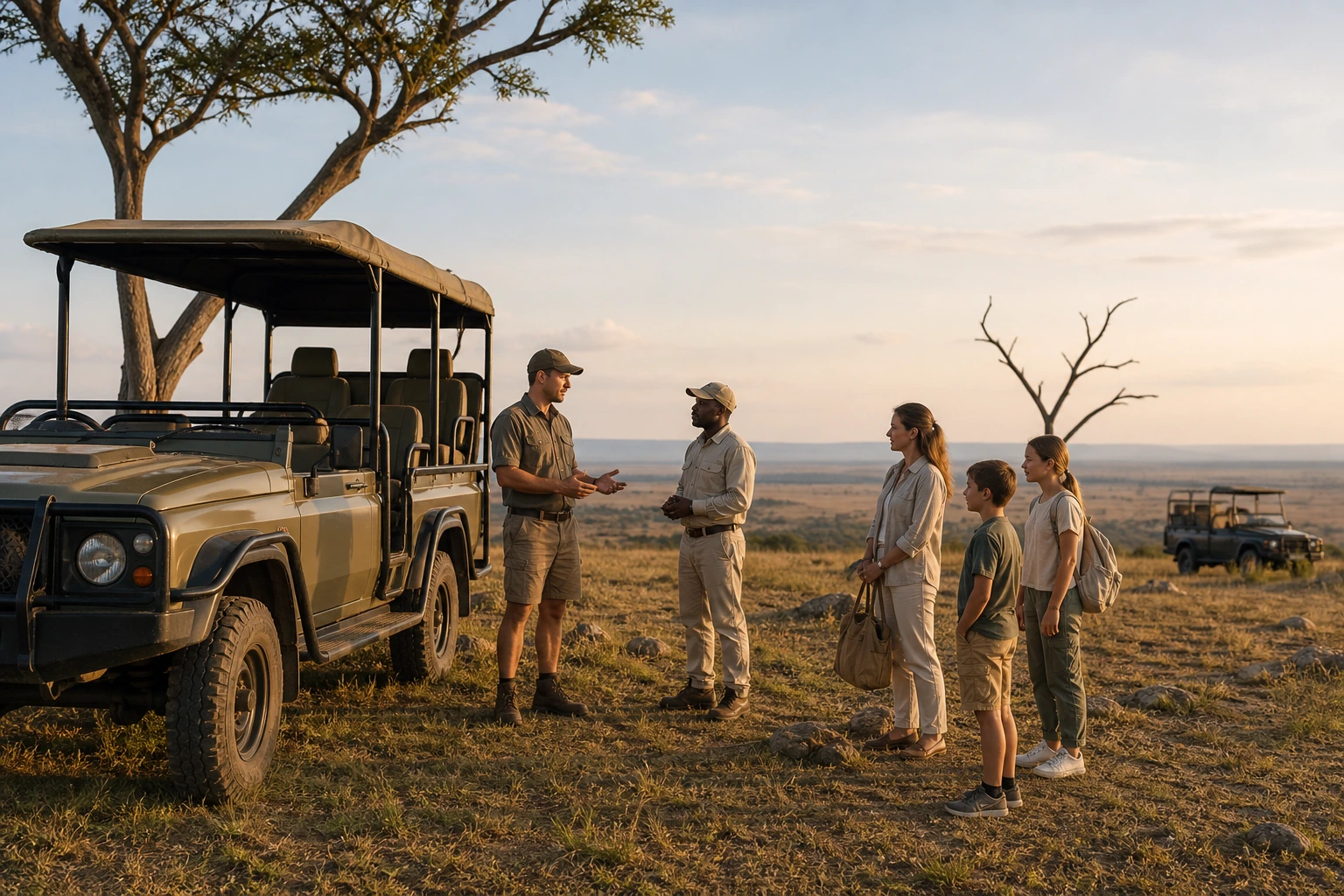
TANAPA requires licensed operators, roadworthy vehicles, low noise and adherence to speed, gate and road rules. Off-road driving is possible only where explicitly permitted. A private booking changes none of those boundaries.
For photographers and birders, time is the principal tool
Photography needs repetition, light and patience. A scene need not end after the first image because fellow guests want another species. Privacy matters when the vehicle can hold position without frustrating a mixed group.
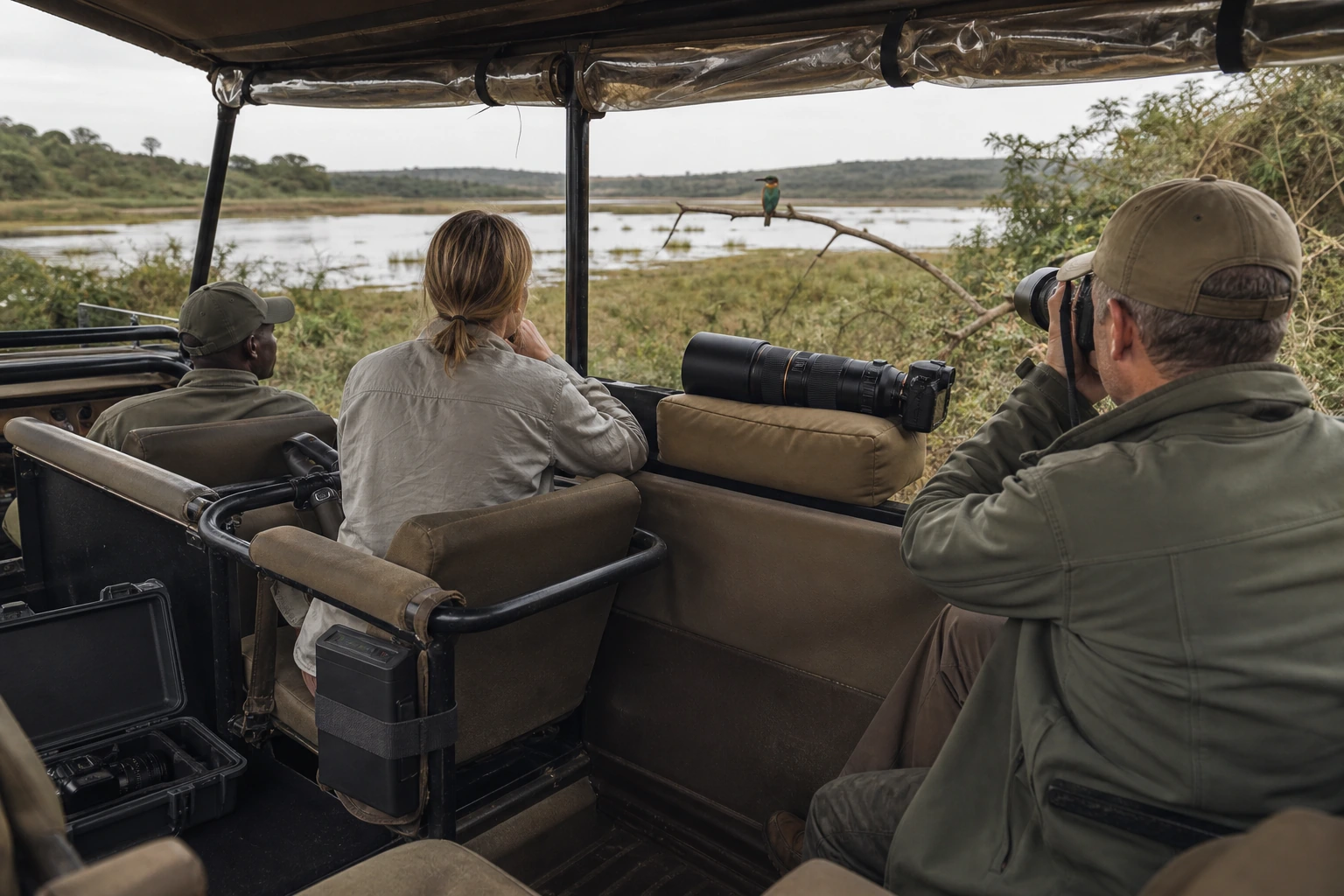
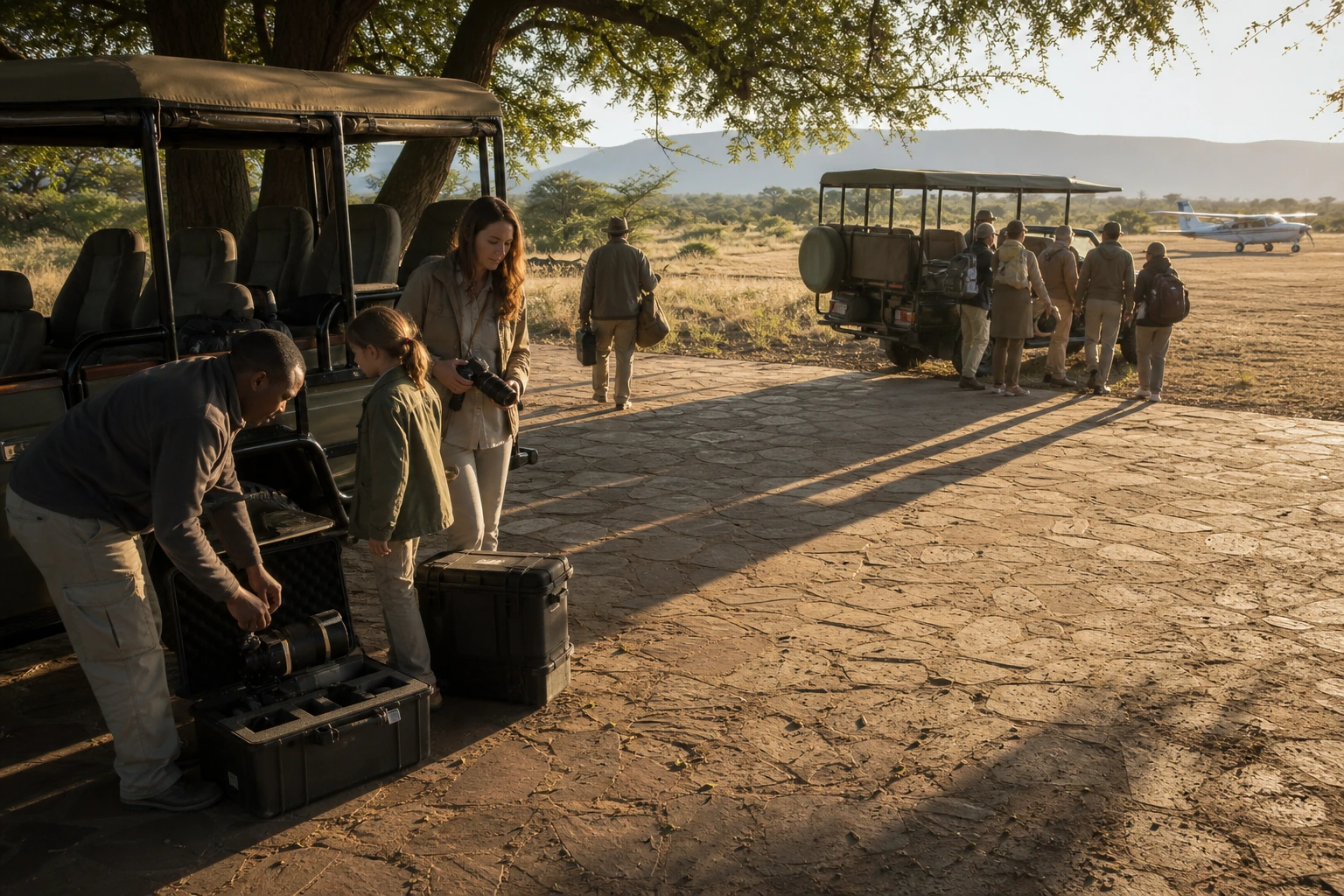
A six-seat vehicle does not necessarily offer six persuasive sightlines. Windows, roof opening, pillars and seat height decide. Two photographers need room for long lenses; four guests may each expect an outside position. Confirm model and layout.
Stable supports, charging, protected storage and sensible equipment space reshape a long day. Open vehicles offer exceptional angles but varying shelter from dust and rain. The right configuration depends on terrain, season and camera kit.
Birding rewards calls, slight movements and patience in apparently ordinary places. A group focused on big cats will often move on. Here, a private vehicle pays for a different rhythm of attention rather than closer distance.
Family, mobility and energy purchase flexibility
Starting later, returning early or taking an unplanned pause are genuine advantages with children. A dedicated vehicle does not remove age or safety restrictions. Walking, balloons, hides and individual camps may still exclude younger guests.
Certain operators require families with younger children to take a private vehicle so other guests and schedules are unaffected. Age thresholds and charges vary. The proposal should distinguish recommendation from requirement.
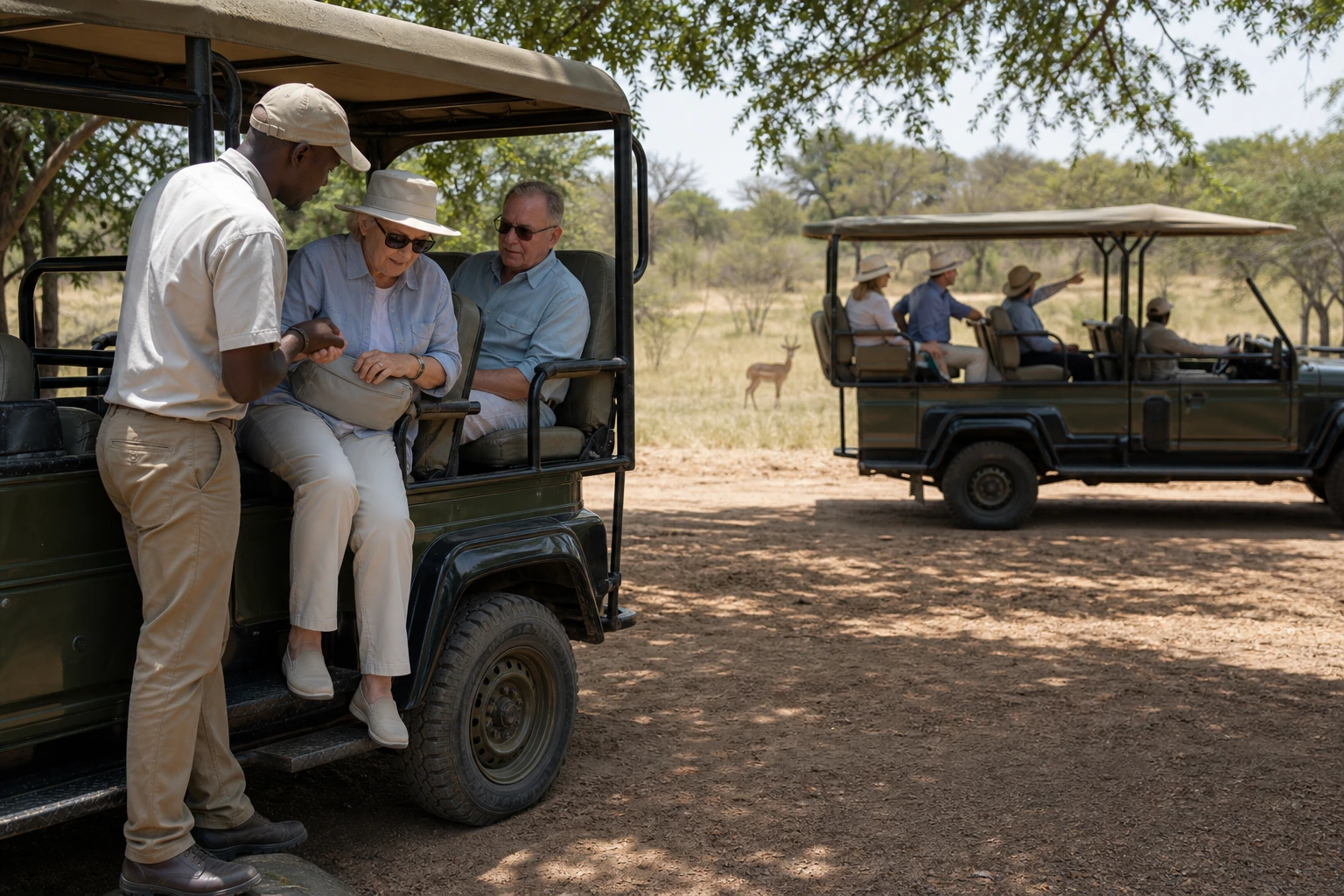
Step height, handles, door width, seat changes, suspension and distance from the lodge may determine comfort. Private does not mean accessible. Obtain images and measurements of the actual vehicle and confirm boarding assistance before paying.
A dedicated car allows shorter drives, medication on time and a return without group pressure. For guests affected by heat, fatigue or back pain, that adaptability may add more value than a larger suite.
When a shared drive may be the better product
Newcomers can benefit from an interested group: more eyes find animals, questions build on one another and delight is shared. Privacy makes sense when a different pace is needed, not because luxury must equal separation.
A small group, guaranteed outside seats and a fine guide already create high quality. Similar interests encourage conversation and collective learning. Compare against the real included service, not a caricature of an overcrowded truck.
Charges are often per vehicle rather than per guest. For one person the ratio is particularly high. A shared car capped at four guests may be financially and socially stronger if seating and guiding are excellent.
An exclusive vehicle cannot resolve differences inside the travelling party. Photography, birds, early returns and acceptable waiting time deserve discussion before departure. Privacy merely moves negotiation from strangers to friends.
A guide speaking the preferred language enables more nuanced questions and less lost meaning. Language alone is not proof of fieldcraft. Natural history, hosting judgement and fluency should be assessed together.
A through-guide may require accommodation, meals, vehicle positioning or flights. In return, each new camp does not begin with another briefing. The quote should separate vehicle, guide and guide-travel costs.
Define the supplement and its limits exactly
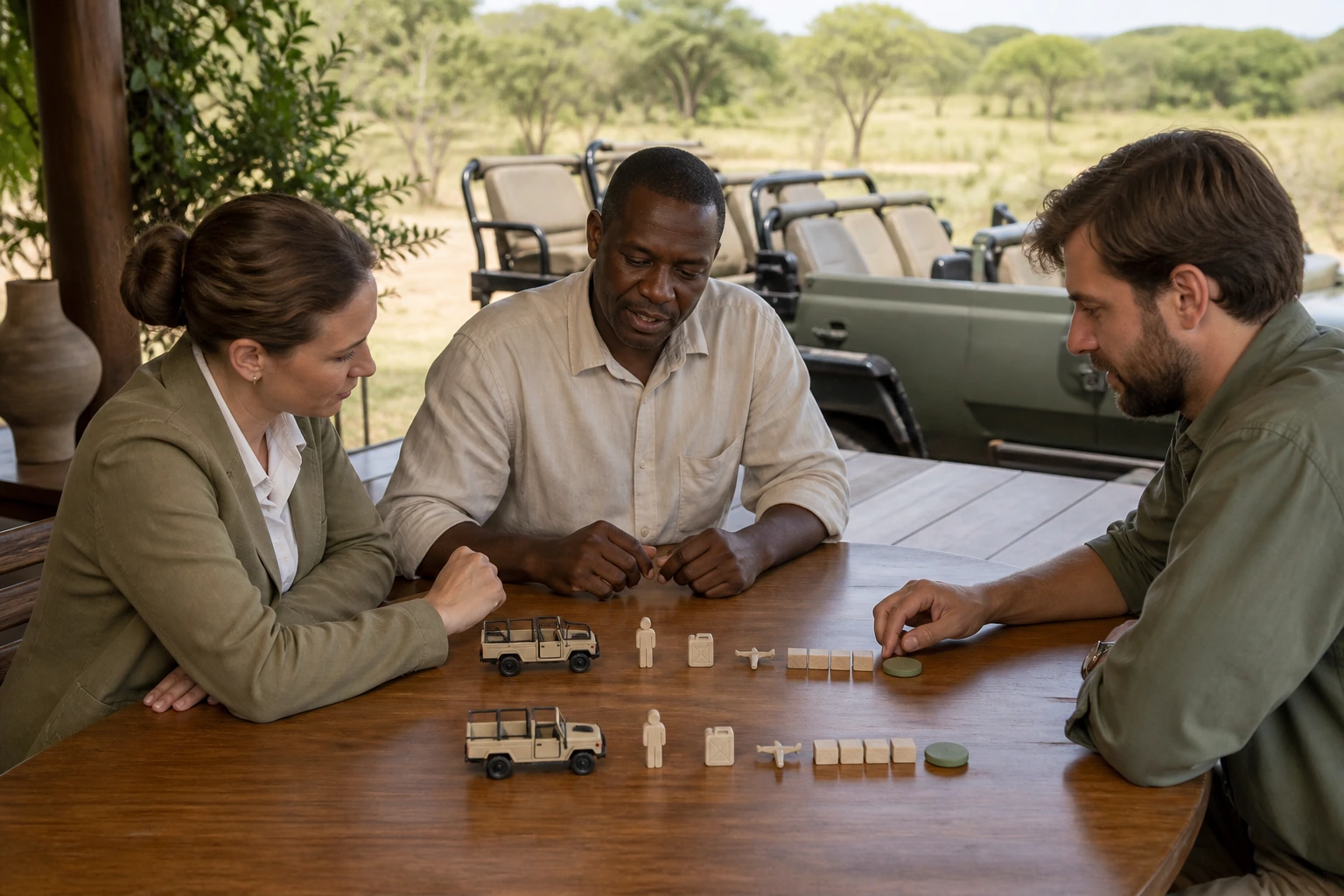
Per drive, day, night, stay or vehicle are all possible. Tax, fuel, park fees and transfers may sit outside the figure. Only a total for the same itinerary allows comparison with the shared service already included.
An exclusive-use house can include its own team and vehicle, but this is not universal. Boats, walks, night drives and specialist guides may still be pooled. Accommodation privacy and activity privacy require separate confirmation.
A lodge may occupy exclusive-use land while operating shared game drives. Conversely, travellers can reserve a vehicle inside a public national park. Land access, visitor density and vehicle occupancy describe different layers.
Some private reserves permit controlled off-road driving; many national parks do not. Ground conditions, rain and conservation rules may narrow access further. The vehicle’s private status has no bearing on permission.
A good guide will not pressure an animal, block escape or approach too closely for a photograph. An exclusive car should enable calmer observation, not more aggressive competition. “Always front row” is the wrong promise.
Flight times, airstrip pickups and camp changes are often shared. A dedicated game-drive vehicle cannot prevent an early end for a scheduled flight. Examine the entire day, not merely the hours between lodge and wildlife.
Some guests need control only for one photographic morning or the family’s first day after a long journey. Where single drives can be reserved, targeted privacy may outperform an all-stay supplement. Availability should be secured early.
When the supplement makes sense
Serious photography, specialised natural-history interests, young children, mobility needs, a preferred language or a markedly different daily rhythm all protect substantive value. Privacy then becomes functional, not ornamental.
Four or fewer similarly interested adults, good seats and an accomplished camp guide can make shared drives excellent. The budget may create more value through extra nights, a stronger location or fewer transfers.
Period, included activities, vehicle and seating, guide and language, child and access rules, pricing unit and shared transfers must be named. Add photographic equipment, breakdown replacement and whether each camp assigns a new car.
We do not recommend privacy as a status symbol. We first identify the compromise that needs removing and measure the shared product already included. The supplement is justified when it protects useful time and attention—not merely an empty seat.