
Singapore is at its most luxurious when it is not treated as a collection of superlatives. One excellent hotel, two memorable meals and a well-judged daily rhythm reveal more than a checklist of rooftop pools, tasting menus and designer shops. The city’s real privilege is precision: effortless logistics, remarkably consistent service and the freedom to move between monumental architecture and intensely local life.
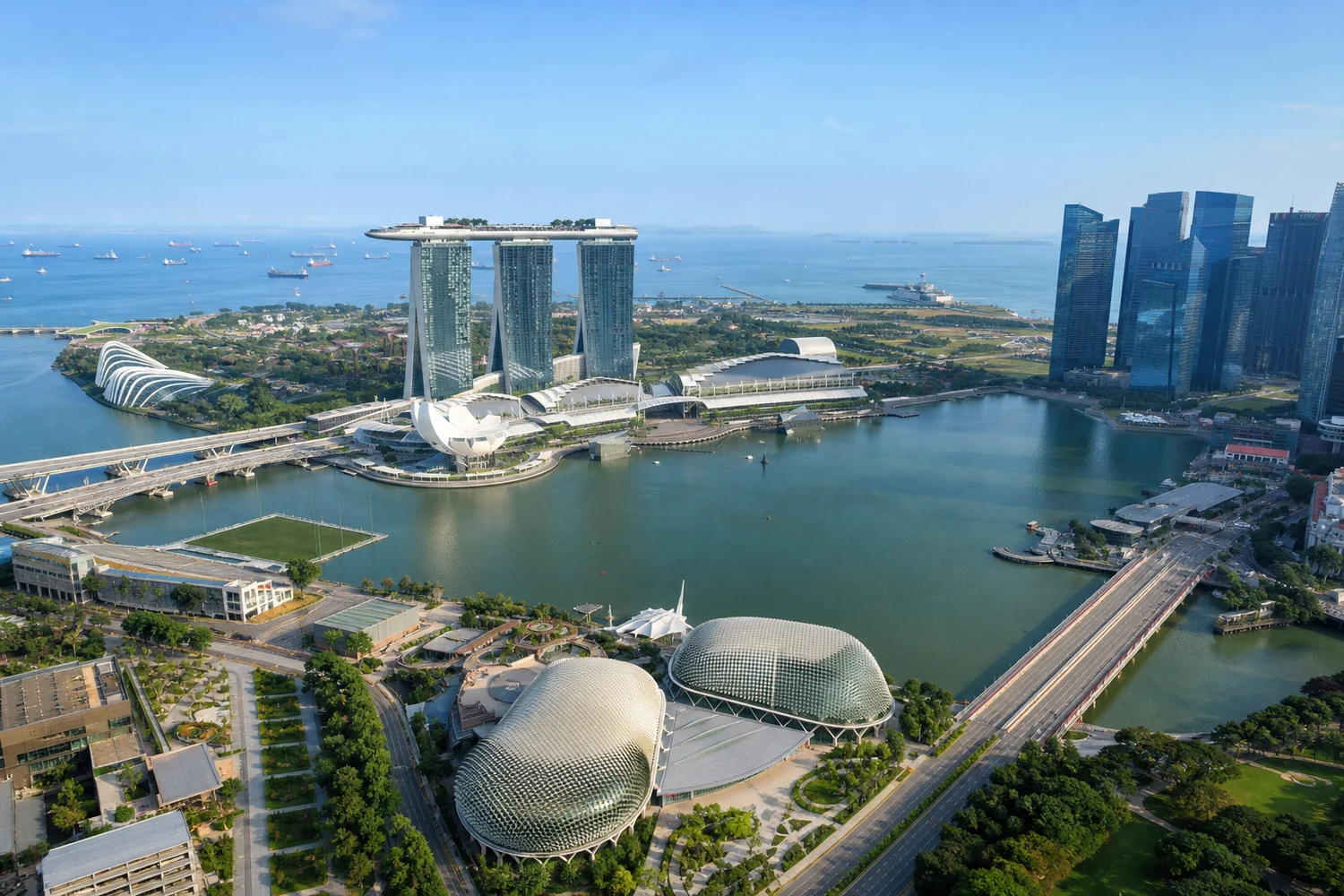
Singapore at a glance
- Ideal stay
- Three full days for a first visit; four nights if dining, culture and downtime matter equally.
- Best first-time base
- The Civic District or Marina Bay for easy movement; Orchard for shopping, Sentosa for a resort-led stay.
- The reservation that matters
- A schedule that accounts for heat, rain and jet lag—not simply the hardest table to secure.
- The common mistake
- Treating Singapore as a layover and compressing the city into 36 over-programmed hours.
The short answer: stay for three nights
Singapore is often folded into a journey to Australia, Indonesia or a cruise. That explains the popularity of stopover itineraries, but it does not show the city at its best. Arrive after an overnight flight, book a tasting menu for the same evening and depart the following morning, and the principal impression will be efficiency.
Three nights create something more valuable: the Civic District at an unhurried pace, one residential neighbourhood, a long lunch and an evening that is not scheduled against jet lag.
For a first visit, a central base is worth prioritising. Distances look modest, yet tropical heat, humidity and sudden downpours make short walks more demanding than they appear. A good driver does more than save time; discreet transfers allow a museum, a neighbourhood and dinner to belong to the same easy day.
Choose the hotel by the Singapore you want to see
Singapore’s leading hotels are not interchangeable five-star addresses. Each places the guest inside a different version of the city. Raffles Singapore, in the Civic District, suits travellers drawn to history, lofty proportions and a consciously ceremonial style of hospitality. Opened in 1887, the hotel now has 115 suites. Its appeal is not height or spectacle, but atmosphere and a remarkable sense of place.
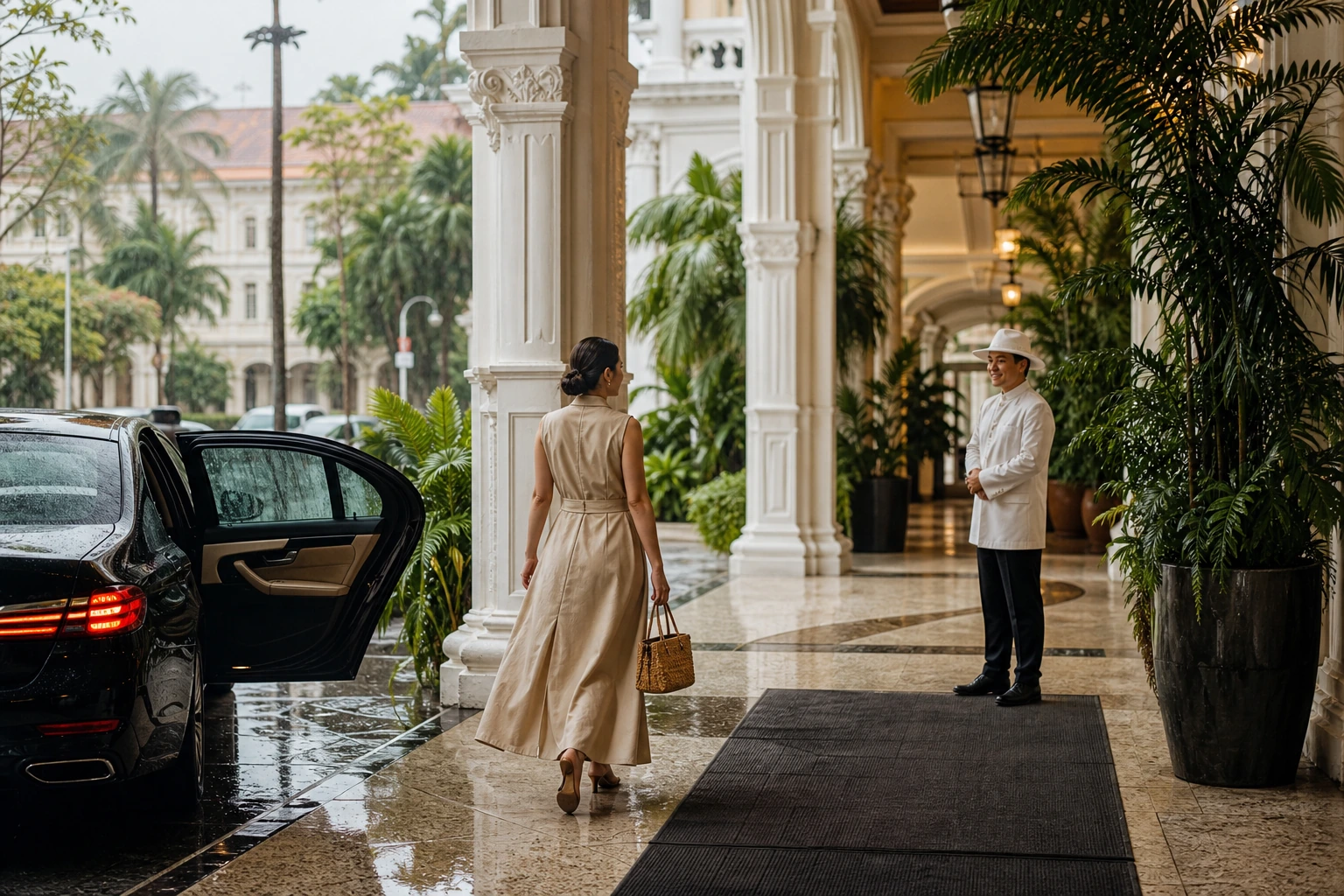
Mandarin Oriental, Singapore faces Marina Bay and works well for guests who want a contemporary city hotel, skyline views and direct access to Esplanade, Gardens by the Bay and the financial district. Here the view category is consequential: bay, sea and city create markedly different mornings.
Marina Bay Sands is not the discreet option; it is spectacle by design. The SkyPark Infinity Pool is reserved for hotel guests and may justify a night for travellers who genuinely want that experience. It should not be mistaken for a promise of serenity. Guests seeking architectural drama, views and energy will value it differently from those who expect intimate recognition and quiet retreat.
Sentosa changes the journey again. A resort base can be welcome after a long Asian itinerary, but it removes the everyday ease of stepping into the city. For a short first visit, we generally favour an urban address; for families or a restorative final chapter, the calculation may reverse.
| Travel style | Best base | What to examine |
|---|---|---|
| Historic and cultured | Civic District | Suite character and access to the National Gallery, Raffles and Esplanade |
| Contemporary with views | Marina Bay | Orientation, lounge access and appetite for being close to the action |
| Shopping and restaurants | Orchard Road | The precise position on a very long avenue and evening traffic |
| Resort and family time | Sentosa | Transfers into town, beach expectations and how many days are truly resort days |

Dining: the best menu is not always the best evening
Singapore has one of Asia’s most compelling food cultures because high gastronomy and everyday eating are not opposites. UNESCO inscribed the city’s hawker culture on the Representative List of the Intangible Cultural Heritage of Humanity in 2020. Hawker centres are not merely inexpensive food halls; they are shared dining rooms shaped by Chinese, Malay, Indian and other communities.
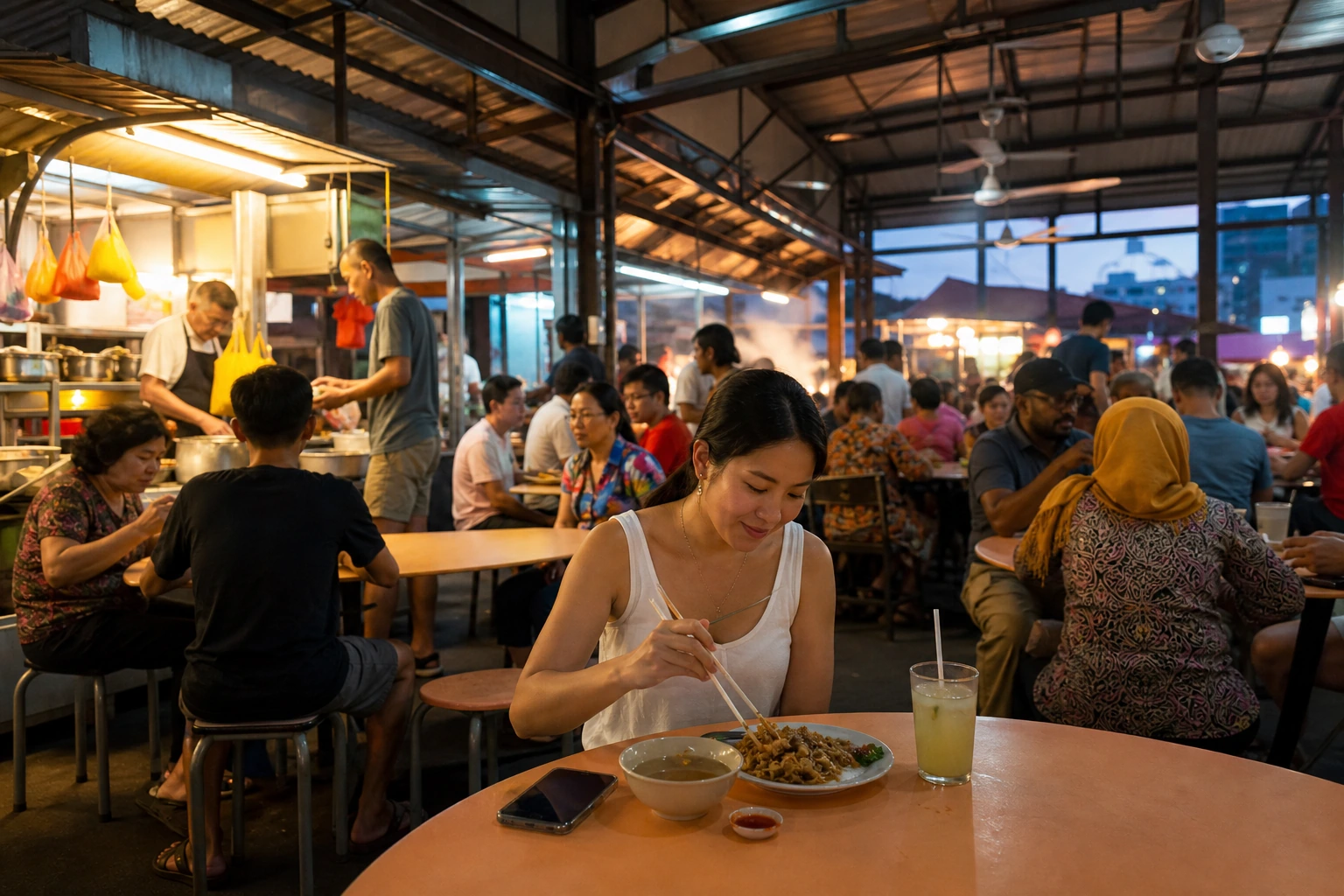
A sophisticated itinerary should therefore resist filling every night with a lengthy tasting menu. One intelligently chosen hawker lunch, one precise contemporary restaurant and one evening in a grand hotel often tell a richer story than three formal bookings. Ask what the evening is meant to provide: conversation, discovery, theatre—or simply an excellent plate at the right time.
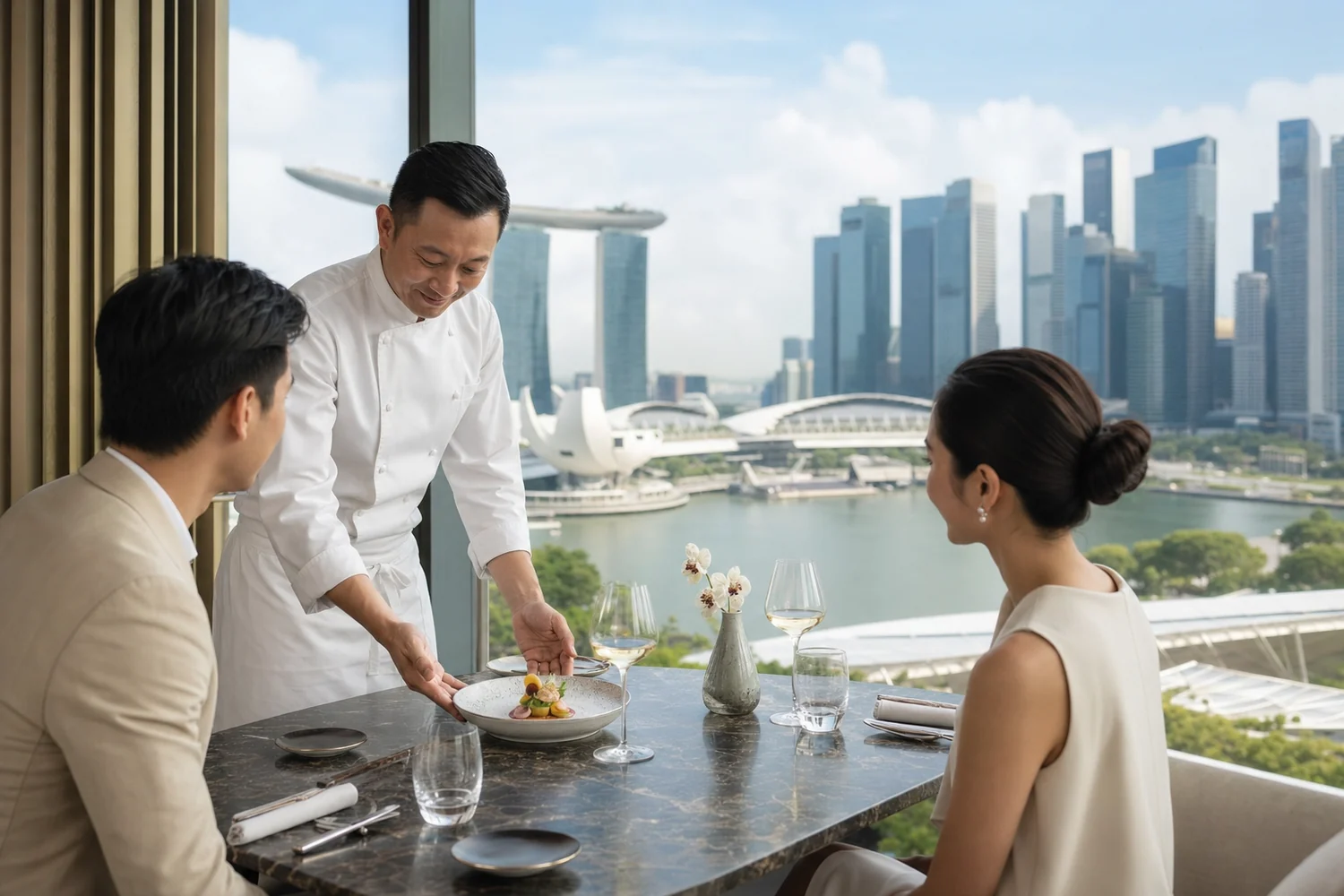
Reservations deserve advance planning, but timing matters just as much as prestige. An early dinner can be perfect after a long-haul flight. A later, more ambitious menu belongs after a quiet afternoon, not six hours of sightseeing. Table, transfer and return to the hotel should be considered as one experience.
A rooftop pool is an image, not an itinerary
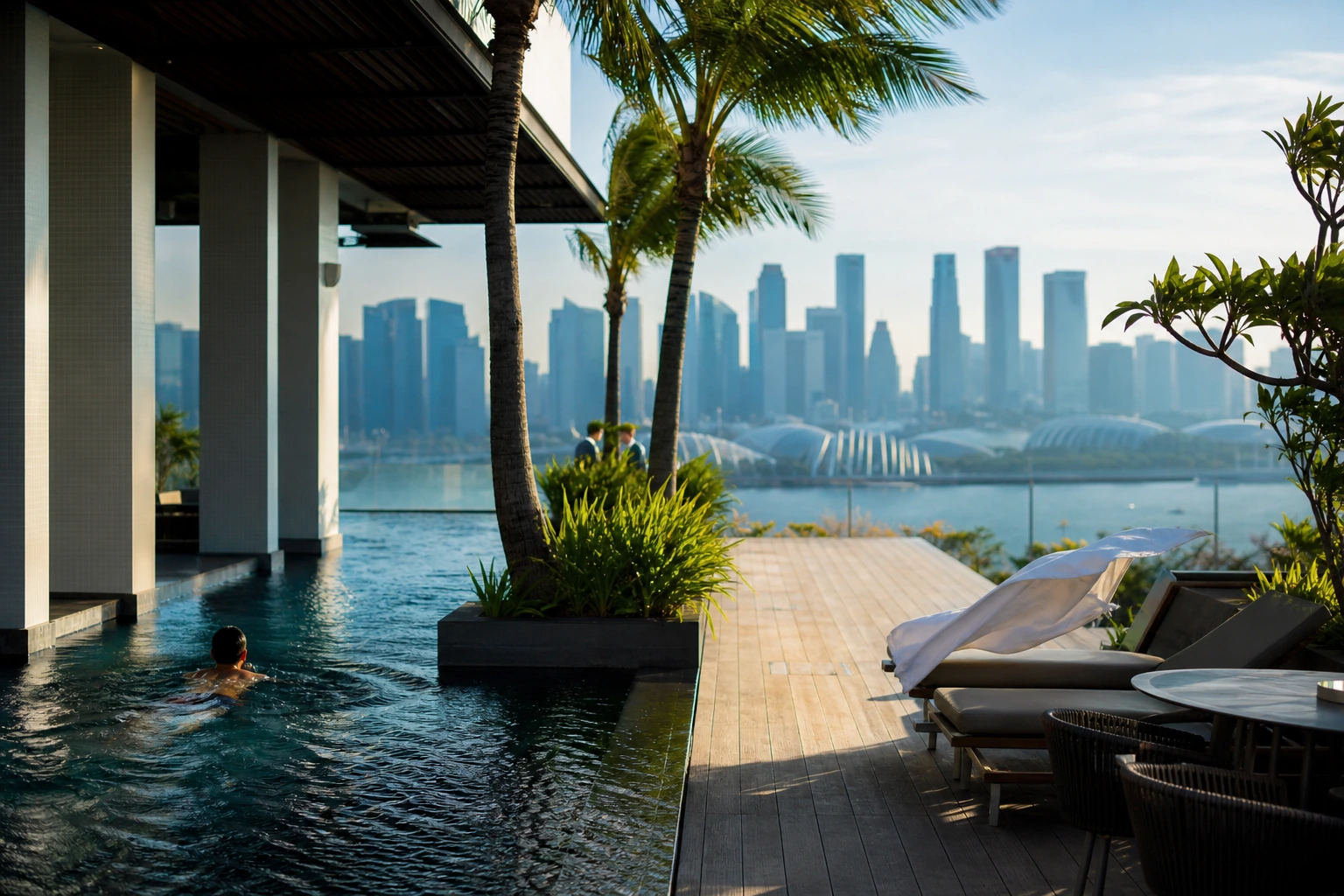
The panorama over Marina Bay is part of Singapore’s visual identity, but a pool should not decide the hotel on its own. Sun, shade, wind, privacy and the amount of time a guest will actually spend there matter more than altitude. A traveller who swims at dawn needs a different room and schedule from one who visits only for sunset.
Short stays produce an obvious contradiction: guests pay for the view, then remain outside all day. A bay-view suite earns its place when morning coffee, an afternoon pause or an early drink are built into the plan. Otherwise, a more characterful address in the Civic District may be the better indulgence.
Beyond the skyline, the city becomes specific
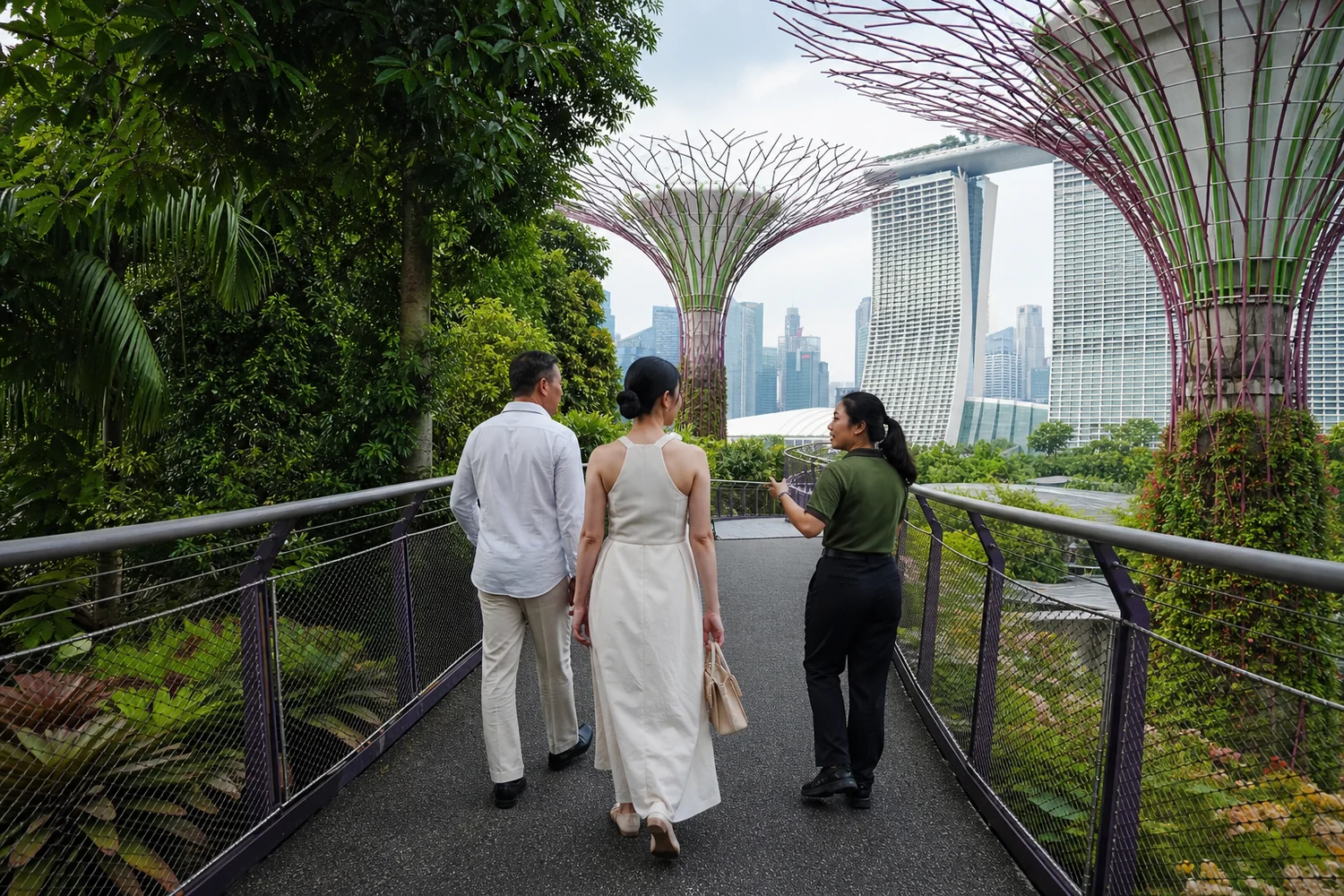
Marina Bay is a powerful opening scene, not a complete portrait. Chinatown combines temples, long-standing businesses and a new dining culture. Katong–Joo Chiat adds Peranakan history, colourful shophouses and a distinctive food identity. Dempsey is greener and quieter, with galleries and restaurants in former colonial buildings. The Civic District links Raffles, Esplanade and the National Gallery, revealing how closely Singapore’s history and contemporary ambition sit together.
A private guide is most valuable where context matters more than access. Two excellent hours can be more illuminating than a full day inside a car. Afterwards, leave space to look independently—in a bookshop, over coffee, at the Botanic Gardens or around a market.
A three-day rhythm that leaves room
Day one: arrive, recover and read the Civic District and Marina Bay in the late afternoon. A drink or uncomplicated dinner is usually wiser after a long-haul flight than the trip’s most important restaurant.
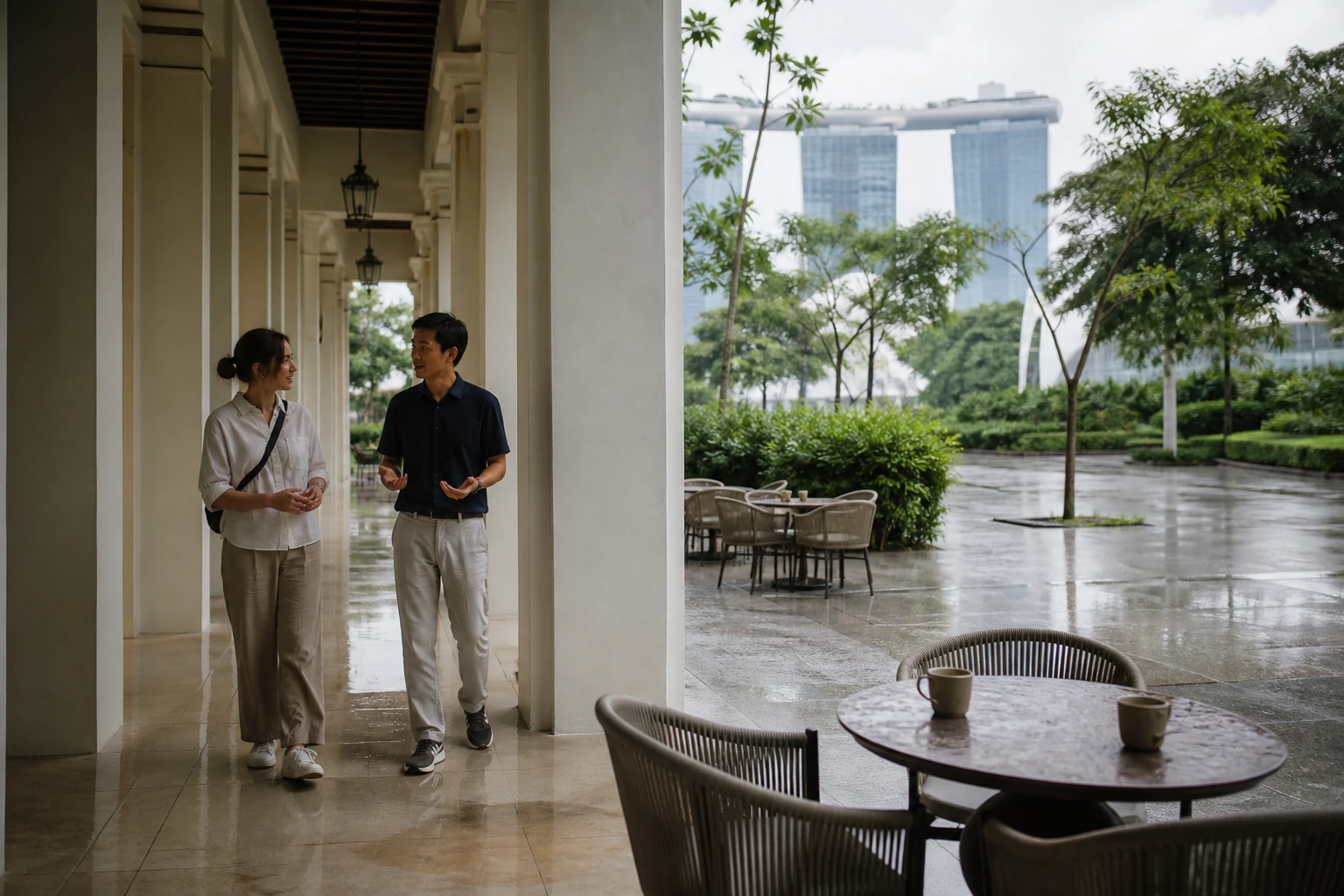
Day two: begin with the National Gallery or Botanic Gardens, follow with a local lunch and a guided introduction to Chinatown or Katong–Joo Chiat. Reserve the evening for one deliberate dining experience.
Day three: choose Orchard Road, Dempsey or a private architecture and design route. Guests at Marina Bay Sands should now make genuine time for the pool; those in the historic centre might favour the spa, their suite and an unhurried tea.
Take climate and calendar seriously
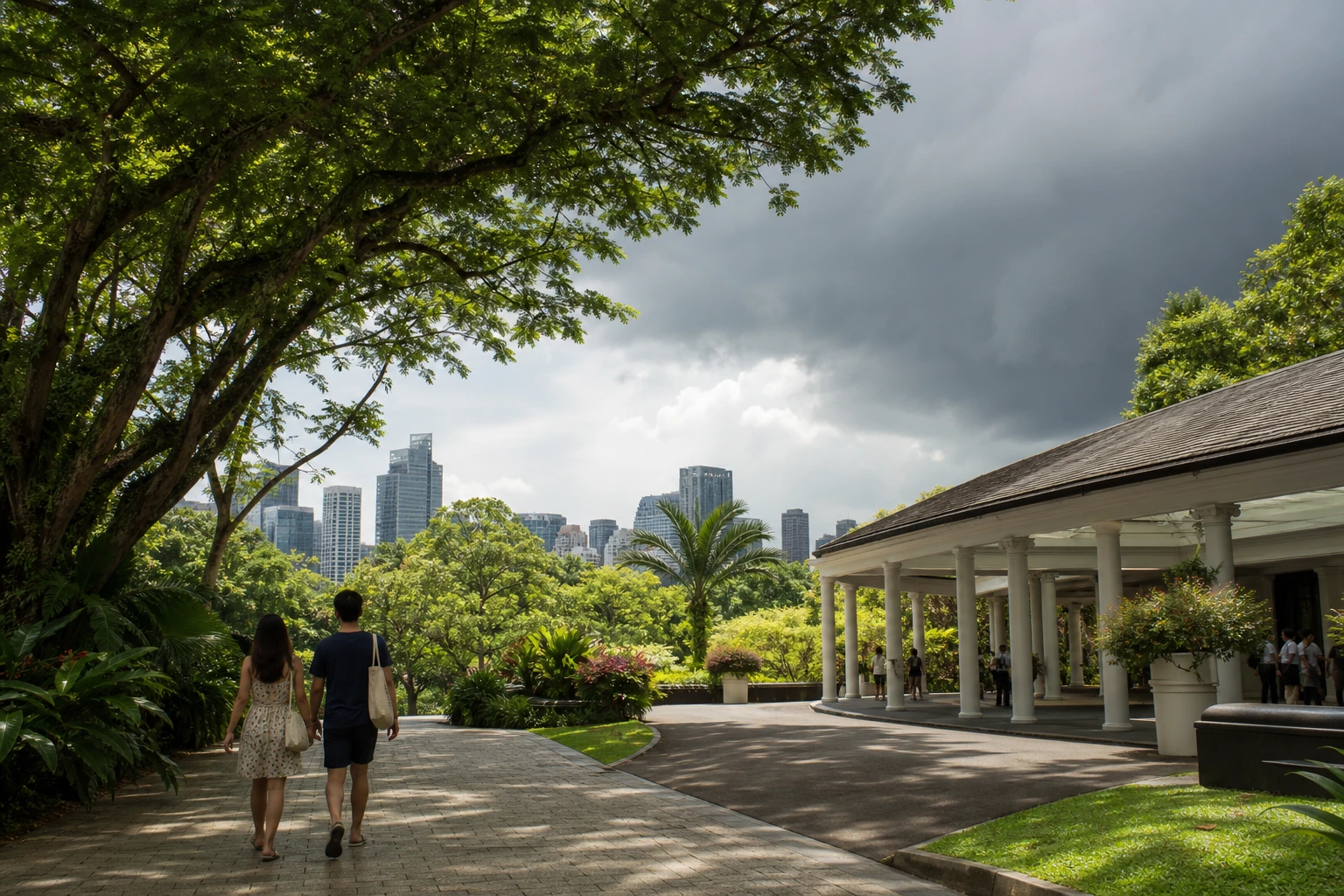
Singapore sits close to the equator. Its Meteorological Service describes a tropical climate with abundant rainfall, consistently high temperatures and high humidity throughout the year. The season therefore changes rhythm more than it defines a simple good or bad month. Early mornings suit outdoor exploration; museums, lunch and spa absorb the hottest hours and frequent storms.
Major dates—including Grand Prix season, National Day and international fairs—materially affect rates, availability and traffic. Some guests want that energy. Travellers seeking calm should discover those dates before, not after, the hotel and restaurant reservations are made.
Who will enjoy Singapore most
- Travellers who want culinary and cultural depth without sacrificing dependable logistics.
- Anyone seeking an elegant opening or finale to a wider Southeast Asian journey.
- Families, provided connecting rooms, pool access and a restrained daily plan are secured early.
- Experienced city travellers who enjoy moving between architecture, design, food and neighbourhood life.
Singapore is less persuasive for guests seeking beach seclusion above all else, or those determined to fill every day with long outdoor programmes. In those cases, keep the city short and exact—or combine it with a resort elsewhere.
The Deluxetargets view
For a first visit, we would stay three nights in a central location, choose the hotel for the city perspective it offers and make only one evening a major culinary production. Marina Bay belongs in the story, but should not dominate it. One neighbourhood, one hawker lunch and two hours with a brilliant guide add the local depth that a rooftop photograph never can.
Singapore’s luxury is not loud. It is the unusual union of urban energy and control—and an itinerary precise enough to feel spontaneous.