
The best destination for a couple is not automatically the most romantic. It is the place where both enjoy the same daily rhythm: rising early or lingering over breakfast, concentrating culture or allowing landscape to work, retreating together or occasionally moving independently through a city. Luxury begins with that agreement.
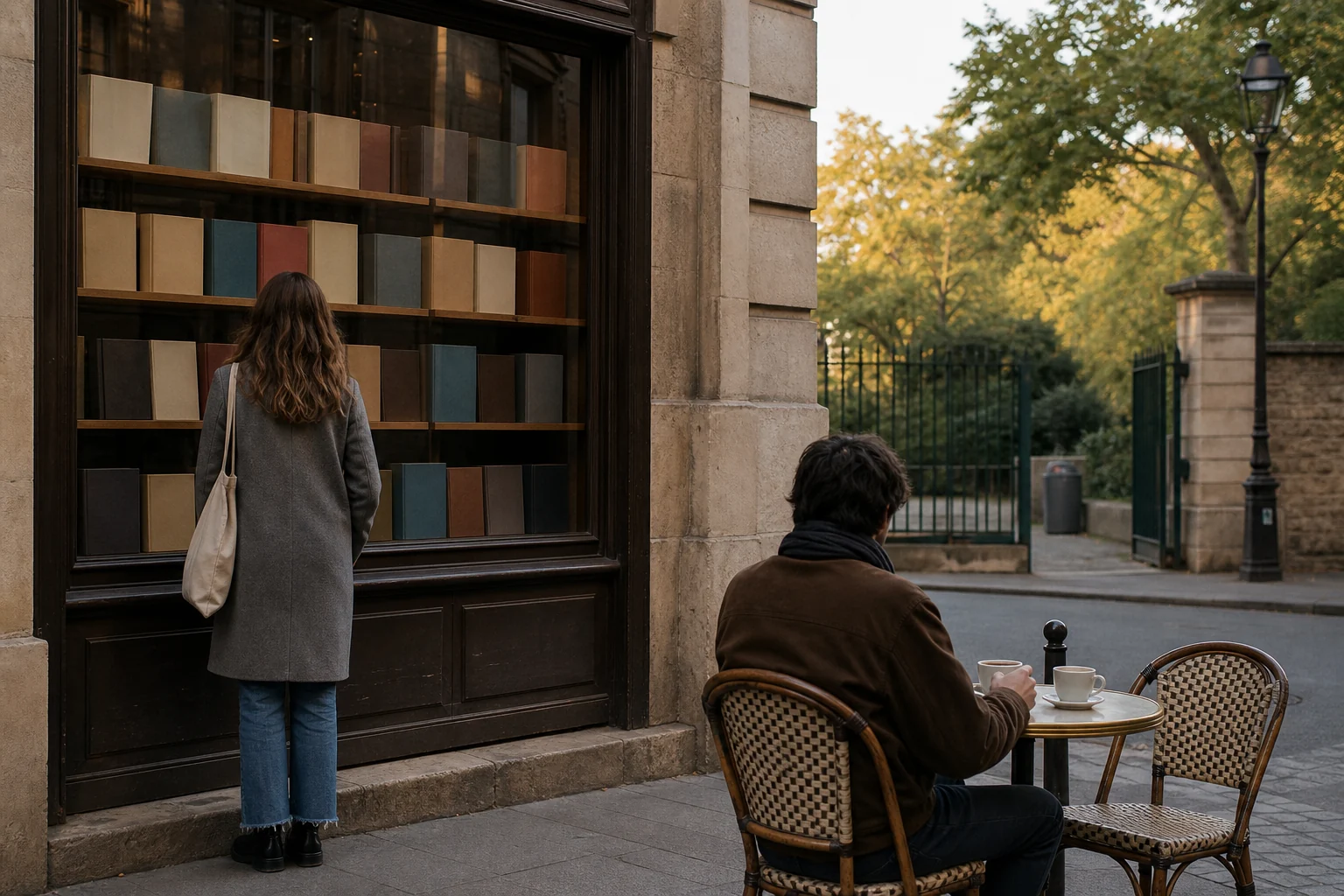
Six travel moods
- Urban independence
- Paris
- Ritual and attention
- Kyoto
- Complete retreat
- Maldives
- Shared wonder
- Okavango Delta
- Active scale
- Torres del Paine
- Slow sensuality
- Tuscany
| Destination | Suits couples who … | Strongest moment | Honest objection |
|---|---|---|---|
| Paris | Enjoy culture, food and some independence | An exhibition, free time and late dinner | Crowds, traffic and reservation pressure |
| Kyoto | Value detail, ritual and early hours | Quiet in the morning before density builds | Etiquette, seasonal pressure and walking |
| Maldives | Want little programme and much shared space | An entire day without changing place | Isolation and limited spontaneous variety |
| Okavango | Share wildlife interest and safari rhythm | Learning to watch together | Early starts, transfers and no sighting guarantee |
| Torres del Paine | Welcome weather, movement and large landscapes | A route whose effort becomes part of the memory | Wind, changeable conditions and different fitness |
| Tuscany | Love food, craft, villages and unused hours | A long lunch without another appointment | Driving, heat and crowded icons in peak season |
Paris: intimacy with room to move
Paris suits couples who need not spend every minute together. A hotel in the right neighbourhood allows separate interests in the morning and a shared table at night. Exhibitions, walking and restaurants provide structure without requiring a private spectacle.
The city becomes tiring when every famous institution and tasting menu is compressed into three days. One museum a day and a deliberate free window are usually more elegant.
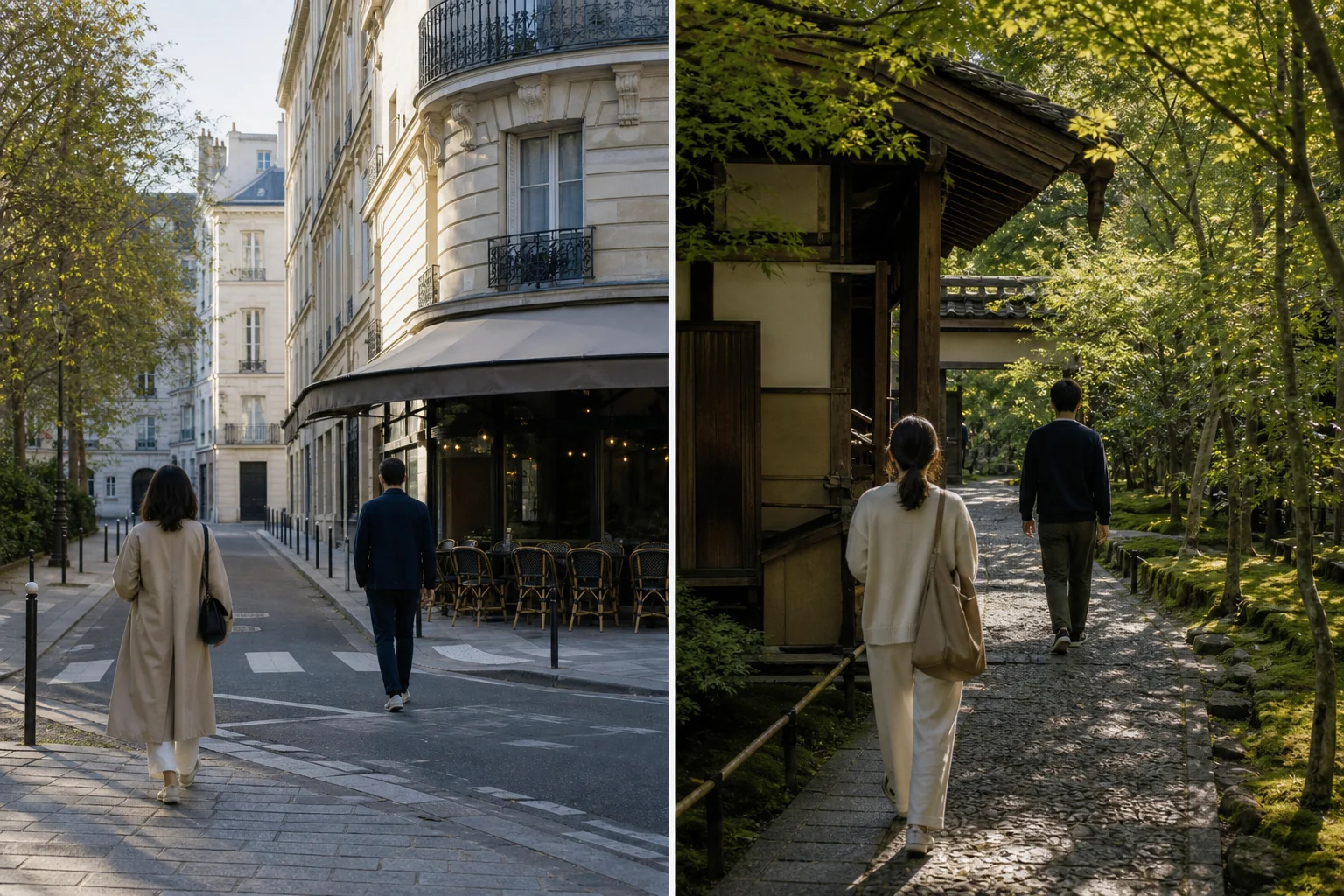
Kyoto: attention rather than spectacle
Kyoto rewards early rising, quiet observation and respect for local rules. Garden, craft, architecture and food emerge not from a long checklist but from good timing and an informed guide where context matters.
It suits less well when one partner wants to sleep late and the other to visit every temple. During popular seasons, hotel base, routes and reservations are decisive; cultural access should never be assumed to be private.
Maldives: the art of adding nothing
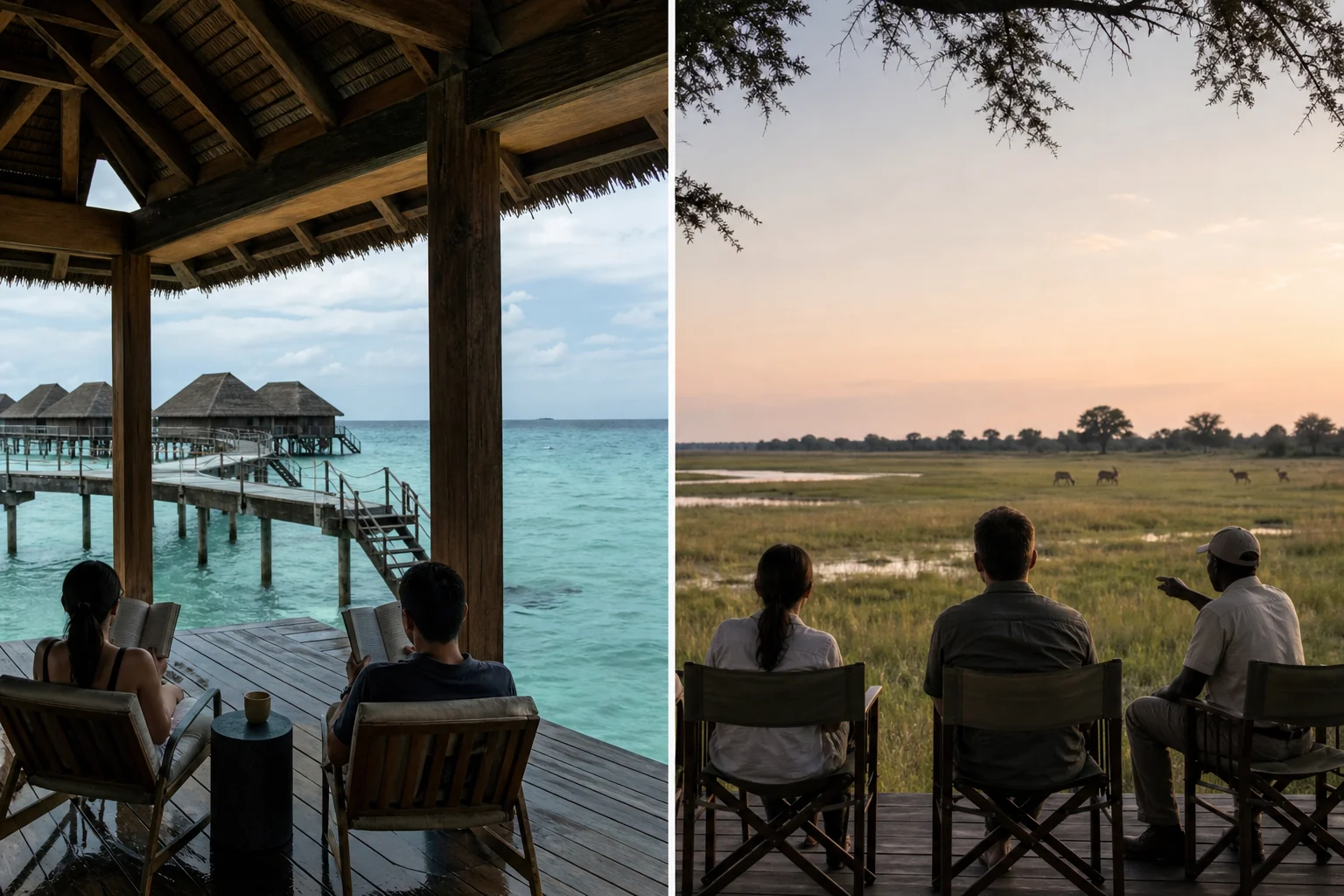
The Maldives works for couples who do not confuse retreat with boredom. The right island has a villa that remains pleasant in rain and enough food and activity options without turning the week into a timetable.
Transfer, island scale, villa position and guest mix matter more than the brand. Anyone needing a city, galleries or spontaneous changes each day should keep the retreat shorter or combine it with another destination.
Okavango Delta: learning to see together
In the Okavango, intimacy comes through attention: tracks, light, water level and waiting for animals. The seasonal flood cycle shapes landscape and activities. A strong safari plan chooses camp and timing for the desired experience rather than a guaranteed species list.
Days often begin early and follow nature and camp operations. A couple with very different enthusiasm for safari or light aircraft needs an honest countercheck. A private vehicle creates flexibility but cannot control weather or wilderness.
Torres del Paine: a relationship in motion
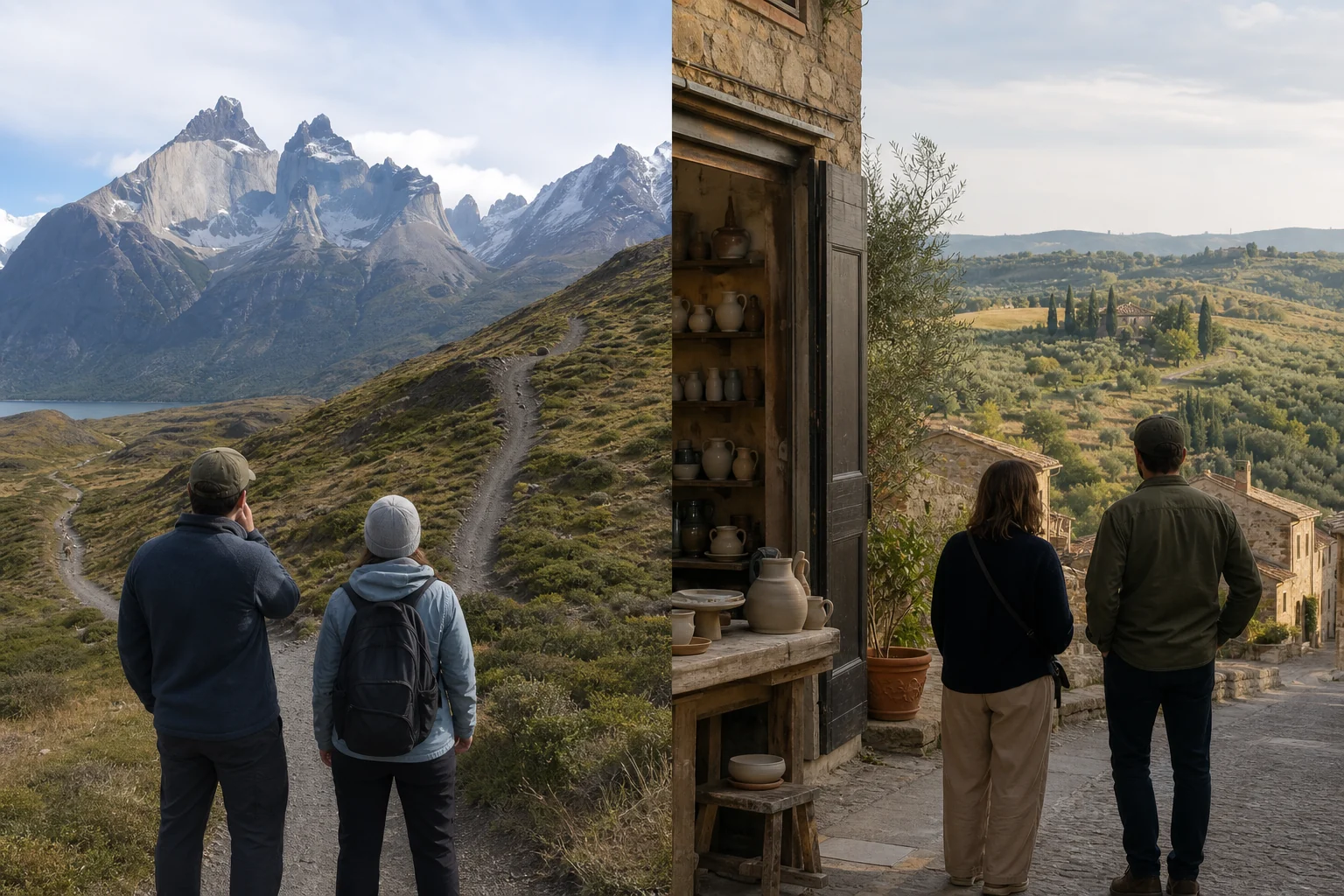
Chilean Patagonia suits couples who accept effort and weather as part of the experience. Not every day requires a long hike: a strong hotel or lodge can support routes of different length, views and recovery.
Fitness, knees, fear of heights and comfort expectations need a candid comparison. The stronger walker need not dictate the plan. If both still want to speak over dinner, the appropriate path is better than the famous one.
Tuscany: slow enough to taste
Tuscany connects villages, craft, landscape, food, cycling and walking. It is particularly effective from one base for several nights. A country hotel whose restaurant and garden can carry an unplanned day is more valuable than moving luggage daily.
High summer and iconic sites may bring heat, traffic and crowding. Shoulder seasons, early hours and fewer stops generally create more shared ease than the maximum number of famous names.
Romance is not bookable; the hotel remains a neutral anchor
Private dinners, spa suites and flowers can be delightful, but they cannot repair the wrong rhythm. Couples often remember a good room, a free afternoon and a guide who knew when to leave more vividly.
Special gestures should respond to the relationship, not a standard catalogue. Discretion also means asking whether surprises are welcome.
Two people rarely travel with identical energy. The hotel needs spaces that work together and alone: a room with retreat, a restaurant without logistics, a spa or garden and a position that does not require a driver for every move.
The most famous suite is not necessarily correct. Bed, bathroom, outlook, acoustics and storage shape a couple’s stay more than decorative romance.
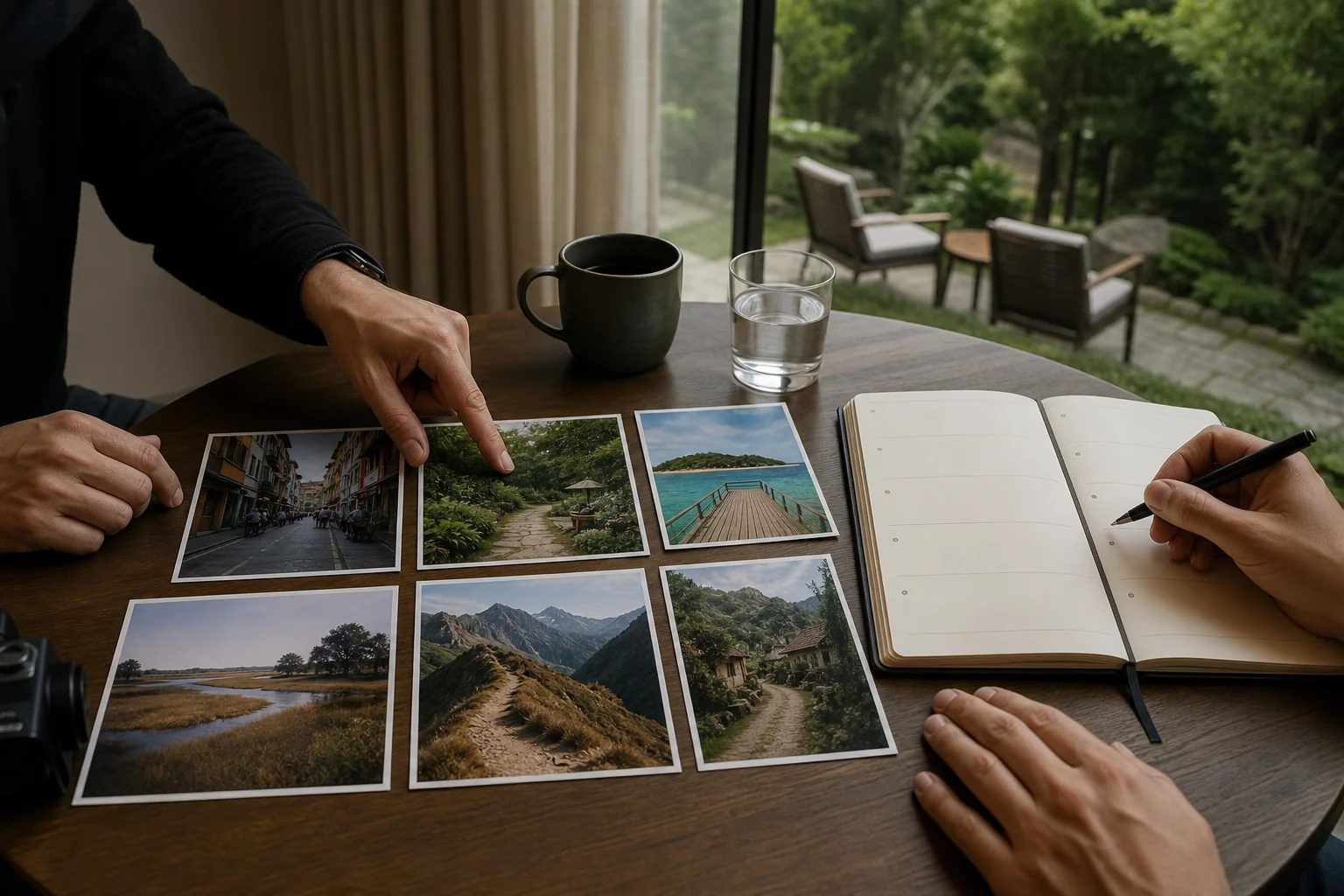
One journey, two briefs
Each partner separately answers three questions: how should the trip feel different afterwards, which situation must not occur, and which experience is essential Only then are the answers combined.
This reveals whether “quiet” means a beach to one person and a calm cultural morning to the other. Good planning finds overlap instead of relying on silent assumptions.
How much programme can intimacy carry
One strong anchor a day is often enough: museum, safari, walk or long lunch. Between them remain journeys, sleep and spontaneous decisions. A fully reserved diary may remove uncertainty and every trace of ease with it.
Short trips select less; long trips schedule pauses. Free time is not an unsold product.
Questions before booking
- Do both want quiet, activity or cultural density at the same dose
- Which time of day matters to each person
- How much shared and independent programme is desired
- Which transfers, weather or physical demands may create strain
- Which hotel still works without a daily programme
- Which surprises or public gestures are unwelcome
- What is the quieter alternative to the first-choice destination
The Deluxetargets recommendation
Do not choose the most romantic backdrop; choose the place in which both people become their best. Paris permits intimacy and freedom, Kyoto creates attention, the Maldives reduces, the Okavango teaches shared wonder, Patagonia brings movement and Tuscany offers time. Luxury for couples is not a rose petal—it is a rhythm neither needs to explain to the other.