
A journey starts with better questions
A strong booking does not begin with a hotel list. It begins with an honest description of the people, purpose, stamina and decisions that should not be improvised once travel starts. A precise brief is not a form; it is the architecture of the journey.
Purpose decides what cannot be compromised
An anniversary, recovery after a demanding period, family connection, nature or a particular event produces a different trip. A purpose used only as a heading often leads to an attractive but interchangeable shortlist. Ask instead how the travellers will know on the final evening that the journey fulfilled its purpose. The answer may be quiet, time together, one specific encounter or reliable privacy.
From that answer, define three non-negotiables and a separate wish list. A nonstop flight, two genuine bedrooms or proximity to medical care may be essential; a private pool, preferred brand or celebrated restaurant may be expendable. Give one person final authority over budget, timing and compromise. Otherwise every new option starts another planning round while availability disappears.

Rhythm matters more than the number of highlights
“Luxurious” does not describe a day. Should it begin early and active, unfold slowly over breakfast, centre on family or remain largely private How many fixed appointments feel enriching before the itinerary becomes an obligation Desired rhythm determines hotel position, transfer length, guide hours and the number of moves.
Every change of base costs packing, checkout, travel, orientation and settling in again. Two spectacular hotels may deliver less quality than one exceptional base. Private guides, boats, permits and sought-after tables are ranked by purpose: secure what carries the journey first, then optional decoration. The language and actual qualification of the proposed guide belong in the confirmation.
Dates, season and weather answer different questions
School, work and an event create genuine limits; other dates are often habit. Define flexibility in nights, weekdays and acceptable departure times. Two or three days may unlock better routes, room positions and cancellation terms. An advisor can compare intelligently only when the range is real rather than politely theoretical.
A month does not guarantee sun, snow, wildlife or open restaurants. Climate history, current conditions, seasonal operations and the desired natural event are different sources of information. The useful question is not “Is October good?” but “How sensitive is our main purpose to rain, heat, swell or closed passes, and what still works in the same place?”

Each traveller requires an individual feasibility check
Passport validity, nationality, residence status, transit, consent documents for minors and entry requirements depend on the person, route and date. A connection may carry separate visa, health or baggage rules even without intended entry. Verify them with current official authorities and carriers before non-refundable payment, then check again before departure.
Health preparation is equally individual. HealthyTravel recommends destination information, vaccine review, a travel kit and suitable insurance; personal questions belong early with a qualified travel-health professional. Medication in hand luggage, letters, refrigeration, oxygen or local care may require lead time. An advisor can organise but cannot diagnose or issue universal health and entry advice.
Measure stamina and accessibility in actual routes
Heat, altitude, boats, small aircraft, stairs and long transfers affect people differently. The slowest credible pace in the party is a design parameter, not a weakness. How long can each person sit, stand or walk continuously Does a full touring day follow an overnight flight Is there a quiet place for one traveller to pause without stopping everybody
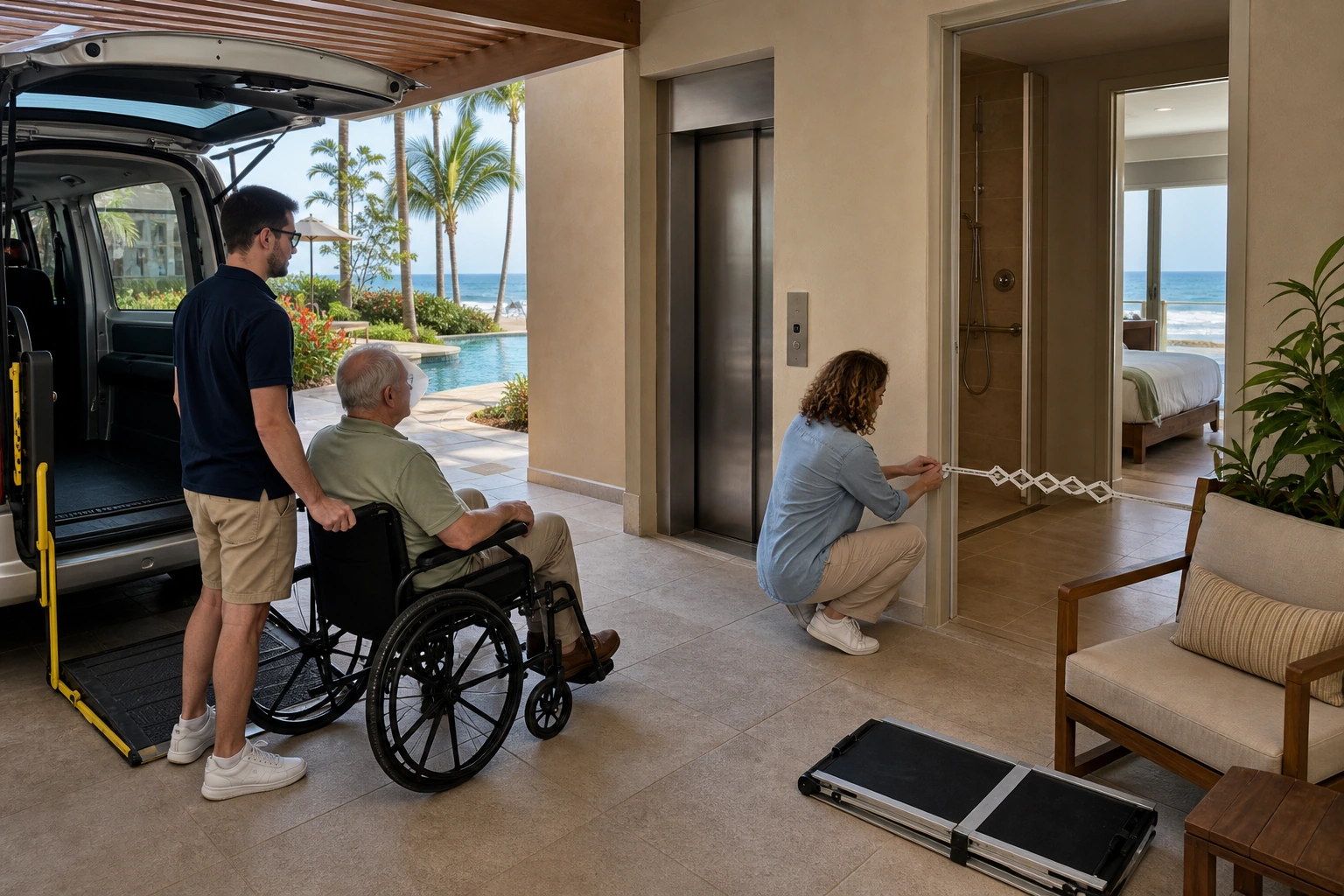
“Accessible” must be broken into routes: airport assistance, vehicle height, step-free entrance, lift dimensions, room door, bed, shower, restaurant, pool and beach. A symbol or “wheelchair friendly” claim cannot replace dimensions and photographs. Confirm the actual equipment in writing and create a functional fallback wherever the need is critical.
The room question is a floor-plan question
Who sleeps with whom, who needs privacy and who supervises children at night “Family suite”, “two bedroom” and “connecting rooms” are not standard configurations. Confirm the internal door, shared entrance, lockable areas, floor, distance, king or twin beds, sofa bed, rollaway and cot for the true occupancy. The plan matters more than the category name.
For children, age, water confidence, care, meals, sleep and equipment affect both hotel and day plan; a kids club does not replace family logic. Separate food safety from preference. Allergy and coeliac disease require different processes from religion, dislike or taste. Discuss kitchen capability, cross-contact, lead time and alternatives without assuming a guarantee the property has not expressly made.
The first hotel night begins in the flight plan
The best flight is not automatically the shortest or most expensive. Departure, connection, seat, chance of sleep, baggage, overnight pattern and actual arrival determine whether day one works. The nearest airport on a map may lose its advantage to traffic, borders, ferries or the wrong vehicle. Calculate door to door, including a buffer and the route still required after a delayed landing.
Luggage travels as its own system. Sports equipment, stroller, medication, valuables and weight limits affect airline, private flight, vehicle and stops. On a small aircraft or boat, dimensions may matter more than the long-haul allowance. Forward shipping needs an address, customs route, receiving contact and time margin; a luxury booking does not make the logistics disappear.

The hotel and destination must support the day
Centre, beach, quiet, view and airport access often conflict. A remote resort can provide privacy while making every dinner a long drive. A city hotel solves culture and restaurants but not necessarily waterside recovery. Assign each property a role before choosing it: principal destination, touring base, retreat or simple transit night.
Then test driving times to the essential experiences under realistic traffic, along with opening days and seasonal access. A spectacular list of addresses is not yet an itinerary. Quality appears when movement, pauses and atmosphere work together over several days.
Read rate, total budget and contract together
Breakfast, tax, resort fee, transfers, benefits, minimum spend, occupancy and extra-person charges sit beside the room price. Flights, guides, dining, gratuities, insurance and reserve complete the budget. The lower visible rate may be the higher total when essential items are absent or payment terms are unfavourable.
Record cancellation, change, deposit, no-show and prepayment service by service, with date and amount. “Flexible” means nothing without both. Booking structure also matters: a qualifying package, linked travel arrangement or separate contracts may carry different information and protection. Identify organiser, retailer and supplier before payment; the classification depends on the actual booking route and applicable law.

Insurance, data and Plan B complete the design
Rescue, treatment, repatriation, cancellation, curtailment, baggage and specialist activities each carry limits, exclusions and excesses. The Swiss FDFA stresses personal responsibility and adequate cover; the policy wording controls the detail. Review insured people, limits, pre-existing conditions, activities, reporting route and assistance contact before the first large non-refundable payment.
Communication needs rules too: lead contact, preferred channel, emergency number and access limits for passport copies, health information or surprise plans. Plan B is not a duplicate journey. It defines decision points: what happens after weather, flight failure, illness or closure, who decides and what financial room is authorised That clarity creates ease during the trip.
The Deluxetargets recommendation
Approve the booking only when the people, purpose, genuine date flexibility, documents, stamina, room configuration, door-to-door transport, rate and cancellation exposure are understood. Name three non-negotiables and one decision maker. A beautiful idea then becomes not an overfilled catalogue, but a viable journey with the right rhythm.