
A villa does not win automatically through privacy, nor a hotel through service. In Tuscany, daily life decides: who organises breakfast, driver, pool and repairs, how equal the bedrooms are, and how far the property lies from wine, restaurants and Florence. Only when those questions are answered does a beautiful building become the right way to travel.
The answer begins with the travelling party
A couple staying four nights needs something different from three generations staying two weeks. Headcount, age, mobility, sleep rhythm, meals, desired togetherness and tolerance for organisation matter. Accommodation is chosen not by square metres but by the day it makes possible for these particular guests.
There is the independent holiday villa, the professionally staffed standalone house, the managed residence within a hotel or estate, and the conventional hotel with rooms or suites. Their photographs may look alike; their staffing, dining, maintenance, cancellation and accountability do not. Each category needs a fresh reading.
Four accommodation models, four kinds of freedom
A private rhythm, kitchen, pool and shared living space are its principal strengths. The group may also organise groceries, breakfast, waste, transport and minor problems itself. A local contact can hand over keys without being a concierge. Guests expecting complete hotel service may find autonomy turning into unpaid work.
A house manager, daily housekeeping, chef, service and maintenance can make private life effortless. Yet “staffed” describes no scope. Names, credentials, hours, days off, live-in quarters, night contact and cover belong in a written rota. Staff are neither permanently invisible nor automatically available around the clock.
A managed residence on a resort or wine estate may link housekeeping, concierge, drivers, restaurants, spa and technical backup. It preserves common space while often reducing total seclusion. Internal drives, buggy or car, opening hours and priority need checking. Proximity to the hotel does not make every service included.
Several restaurants, room service, spa, bar, reception, housekeeping and another room when something fails make the hotel powerful. Couples, short stays and guests with spontaneous needs benefit most. The trade-off is less private common space and a rhythm tied more closely to breakfast, pool and restaurant operations.
Party, duration and occasion determine the model
A villa works when guests genuinely want to breakfast, rest and spend several evenings together. Six people with different restaurant plans, bedtimes and service expectations may be freer in three fine hotel rooms. Group size is a clue; shared way of living is the real criterion.
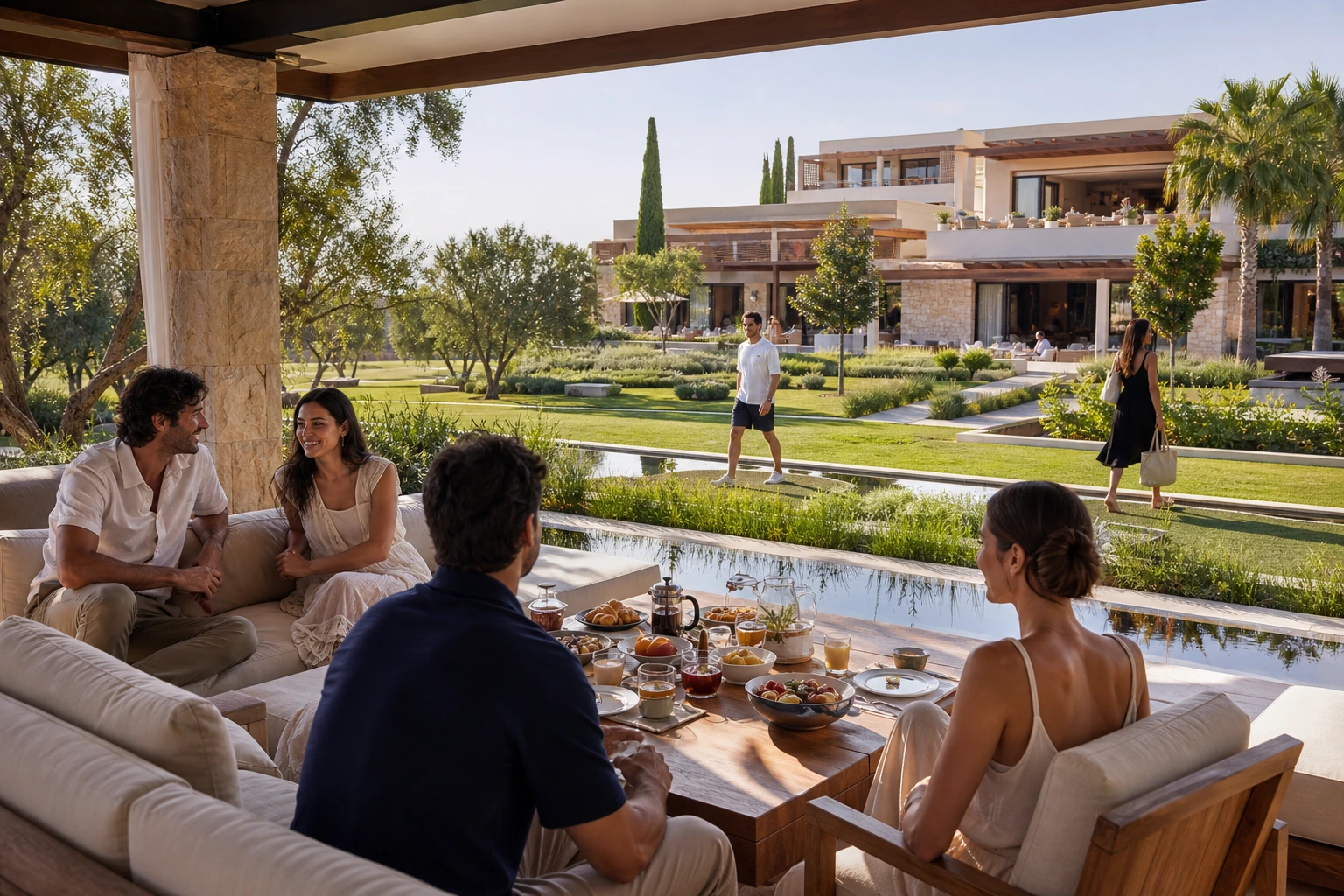
Villa arrival, groceries, staff briefing and orientation consume time. Across three or four nights, those systems rarely settle. At five to seven nights routine develops; at ten, laundry, kitchen and living room become especially valuable. Minimum stays and fixed arrival days may decide the matter anyway.
A family holiday, birthday, friends’ trip, wine week and wedding have different rules. A celebration may trigger limits on noise, visitors, catering and events. A quiet gathering may not need event permission, but extra guests still require approval. Purpose, outside suppliers and maximum attendance are disclosed before contract.
Bedrooms, bathrooms and common space
“Six bedrooms” can mean two principal suites, two doubles and two small rooms in an annexe. Request area, bed, bathroom, climate, view, steps, noise and distance from the main house for each. Guests paying equally often expect comparable comfort. Fair allocation begins before the deposit.
Young adults or a couple may relish their own cottage; parents of small children and reduced-mobility guests experience the night walk differently. Verify lighting, steps, weather exposure, security, door communication and distance. “Guest house” is not a quality grade. Treat it as a complete separate sleeping product.
En suite, shared bathroom, bath with hand shower, low ceiling and a step are materially different. Hot water, pressure, sockets, storage and blackout also belong in the room profile. In historic houses, every bathroom may differ. A total count says little about daily ease.
Can everyone dine, sit and retreat indoors at once when it rains Is there a second quiet room for work, reading or children Villa photography often celebrates the terrace and hides the winter plan. Interior space is the insurance against heat, rain and incompatible rhythms.
Kitchen, chef and breakfast form the operating centre
A private chef needs cooking capacity, refrigeration, storage, dishwasher, deliveries and a waste route. Some design kitchens serve breakfast well but not dinner for twelve. Clarify whether guests may use the same kitchen, whether a service kitchen exists and who cleans after an external chef evening.
Hours, shopping, menu planning, children’s food, allergies, drinks, table service, cleaning and cancellation are confirmed separately. Is the chef exclusive, introduced by the operator or external Provisions may be billed at cost, marked up or packaged. “Chef available” is not a booked meal.
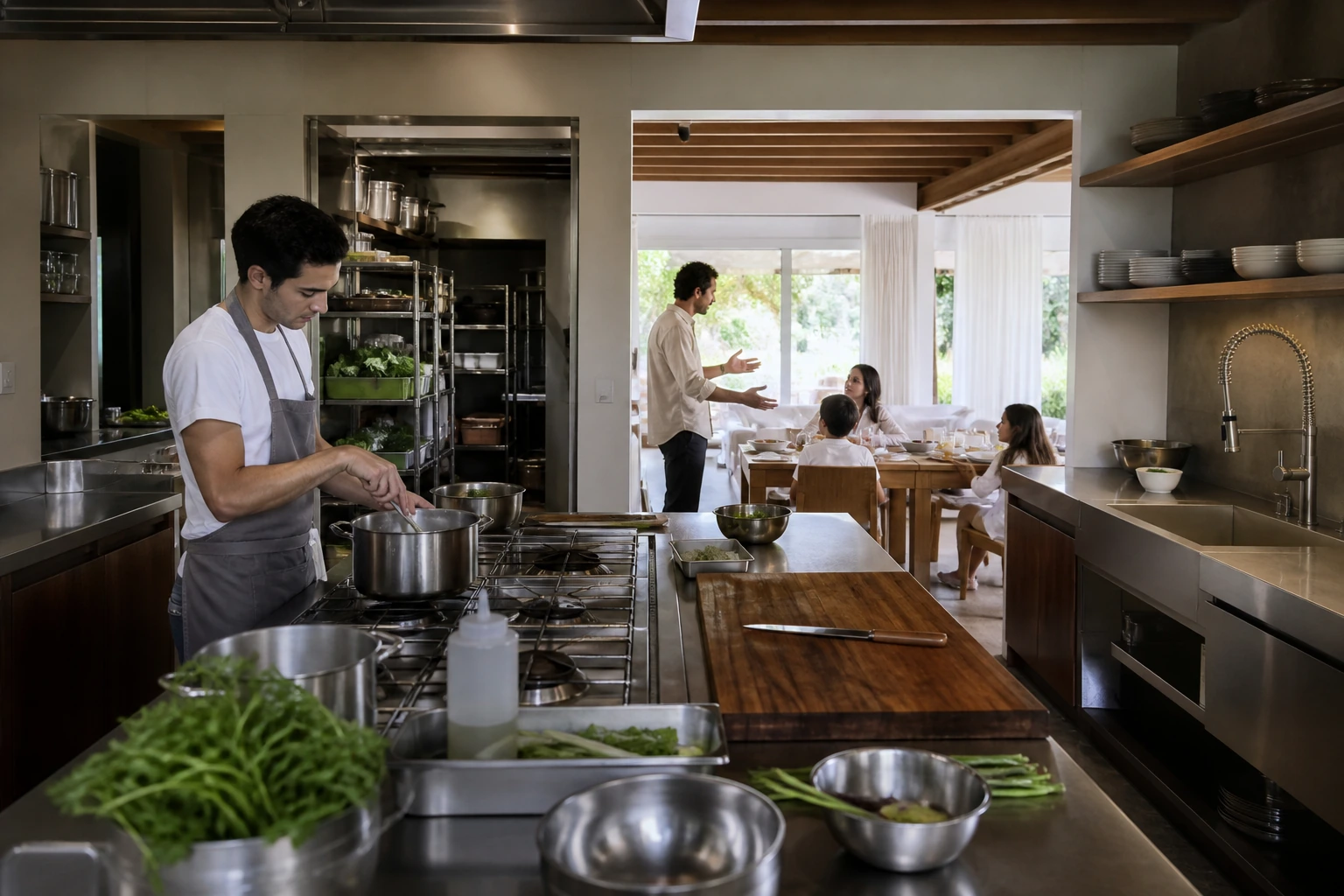
Who prepares coffee, bread, eggs and fruit, at what hour and on how many days Must the first morning begin with a supermarket trip An exceptional dinner does not repair a chaotic start. Families with early children, late sleepers or excursions need flexibility that remains realistic for the team.
Welcome basket, first stock, daily provisions, wine, water and specialist products are separate items. Check shopping fee, receipts, mark-up, delivery time, minimum order and ownership of leftovers. The nearest supermarket can look close on a map and feel distant across rural roads.
Housekeeping, laundry and technical readiness
Daily cleaning can mean several staff for two hours through the private morning. Confirm timing, bedroom access, beds, bathrooms, kitchen, turndown, towels and days off. A villa remains a home in use; agreed service windows protect guests and team alike.
A guest washing machine, laundry service, drying, pressing and dry cleaning are different. In a historic house, the machine may sit in a staff-only room. Verify capacity, turnaround, price and delicate clothing. Families often need function today, not formal service returned in 48 hours.
An emergency number may wake a manager without producing night room service or an on-site engineer. Define who answers, how quickly someone can arrive and what counts as an emergency. Hotel reception usually has the stronger system; a remote villa needs a credible on-call plan.
Power, hot water, climate, pool, gate, refrigerator and internet can fail. Ask about generator or backup, spare keys, local engineer, response time and alternative accommodation. Historic character is welcome; repeated failures without a plan are not character.
Connectivity, driveway, check-in and driver
Thick stone, outbuildings and rural lines create dead zones. A speed test in the salon says nothing about bedrooms or pool. Guests working, streaming or connecting medical equipment should state the need precisely. Mobile signal is not a guaranteed fallback; speed and availability remain time-sensitive.
A strada bianca, narrow bend, low gate, darkness and steep approach affect vehicle choice and night arrival. Request coordinates, video or current photographs, ground clearance, turning point and wet-weather alternative. A sports car can be the wrong luxury decision; a van will not fit every village.
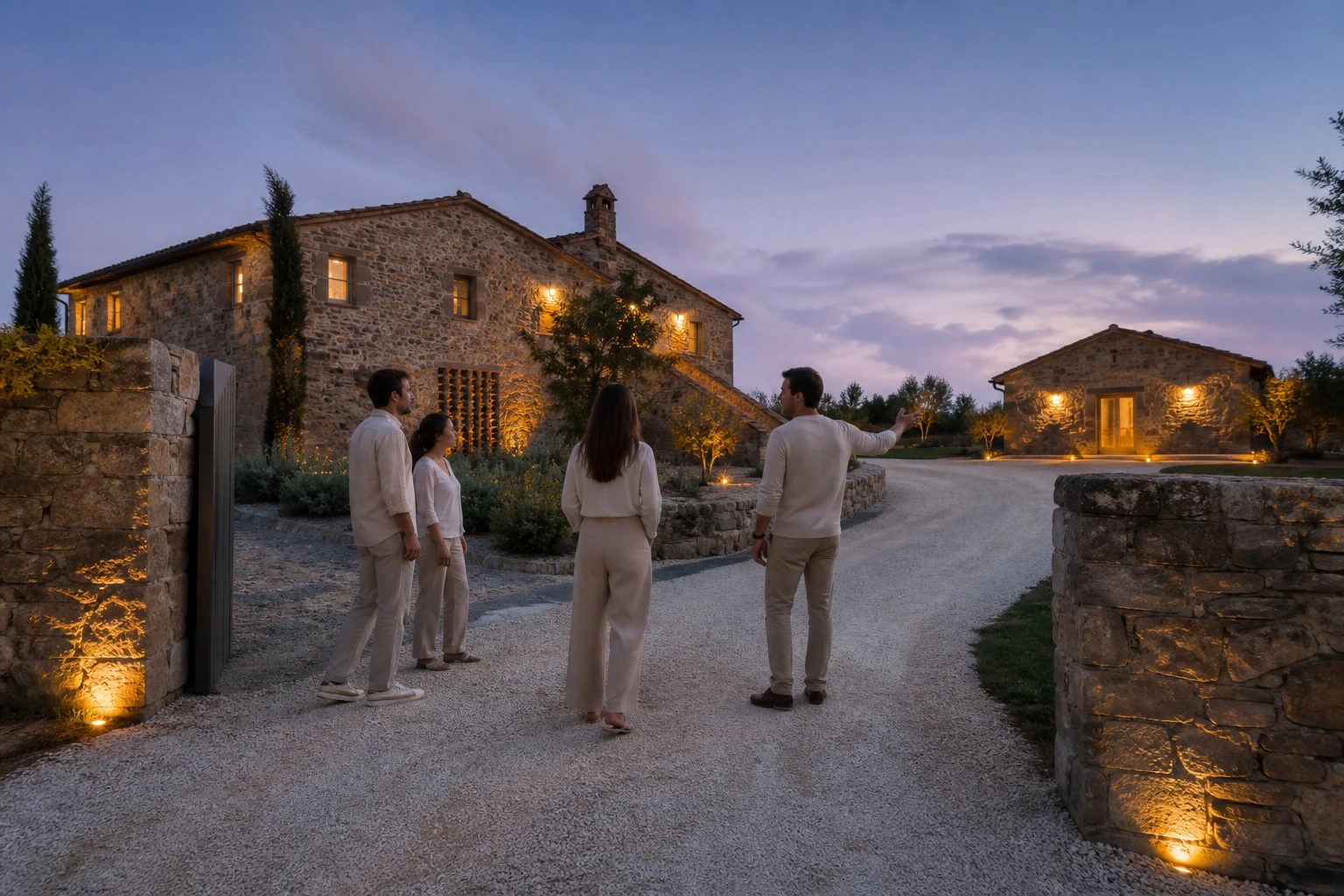
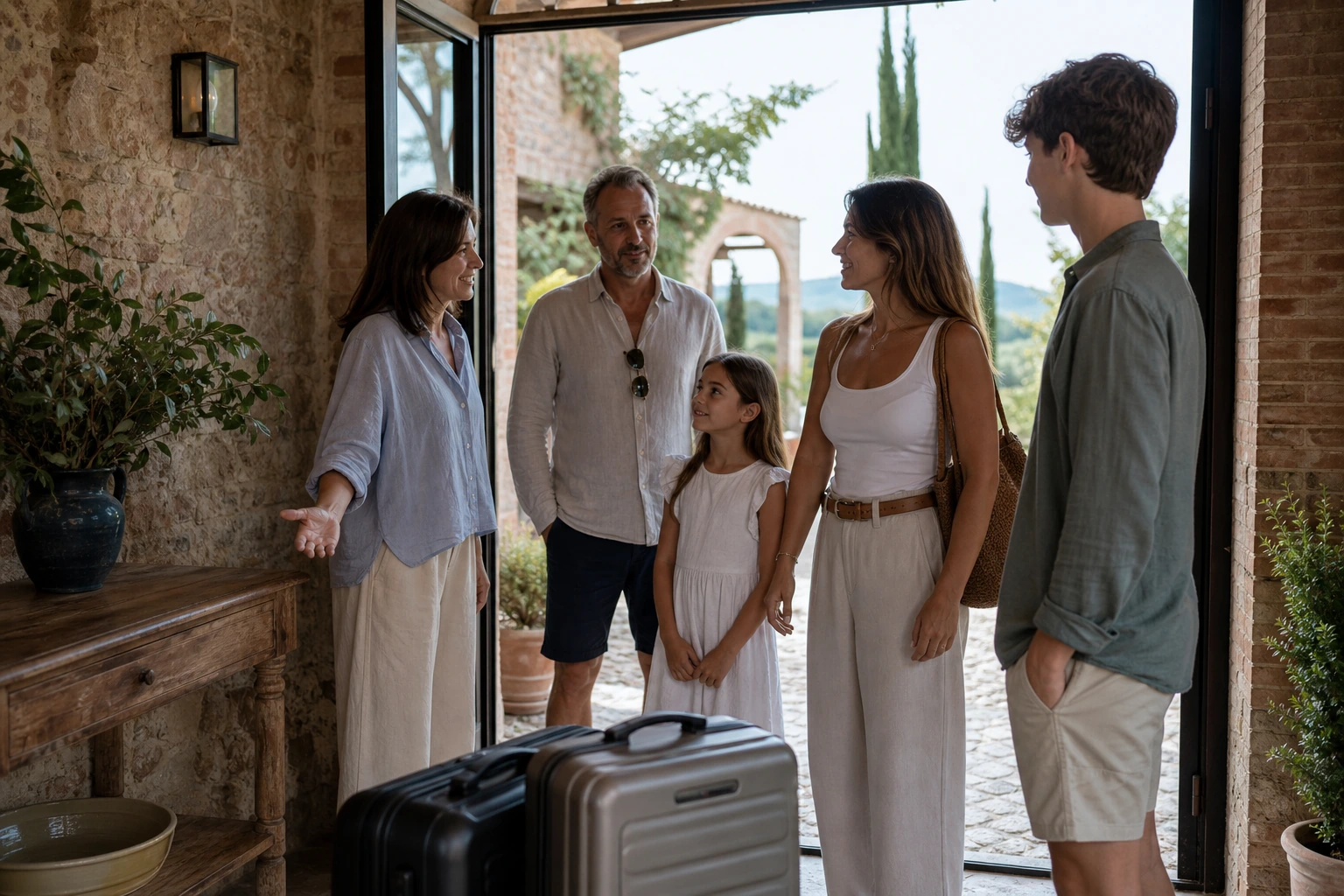
A key box and digital manual are not enough for every party. Complex climate, alarm, pool, heating and gate systems deserve a handover. Confirm latest arrival, delay contact, luggage help and first meal. After a late flight, the first task should not be finding the fuse box and drinking water.
Wine, dinner and Florence may require a vehicle every day. Will it remain on site, operate on call or attend selected dates Add hours, waiting, overtime, vehicle size and return. A remote villa can cost more in drivers than a more expensive, better-positioned hotel.
Using Val d’Orcia for a Florence day trip creates long roads and ZTL risk. On a first journey, two nights in a city hotel plus five to seven in a villa is usually more elegant. A hill hotel outside Florence also depends on transfers. MAG-185 designs the full geography.
Privacy, security, pool and rural reality
Staff house, owner’s apartment, neighbouring villa, public road, footpath, farming and drones can introduce sight or sound. Test pool, bedrooms, drive and garden both ways. “Secluded” often means distant rather than unseen. Gardeners and pool technicians need agreed windows too.
Alarm, cameras, gate, safes, keys and night lighting provide protection while affecting privacy. Position, purpose and data handling for every camera should be disclosed; indoor cameras are a particular warning sign. Qualified parties determine legal compliance. Guests need clear emergency and access information.
Opening, heating, temperature, cover, fence, alarm, depth, steps, light, towels and daily care are confirmed individually. “Heated on request” needs lead time and may carry cost. Weather and plant affect temperature and use. Children require responsible supervision; a cover does not replace it.
Some rooms have individual units; others only fans or cooling in selected spaces. Verify every bedroom, controls, operating hours and noise. Heating matters in spring and autumn too. Legal or energy-related restrictions may apply and need current explanation from the operator.
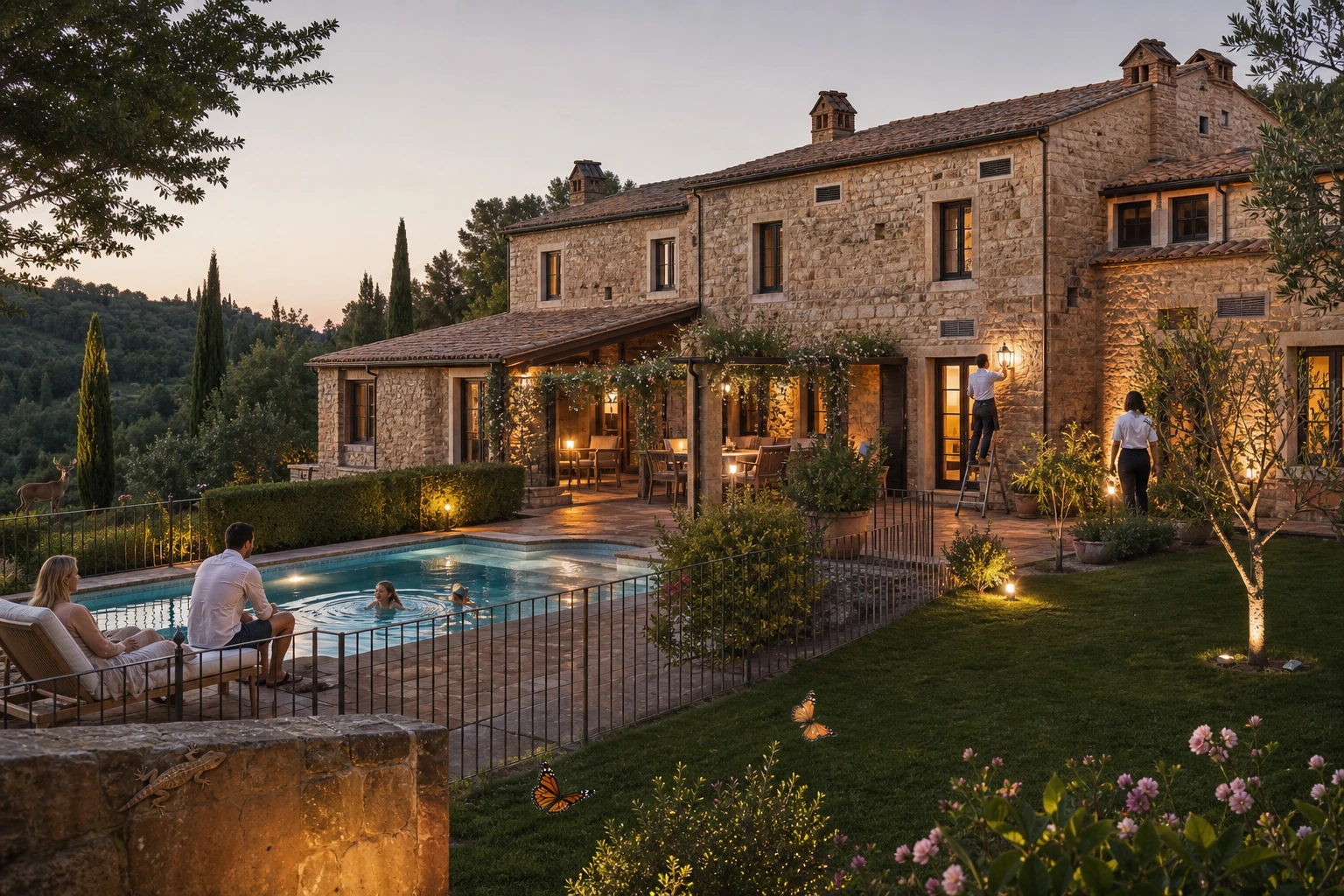
Mosquitoes, wasps, ants, geckos and occasional wildlife do not by themselves indicate poor luxury. Screens, door seals, outdoor lighting and responsible management shape comfort. Chemical treatment and repellents require individual health and environmental judgement. A sterile garden is neither realistic nor desirable.
Where the hotel wins through infrastructure
Bar, room service and several restaurants allow plans to change. At a villa, every evening needs chef, groceries, driver or self-catering. Travellers prioritising outside fine dining should not solve the return and alcohol question each day. An estate restaurant can offer a middle course — when table and opening are confirmed.
A villa can arrange massage, trainer or childcare, but room, credentials, weather and cancellation remain variable. A hotel usually provides suitable facilities and backup. Outside suppliers require owner approval. Childcare and clinical services need verified qualifications and clear responsibility.
Garden and private pool create freedom when gates, water, stairs, windows, chemicals and terrain are appropriately managed. Children’s rooms beside parents, early meals and laundry can matter more than toys. Babysitter, equipment and pool barrier are named and confirmed, never inferred from “family-friendly”.
Gravel, grass, steps, distant annexes and slippery pool edges can exclude grandparents from a beautiful villa. Test the complete route from vehicle to bedroom, bathroom, table and pool. A hotel with lifts and several room categories may be fairer. Accessibility requires measurements, photographs and professional confirmation.
Connecting rooms, one floor, a suite plus neighbouring room and proximity to the lift can create collective life without a villa. Confirm genuine connecting doors, beds and room numbers. “Adjacent” can mean opposite, beside or only in the same wing. A reserved salon or private dinner can complete the arrangement.
Registration, contract and comparable total cost
Italy’s Ministry of Tourism describes a national identification code for accommodation and tourist or short rentals. Request the CIN and verify its current display. A code proves neither service quality nor complete legal compliance. Regional, municipal, tax and safety requirements need separate qualified review.
Address, owner or operator, CIN, floor plan, rooms, exterior, exclusive use and excluded areas belong in the agreement. So do occupancy, visitors, pets, events, noise, smoking and outside suppliers. A marketing name and platform listing are not enough. The paid counterparty and local accountability must be clear.
Payment dates, refund, security deposit, card hold, utilities, inventory check and dispute process are understood before funds move. Large villas can carry stricter cancellation than hotels. Travel insurance must be tested against the exact booking. This article gives no legal or insurance advice.
For the villa add rent, tax, cleaning, staff, provisions, pool, climate, driver, mid-stay cleaning, laundry, gratuities and deposit exposure. For the hotel add several rooms, breakfast, service charge, transfers, restaurants and any private dining. Only the complete weekly group price is comparable.
Managed hybrids connect house and hotel
Its official accommodation page presents both suites and villas across a broad estate, with hotel, wine and other facilities in the same world. That can combine private common life with professional backup. Exact villa position, staff, pool, internal distances, restaurant and spa access, and inclusions still need rate-specific confirmation.
Its official material brings hospitality, wine activities and dining onto one property. For groups, that can reduce transfers and serve several interests. It remains essential to identify whether the booked unit is a hotel room, suite, village house or villa and which services attach. The estate name is not a service schedule.
Two nights in a Florence hotel, six or seven in a managed villa and two final nights at an estate hotel combine walking freedom, shared living and service. Not every trip needs all three; city plus villa may be enough. Hybrid is not compromise but an allocation of tasks to the accommodation that solves each best.
Decision, proof questions and the right outcome
Choose the villa when a group will live together for at least five nights, eat several meals at home and actively brief staff. Choose the hotel when a short stay, couples, spontaneous dining, spa, easier mobility and instant backup matter more. Choose the estate villa when both are required and the budget supports integration.
Which product Which CIN Which bedrooms Which staff Which meals Which groceries Which cleaning Which pool Which heating and cooling Which drive Which driver Which privacy and cameras Which accessibility Which total cost Which cancellation, deposit and failure remedy Every answer is written and dated.
A villa is superb when it sustains common daily life; a hotel when it supplies options and immediate help. Tuscany adds distance, historic fabric, season and wine logistics. Luxury is not held in a private key or reception desk. It is the assurance that no guest quietly becomes the household manager.