
A yacht's weekly rate is not the price of the trip. On many charters, fuel, berthing, provisions and requests along the way are funded through the APA. Read that advance account properly before signing and it delivers more than cost control: it protects the freedom that makes a private yacht worthwhile.
The short answer
APA means Advance Provisioning Allowance, a contractually agreed advance for variable charter expenses. It is neither a gratuity nor a blanket surcharge. The captain administers it, records expenditure and reconciles the balance under the terms of the agreement.
Why APA exists and the six money buckets it manages
Two weeks on the same yacht can cost very different amounts. One family may cruise gently, anchor often and dine aboard; another party may travel fast, book coveted berths and use tenders and toys intensively. The APA connects those choices with the costs they actually create.
Properly explained, the APA is transparent: money is made available for the trip rather than earned as an extra charter rate. Confusion begins when rate, advance, tax and other charges are compressed into one seductive number.
At minimum, place six figures side by side before booking: charter rate, APA, tax or local charges, repositioning, any security deposit and discretionary gratuity. Flights, hotels, transfers and insurance may sit outside the yacht contract as well.
Whether the parties use a MYBA-influenced agreement or another industry form, the signed version, schedules and written amendments govern. Marketing copy, custom and a sample quotation cannot replace the terms of the actual charter.
Current industry guidance publishes different ranges. That is a useful warning, not a flaw: yacht, cruising area, season, duration and intended use change the requirement. The amount written into the agreement is the relevant starting point.
A benchmark can shape an initial budget, not the final account. Burgess currently refers, depending on context, to roughly 20–40 per cent or often 30–40 per cent of the weekly rate. Those are one broker's planning figures, not a universal rule.
Due date, account control, balance and top-up
Due date, currency and payment route belong in the agreement or formal payment instruction. Before transferring funds, verify beneficiary, account holder and instructions through an established contact; a late change of bank details warrants independent confirmation.
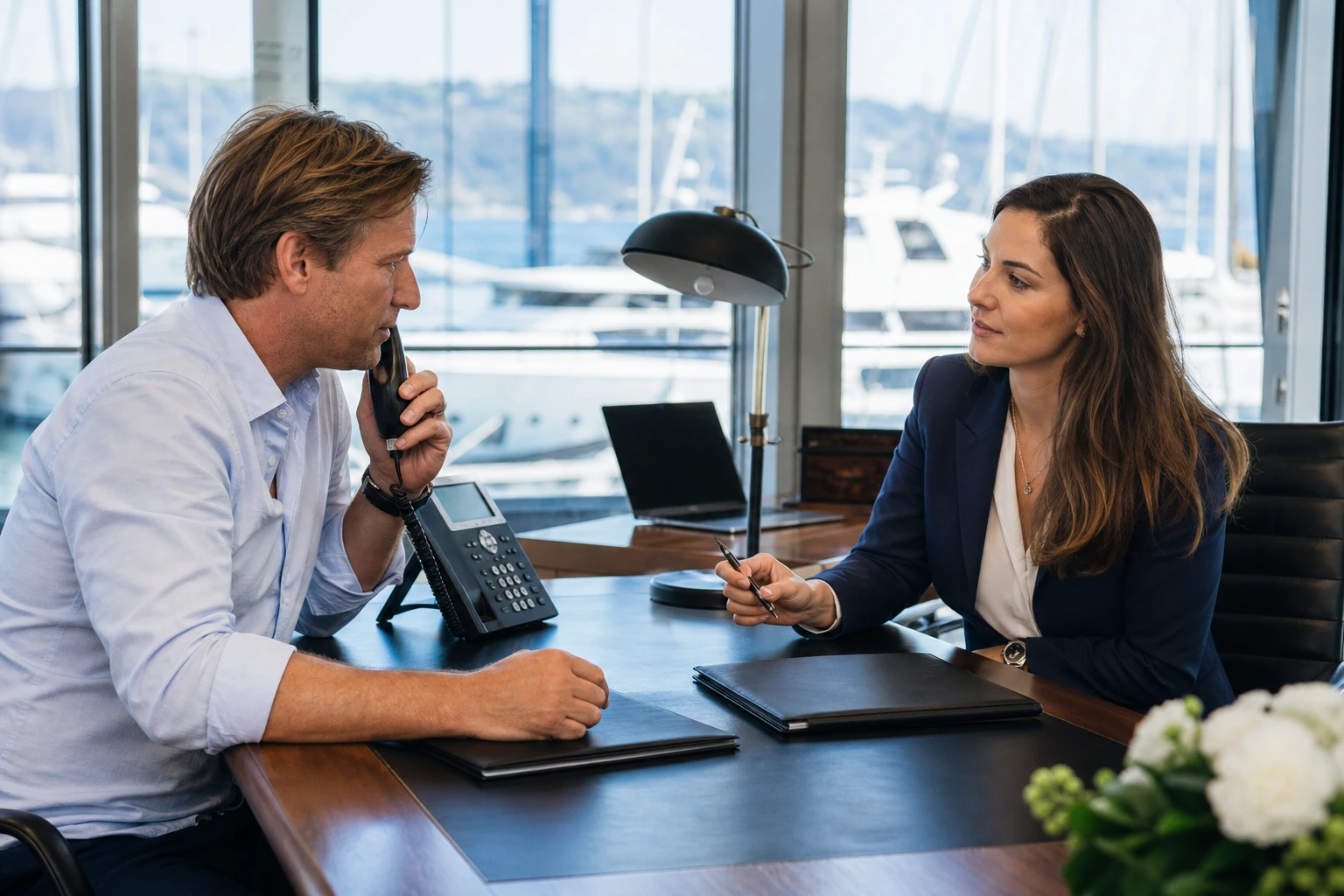
The documents should identify who receives the payment and how it is allocated to the charter. An advisor should also explain bank charges, exchange-rate exposure and payment references without reproducing sensitive account details in insecure messages.
The captain normally controls the APA for operating expenses and keeps supporting records. That does not mean the guest approves every tomato or litre of fuel. It means the itinerary remains funded and the eventual account can be understood.
If actual expenditure overtakes the advance, a top-up may be required during the charter. A generous initial deposit is therefore not a cost cap, while a low one does not make the holiday inherently less expensive.
Unused funds are reconciled under the agreement and final accounting. Timing, currency, transfer method and outstanding supplier charges should be understood in advance; an instant cash refund should never be promised as a universal practice.
A well-run yacht flags foreseeable pressure early rather than saving the conversation for the final day. The principal guest can then see the current balance, the reason for the change and a credible requirement for the remaining route.
A worked example separates rate from variable cost
On a €200,000 charter with a contractual APA of 35 per cent, €70,000 is advanced. If qualifying spend reaches €64,000, the arithmetic leaves €6,000; at €76,000, a further €6,000 is needed. Tax, repositioning, deposit and gratuity may remain separate.
The rate pays for use of the yacht and the core services defined in the agreement. Exactly which crew, equipment or insurance items it includes must be read line by line in the offer and contract, not assumed from market habit.
Fuel, speed, generators, tenders and berthing
Propulsion is often the largest variable. Distance, hull, machinery, load, weather and speed interact. A graceful line on a map is not yet a reliable fuel calculation.
On many yachts, faster is dramatically more expensive, not marginally so. Before the charter, the captain or manager can model a realistic cruising speed, passages and reserve without turning the estimate into a guarantee.
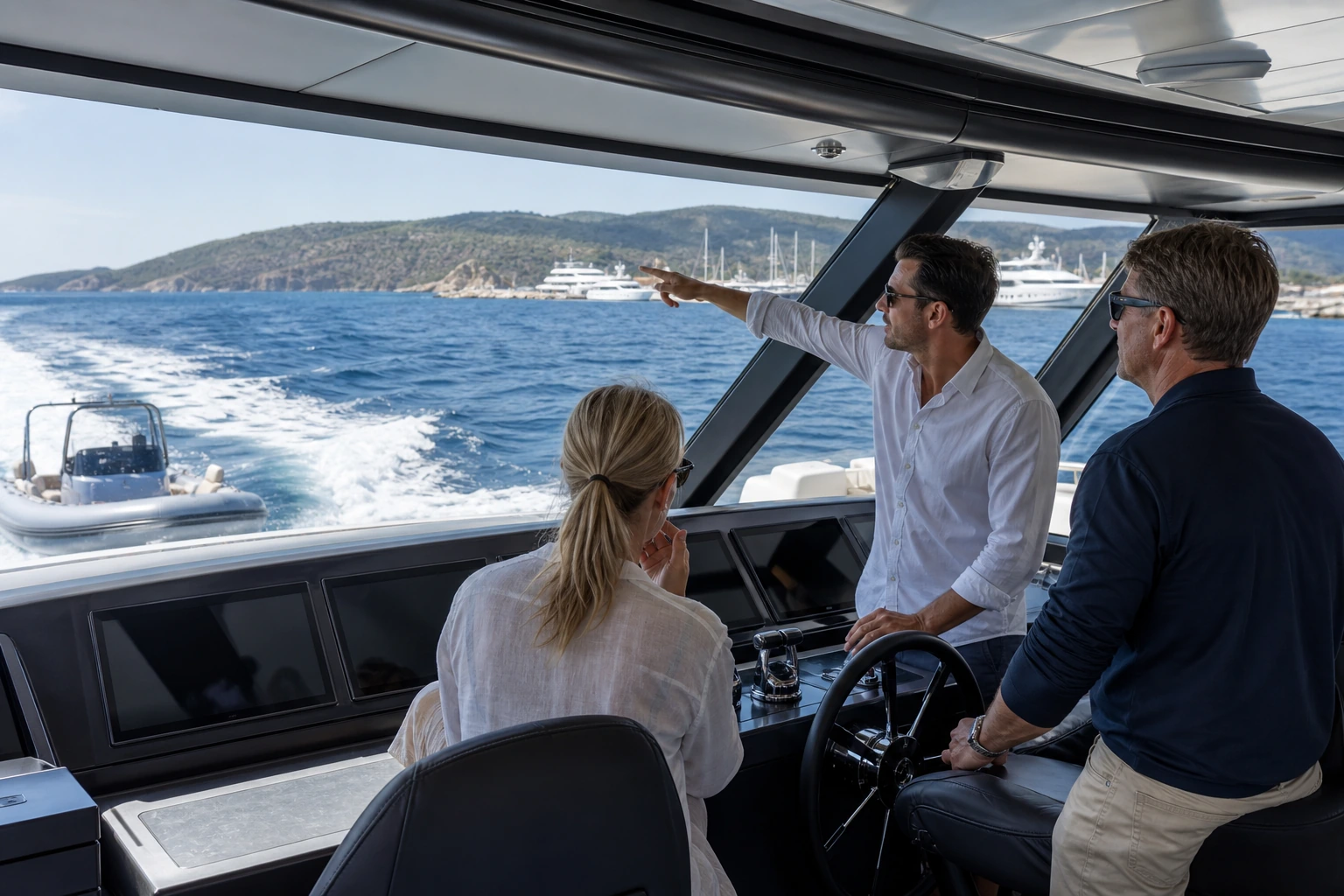
At anchor, generators may still support air conditioning, galley, watermaking and the yacht's hotel load. A short-mileage week with high energy demand can therefore produce meaningful fuel expenditure.
Large tenders, jet skis and motorised toys consume fuel; certain activities may also require instructors, permits or local operators. Availability depends on the yacht, jurisdiction, weather, guest age and competence.
Marina charges vary by yacht length, season, port and demand. Prime berths can be expensive and carry distinct reservation or cancellation rules. Confirmed berthing therefore belongs in the budget, not only the itinerary.
An anchorage may avoid berth fees yet require more tender runs, generator hours or a weather-driven change of plan. It is an aesthetic and navigational choice, not an automatic economy.
Ports may charge separately for electricity, freshwater, waste, pilots, agents and other services. Only the actual tariff and invoice reveal whether each item sits inside the berth fee or is posted to the APA.
Provisions, drinks, restaurants, excursions and communications
Guest food and drink are commonly bought from the APA. The crew provisions against the preference sheet; quality, quantity, local supply and late changes determine the final cost.
Rare vintages, caviar and products flown in on request can move the budget quickly. Early priorities and acceptable alternatives allow better sourcing with less costly last-minute procurement.
Medical allergies and dietary requirements should be conveyed clearly, discreetly and early. Specialist products, segregation or external sourcing may add cost; safety must take precedence over improvisation.

A meal ashore may be paid directly by the guest or settled through the yacht. Clarify this before the reservation. Direct payment lowers APA use but not the total cost of the journey.
Guides, beach clubs, private vehicles and admissions may be arranged by the yacht and posted to the APA, or invoiced elsewhere. The important point is to settle responsibility before anyone confirms the booking.
Satellite data, specialist equipment, laundry and outside services are not treated identically on every yacht. The contract, tariff or written confirmation must show what is included and what counts as consumption.
Tax, local charges, delivery and one-way routes
Tax may depend on jurisdiction, embarkation, cruising area, use and current law. Obtain a written calculation for the particular charter. This editorial guide is not legal, tax or accounting advice.
National parks, protected waters, cruising permits and authorities can add charges and lead times. A route is not financially reviewed until these local requirements have been considered.
If the requested start or finish lies away from the yacht's planned position, delivery costs may apply. Burgess cites fuel and crew expense as examples; the actual method and figure should appear in writing.
A voyage from A to B can be elegant but may create an empty delivery before or after the charter. Establish the charge before signing rather than discovering it later among operating expenses.
Security deposit and gratuity sit outside APA
If required, a security deposit protects against risks defined by the contract; it is not a spending account. Conditions for deduction and release sit separately, and damage or guest negligence should not be casually blended with ordinary operation.
A crew gratuity is customary after good service but remains voluntary. It is neither a compulsory use of the APA nor an automatic charge, and should not be presented as already earned in a pre-charter budget.

Burgess currently describes 10–15 per cent of the charter fee as usual while explicitly preserving discretion. This is published practice from one broker, not a binding worldwide standard; contract, culture and personal judgement still matter.
The decision is best made after the service and alongside the closing overview. A broker can explain a discreet handover or instruction without prescribing the amount or prejudging the result.
Preference sheet, cost scenario and live control
It sets out food, drink, activities, daily rhythm and special requests. Precision reduces overbuying and emergency sourcing. Only necessary personal data should be shared, and sensitive details should be handled appropriately.
Alongside the desired itinerary, record a credible assumption for miles, speed, marina mix and tender use. The captain can turn that into a working range; weather and safety always retain priority.
A safety-led port change, longer passage or extra marina night can alter spending. An itinerary is therefore an informed intention rather than a guaranteed choreography.
On a high-spend charter, a concise report at agreed intervals is useful: opening balance, recorded costs, expected commitments and funds remaining. The guest gains control without becoming the yacht's bookkeeper.
Families and groups should nominate one person for additional financial decisions. The crew then receives a clear answer on wine, excursions and spontaneous changes rather than competing instructions.
Before an unusually expensive request, the yacht should outline likely effect and alternatives where possible. A simple contrast—premium berth versus anchorage, fast run versus cruising speed—supports informed choices without puncturing the mood.
Rate, APA and refund may use the contract currency while the guest funds them in another. Foreign exchange, intermediary bank fees and the return route for balances therefore deserve a place in the plan.
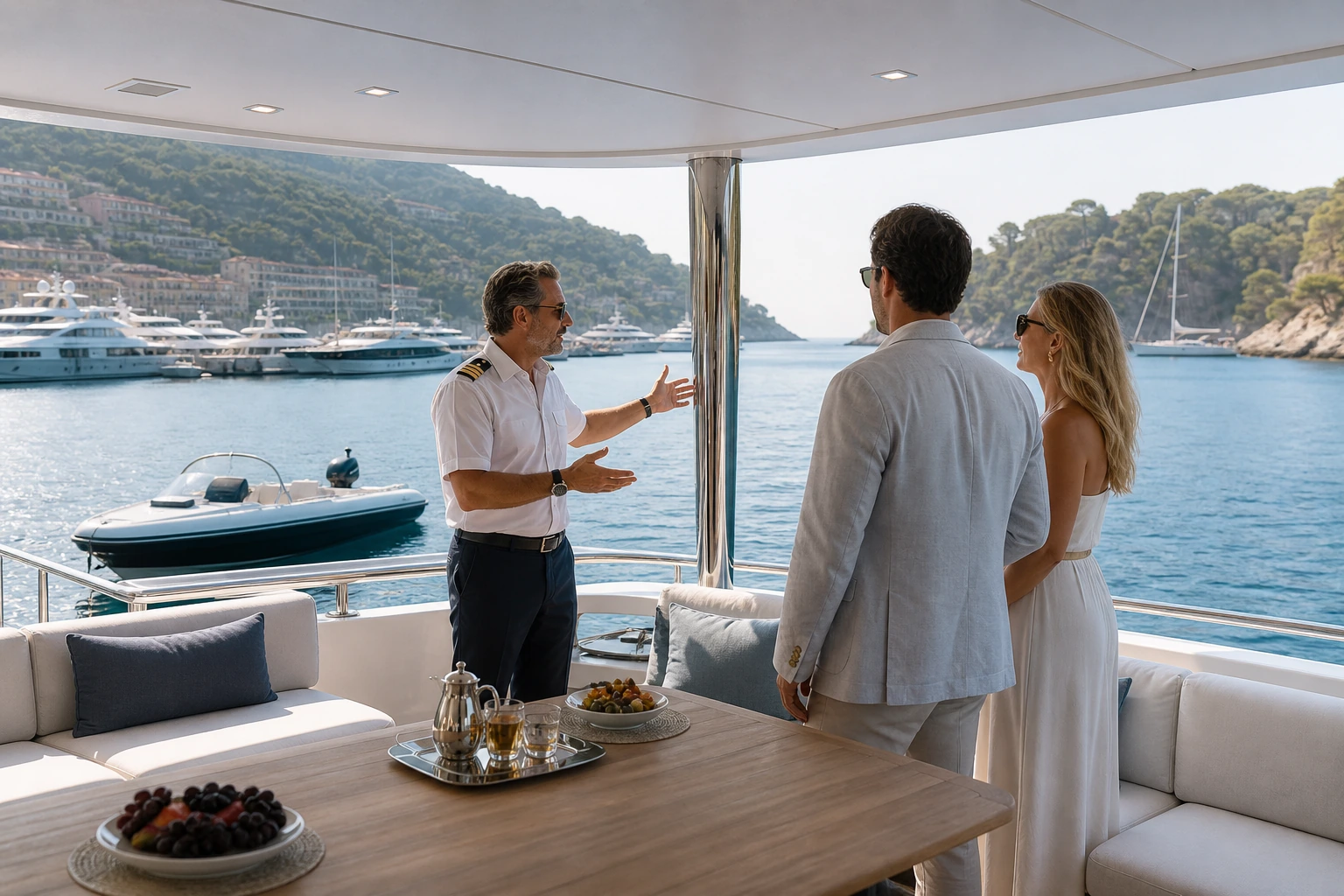
Closing account, timing and currency
At the end, documented expenditure is set against the advance and balance. Outstanding invoices or estimates should be identified. The guest can review calmly and route questions through captain, broker or contracting party.
Not every marina or supplier invoice is final at disembarkation. The agreement determines how later documents and residual balances are handled; no responsible article can promise one deadline for every charter.
Sensible economies and common mistakes
Paying restaurants and excursions directly may make the APA look leaner without reducing the holiday budget. Sound planning therefore follows total trip cost rather than one account balance.
Shorter clustered passages, sensible cruising speed, planned provisions and a considered mix of marina and anchorage can remove waste. Safety, the captain's authority and the quality of the charter are not bargaining chips.
Guests often mistake rate for total price, read the APA as a fixed fee, overlook tax and cost a one-way route too late. Unspoken tipping expectations and minute-by-minute itineraries create further friction.
What does the rate include What APA does the agreement require Which tax, delivery, deposit and bank charges are separate Who administers the money, how often are balances reported, and how do top-ups and reconciliation work
Pause if no contract explains the APA, tax remains undefined, fuel is guaranteed before a route exists or gratuity is demanded. Unverified new payment instructions and the absence of a closing account are equally unacceptable.
The verdict
A well-run APA does not make yacht charter feel transactional. It funds freedom and makes choices visible. Luxury here is not a vague all-inclusive claim, but a precise contract, an informed captain and an account that never needs to invent a story.