
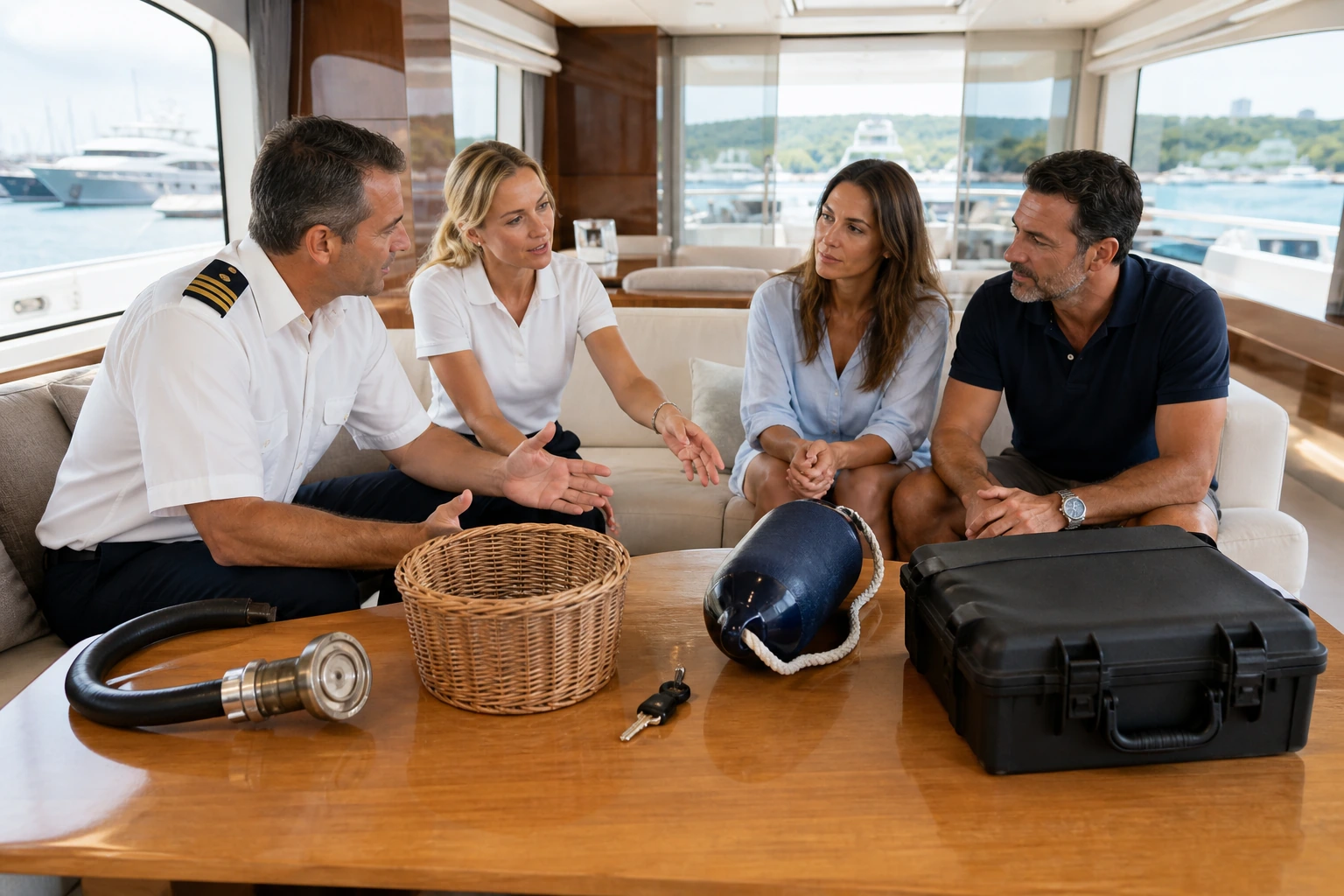
On a well-run yacht, service feels instinctive. In reality, it begins with a remarkably precise briefing. A crew can make almost anything possible, but it should not have to guess at allergies or arbitrate between conflicting expectations. The clearer the conversation about food, privacy, pace and non-negotiables before embarkation, the more effortless the week feels on board.

The briefing at a glance
- When
- Set the direction when booking, complete the preference sheet several weeks before embarkation and communicate final changes before provisioning.
- Who owns what
- The captain controls safety and routing; the chef and interior team translate preferences into food and service; the broker connects wishes, contract and costs.
- What belongs in writing
- Allergies, medical needs, children, food, celebrations, cabins, activities, privacy and financial expectations.
- The common mistake
- Using vague phrases such as “healthy food” or “keep it spontaneous” without examples, priorities or limits.
The preference sheet is an operational document
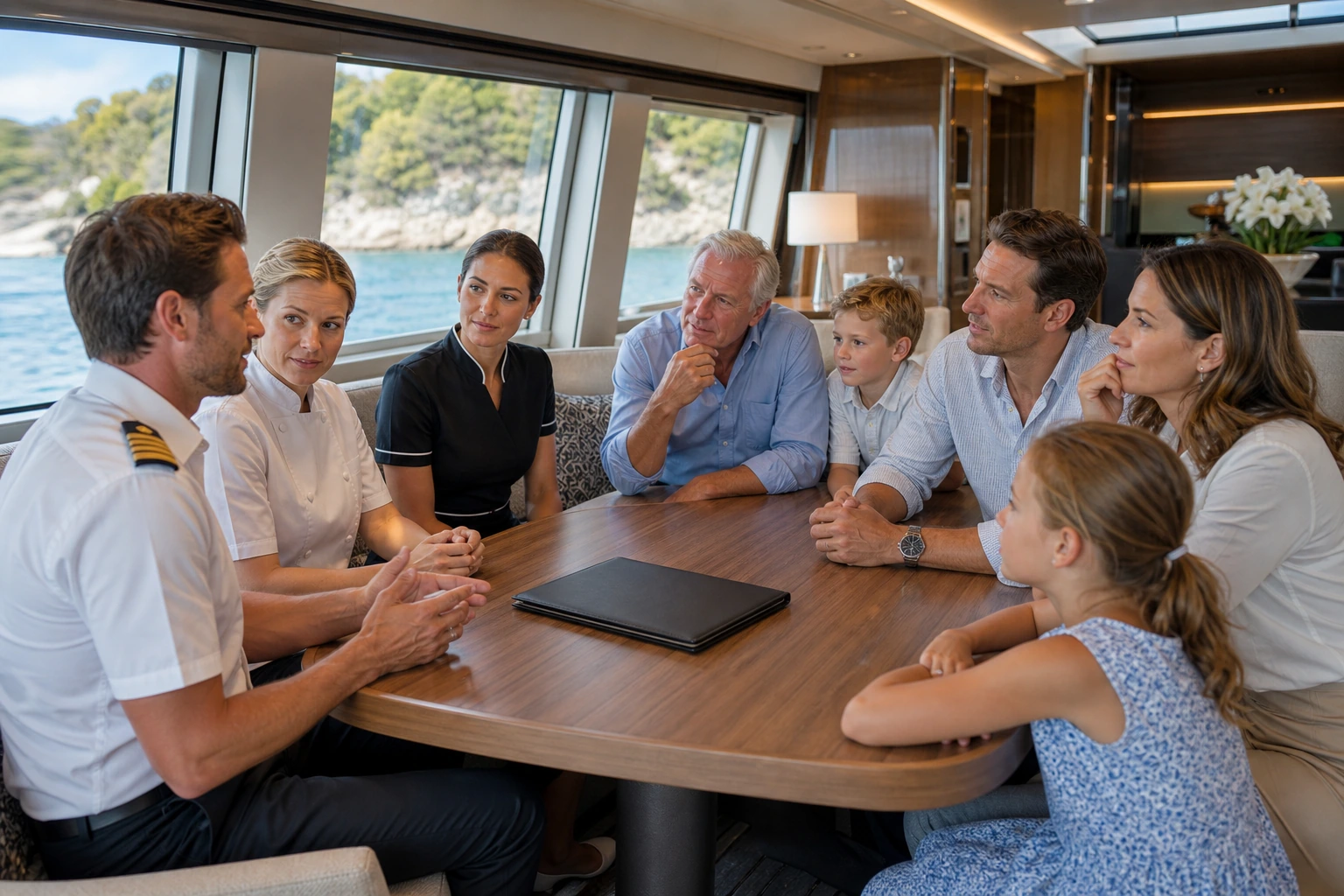
A useful preference sheet does not read like a hotel questionnaire. It describes how a particular group lives. Who wakes early Who would rather not be approached in the morning Do children dine with adults Is there one principal who makes decisions, or does the group expect daily consultation
Established charter brokers collect the preferences and special requirements of every guest several weeks before a charter. That includes dietary and medical needs, allergies, birthdays and entertainment. The information is practical: captain, chef and chief stewardess use it for provisioning, cabin allocation, staffing and the daily rhythm.
Separate preference from risk. Disliking raw onion is a preference; a severe nut allergy may involve cross-contamination and emergency medication. Medical information should be handled as discreetly as possible and as clearly as safety requires.
Give the captain priorities, not an immovable timetable
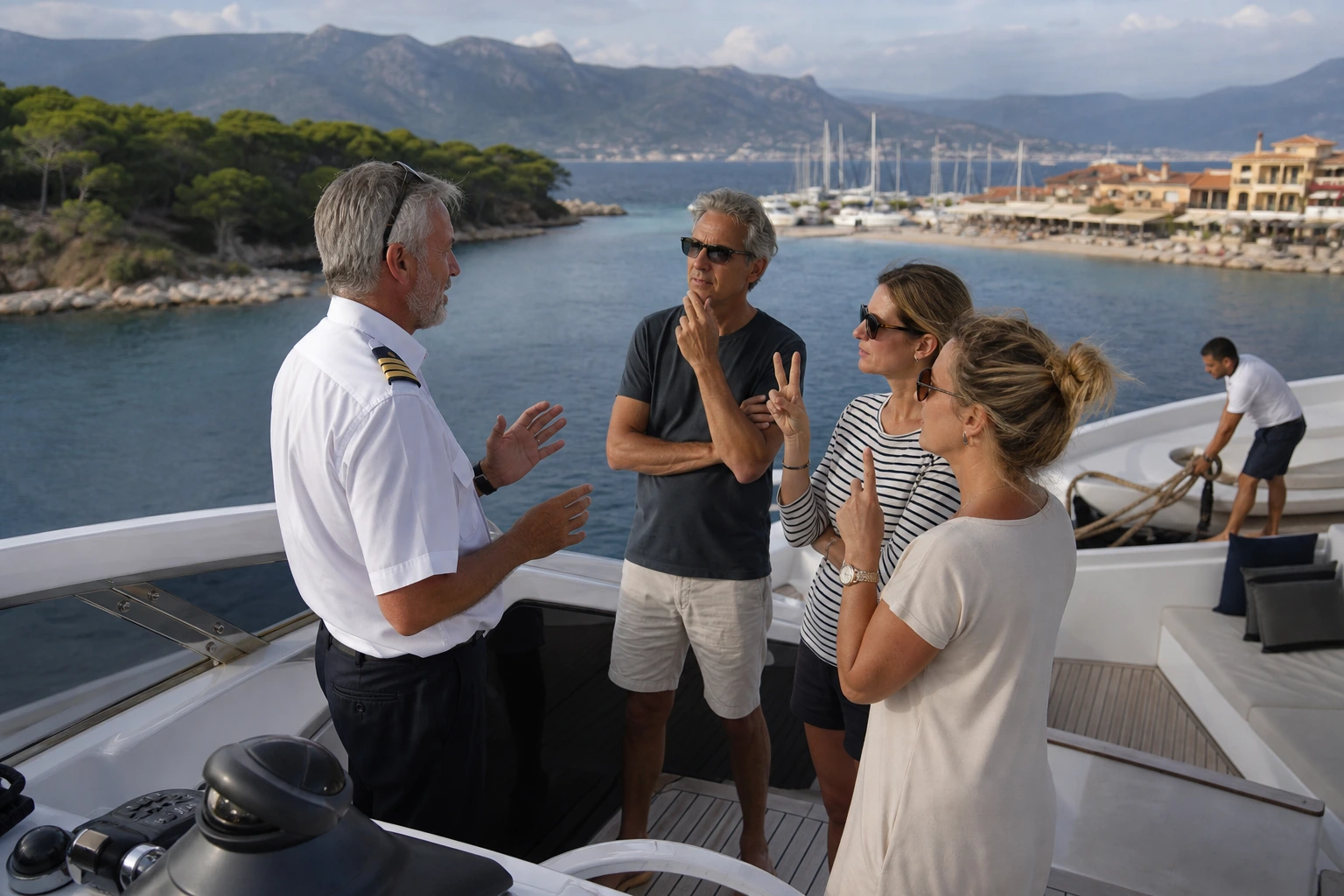
A route is designed in advance but remains alive. Weather, sea state, berths, the yacht’s speed and crew rest all affect what is safe and comfortable. The captain therefore needs to know which moments are irreplaceable: a birthday ashore, quiet nights at anchor, one beach club or the least possible time under way.
A hierarchy is more useful than seven fixed daily programmes. Guests might say that calm morning swimming matters more than any port, two lunches ashore are essential and comfort takes precedence over the original route in strong wind. That gives the captain room to act without losing the journey’s intent.

The chef needs taste, not only prohibitions
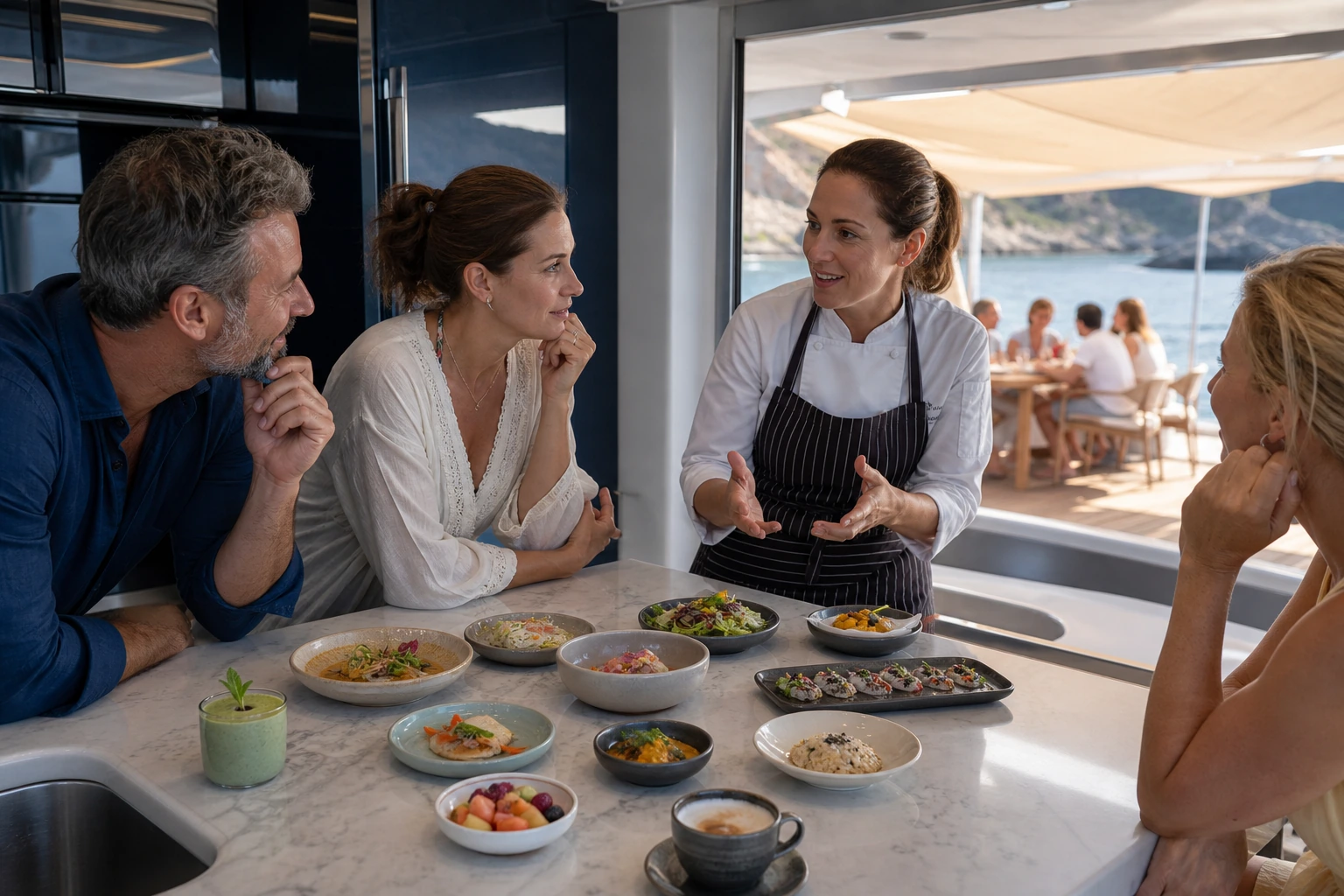
“Healthy, Mediterranean and local” sounds sensible but tells a yacht chef very little. Does healthy mean grilled fish and salad, or plant-led bowls Should breakfast repeat every morning Is a long lunch more important than a formal dinner Which three dishes does the group love, and which three should never appear
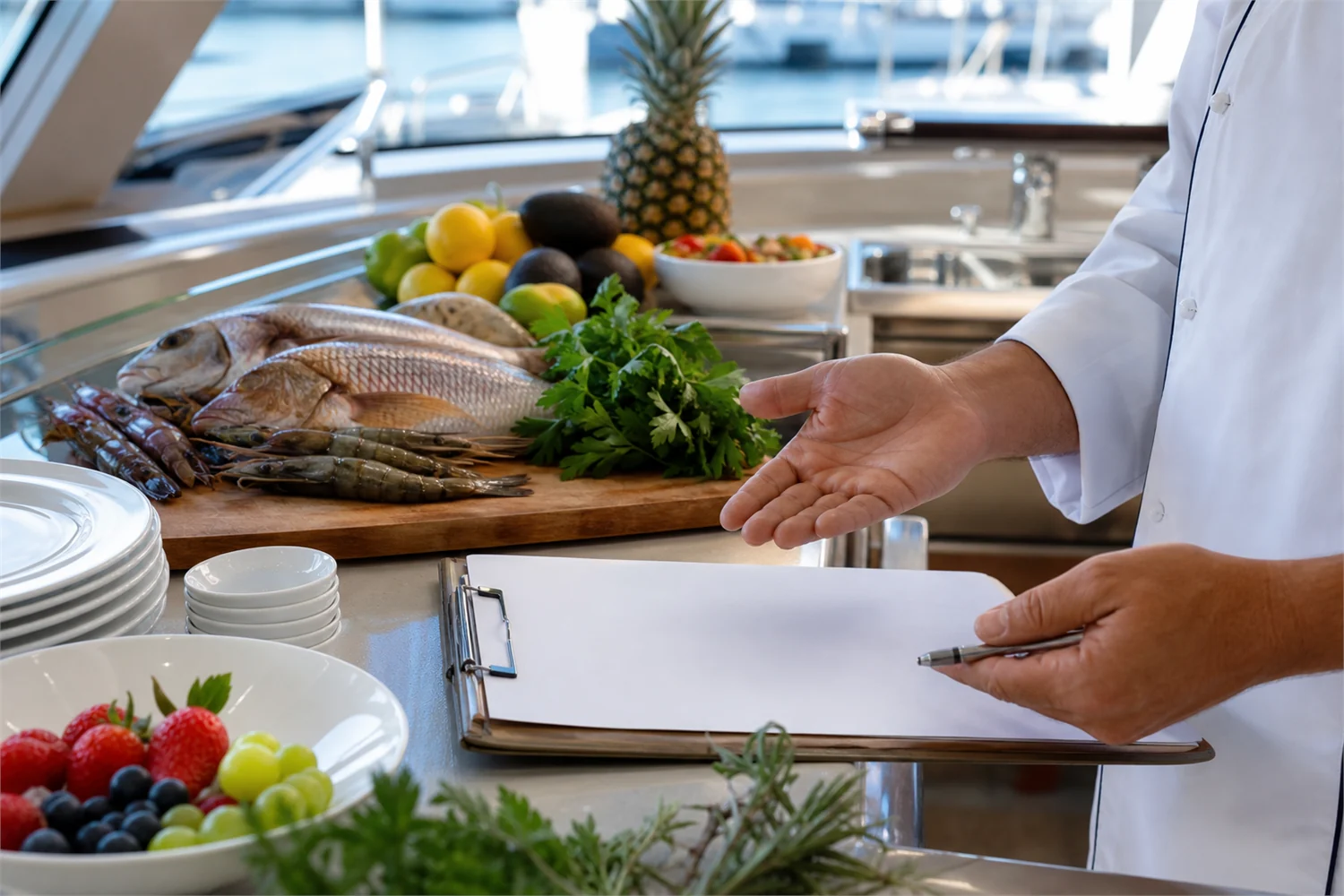
The strongest information is specific. Share preferred cuisines, spice levels, portion sizes, coffee habits, children’s staples, favourite wines and non-alcoholic alternatives. Also define the balance between meals on board and restaurants ashore. The chef provisions against a plan; five cancelled lunches create avoidable cost and waste.
For rare wines, spirits or specific brands, establish what is locally available and what would need special delivery. “Surprise us” works beautifully once the boundaries of surprise are understood.
Define service and privacy openly
Some guests enjoy discussing the day with the chief stewardess over breakfast. Others prefer barely to notice the crew. Both can be excellent service. Before departure, decide whether drinks should be offered proactively, loungers prepared, cabins refreshed during each meal and evenings conducted formally or barefoot.
Families and groups of friends often contain several travel styles at once: early risers want coffee at seven, teenagers sleep until eleven, one couple dines ashore and grandparents prefer lunch on board. The crew can orchestrate this when it knows in advance. Ambiguity otherwise appears as small but persistent friction—music too loud, breakfast too early, too many questions or service arriving precisely when privacy was wanted.
Children, safety and water toys
For every child, record age, swimming confidence, routine, allergies and any expected supervision. A yacht crew is not automatically a nanny service. Dedicated childcare must be considered when selecting both yacht and crew. Sleeping arrangements, safety gates, correctly sized lifejackets and rules for deck, tender and water should all be confirmed.
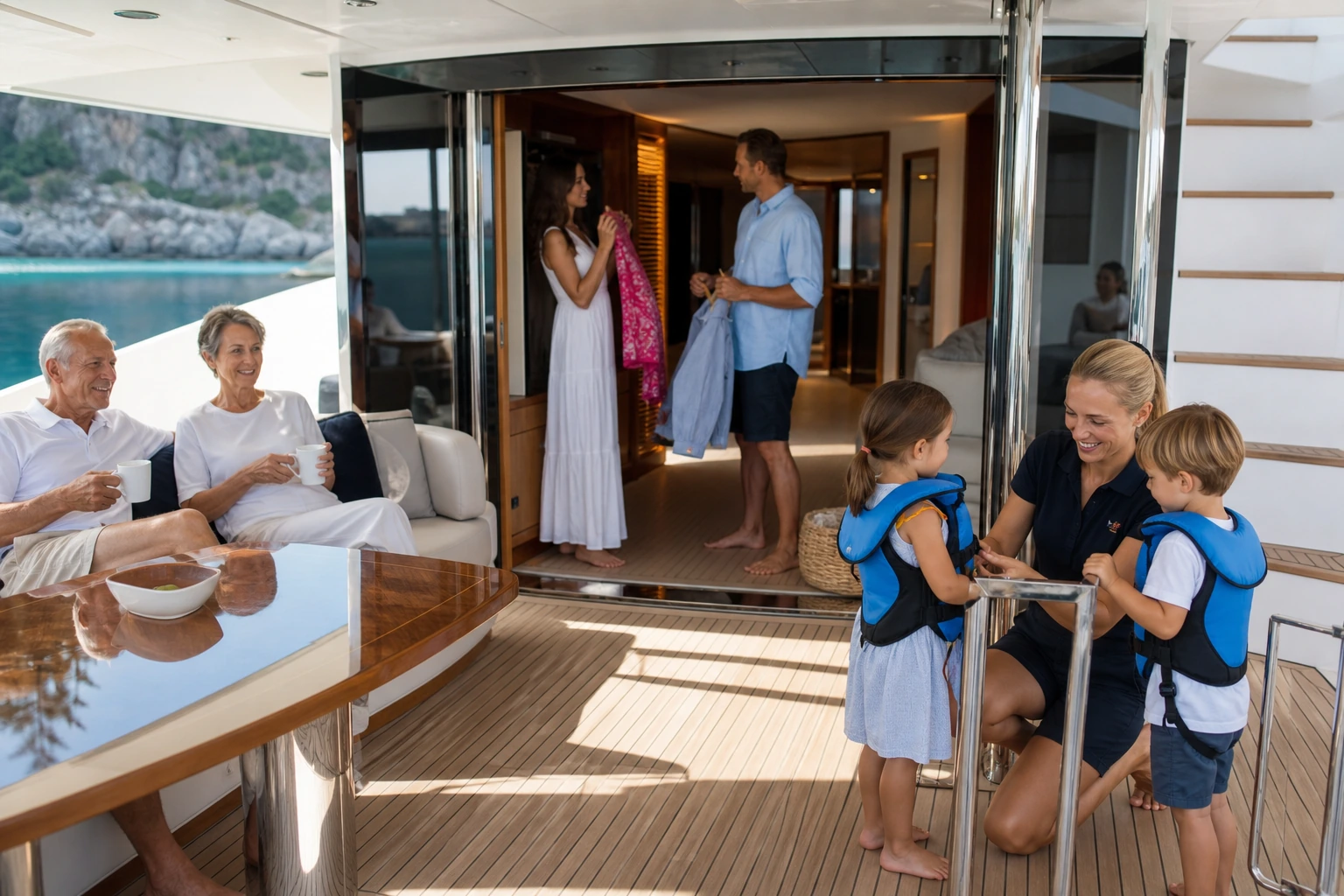
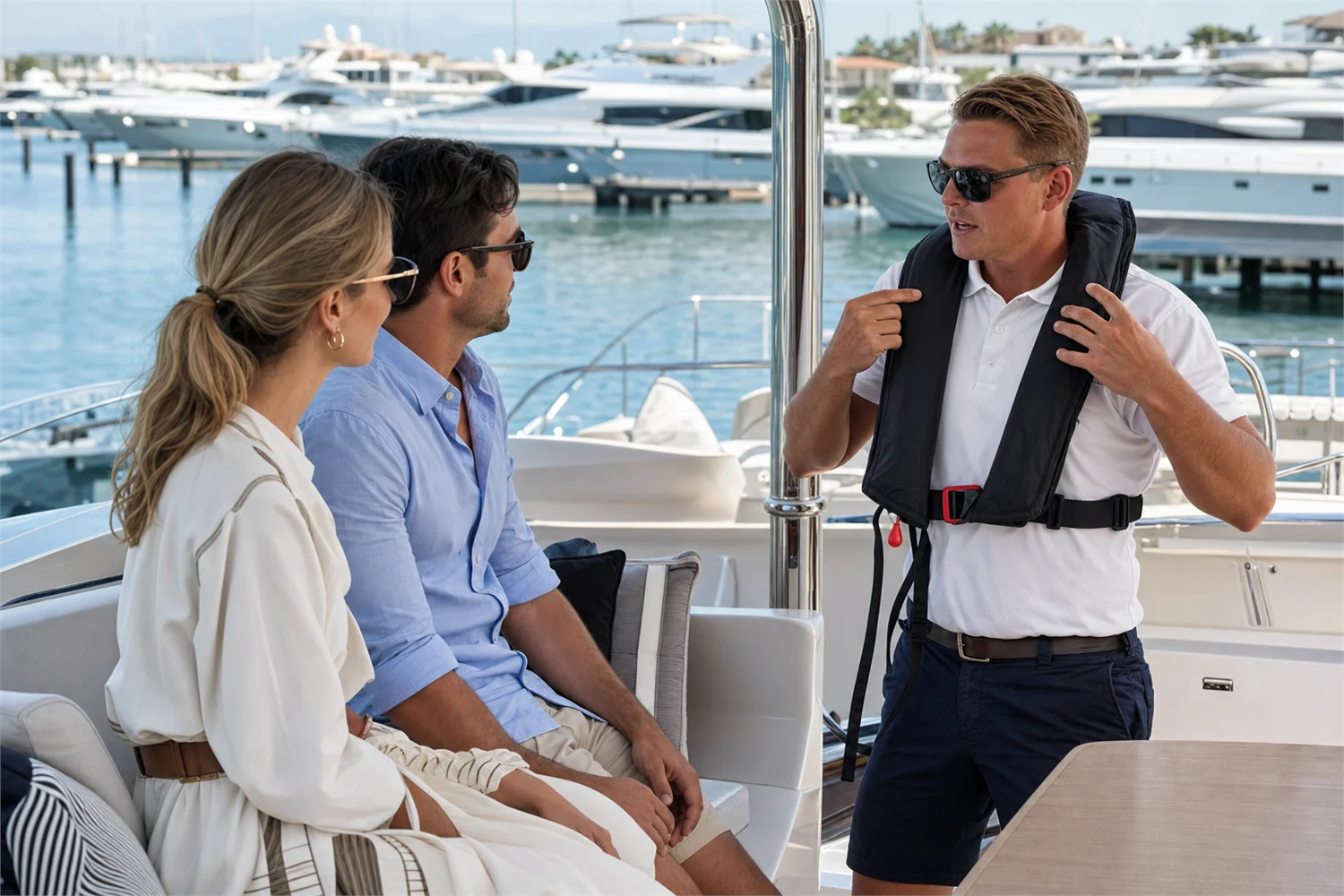
An impressive toy inventory does not mean every guest can use everything at any time. Age, licences, local rules, weather and instruction apply. The first-day safety briefing is not an interruption to luxury; it is what allows the rest of the week to feel relaxed.
Costs: APA is not a flat surcharge
On many charters, the Advanced Provisioning Allowance covers variable expenses such as fuel, food and berthing. The amount is stated in the charter agreement and, according to established brokers, is commonly 20–40 per cent of the charter fee depending on yacht, destination and duration. The captain maintains a detailed account of expenditure.
The briefing directly influences that account. High-speed cruising, frequent tender runs, daily marina berths, special deliveries and last-minute changes all carry consequences. Good advice makes them visible before departure. Gratuity practice, local taxes, transfers, delivery charges and any repositioning fee should also be discussed explicitly rather than appearing as footnotes at the end.
| Subject | Primary contact | What should be clear |
|---|---|---|
| Route and safety | Captain via broker | Priorities, fixed commitments, tolerance for cruising and sea state |
| Food and drink | Chef / chief stewardess | Allergies, examples of taste, meals ashore and specialist items |
| Service and cabins | Chief stewardess | Privacy, daily rhythm, cabin allocation, laundry and celebrations |
| Contract and cost | Charter broker | APA, tax, payment, insurance and gratuity practice |
Questions a strong briefing must answer
- Which three moments would make the week a success
- Which medical, dietary or mobility requirements affect safety
- Should service feel formal, proactive or almost invisible
- Which guests need separate routines, meals or supervision
- How much cruising, marina time and programming does the group truly enjoy
- Who may photograph on board, and what is the social-media policy
- Who can make a quick decision for the entire party
The Deluxetargets view
Do not write what you think luxury should sound like. Describe how you actually travel. The crew needs honest answers: whether the day revolves around a long lunch or an early swim, whether children and adults have different rhythms, and whether privacy matters more than constant attention.
The finest briefing disappears once the yacht leaves the dock. Guests notice only that the right coffee arrives, the captain chooses a better bay when the wind turns and nobody has to explain why tonight is not the night for formal dinner.