
More camps do not automatically create more safari. Every move promises a new landscape but often consumes the best part of an observation day: a shortened drive, packing, airstrip, possible stops, another briefing and a new guide relationship. A move is worthwhile only when the next camp unlocks a different ecology or operation—not merely a different interior.
A durable rule
- Up to 6 nights
- One camp, or at most two clearly different regions.
- 7–9 nights
- Two camps are ideal; three only with a short, coherent connection.
- 10–12 nights
- Three camps work when each contributes a new landscape or activity.
- Test
- What can Camp B deliver that Camp A cannot at these dates
What a camp change actually costs
The visible transfer starts at departure and ends on arrival. The real change begins earlier: reduced morning activity, bills or gratuities, drive to the strip, safety process, a flight with possible stops, another vehicle transfer and orientation. Only then does the new guide begin learning the guests.
Wilderness describes common Botswana bush flights of 30–60 minutes, but that is not door-to-door time. Asilia’s Ubuntu Migration Camp currently lists 90 minutes or 1 hour 40 minutes between camp and airstrip, depending on its Serengeti location. A short flight can therefore occupy much of a day.
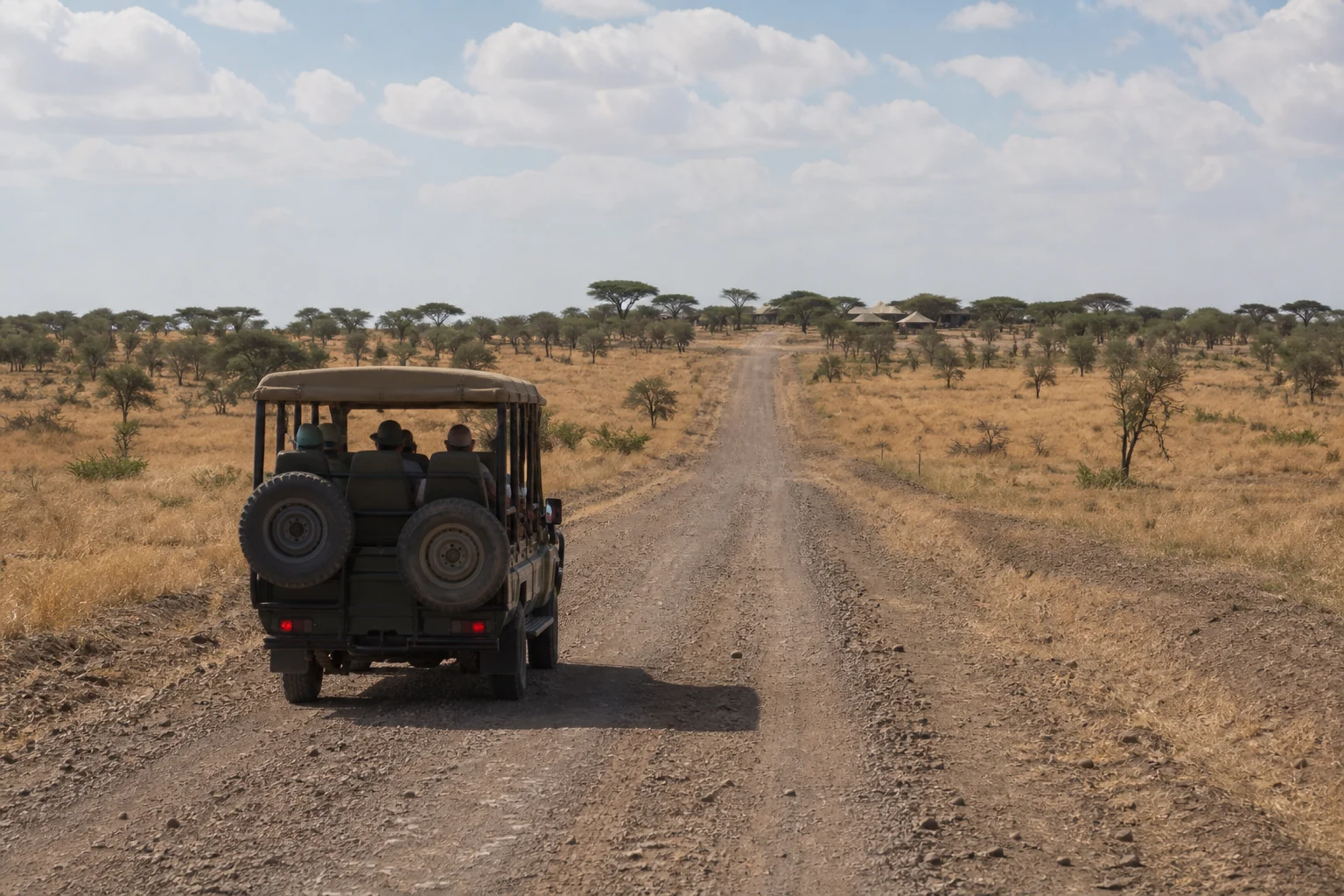
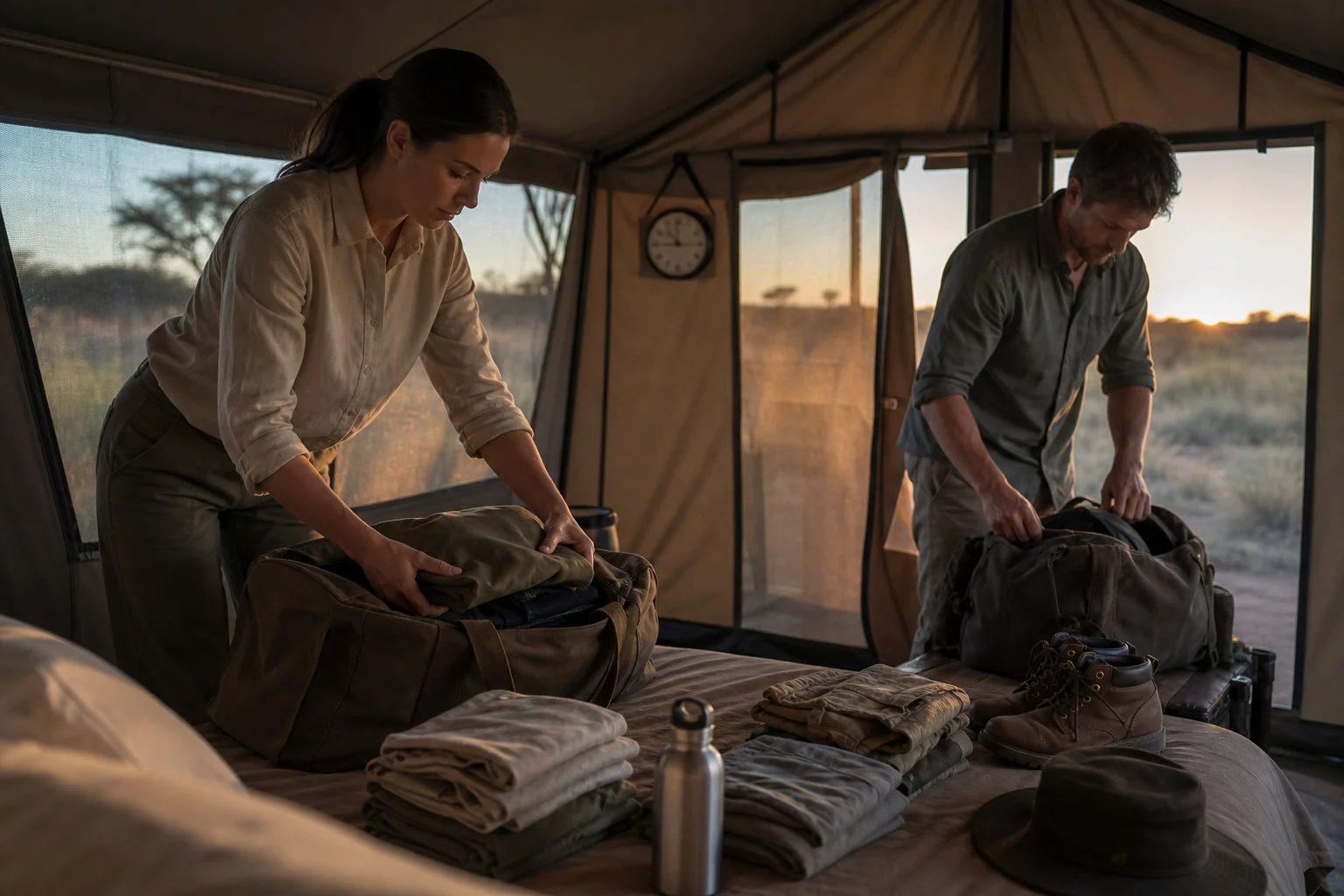
A credible transfer day may start at six with final packing and a concise breakfast. Baggage leaves for weighing while guests take only a shortened drive if the flight window allows. Road time, waiting and an aircraft serving other camps follow. At the destination come another airstrip transfer, welcome and safety orientation. The first activity should be brief and optional; the following dawn, not arrival afternoon, is the next full safari day.
| Reason | Verdict | Why |
|---|---|---|
| New habitat | Yes | Water, dry island, river or desert changes species and observation. |
| Different activity | Yes | Mokoro, walks, night drives or boats are locally constrained. |
| Seasonal migration position | Sometimes | Only when current movement and camp location align. |
| More famous brand | Usually no | New hardware is not an ecological contrast. |
| One night to sample | No | The move consumes more depth than the night returns. |
Three nights are the editorial base unit
Two nights usually mean one afternoon, one full day and a final morning. A delayed flight, rain or quiet wildlife period then dominates the stay. Three nights create several dawn and evening windows and allow a rest without reducing the camp to a bed. Four suit photographers, families, walking or genuine land-and-water programmes.
Three nights remain a baseline, not a universal sales rule. Two can work when the connection is genuinely short, arrival is dependable and the camp supplies one sharply defined contrast. Conversely, four are insufficient when transfer and compulsory programming fragment two full days. Count usable dawn and evening windows rather than the number printed on the invoice.
When two camps in one ecosystem still work
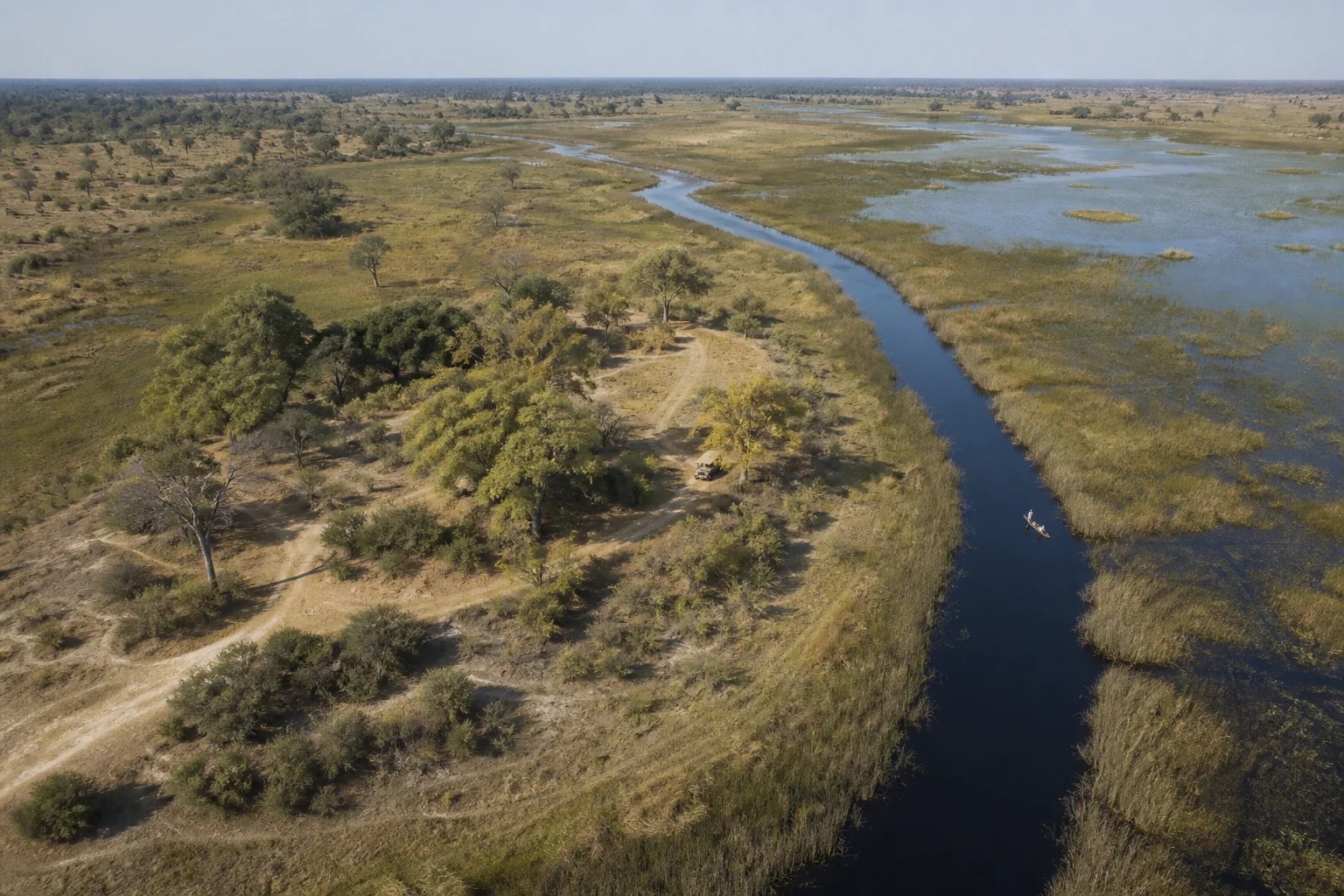
In the Okavango, permanent water and a productive dry island can sit near each other yet offer different safaris. In the Serengeti, a seasonal move may track migration geography. Ubuntu operates in northern and southern locations at different times; the location is part of the product.
The move must answer the travel date. North plus south for completeness is not a narrative. “Mara and Serengeti” is not automatically twice as good: border, flight sequence and current wildlife distribution must justify the additional day.
Guide continuity is an understated luxury
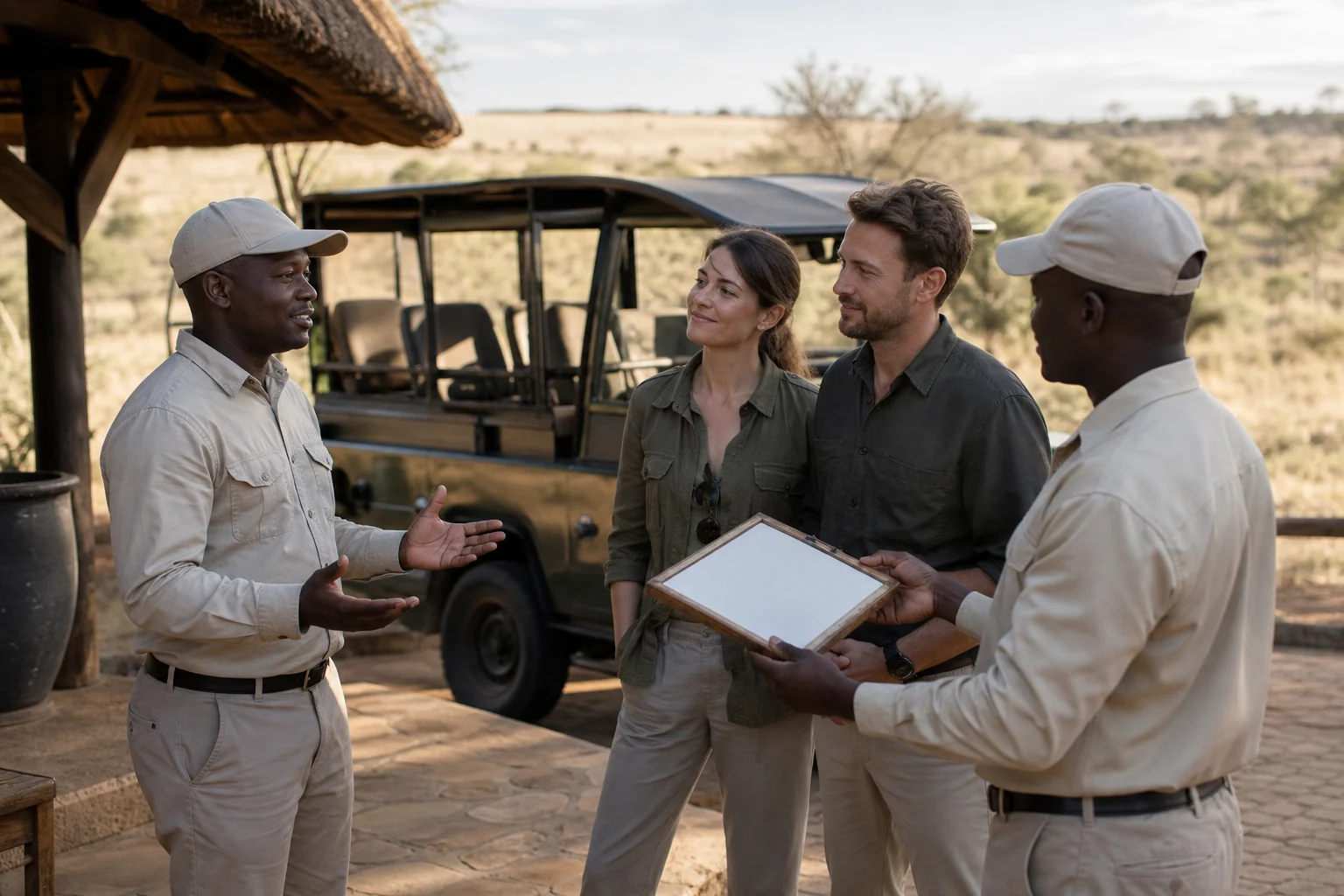
After two drives, a strong guide understands whether guests care most about birds, behaviour, photography or broad landscapes. They learn walking pace, cold tolerance and when silence is preferable. Each move restarts that calibration. Where the same guide cannot travel, a concise handover should cover interests, sightings already made, camera needs, mobility, children and clear no-go points.
The handover must not become a wildlife order. It can state that a guest prefers behaviour to species count, needs a particular vehicle side or benefits from frequent pauses for a back condition. The incoming guide retains professional judgement over route and distance. Ideally the first camp transmits this note directly and discreetly, sparing the traveller another long recital while respecting personal information.
Fly-in is fast, not automatically restful
Small aircraft unlock remote areas and extraordinary aerial views, but bring baggage limits, variable departure times, hot airstrips and intermediate stops. Wilderness cites typical soft-bag limits of 15–20 kilograms; the confirmed carrier rule governs. Three flights in four days may feel harder than one longer drive with good breaks. Family needs, age, backs, flight anxiety and camera weight all change the ideal camp count.
Soft-sided does not mean infinitely compressible. The booked operator should confirm total weight, dimensions, cabin items, camera equipment, batteries and the process for excess baggage on every sector. Medicine, documents, water and one warm layer stay accessible. Ask about possible stops as well: routing may only settle the day before and can change heat exposure, lunch timing and whether an afternoon drive remains plausible.
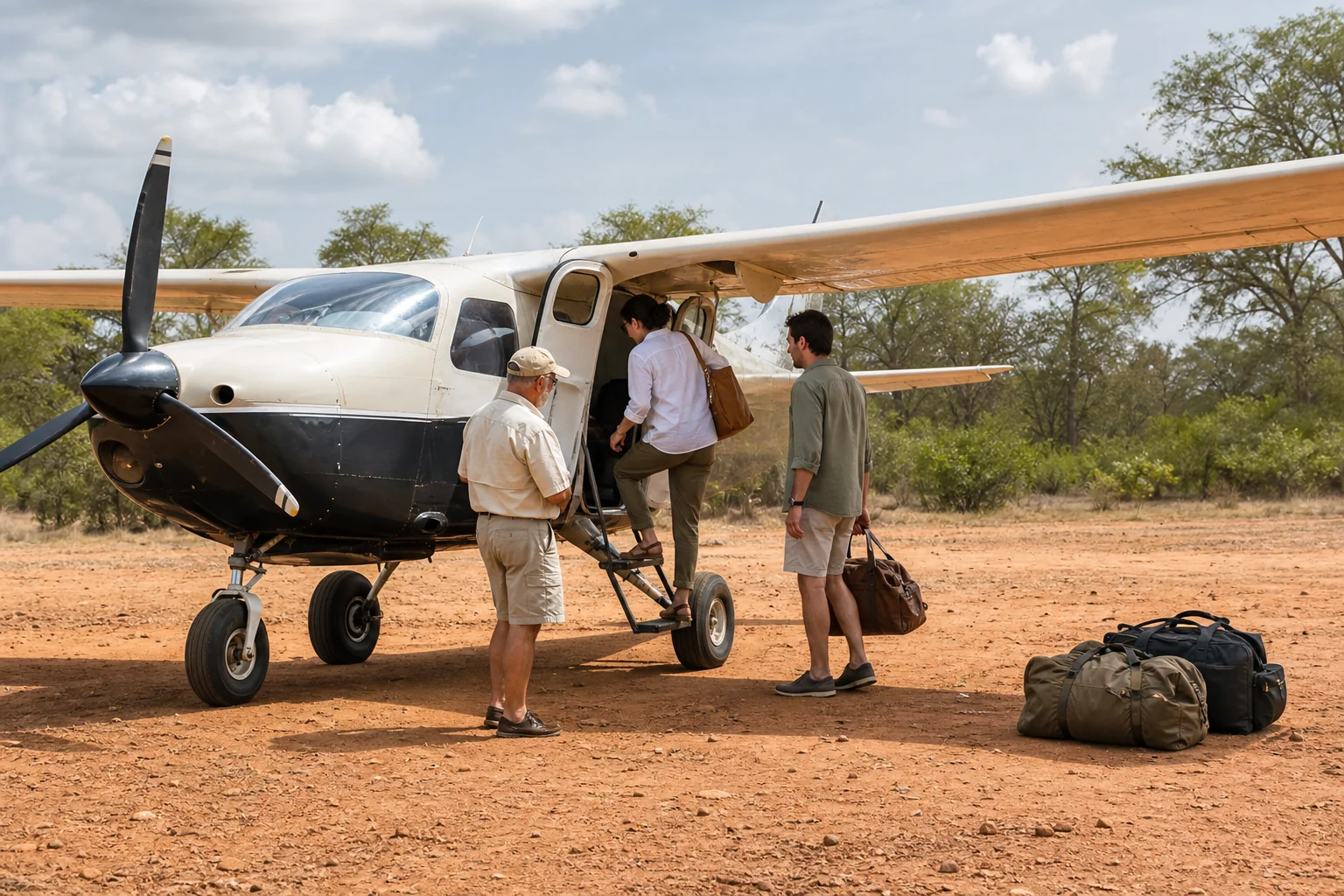
A well-designed transfer day
- Do not promise a full morning drive when departure is movable.
- Keep breakfast, water and medication accessible.
- Explain possible stops and total duration, not only airborne minutes.
- Schedule only one flexible afternoon activity after arrival.
- Make the first briefing short and personal.
Better safari dramaturgy: progress, do not repeat
A route may open quietly with water and birdlife, move to serious game drives, then close with space, privacy or wellness. That is progression. Three similar Big Five camps with the same timetable repeat themselves despite different logos. Comfort need not rise every night; a simpler mobile camp may be more valuable because of its position.
The most persuasive sequence begins with orientation: an accessible habitat, a calm arrival and a guide who teaches the ecological grammar. Immersion follows through several complete activity windows. The most focused or remote camp comes last, once guests understand rhythm and observation. This emotional progression is stronger than moving from one theatrical suite to another and prevents the defining experience from being spent too early.
Useful structures
- 6 nights: 3 + 3 in contrasting camps.
- 8 nights: 4 + 4 for photography, family or slower travel.
- 9 nights: 3 + 3 + 3 only with clean flight logic and distinct roles.
- 12 nights: 4 + 4 + 4, or four camps at most for most travellers.
These numbers describe rhythm, not a finished itinerary. Six nights in one exceptional camp may create more depth than a 3+3 split; twelve nights across three bases can feel more expansive than four equal blocks. Complete observation days and a visible change of role matter most. A free day at the strongest camp can therefore be more valuable than geographical completeness,
particularly when weather, photography or family energy benefits from flexibility. It also absorbs disruption elsewhere without forcing another transfer to move.
When another camp makes the journey worse
- It changes brand but not habitat.
- A single night is sold as a “taste”.
- Transfer days outnumber full observation days.
- Children, mobility or luggage make every flight a project.
- The preferred guide or private vehicle is lost.
- Seasonal logic relies on old photographs rather than current conditions.
The Deluxetargets recommendation
Before ticketing, the advisor verifies for every move: actual camp and airstrip, road time at both ends, possible stops, latest total arrival, soft-bag dimensions and battery rule, boarding assistance and mobility, accessible medicine, guide handover and weather or technical contingency. The remedy for a missed connection should also be named. Only when that chain is credible and Camp B adds a distinct role has the transfer earned its place.
Every lodge should be justified in one sentence: this camp is necessary this week because it provides this habitat, activity or guide access. If the sentence fails, keep the night in the stronger camp. Safari luxury is not waking somewhere new every morning. It is remaining long enough for a sighting to become understanding.