
Not every conservation fee is a donation—and not every mandatory charge explains its impact. A safari invoice may contain park entry, concession levy, community fee, permit, vehicle charge and a lodge contribution side by side. They should never disappear beneath one convenient green label.
Five questions
- Who collects it
- Government authority, concession, community, lodge or foundation.
- What for
- Access, protected-area management, community revenue or a named project.
- How calculated
- Per person, day, 24 hours, night, vehicle or activity.
- Is it mandatory
- Statutory charge, contractual line or voluntary contribution.
- What proves it
- Tariff, invoice, register, annual report or defined outcome data.
Two consequences complete those questions: what refund applies when travel or activity fails, and which evidence identifies the final recipient A marketing title answers neither. Diligence follows the payment from guest through operator or lodge to authority, conservancy or foundation, distinguishing the invoice, proof of transfer and the later report on use.
A safari invoice contains different flows of money
| Line | Function | Recipient | Test |
|---|---|---|---|
| Park/conservation fee | Access and protected-area management | Park or wildlife authority | Official tariff, validity, tax |
| Concession/bed-night fee | Use of a concession or night in the area | Authority, landholder or community | Per person/night; included |
| Permit | Controlled access to a scarce activity | Authority or protected area | Name, date, age and refund |
| Community levy | Contracted revenue for local rights holders | Community/conservancy | Governance, payment, report |
| Lodge contribution | Operator project or foundation | Lodge-linked entity | Mandatory/voluntary, ring-fencing, result |
Vehicle, guide, ranger, airstrip transfer, camping and activity charges may appear too. They can enable conservation without themselves being conservation fees. A rigorous quotation names every line.
Money may travel directly through an official payment platform or indirectly when an operator collects and later remits it. Either route should preserve tariff basis, quantity, currency, tax and recipient. One invoice line marked conservation prevents that analysis. A credible partner can state what it collects on the traveller's behalf, what it passes onward and what remains with the business.

A mandatory fee buys access, not automatic proof of impact
Kenya Wildlife Service publishes official conservation tariffs for its parks. TANAPA itemises park and vehicle charges and defines how long entry remains valid. These fees belong to the legal and operational protected-area system. They support infrastructure, staff and administration, but the amount alone does not tell one traveller what share reached anti-poaching, roads, salaries or ecology.
A statutory park charge should therefore be neither dismissed as an arbitrary extra nor advertised as complete impact evidence. First, it is the price of regulated access.
Whether the authority maintains roads, employs rangers, funds research or carries administration appears in budgets and reporting. Even a transparent annual report normally allocates pooled income, not one traveller's receipt. Guests may ask about governance and outcomes without claiming a direct causal link between their entry payment and one animal, fence or patrol.
Permits are scarce rights of use
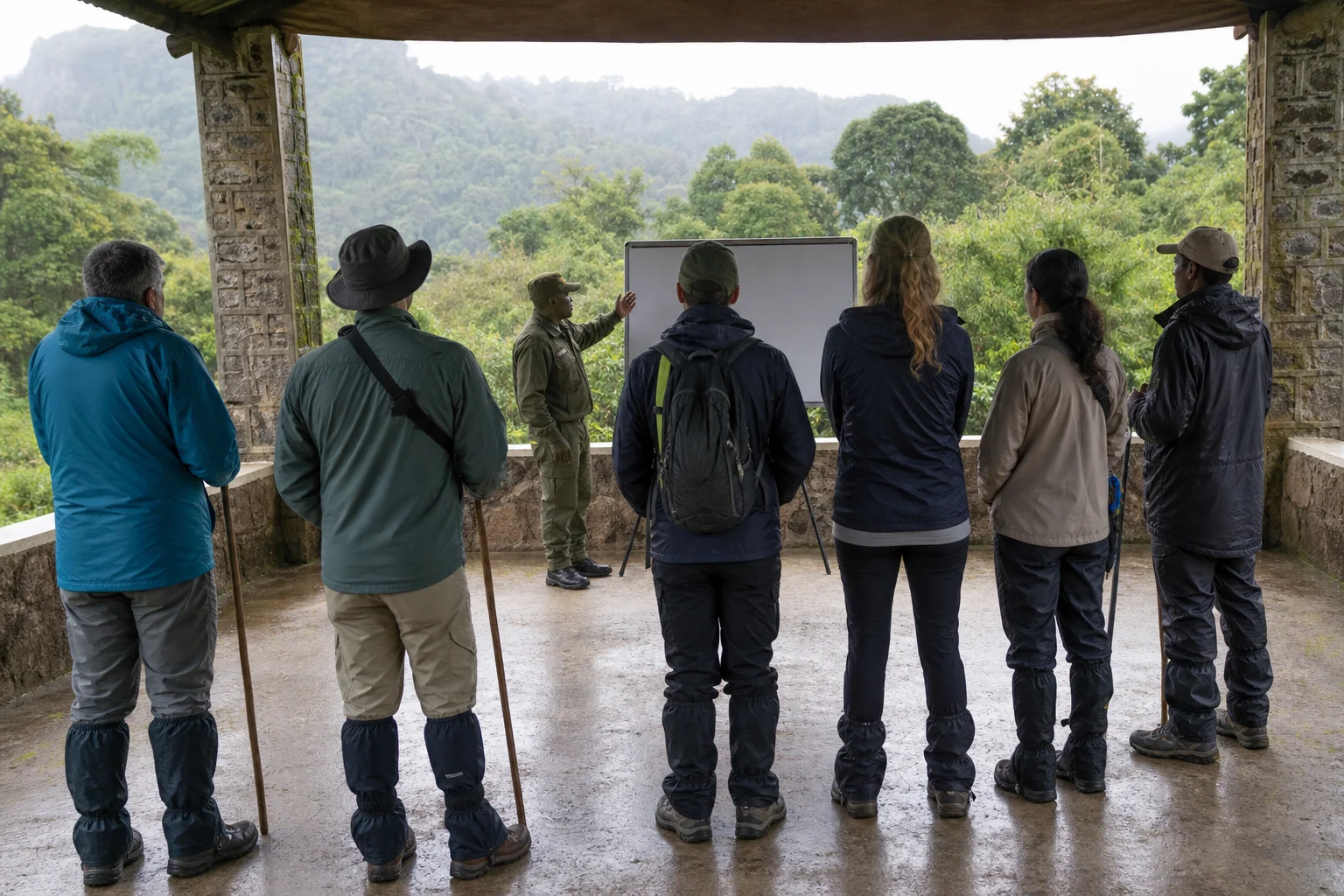
A Rwanda gorilla permit is named, dated and governed by minimum age and group limits. Visit Rwanda publishes the price and rules and describes a government community-revenue mechanism. The permit is not an optional donation—and it cannot guarantee weather, a sighting or a particular gorilla family.
For every scarce activity, check name, passport data, date, age, amendment and cancellation. A permit can become non-refundable long before the lodge. That cash and itinerary risk must be explained before payment.
Briefing time, group size, duration, conduct, health, equipment and ranger authority also apply. A valid permit is only a right to participate under current rules; it does not override weather, welfare or an operational closure. Confirm who decides, whether a move is possible, and which terms separately govern permit, transport and lodge.
Community conservation requires rights, not just images
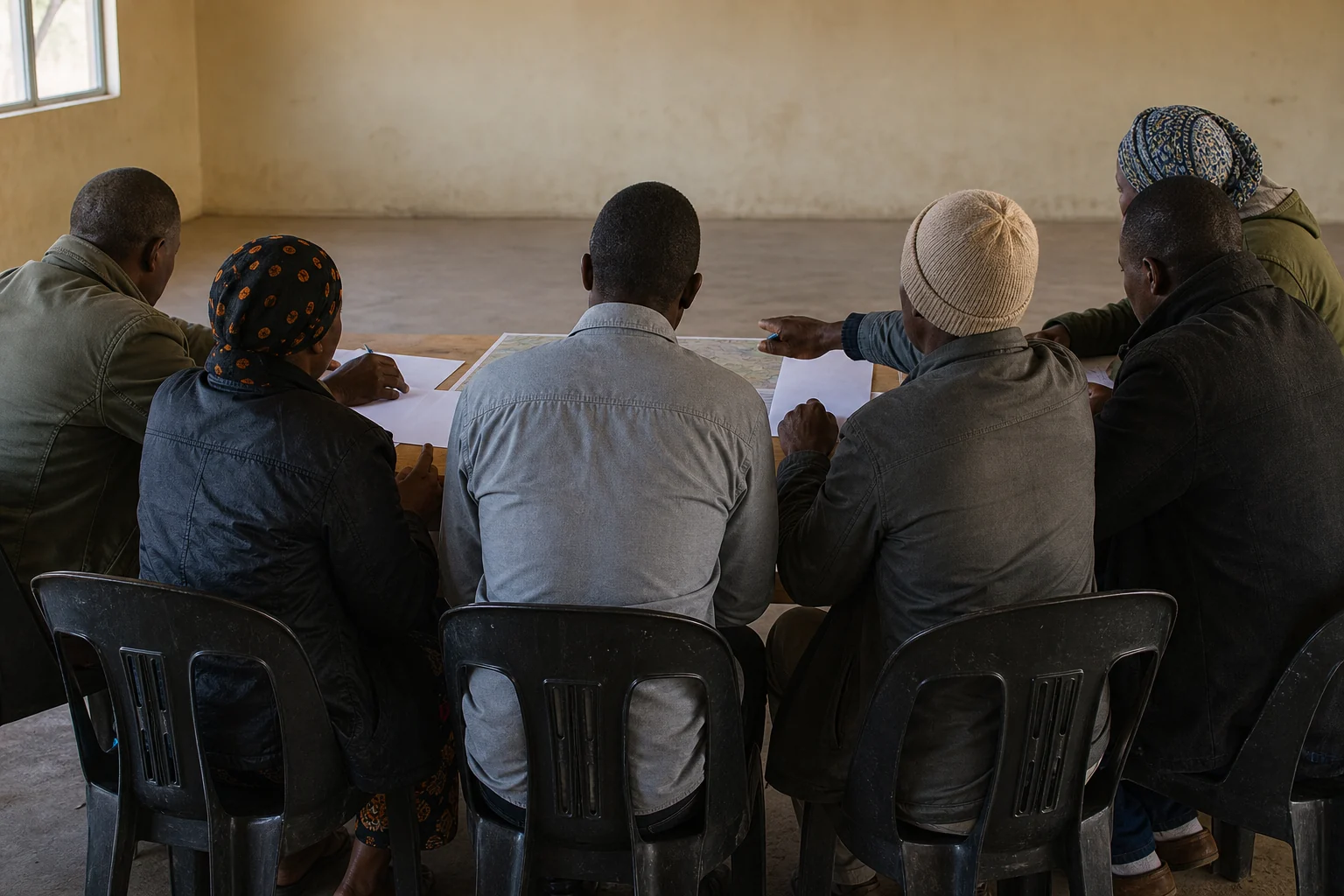
Namibia's communal conservancies rest on recognised structures. NACSO reports tourism revenue, jobs and governance. That differs from a lodge referring to “support for neighbouring villages” without identifying a recipient or agreement.
A credible community levy names the institution, decision rights, calculation and use. Income, employment, lease payments, procurement and joint ventures may matter more than one school photograph. Community members are rights holders and business partners, not scenery for guest communication.
Ask who sits on the governing body, how income is divided among households, infrastructure and operations, which grievance route exists and whether the community can renegotiate terms. Job count matters but does not establish ownership or decision power. Reporting should distinguish gross tourism revenue, costs, distributions and the period covered.
When a lodge contribution makes sense
An additional lodge charge may fund rangers, research, conflict prevention, habitat or scholarships. It gains credibility when separately disclosed, assigned to a named entity and reported regularly. A high number without project logic is not automatically better than a smaller transparent fee.
Ask whether it is mandatory, gross or net, subject to administration, reviewed annually, restricted or discretionary. If park and concession fees already fund similar work, the additional value needs explanation.
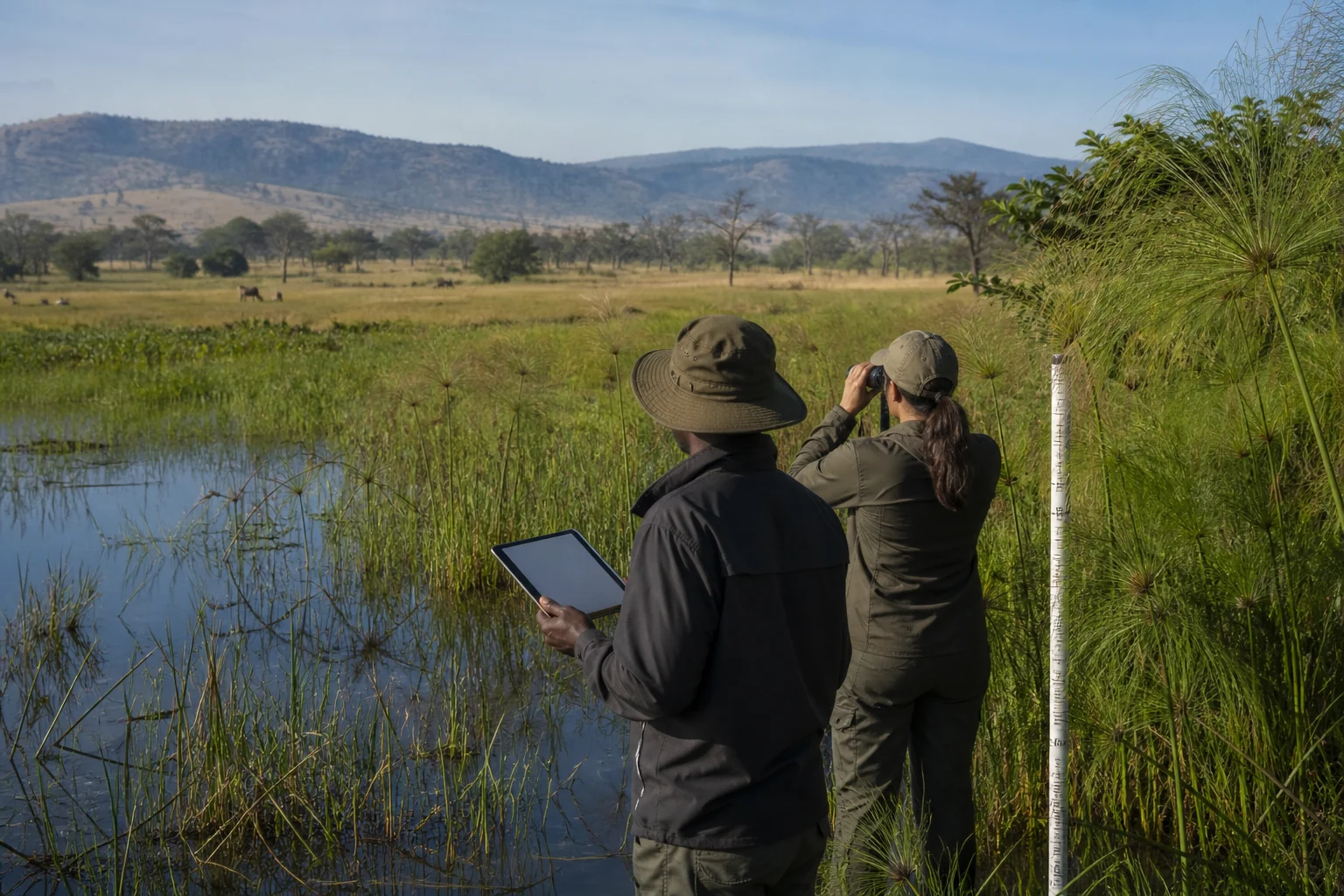
A credible programme has a baseline, responsible entity, annual budget, defined use and a few appropriate measures. Conflict work might track cases handled and response time; research should explain how data are used. Numbers without method remain promotion. Ask what follows if targets are missed and whether unspent funds stay in the programme or return to lodge operations.
Day counting creates the common surprises
“Per day” may mean calendar day or a 24-hour period. “Per night” may sit on top of entry. Moving camps within one ecosystem can trigger another charge; a late flight may cross a validity window. Nationality, residence, age and season may change tariffs.

The proposal therefore needs one calculation line per protected area: arrival, exit, nights, travellers, children's ages, vehicles, currency, tax and exchange-rate rule. A lump sum without quantities cannot be audited.
Consider a late-afternoon entry and an exit two mornings later. Depending on the system, that may trigger two calendar days, two bed-nights or more than one 24-hour window. An airstrip stop may create no new park charge—or one may arise when the vehicle enters another jurisdiction. Calculate exact routing and entry times rather than hotel nights alone.
Tax, currency and refund are part of the analysis
Authorities sometimes change tariffs or payment platforms after booking. Charges may be denominated in US dollars but settled locally; card and bank costs may follow. Some payments become non-refundable once issued. Transparent advice separates confirmed amounts from estimates and states who bears an increase.
On cancellation, identify what belongs to lodge, permit, park or donation. A voluntary contribution should not automatically inherit the hard terms of an issued permit.
The currency clause also precedes deposit. Is conversion made at the daily rate, a fixed quotation rate or with a buffer Are VAT, card costs and bank fees included If an authority changes a tariff after booking, the contract identifies who bears the difference and when cancellation remains possible. A revised invoice needs a date and current official basis.
Green language without money flow is a warning
Terms such as “eco levy”, “wilderness contribution” or “giving back” are insufficient on their own. So are percentages without a denominator, photographs without a project and impact numbers without a period. Strong evidence includes official tariffs, contracts, independently reviewed reports, identifiable beneficiaries and multi-year outcomes.
Other warnings include a mandatory donation without a recipient, different project names across invoice and website, “100 per cent to conservation” without an administration explanation, or a figure disclosed only after challenge. Honest communication can acknowledge that important work is not yet fully measurable. It cannot make an opaque money path credible.
Questions for every safari quotation
- Which charges are statutory, contractual or voluntary
- Who receives each line and when is it paid
- Is it per person, day, night, vehicle or permit
- Are tax and currency buffers included
- What is refundable after change or cancellation
- Which community holds rights or receives income
- Where are the tariff and current impact report
The final quotation is recalculated immediately before payment for country, protected area, travel date, nationality, residence, age and exact routing. It carries an issue date and validity rather than only a total. Before departure, check tariff changes, permit status and receipts again. Any difference can then be traced to regulation, currency or a changed itinerary.
The Deluxetargets recommendation
Accept official park, concession and permit costs as part of the real safari price, while requiring them to be itemised. Judge community and lodge contributions by governance and reporting, not emotional language. Conservation then becomes a traceable component of the journey rather than a label on the invoice.