
The most effective conservation journey is not necessarily the one with the greatest access. A ranger briefing, telemetry flight or project afternoon may be illuminating, but conservation should not be designed around the visit. Long-term work and local rights come first; the guest experience follows.
Four forms, four expectations
- Donation or foundation
- Funds work and partnerships without a claim to personal access.
- Project visit
- Explains existing work when safety and operations allow.
- Conservation lodge
- Links a stay with land use, employment and recurring finance.
- Qualified professional contribution
- Applies proven expertise to a defined need with a proper handover.
- Warning
- Animal contact and guest photographs appear more important than results.
The right form depends on the traveller's objective
| Form | Strength | Limit | Best for |
|---|---|---|---|
| Direct donation | Little disruption; funds can meet real priorities | Less visible experience | Travellers who place impact above access |
| Project visit | Context, conversation and understanding of method | Uses staff time and may disturb operations | Interested guests with realistic expectations |
| Conservation lodge | Recurring tourism revenue, jobs and land value | Impact and hotel marketing may blur | Guests combining stay and purpose |
| Qualified professional contribution | Specific expertise for a confirmed operational need | Credentials, liability and handover are essential | Experienced specialists with sufficient time |
The form should follow purpose, time and competence rather than trip price. A traveller seeking understanding may need a carefully prepared visit; someone funding durable work may be better served by a vetted foundation or direct partnership. Professional work begins with an assignment from the organisation, not a guest's desire for proximity. Privacy and uncertainty matter too: a field appointment may be cancelled while a donation without a visible climax can continue doing useful work.
A donation does not purchase an encounter
A good organisation separates financial support from wildlife access. Unrestricted funding may be more useful than a tightly labelled gift because it pays salaries, fuel, data systems or repairs. A restricted donor should test whether the purpose is genuinely a priority and understand the administration required.
Tax treatment, currency, transaction costs and receipts depend on organisation and residence. The emotion of being on site does not replace legal or financial diligence.
Before making a substantial gift, establish whether funding is restricted or flexible, which planning period it serves and how departures from plan are reported. Restriction can feel reassuring but may obstruct essential overhead or a response to changing conditions. A credible partner explains budget, reserves, administration and outcome measures without pretending that every animal protected can be attributed to one transfer of funds.
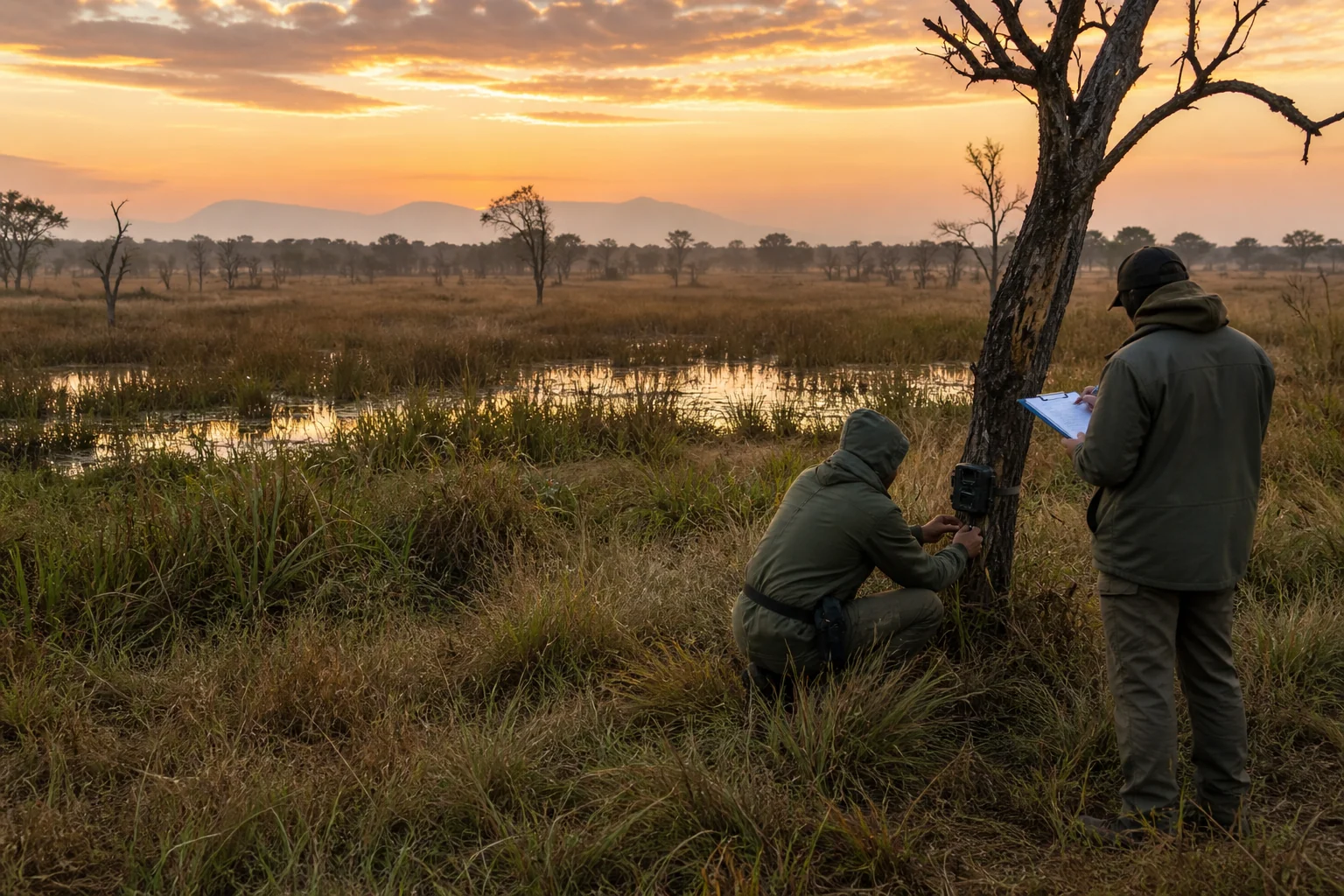
Project visit: observe rather than perform work
Research, veterinary care, ranger operations and conflict mitigation are professional tasks. A guest should not expect to handle wildlife, feed an orphan or see confidential tracking locations. A briefing, controlled field visit, method demonstration or conversation with the responsible specialists is more appropriate.
The visit proceeds only when the project, welfare and safety allow. No intervention, sighting or particular expert is guaranteed. Strong programmes cancel when the work needs priority.
A responsible itinerary states duration, group size, permissible questions, image and publication rules, and who authorised the visit. GPS records, ranger movements, names of vulnerable informants and locations of sensitive species remain protected. Staff may decline participation without being required to justify themselves to a donor. Those boundaries are evidence that the operation has not become a private theatre.
A lodge must count its own footprint
A foundation logo in the footer does not make a conservation lodge. Relevant questions include land or concession model, water, energy, waste, employment, local procurement, lease and community revenue, vehicle pressure and guiding quality. The protected value of the land and the economic alternative to conversion may matter more than one donation project.
Ask what share flows contractually, what is reported annually and who decides. A moving guest story without a denominator is not an impact report.
Assessment starts with ordinary hotel operations: dry-season water, energy source, wastewater, supply chains, pay and accommodation for staff, and vehicle numbers at sightings. Only then examine the conservation contribution with a baseline, reporting period and named implementing partner. A percentage of revenue differs from a fixed amount per occupied night; neither is meaningful when occupancy and recipient remain undisclosed.
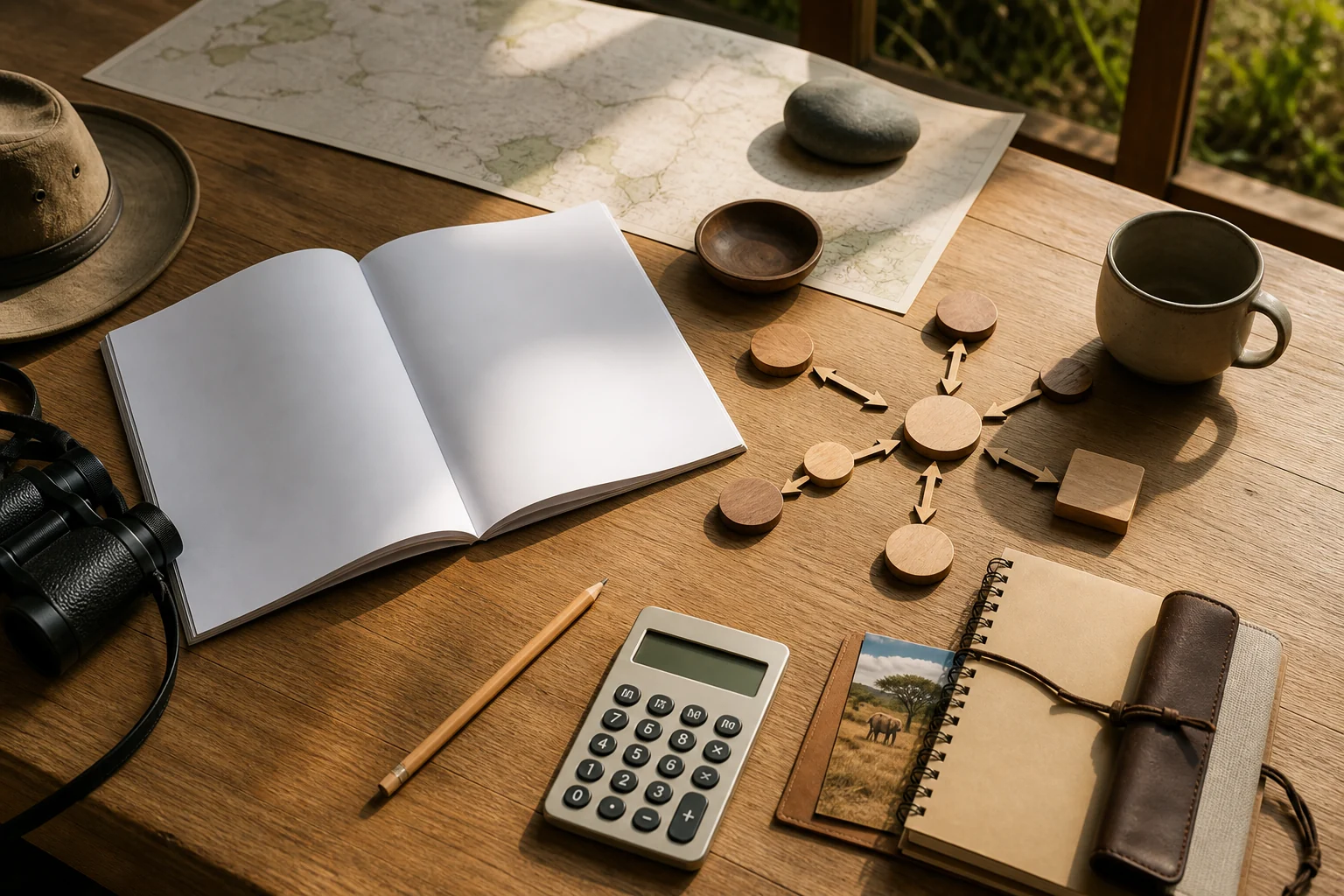
Foundation and NGO: governance before celebrity
African Parks publishes annual reports on long-term management partnerships with governments and communities. Tusk provides audited financial statements and project partners. These documents enable questions about board, audit, reserves, programme cost and multi-year performance. Familiarity alone is insufficient; missing reports remain a risk even around charismatic founders.
A foundation can vet a portfolio and sustain funding, but may add distance between donor and place. Selection, monitoring and exit should be transparent.

An annual report starts diligence; it does not finish it. Review auditor, reporting period, related entities, conflicts, remuneration, reserves and the proportion reaching implementing partners. Impact numbers also need method and comparison. More patrols are an output; reduced poaching may be an outcome. Drought, conflict or policy change can alter targets without making every variance evidence of failure.
Community is not a synonym for beneficiary
Local people may be owners, concession partners, employees, suppliers or decision makers. Those roles are stronger than saying a project “helps the community”. Land rights, consent, governance and revenue sharing must be visible. Photography and visits require permission and should never exchange dignity for donor emotion.
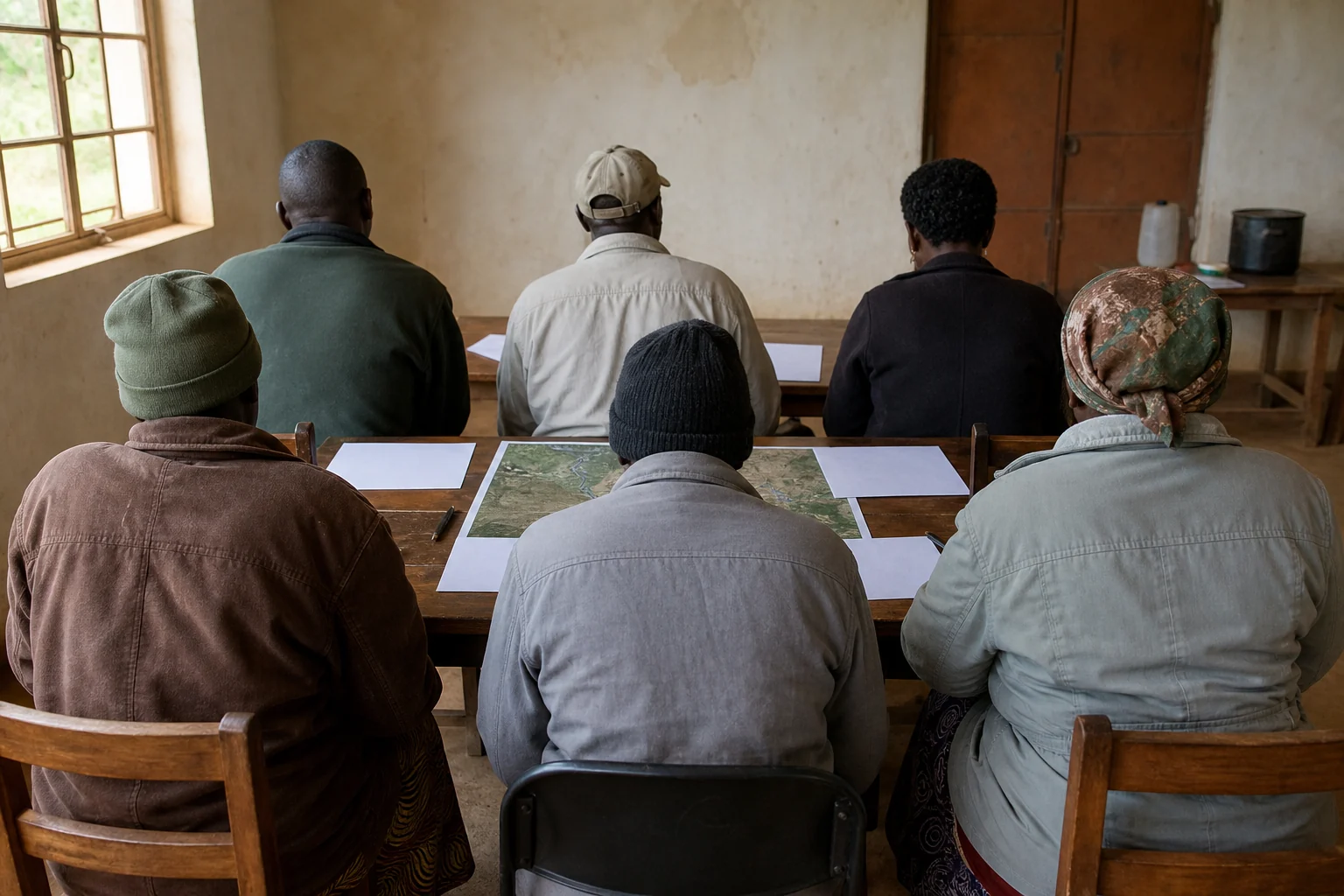
A serious partnership shows who sits on the board or conservancy committee, how leases and fees are distributed, which grievance process exists and whether terms can be renegotiated. Employment alone is not decision power; ownership on paper does not guarantee a fair voice. Ask whether local businesses can compete for contracts and whether training leads to management roles, rather than treating community as a cultural add-on.
Wildlife welfare places limits on the guest
IUCN guidance for visitor management in protected areas places ecological objectives and management capacity before maximum volume. For travellers, distance, group size, timing, radio and photography rules and guide instruction are part of quality. Feeding, holding, luring or positioning wildlife for photographs are warning signs unless transparently justified within a professional intervention.
Passive information can also cause harm. Real-time geotags, visible telemetry screens and casually shared patrol plans may expose rare species and field teams. Good projects delay publication, strip location data and review sensitive images before release. That may feel less exclusive, but it protects wildlife, researchers and rangers. Accepting the restriction contributes more than securing the more spectacular post.
Short volunteering is rarely the best journey
Unskilled short-term work creates induction and supervision and can replace work local teams could perform professionally. A defined specialist contribution—data, medicine, engineering or governance—may help when need, qualification, liability and handover are clear. For most guests, funding and respectful learning outperform the desire to “help hands-on”.
A genuine professional assignment has a scope, technical supervisor, insurance, data rules, safety induction and a recipient for the handover. It may require weeks of preparation and duties after the journey. A traveller with only days can often help more by financing local expertise or delivering pro bono work remotely. Ranger, veterinary and research functions remain careers; luxury access must never devalue their qualifications.
A credible visit has a cost model
Project staff, vehicle, security briefing and diverted work time cost money, so a visit may carry a fee. Separate expense from contribution: what pays logistics, what reaches the programme and what is voluntary A high journey price is not automatically a large donation.
Transparency also prevents a project from subsidising a wealthy visitor. Full cost may include staff hours, fuel, permits, security cover and contingency when a visit is cancelled. It should still be clear whether the lodge, tour operator or foundation adds a margin. Anyone unwilling to meet the real cost should choose a public briefing or contribute without visiting.
Due-diligence questions
- Which problem is addressed by which method
- Who owns land, data and decision rights
- Which multi-year outcomes are reported
- Are finances audited and is the board accountable
- How do local rights holders benefit economically and politically
- Which limits protect animals, people and research from the visit
- What happens if tourism or donor revenue declines
Every answer needs a source, period and accountable person. Compare campaign language with the annual report, implementing agreement and, where appropriate, independent evaluation. Reconfirm permits, welfare protocol, image consent and current security conditions immediately before travel. Tax claims belong with a qualified adviser in the donor's jurisdiction; a travel company should promise neither deductibility nor legal effect.
The Deluxetargets recommendation
Choose a credible long-term model before choosing the visit. A conservation lodge can create recurring revenue, a foundation can manage larger gifts professionally and a project visit can deepen understanding. A donation is often the most effective option precisely because it demands no special access.
The strongest relationship begins with one modest, well-tested decision, continues through a reporting conversation and grows only when both parties find value in it. An annual exchange can surface new priorities, candid setbacks and the right moment for a visit. Conservation then ceases to be a one-off backdrop and becomes a durable partnership in which access is never the consideration for support.