
A digital detox becomes luxurious when offline time is properly serviced, not when the Wi-Fi is poor. A good retreat does more than remove devices. It replaces alarms, directions, contact and daily structure with discreet analogue alternatives. The acoustic reality matters just as much: a phone-free room beside a generator, beach club or service road is not a place of calm.
Four models – only one needs to be radical
- Committed retreat
- Device-free common spaces, silence and very few external stimuli
- Hosted detox
- Lockbox, concierge, analogue tools and planned experiences
- Wellness framework
- Defined digital rules within a structured retreat
- Gentle detox
- Selected hours and zones stay offline while essential contact remains controlled
The short answer: stricter is not necessarily better
Guests who are on call, care for a relative or depend on digital health and travel documents need a different model from someone seeking three solitary days of silence. The first decision is therefore not the resort but the degree of separation: complete, time-limited or restricted to shared spaces.
For many travellers, a gentle detox is more effective. The phone remains in the room safe, is checked once daily for twenty minutes and stays absent from meals, spa and activities. A committed retreat can go deeper, but requires sound preparation and willing participation from everyone travelling.
| Retreat | Official model | Particularly good for | Confirm before booking |
|---|---|---|---|
| Eremito, Umbria | Device-free common areas, silent dinner and hermitage rhythm | Solo travellers and intentional silence | Room connectivity, arrival, desired degree of silence |
| Chiva-Som / Zulal | Wellness resorts publishing a digital-detox policy | Structured retreat with wellness support | Exact rules, zones and personal suitability |
| Frutt Mountain Resort | Offer including device handover, TV-free room and analogue tools | An accessible first trial in the Alps | Whether the time-limited offer is currently available |
| Waldorf Astoria Riviera Maya | Offer with device lockbox and Detox Concierge | Voluntary disconnection within a full-service resort | Current inclusions, quiet room position, exceptions |
Eremito, Chiva-Som and Zulal: silence or wellness structure
Eremito calls itself a contemporary hermitage within the UNESCO Monte Peglia Biosphere Reserve. According to the property, its common areas have been conceived as free from phones and digital devices since 2009. Reading, woodland paths, optional activities and a silent dinner accompanied by Gregorian chant shape the day.

This is the most committed choice in our comparison and, for that reason, not the universal one. Guests expecting animated dining, a social pool or a conventional hotel programme may experience the reduction as absence. Solo travellers who do not confuse silence with loneliness, and require little entertainment, may find rare space within it.
Chiva-Som describes both its Hua Hin property and Zulal Wellness Resort in Qatar as operating a digital-detox policy. The strength of such a model is the framework already in place: consultation, movement, treatments, meals and rest occupy the space that notifications usually fill.

The published description is not a substitute for the operational rules. Does the policy apply everywhere or in selected zones Is an e-reader acceptable How does a relative make urgent contact Some wellness or nutrition programmes also require individual assessment. A digital detox is not medical treatment and cannot promise sleep or psychological outcomes.
Frutt and Waldorf Astoria: controlled test or voluntary detox
The Swiss resort published a digital-detox offer under which devices are handed over at check-in. The concept includes a television-free room, books and board games, an analogue alarm clock and an in-room telephone for contacting reception. That replacement logic is persuasive: the smartphone disappears, while necessary functions remain solved.
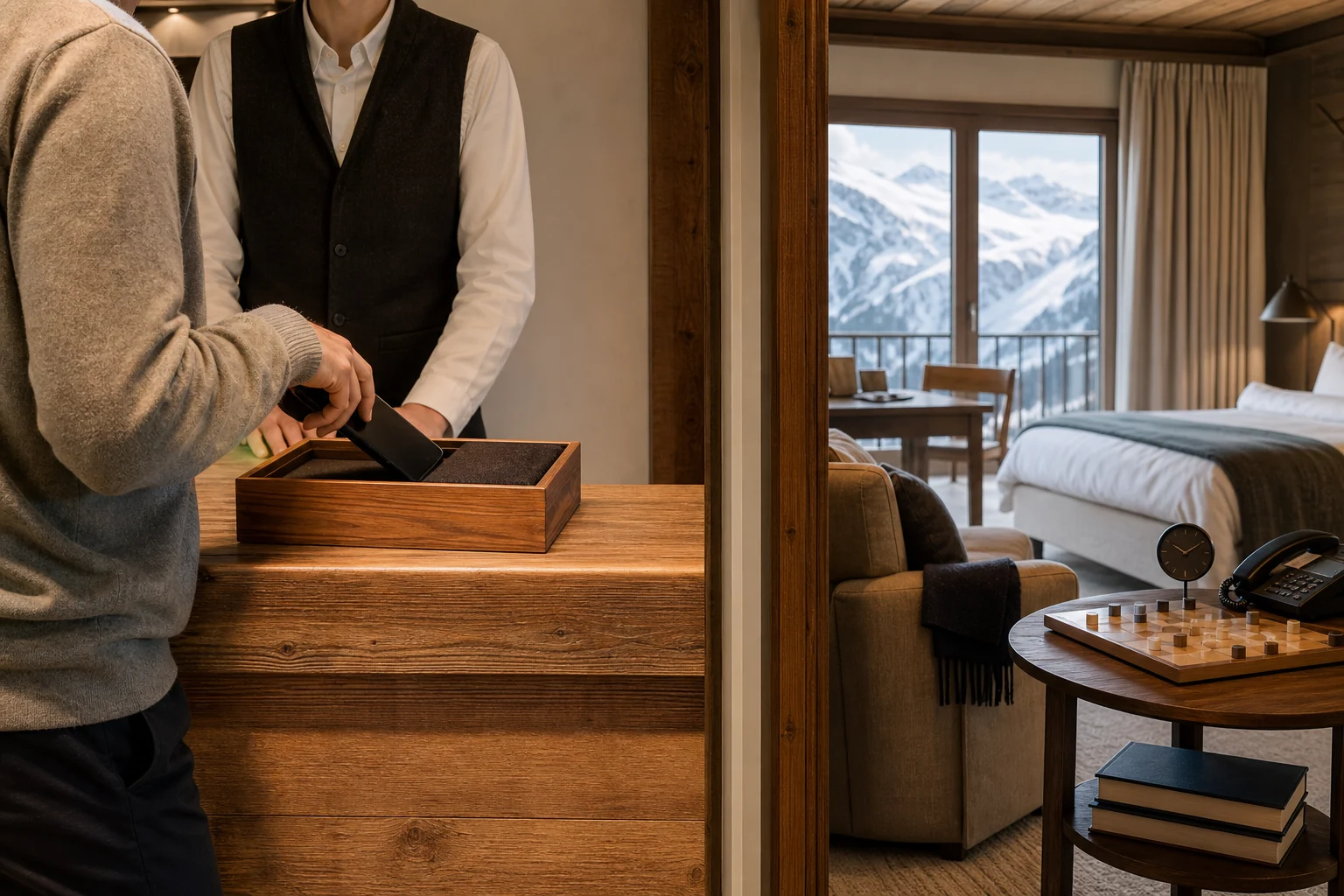
A seasonal offer is not a permanent hotel feature. Availability and present inclusions must be reconfirmed. For guests testing full disconnection, a short stay in familiar surroundings may be more intelligent than an expensive long-haul journey followed by immediate device surrender.
The resort’s published offer includes secure storage for digital devices and a dedicated Detox Concierge, together with guided analogue or mindful experiences. This model retains the infrastructure of a large resort and makes disconnection a personal choice.
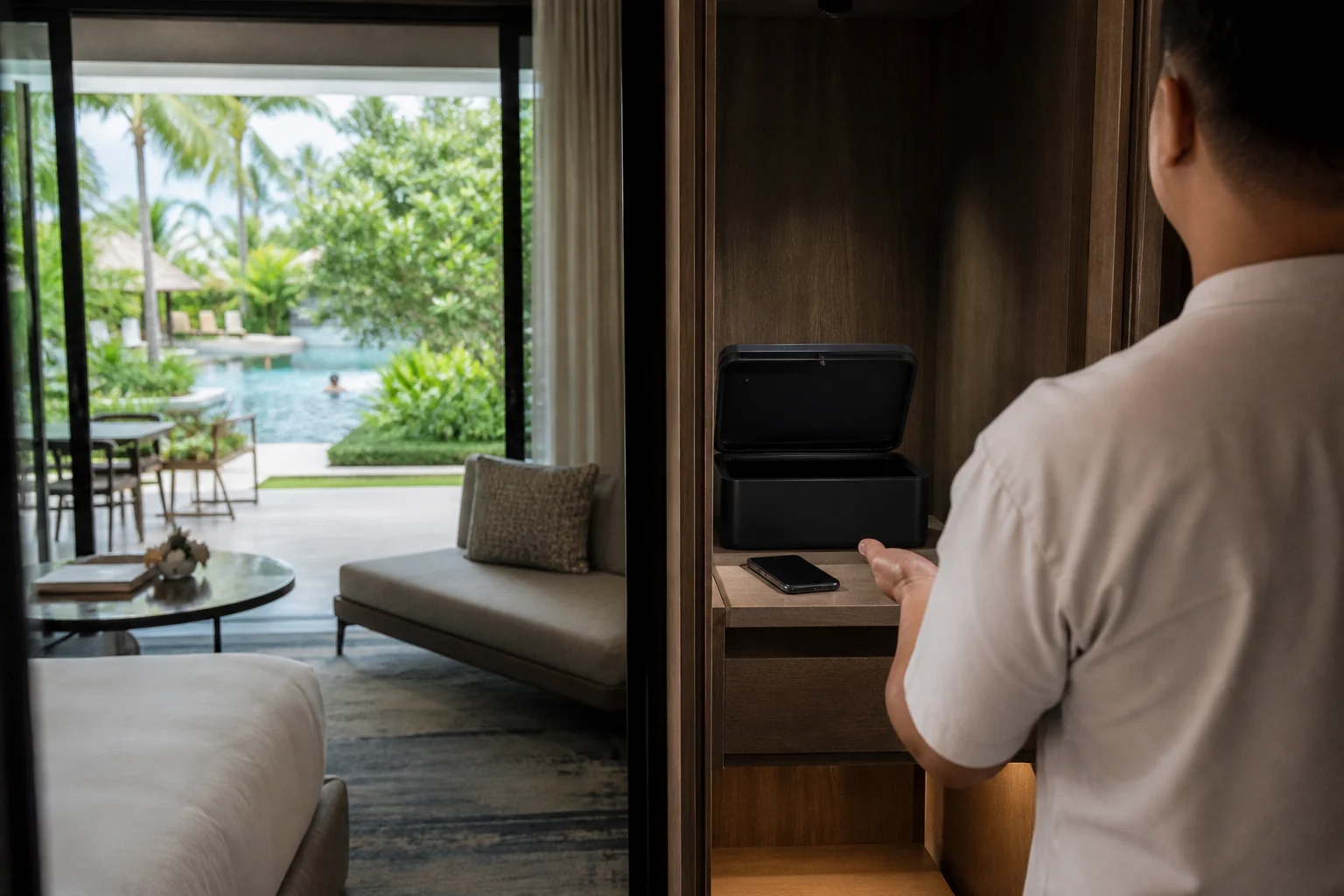
It is more approachable than a hermitage but also more permeable. Restaurants, other guests and normal resort operations remain present. Room position determines whether the stay is actually quiet. A detox package cannot compensate for an acoustically compromised category.
Quiet begins with the noise map
Remote does not mean silent. Islands have seaplanes, boats, generators and wind. Mountain resorts may have piste machinery, church bells or snow clearance; beaches have clubs, weddings and surf. Air conditioning, minibar compressors, pool plant and connecting doors can shape the night too.
We examine the plan and the daily rhythm: distance from service routes, kitchen, lifts, family pool, event space and jetty; bedroom orientation; announced building work; seasonal events. Absolute silence is never promised. Nature has its own sound. The question is whether the soundscape matches the calm a guest expects.
Lockbox, emergency route and shared contract
A phone contains boarding pass, camera, alarm, translation, maps, banking, two-factor authentication and emergency contacts. Once it is stored away, necessary functions need alternatives. A considered property supplies an analogue alarm, printed schedule, writing materials, directions and a clearly accessible reception.
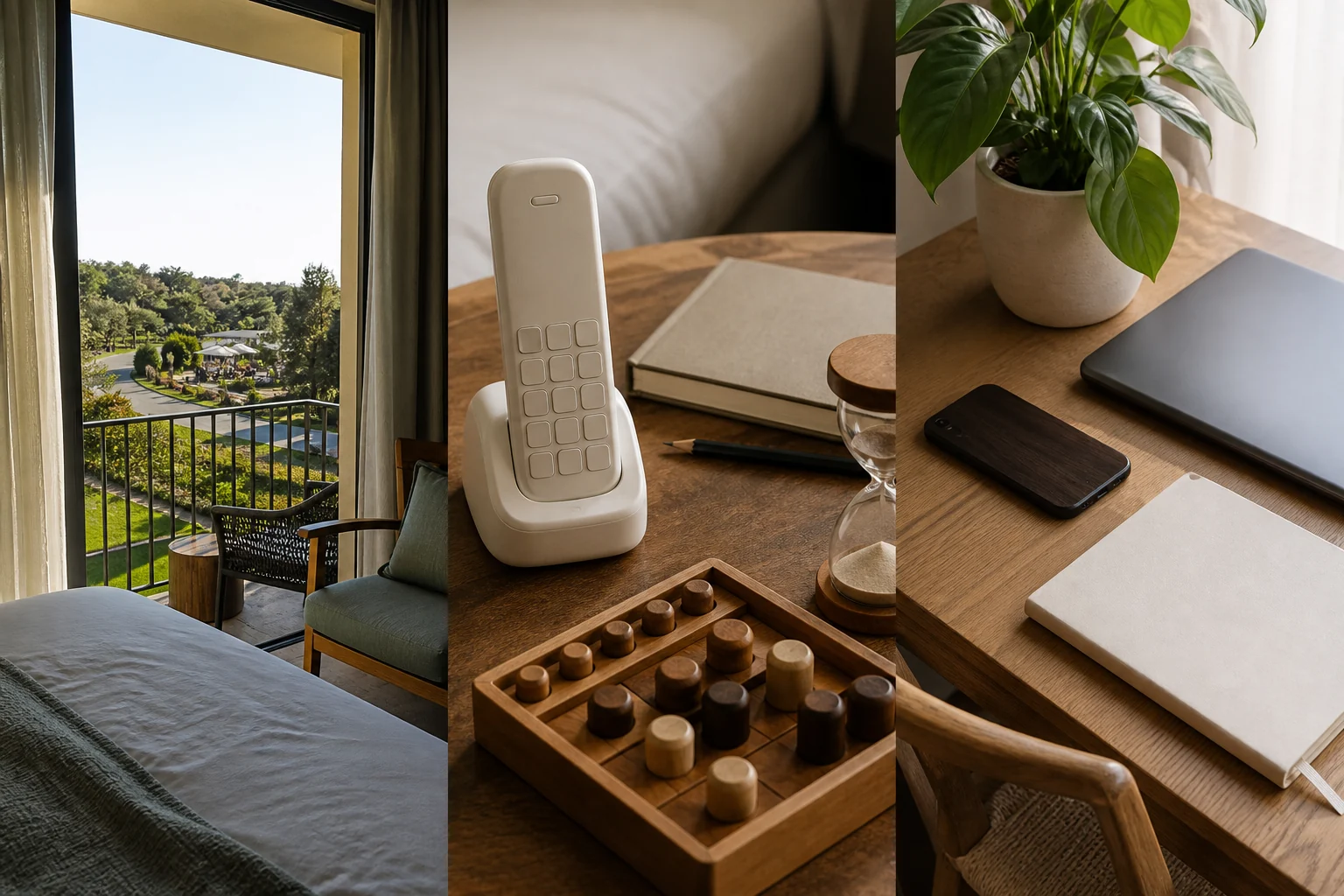
Storage and access matter as well. Who holds the device, when can it be recovered, and how is an incoming emergency relayed No guest should surrender a device under social pressure. Voluntary participation is part of luxury.
One trusted person receives the hotel number, dates and a definition of what qualifies as urgent. The property confirms whether messages are received around the clock, translated if necessary and delivered personally. At remote retreats, medical procedure, transport time and nearest appropriate care belong in the travel plan regardless.
Parents, carers and business owners may need a scheduled check-in window. That is not failure. One predictable contact in the afternoon creates more calm than continuous fear of missing something.
A detox works poorly when one person wants to disconnect and the other intends to work in secret. Decide which devices travel, whether photographs will be taken, when messages are checked and whether meals remain completely offline. Children and teenagers need age-appropriate agreements, not a surprise ban at check-in.
Solo guests often benefit most from a property whose architecture and programme carry the day. Anyone uneasy about social conventions should know whether there are shared tables, silent periods or group activities.
Two nights test; five to seven change the rhythm
A weekend reveals how automatic the reach for a phone has become. Yet day one is often consumed by travel and inner resistance. Three full days make a better introduction. Five to seven nights allow the new rhythm to consist of reading, movement, conversation and sleep, rather than abstinence alone.
Longer does not automatically mean deeper. A strict silence or wellness programme must suit experience, physical condition and purpose. For a first attempt, an accessible retreat with flexible rules is usually the more intelligent choice.
Offline logistics and a gentle detox
Print boarding passes, insurance information, visas, transfers and key numbers. Complete banking and two-factor logins in advance. Out-of-office replies should name a deputy, not disclose the private location. Music, books and camera are selected deliberately – or replaced with analogue versions.
The team at home needs a rule too. If every question is urgent, the retreat cannot work. One nominated person filters genuine exceptions and protects the remaining hours.
Not every stay needs surrendered devices and silence. A room without a television, no phone before breakfast, device-free meals and one daily message window may be enough. On a wider itinerary, the smartphone remains available for tickets and directions without controlling the day.
A resort supports this approach when printed information exists and guests are not directed to an app for every service. A QR-code-only operation is a poor foundation for serious offline time.
The return decides what remains
Reactivating every notification at check-out ends the stay with digital noise. A staged return works better: family and travel information first, work later, social media last. The first working day should not immediately follow an overnight long-haul flight.
One ritual may remain – device-free meals, the phone outside the bedroom or half an offline day each week. The retreat is a protected rehearsal space; the durable boundary is created at home.
The Deluxetargets view
Eremito is the strongest choice for deliberately sought silence and reduction. Chiva-Som or Zulal suit guests who want a wellness framework to carry the day. Frutt is a nearby trial of hosted disconnection when its offer is available. Waldorf Astoria Riviera Maya combines voluntary detox with conventional full service.
We choose intensity, duration and emergency protocol before the hotel. We then verify noise position, room location, analogue replacements and the return online. That invisible organisation – not missing connectivity – is what turns digital absence into luxury.