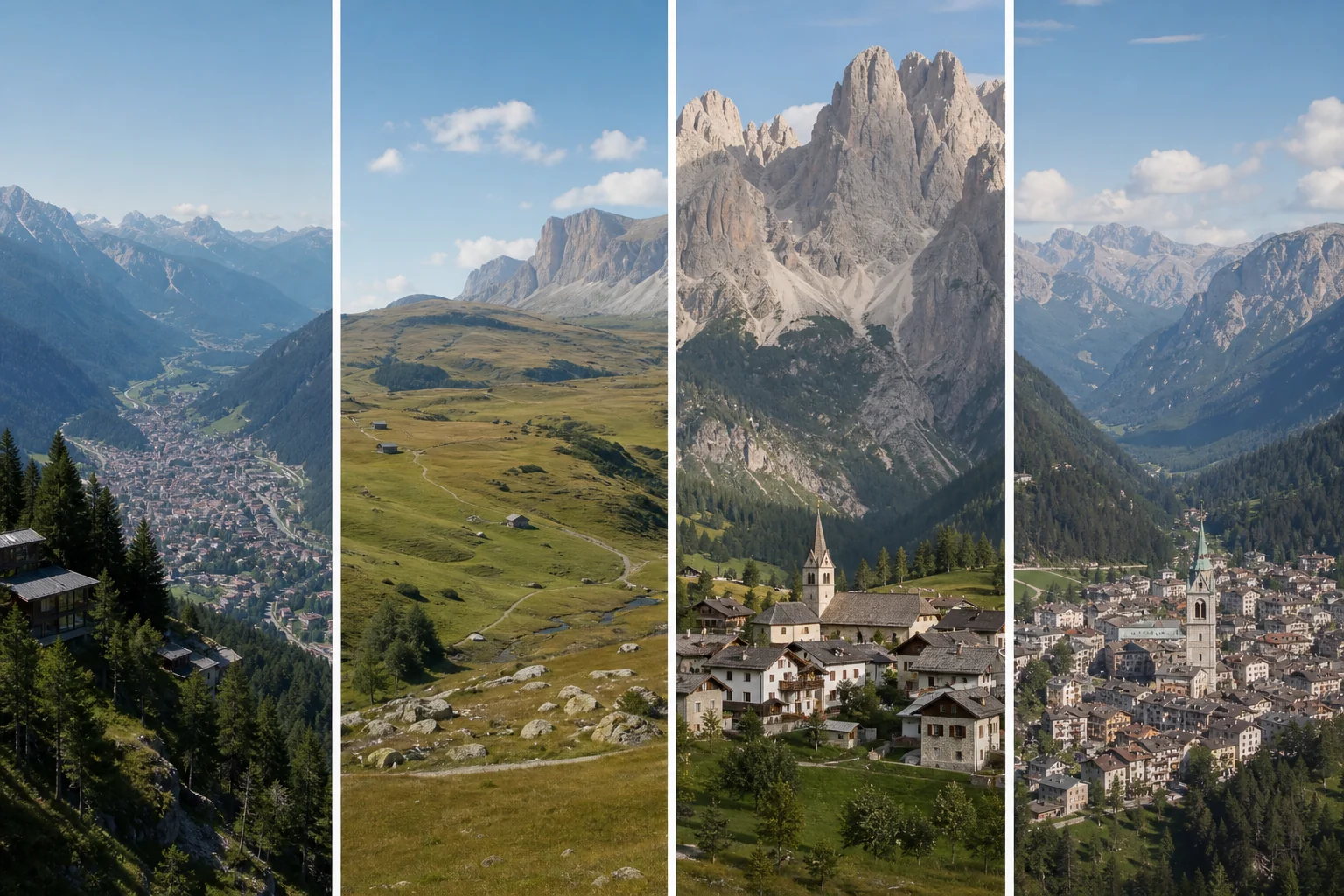
The Dolomites are not one destination but an archipelago of valleys, passes and distinct hotel cultures. FORESTIS above Brixen is for architecture and retreat; Alpe di Siusi for space and movement; Alta Badia for Ladin food and access to the Sella; Cortina for a livelier town and an independent dining scene. Attempt all of them in a week and the defining experiences will be hairpins and check-ins.
Four regions, four clear roles
- Plose above Brixen
- Retreat, spa and architecture facing the Dolomites
- Alpe di Siusi
- High plateau, hiking, winter sport and a hotel that works as a complete base
- Alta Badia
- Ladin culture, ambitious food and direct engagement with the Sella group
- Cortina d’Ampezzo
- Town energy, design, independent restaurants and the eastern Dolomites
The short answer: no more than two bases in a week
For six to eight nights, choose one base or two complementary ones. Three nights at FORESTIS and four in Alta Badia combine silence with culinary and sporting range. Four nights in Alta Badia followed by three in Cortina reveal two very different mountain worlds, but demand a carefully checked pass route.
Travellers primarily interested in skiing are usually better staying within one connected area. In summer, those giving equal weight to architecture, walking and food can combine two hotels intelligently. Distance in kilometres is less important than driving time, pass status, daylight and energy after a mountain day.
| Hotel | Strongest profile | Best journey | Confirm honestly |
|---|---|---|---|
| FORESTIS | Architecture, forest, spa and a coherent culinary philosophy | Three-to-five-night retreat above Brixen | Distance from intended hikes and outside restaurants |
| COMO Alpina Dolomites | 60 rooms on Alpe di Siusi, sport and wellness | One hotel as a complete summer or winter base | Access, seasonal operation and desired valley connections |
| Aman Rosa Alpina | 51 rooms, design, spa and several dining concepts | San Cassiano as a precise Alta Badia base | Room orientation, transfers and preferred sport logic |
| Ciasa Salares | Wine, Cocun and personal food culture | Food-first stay near San Cassiano | Restaurant days, menu format and evening transport |
| Hotel de LEN | 22 restrained rooms in central Cortina | Design base for the town and independent restaurants | Room size, parking, road and event position |
FORESTIS and COMO Alpina Dolomites: retreat or high plateau
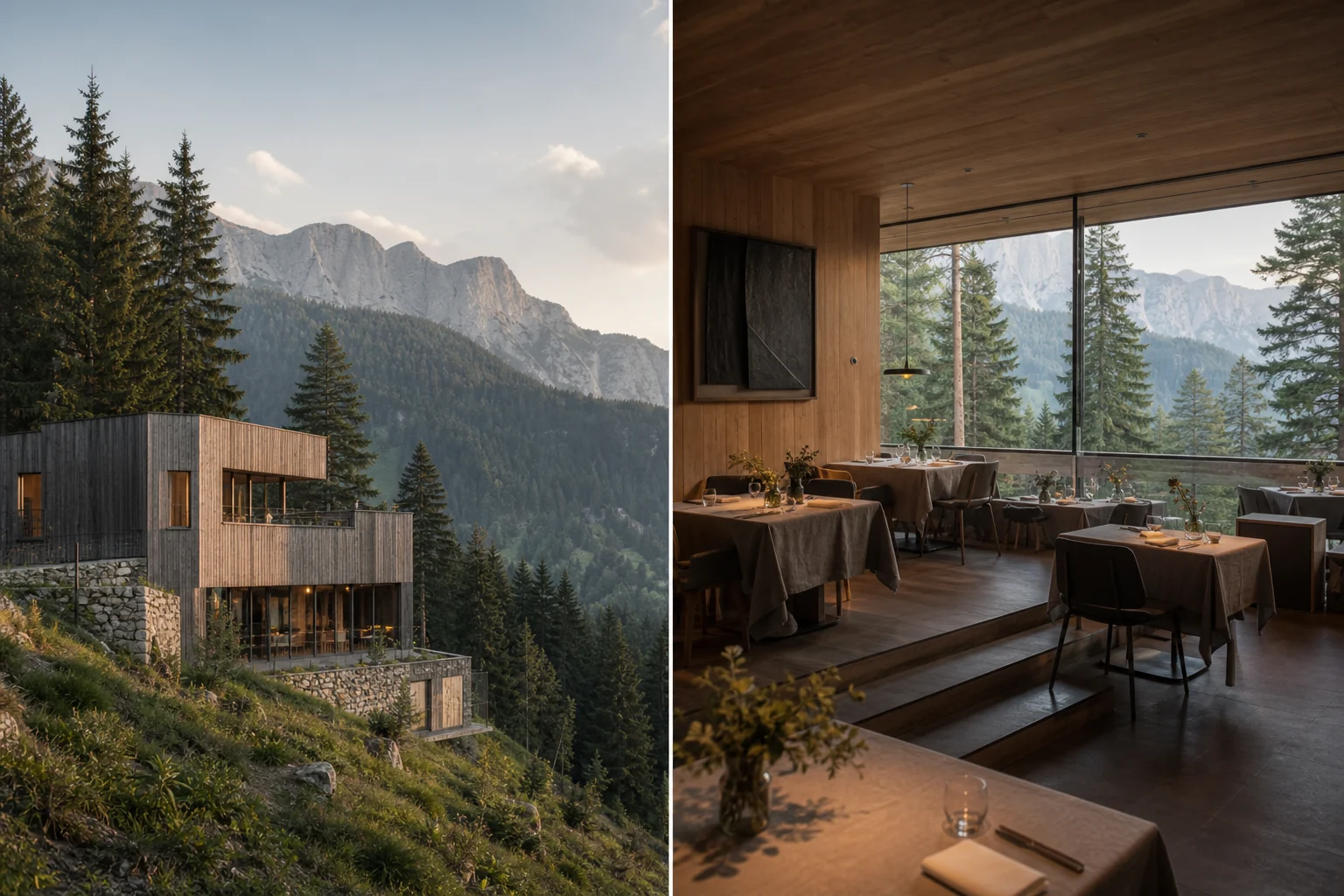
FORESTIS sits at Palmschoss above Brixen. Forest, light and a direct relationship with the Dolomites are framed through restrained architecture, suites and a historic villa available for exclusive use by up to ten guests. Spa and stillness are not ancillary facilities; they are the reason to stay.
Roland Lamprecht’s “Forest Cuisine” draws, according to the hotel, on local farmers, foraged ingredients and contemporary interpretations of regional tradition. The stepped restaurant gives each table privacy and a view. This is a self-contained hotel world, particularly persuasive for guests who do not want to drive somewhere different every evening.
It is not the geographical centre of every Dolomites itinerary. Travellers intending to reach Alta Badia, the Sellaronda and Cortina each day have selected the wrong base. Three nights as a distinct beginning or conclusion are stronger than a restless programme of day trips.
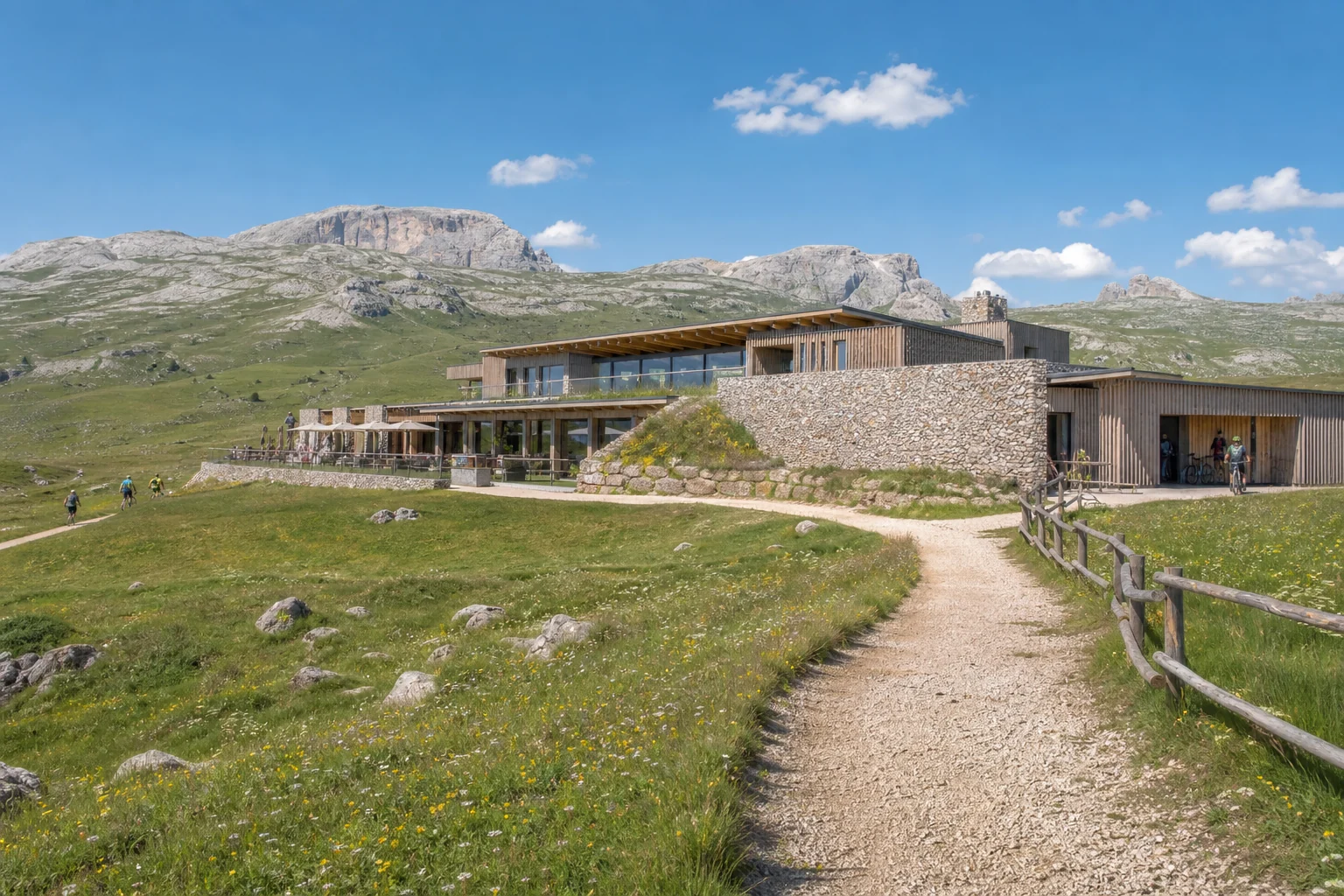
COMO Alpina occupies Alpe di Siusi, the high plateau linked to mountain sport around Val Gardena. The property lists 60 rooms, extensive COMO Shambhala wellness facilities, hiking, riding and mountain biking in summer, and ski-in/ski-out access, cross-country skiing and guided snowshoeing in winter.
Dining ranges from open-fire food at Alpina Chalet to Mediterranean, regional and COMO Shambhala dishes at Sassolungo, with Trattoria dell’Alpe adding another register. This breadth makes a longer stay more resilient than a visually spectacular hotel relying on one menu.
The plateau location is an advantage when the plateau is the purpose. It becomes a disadvantage if guests plan daily cities, wine estates or distant valleys. Road access, transfer, lift operation and seasonal openings need confirmation for the exact dates.
Aman Rosa Alpina and Ciasa Salares: precision or food
The historic Rosa Alpina has returned after extensive renovation as Aman Rosa Alpina. Jean-Michel Gathy designed the 51 rooms and suites, which face the village or forest. The resort states that its Aman Spa contains seven treatment rooms and three pools.
The hotel combines the brand’s serenity with unusual culinary breadth: breakfast in the Heritage Room, family-style Italian dining at The Grill, Japanese shabu-shabu at Enju and cocktails in Il Salotto. Guests can dine in-house on several evenings without repeating the same mood.
San Cassiano is a base for hiking and cycling in warmer months and part of the Dolomiti Superski landscape in winter. The hotel gives a road-transfer range of roughly 90 to 150 minutes from relevant airports. That range is precisely why flight, weekday, traffic and weather belong in the plan.
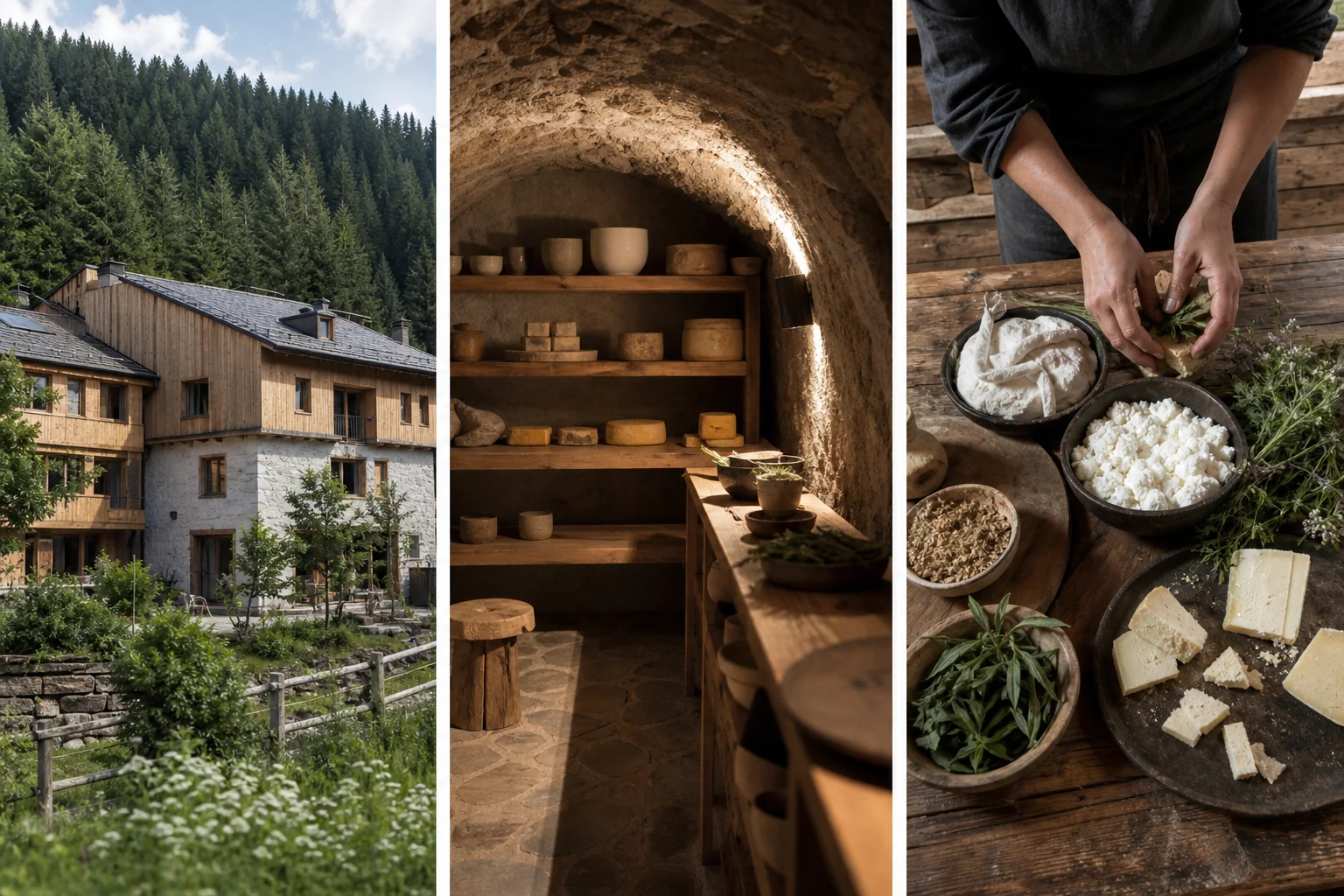
Ciasa Salares in Armentarola, near San Cassiano, is less an international design statement than a deeply personal house for curious eaters. Cocun Cellar Restaurant joins food and wine; the official page publishes curated tastings, optional cheese pairings and small participant numbers. Other in-house concepts include Sorí, Infiní and Bona Lüna Bar.
This is a place for an unhurried evening. A tasting should not follow a demanding pass drive, long hike or dawn ski start. Menu, closing day, duration and pairings are confirmed before the stay. A driver makes sense when dining here from another village.
Ciasa Salares demonstrates that gourmet Dolomites travel is not a league table of stars. A cellar, cheese, producers, Ladin ingredients and host knowledge may shape the memory more strongly than the most formal dining room.
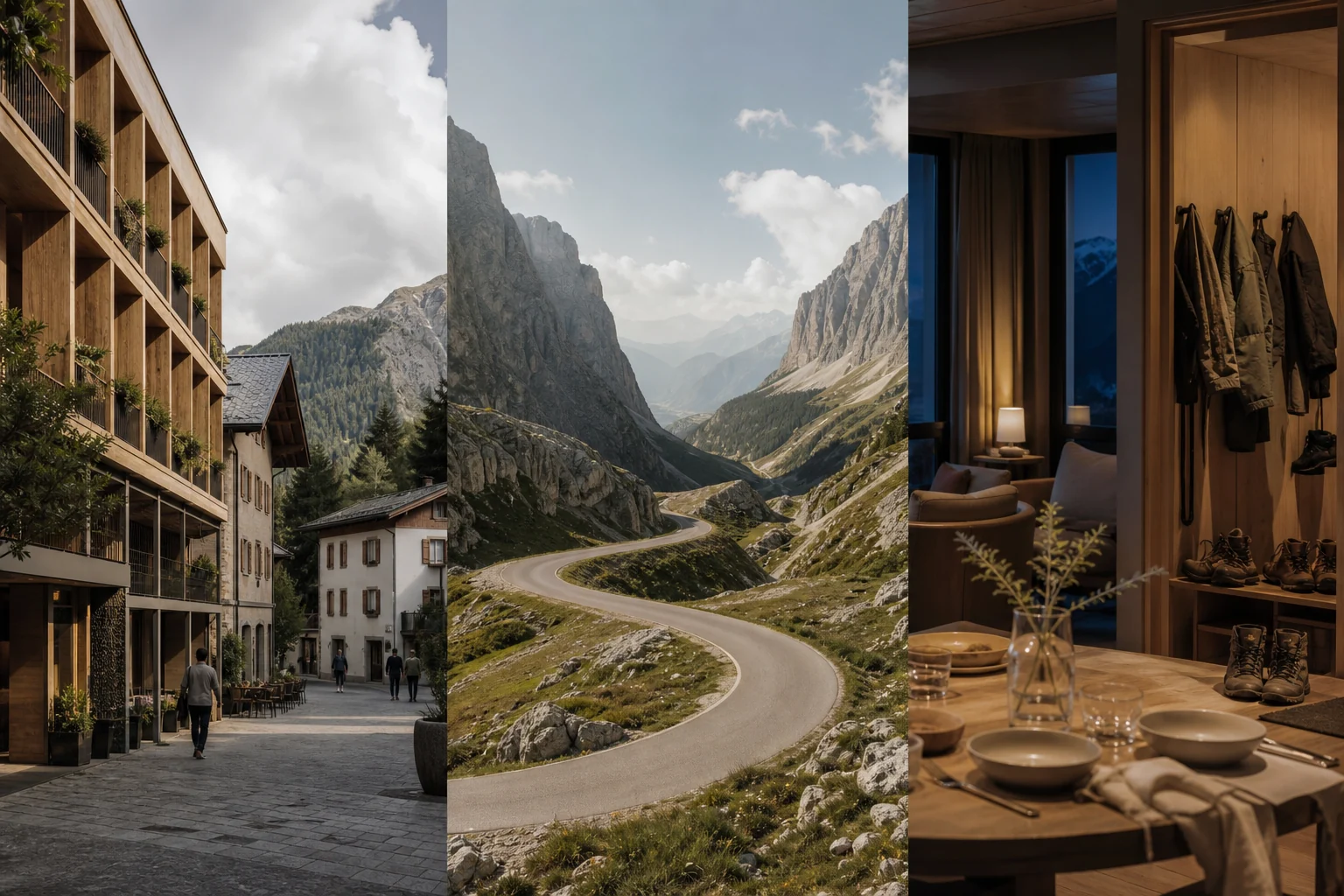
Cortina and Alta Badia: design, land and dining culture
Hotel de LEN opened in 2021 after the transformation of the historic Hotel Impero. Cortina’s official destination site lists 22 minimal rooms, wood as the architectural protagonist, a mountain-view spa, restaurant and bar in the centre. It suits travellers who want to walk through Cortina and deliberately dine beyond the hotel.
Centrality brings life rather than hermitage calm. Room position, road, events and parking deserve attention. Those seeking generous resort grounds and a secluded spa should choose differently; those connecting boutique scale, Corso Italia and independent addresses have a coherent base.
SanBrite describes its work as “agri-cuisine”, rooted in mountain territory, tradition, research and experimentation. The restaurant lies beyond Cortina’s immediate centre and should be treated as the evening’s destination, not an incidental stroll after aperitivo.
Current opening days and menu are confirmed directly. Its strength is the relationship between landscape and kitchen rather than abstract status. Lunch can be more convincing than a late tasting menu after a full mountain day, particularly in summer.
The region’s official material places farms, inns, mountain huts, Ladin cooking classes and ambitious restaurants beside one another. That range is what makes Alta Badia important. A perfect day may contain a hut lunch and a precise evening menu – but rarely two major meals.
At least one evening belongs to traditional food. Turtres, Schlutzkrapfen, barley soup and local dairy or meat products explain the place when origin and preparation are treated seriously. Ladin is not a decorative adjective; it is a language and culture.
Design is more than photogenic timber
Good mountain architecture governs light, acoustics, temperature, views and the route from wet boots to bedroom. Large glazing can be magnificent and warm in afternoon sun; open bathrooms do not suit every party; dark reclaimed timber requires careful lighting.
We examine floor plan, orientation, blackout, cooling, connecting doors, lift and spa distance. Winter adds ski room, boot drying and return access. Summer requires cycle storage, laundry and somewhere for wet clothes. Design becomes luxurious when it simplifies the mountain day.
Nine mountain systems, not one scenic road
The official UNESCO foundation describes nine systems separated by valleys, rivers and other mountain groups. That geography explains why points close on a map need not connect quickly. A pass is part of the beauty and a logistical filter.
Before each hotel move, consult provincial traffic information, weather, events and closures. South Tyrol publishes live traffic and pass guidance; weather, works, races and car-free events may temporarily alter roads. A mapping app is not a complete plan.
Summer, winter and the quiet seasons between
July and August bring long days and busy famous trails. June may be green and clear, but high paths, huts and lifts do not open automatically early. September often offers softer light and cooler nights; later autumn brings more seasonal closure. Aman, for example, describes its warm activity period from June through October, though the exact week still matters.
In winter, hotel and length of stay follow ski area, ability and open links. A Dolomiti Superski pass does not mean every piste or circuit operates every day. Spring and late autumn can be wonderfully quiet, but restaurants, cableways and entire hotels may pause. Calm without infrastructure is only luxury when intentional.
Gourmet evenings need their own rhythm
Place a tasting menu after a light mountain day. Attention is diminished after a long hike, several passes or intensive skiing. Transfers include reserve; altitude and alcohol call for judgement, and the driver is decided in advance.
Over four nights, one major menu, one traditional dinner and two flexible hotel evenings are enough. A seven-night stay can absorb a second ambitious address. More reservations do not create more pleasure when every evening must be reached against the clock.
One intelligent seven-night route
For design and dining, we favour three nights at FORESTIS and four in Alta Badia. The first part allows spa, one walk and Forest Cuisine; the second joins San Cassiano, Ladin food and one deliberately chosen gastronomic evening. The drive happens on a quiet day.
Alternatively, four nights in Alta Badia and three in Cortina move from the Sella group into the eastern Dolomites. This pairing is particularly persuasive in summer or early autumn when passes have been checked. Two nights in each place consumes too much value in packing and orientation.
Who will love the journey – and who will not
The Dolomites suit guests who actively enter the landscape and then appreciate architecture, spa and food. Couples, athletic friends and families can all thrive when route and programme match ability. A private guide improves not only safety but timing and access to less obvious places.
The journey is less suitable for travellers wanting to improvise daily between distant valleys or expecting complete urban choice. Anyone uncomfortable on mountain roads should minimise transfers and select the base with particular care.
The Deluxetargets view
FORESTIS is the strongest retreat, COMO Alpina the most complete plateau base, and Aman Rosa Alpina the most precise union of international design and Alta Badia. Ciasa Salares wins for guests led by wine and food; Hotel de LEN for small-scale, central Cortina.
We choose region and daily rhythm first, the hotel second and the restaurants last. Two bases are almost always enough. When pass route, sport, closing days and serious meals do not compete, Dolomites luxury ceases to perform – and begins to feel effortless.