
Africa by air
A small aircraft can turn exhausting road transfers into revealing flights across delta, desert and savannah. The real luxury, however, is not the aircraft. It is an itinerary whose geography, season and pace have been resolved before take-off.
The view from above changes the scale of Africa
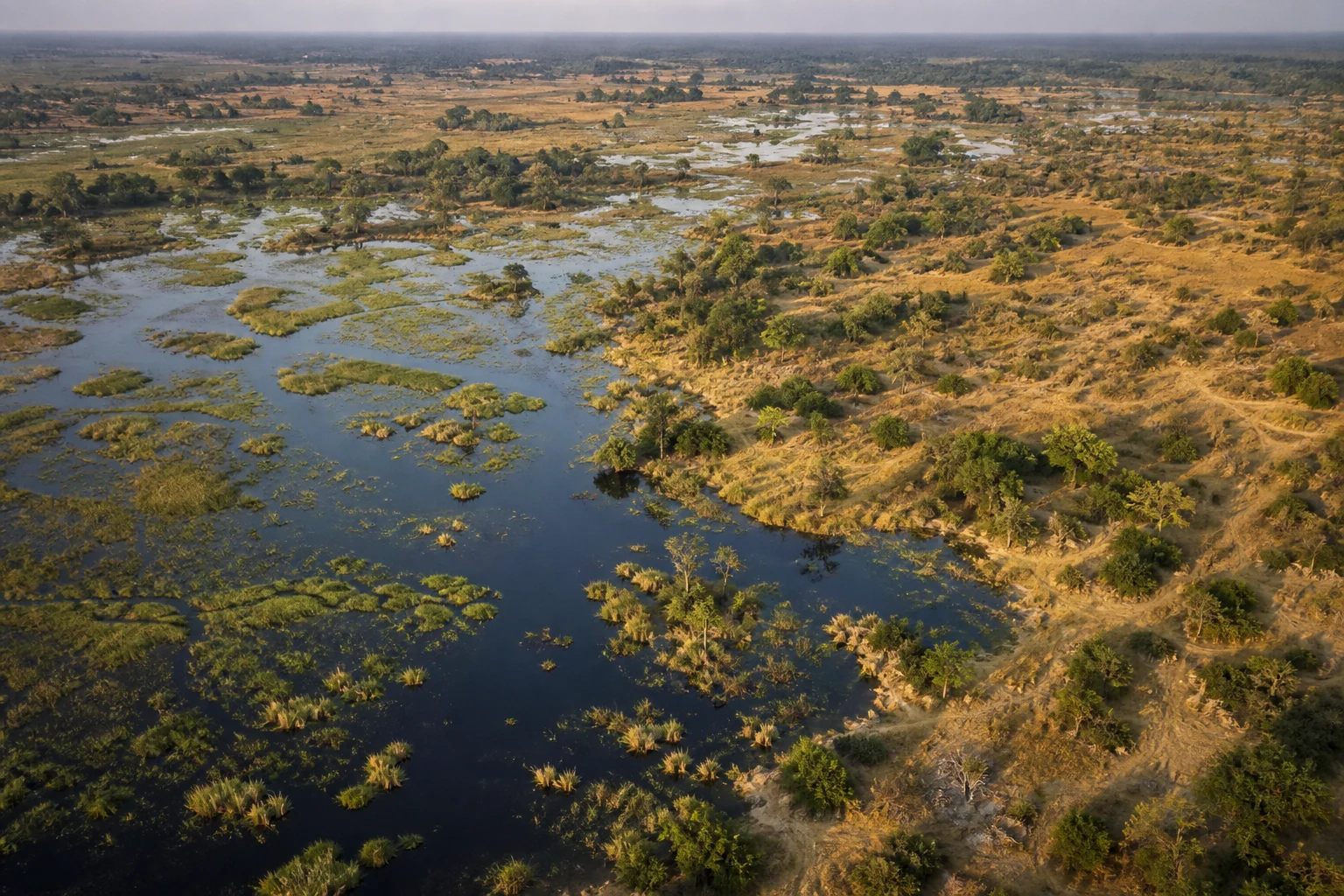
From a light aircraft, the Okavango is no longer an abstract blue shape on a map. Channels divide the floodplain into islands; animal paths run like pencil lines through grass; a distant airstrip becomes the only straight mark in the landscape. Over Namibia, geology replaces greenery. In East Africa, escarpment,
crater and plains reveal why an hour in the air can connect places that require most of a day by road.
This is the seduction of a fly-in safari: distance becomes part of the experience rather than a tax on it. Yet the finest journeys are not collections of dramatic arrivals. They use flight selectively, protecting long mornings in the field and quiet afternoons in camp.
A plane is valuable when it improves the rhythm of the safari—not when it merely adds another expensive object to the itinerary.
Four kinds of fly-in and when flying really saves time
The phrase often hides the operational detail that determines comfort and flexibility. A scheduled regional flight links established airports. A seat-in-plane service follows a planned circuit between bush airstrips, sometimes with intermediate stops. A private charter reserves the aircraft for one party but still operates within weather, daylight, payload and airstrip constraints. A privately guided flying safari adds a pilot-guide, dedicated aircraft and a route designed around the group.
None is automatically superior. A well-timed seat-in-plane flight can be elegant and efficient for two travellers. A charter can become rational for a family, a group or an itinerary that otherwise loses a night to awkward connections. The important question is not “private or shared?” but “what exactly happens from hotel door to camp?” That answer must include check-in, waiting time, possible stops, baggage handling and the vehicle transfer at the far end.
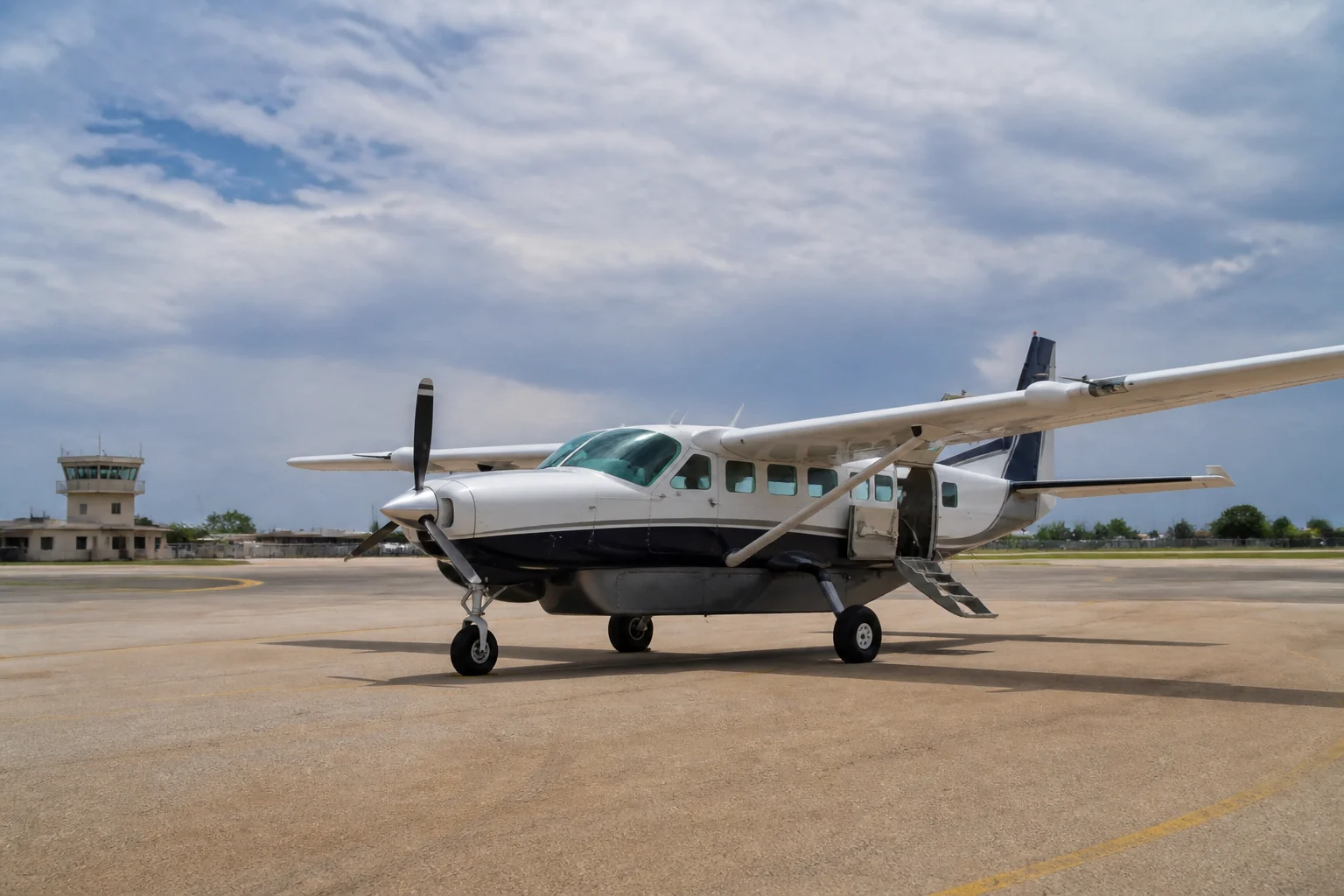
Flight is most persuasive when two excellent wilderness areas are separated by difficult roads, border formalities or several hours of backtracking. It can preserve an afternoon game drive after an international arrival, connect a delta camp with a desert lodge, or make a remote park possible within a finite holiday. It is less convincing when a short, scenic drive offers valuable context or when flight schedules force a whole day around a nominally brief sector.
Calculate the full transfer, not the airborne minutes. A forty-minute flight may require a city transfer, early reporting, two bush stops and a final drive. Conversely, a private departure from an airfield close to the hotel may remove a night in transit. Luxury lies in understanding that difference before money is committed.
Botswana, East Africa, Zambia, Zimbabwe and Namibia
Botswana is the classic fly-in landscape. Camps in the Okavango Delta, Linyanti and parts of the Kalahari are dispersed across concessions and seasonal terrain. Flying from Maun or Kasane can be the cleanest way to reach them. But “the Okavango” is not one experience. Water levels, habitat and permitted activities vary by concession and time of year. A beautiful lodge with the wrong activity mix is still the wrong lodge.
A thoughtful Botswana route contrasts environments rather than repeating rooms. One camp might offer permanent water and boating; another may focus on productive floodplains, dry-land game drives or predator-rich woodland. Two or three well-chosen bases usually tell a richer story than four hurried check-ins. The aircraft should connect distinct ecosystems, not identical brochures.
In Kenya and Tanzania, scheduled bush flights make large safari circuits possible without days of road travel. They can connect Nairobi or Arusha with the Maasai Mara, northern Tanzania, the coast and more remote reserves. Yet migration language deserves caution. Wildebeest do not follow a fixed appointment book, and a river crossing cannot be ordered like room service.
The better plan begins with habitat and likely seasonal movement, then chooses the appropriate part of an ecosystem. Camp location matters more than a famous name: the right sector can reduce daily driving and protect the quiet hours when wildlife activity is strongest. A flight is only one link in that decision. The private vehicle, guide quality and access rules at the destination often shape the safari more profoundly.
South Luangwa, Lower Zambezi, Kafue, Hwange and the Zambezi region offer some of the continent’s most compelling guiding and varied activities. Light aircraft can link them efficiently, especially where road access is long or seasonal. Some camps close in the rains; others remain open and reveal a radically different landscape. Airstrips, schedules and onward transfers therefore need date-specific confirmation.
These countries reward travellers who prefer depth to spectacle-by-checklist. Walking, boating and patient observation can matter as much as a dramatic drive. A good itinerary leaves room for those experiences instead of compressing every park into two nights.
Namibia’s distances are immense and its aerial geometry unforgettable. A private or shared light-aircraft circuit can connect the Namib, Damaraland, the Skeleton Coast and remote northern areas far more coherently than a rushed road itinerary. Here, time aloft is often a scenic chapter in its own right.
That does not make every flight a sightseeing flight. Routing, altitude, visibility and pilot priorities are operational matters, and the most dramatic coast or dune angle cannot be guaranteed. The itinerary should still allow time on the ground: desert walks, geology, community encounters and unhurried evenings give the aerial grandeur meaning.
The season comes before the lodge name
There is no single “best time for Africa.” Floodwater may arrive in the Okavango during the region’s dry months. Green-season rain can bring dramatic skies, young animals and fewer vehicles, while also affecting roads and flight operations. East African animal movement responds to rain and grazing. In Zambia, access and camp openings can change materially by season. Namibia’s desert has a different logic again.
Start with the experience: water activities, walking, predators, birdlife, calving, photography, privacy or a particular landscape. Then match region, concession and dates. Only afterwards should the lodge shortlist begin. This order protects the traveller from choosing a beautiful property in the wrong ecological moment.
Why two or three camps often outperform five
Every move consumes attention. Bags are closed, vehicles return to an airstrip, a flight is awaited, another safety briefing begins. Even when the transfer runs perfectly, the day changes character. Too many short stays prevent guides from learning a guest’s interests and travellers from understanding a place beyond its first impression.
Three or four nights per ecosystem are often more luxurious than a chain of two-night cameos. The right duration depends on activities and the total journey, but the principle is stable: protect complete mornings and evenings. Count quality safari sessions, not hotel logos.
The guide and vehicle can matter more than the suite
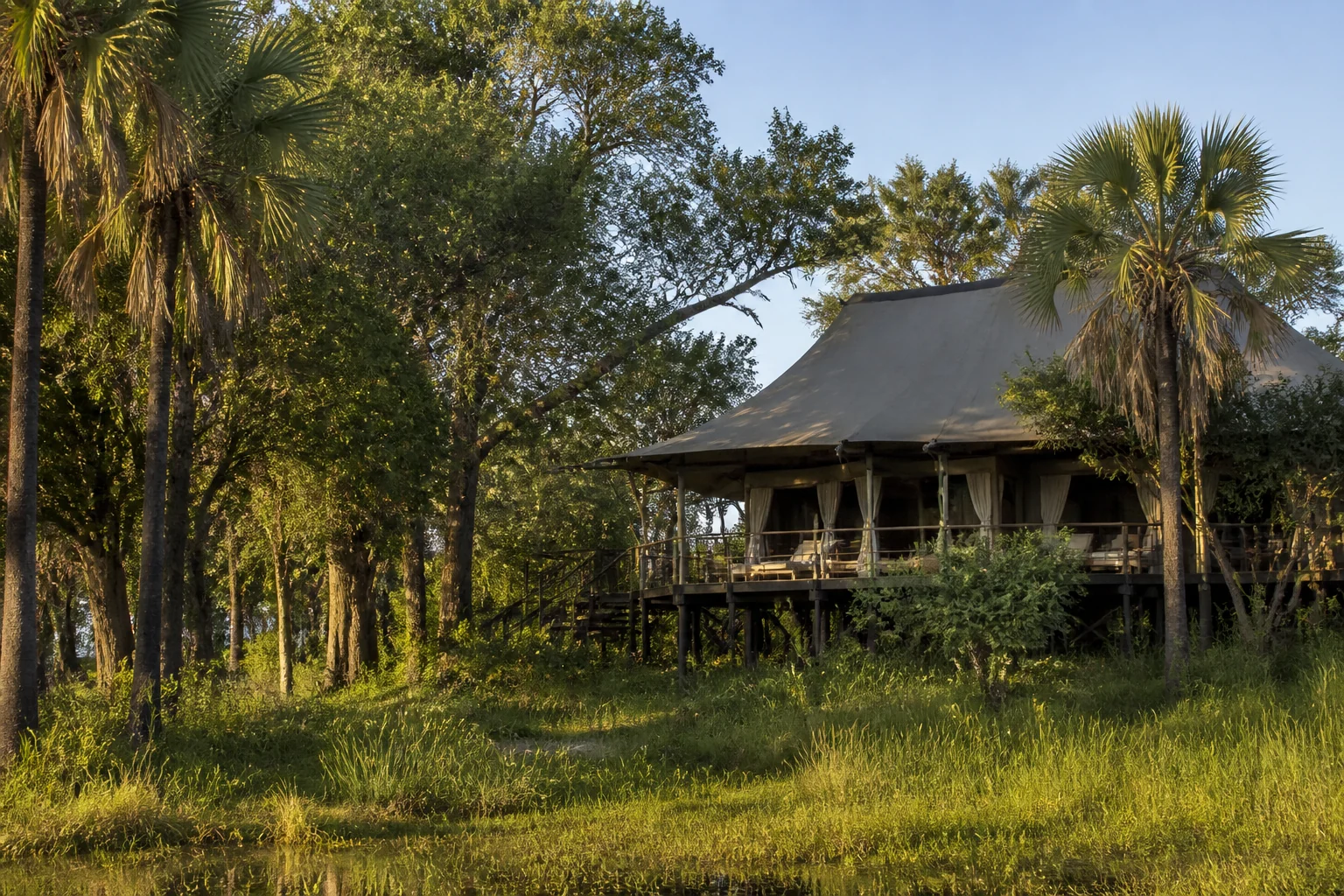
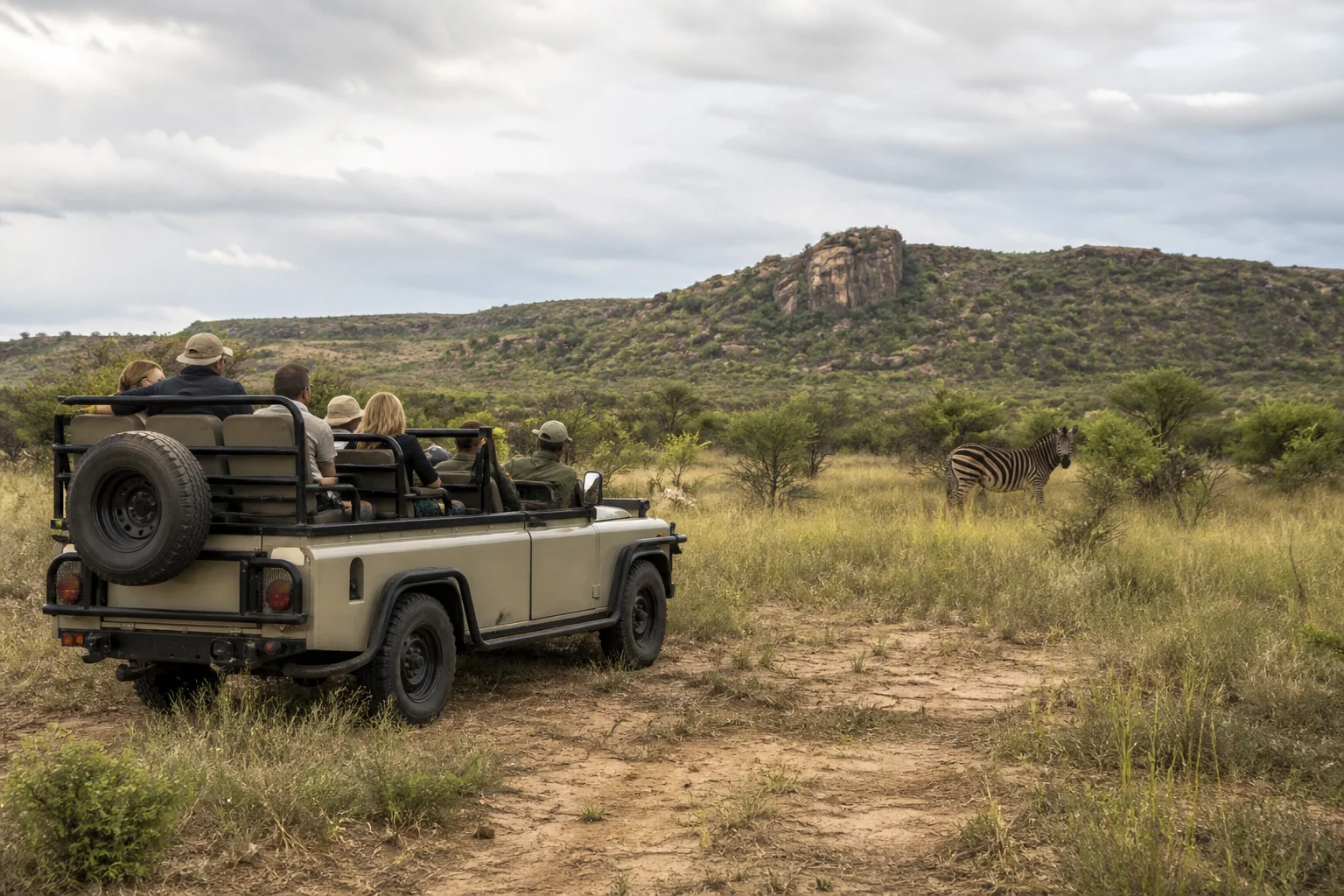
A magnificent room cannot compensate for a crowded vehicle, inflexible programme or guide whose style does not fit the guest. Travellers interested in photography may need a private vehicle, space for equipment and a guide who understands light and positioning. Families may value pacing and interpretation. Experienced safari-goers may prefer patient tracking over a rapid circuit of familiar species.
Ask who controls the day. Can the vehicle stay out through breakfast Are activities shared Is off-road driving permitted in the concession Can walking or boating be privately arranged These questions reveal the real character of a camp far better than thread count.
Soft bags are not a stylistic suggestion
Small aircraft have limited holds and payloads. Published rules differ: some operators state 15 kilograms including hand luggage; others allow 20 kilograms and define hand luggage separately. Several require or strongly prefer soft-sided bags with strict dimensions. The traveller must follow the most restrictive sector in the entire route, not the allowance printed on the long-haul ticket.
Camera equipment needs explicit treatment. Weight can be more difficult than volume, and a hard photographic case may not fit even if the total is acceptable. Options may include advance approval, an extra seat, freight arrangements or secure storage for excess luggage, but none should be assumed. Obtain the current rule in writing for every operator before packing.
What flying in a small aircraft actually feels like
Cabins are compact, steps can be narrow and airstrips informal. Seating may be assigned by weight and balance rather than preference. The aircraft can be warm on the ground, noisy in flight and sensitive to turbulence. Some routes make several stops as passengers join or leave. For many guests this is exhilarating; for others it requires preparation.
Disclose mobility restrictions, anxiety, motion sensitivity and relevant medical concerns before booking. A private charter does not remove aviation safety decisions. The pilot retains authority, and weather, visibility, daylight, payload or airstrip conditions can change a plan. A sophisticated itinerary includes margin rather than promising perfect punctuality.
Buffers, borders, private charter and lost safari time
A bush flight and an intercontinental departure should rarely be stitched together with the thinnest legal connection. Delays may arise far from an airport with plentiful alternatives. The final night in a gateway city or an airport-accessible reserve can be part of good design, not wasted time.
The same applies on arrival. Immigration, bags and a city transfer can make the final bush departure unrealistic. If missing that flight means losing a safari night or chartering an aircraft at short notice, a calm first night near the gateway may be the more luxurious choice.
Combining countries can be rewarding, but borders introduce passports, visas, transit rules, health documentation, customs and sometimes a change of aircraft. A route that looks direct on a map may require immigration at a designated airport. Baggage may need to be reclaimed or screened again.
Requirements depend on nationality, routing and date. They should be checked from official authorities for every traveller shortly before departure. Insurance also deserves precision: medical evacuation, trip interruption, missed connections and remote-area exclusions are more relevant than a generic label of “comprehensive cover.”
A charter can create a later departure, avoid intermediate stops, reach an airstrip without a scheduled service or keep a family together. It may also be the only elegant solution for a specialist route. But it does not guarantee a particular aircraft, scenic routing, zero waiting or immunity from weather.
Compare the total outcome. If a shared service departs at the right time and lands beside the camp, private flying may add little. If a charter protects a full safari day or eliminates a complicated overnight, its value is tangible. The decision should be made in hours and experience, not status.
Headline prices rarely reveal the whole journey. Private vehicle supplements, conservation fees, baggage surcharges, airport transfers, cross-border taxes and empty-leg positioning can matter. So can the cost of a badly timed flight that erases an afternoon in the field.
A useful quotation shows what is private, what is shared, which fees are included and which elements remain provisional. It should also state cancellation terms for charters and camps separately. The cheapest route on paper may be expensive in the only currency that cannot be replaced: time in the wilderness.
Conservation needs evidence
Remote camps can support protected areas, local employment and low-density tourism, but “sustainable” should never be accepted as decoration. Ask how a concession is managed, where conservation levies go, how water and waste are handled, and how communities participate economically. Flight itself carries an environmental cost; a longer stay and fewer unnecessary sectors are more credible than vague offset language.
The most respectful safari also changes behaviour: fewer rushed transfers, quieter sightings, adherence to guide instructions and no demand for unsafe proximity to wildlife. Exclusivity is meaningful when it protects a place rather than merely isolating the guest.
A model route with a defensible question set
For a first fly-in safari, a strong route might combine three nights in a water-influenced delta environment, three or four nights in a contrasting dry-land concession, and a final restorative stay with easy onward access. In East Africa, one carefully positioned migration-area camp can pair with a different ecosystem or the coast. In Namibia, a flying circuit should alternate aerial scale with time to walk and explore.
This is not a prescription. The sequence changes with season, interests and flight pattern. Its lesson is structural: each stop must earn its place. If two camps offer the same habitat, activities and viewing style, one of them may be unnecessary.
- Which sectors are scheduled, seat-in-plane or privately chartered
- Can there be intermediate stops, and what is the realistic door-to-door time
- Which baggage rule is the strictest, including cameras and mobility equipment
- Why is each camp right for the exact dates and requested activities
- Are vehicles and guides private or shared, and what flexibility is confirmed
- What happens if weather or an international delay disrupts the route
- Which border, health, insurance and evacuation details remain the traveller’s responsibility
The finest fly-in safari feels effortless because it was not planned casually
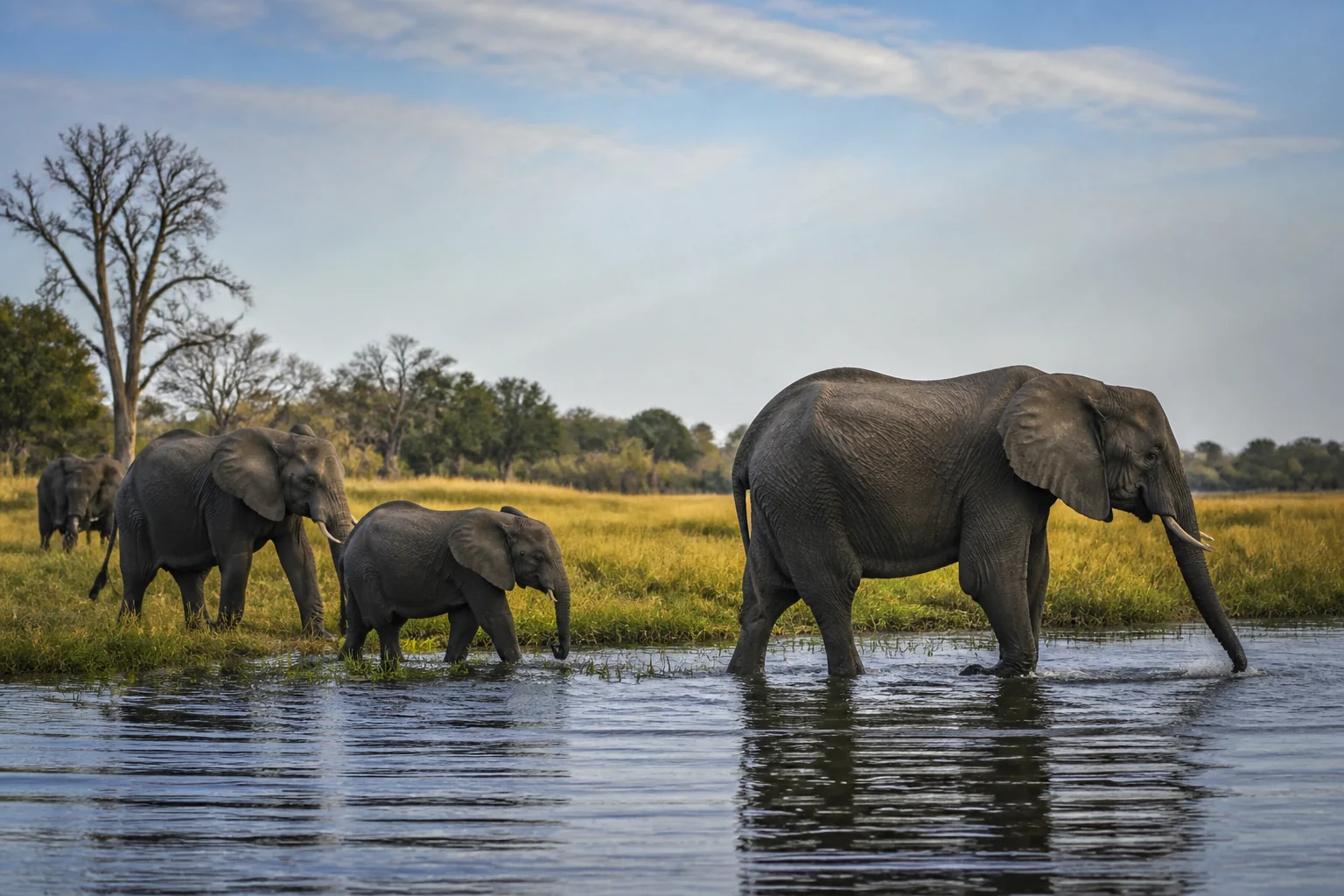
In the air, Africa offers its grandest perspective. On the ground, its value lies in smaller things: a guide reading fresh tracks, the pause before an elephant crosses a channel, the change in light over an empty plain. Good flight planning protects those moments.
The result should not feel like an aviation itinerary with lodges attached. It should feel like one coherent journey through distinct landscapes, with each flight quietly solving a problem. That is the real freedom of a fly-in safari: less transit for its own sake, more time where the story is happening.