
Safari after the first rain
Green season is often sold as the quieter, better-value alternative to peak safari. That description is too simple. In the right ecosystem and month, rain brings charged skies, new life and an extraordinary sense of renewal; in the wrong itinerary, it can remove the very activities a guest expected.
Green season is not a discount code
The phrase usually describes the warmer, wetter part of the safari calendar, when rain returns colour to landscapes and seasonal water spreads across pans and plains. It does not denote one fixed period across Africa. Botswana, the Serengeti ecosystem, Greater Kruger and Zambia respond differently, and conditions vary from one year to another.
Lower rates and fewer guests may be part of the appeal, but they should follow the ecological decision rather than lead it. A reduced price has little value if the camp, activity or species priority is wrong. The first question is not “Where is the offer?” but “What becomes interesting here during these exact dates?”
Begin with ecosystem and month, not a famous lodge
A camp name cannot explain rainfall, soil, drainage, vegetation or animal movement. Even neighbouring concessions may differ: one retains all-weather roads, another becomes difficult; one focuses on dry-land drives, another depends on navigable channels. The useful unit of planning is a specific area in a specific part of the season.
Ask what happened there in comparable years, which habitats the camp can reach and which activities remain realistic. Then consider the lodge. This order prevents an expensive property from dictating a journey that does not match the traveller’s real priority—whether cats, birding, landscape photography, privacy or a first safari with dependable breadth.
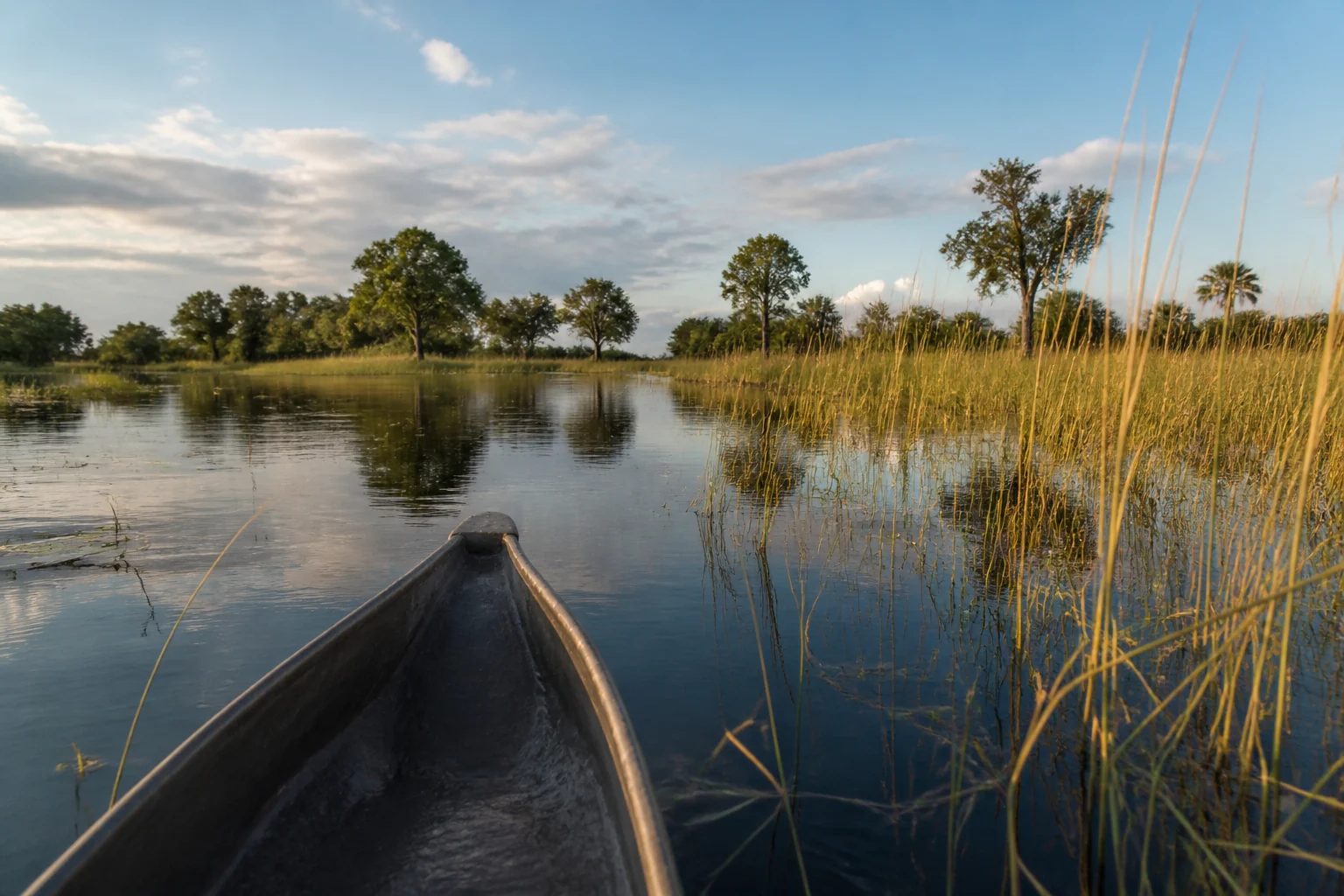
Botswana, Serengeti, Kruger and Zambia follow different rain logics
Botswana Tourism distinguishes the green rainy season from the dry winter period, when the Okavango’s distant floodwater can fill channels and concentrate wildlife. That inversion surprises many first-time visitors. Rain falling locally in summer does not mean that every Delta camp is operating in a high-water landscape.
An official Wilderness seasonal guide likewise notes that lower Delta water in the green season can limit mokoro and boating at some camps. A Botswana proposal must therefore identify the camp’s hydrology and confirmed activity mix. “Okavango in the rains” is not enough; land, mixed and water-oriented camps can deliver materially different trips.
The summer transformation brings fresh grass, migratory birdlife, births among plains game and opportunities for predators. Storm fronts create sculptural skies, and a familiar dry landscape can feel newly alive. In suitable areas, the atmosphere is not a lesser version of winter but a separate safari chapter.
Visibility may be reduced by vegetation, while heat and humidity can rise. Some tracks become slow or temporarily inaccessible. The right guide uses habitat knowledge rather than repeatedly chasing the previous season’s pattern. Guests who value process—weather building, birds arriving, animals spreading into renewed ground—often understand the season better than those counting only headline sightings.
The Tanzania Tourist Board highlights the Serengeti calving season, when large numbers of newborn wildebeest alter the drama of the plains and attract predators. This is one of the clearest examples of a rainy-period event being the primary reason to travel, not a compromise made for price.
Yet neither birth date nor herd position can be guaranteed. Grass and rain guide movement across a wide ecosystem. A strong plan places the guest in an appropriate area for the travel window and allows enough nights to observe rather than commute. Marketing phrases such as “front-row calving” should never replace current field intelligence and honest uncertainty.
SANParks classifies Kruger as a summer-rainfall region and notes that October to April is hot, with convectional rain capable of heavy downpours. In Greater Kruger and private reserves such as Sabi Sand, the landscape becomes dense and saturated with colour. Young animals, migrant birds and dramatic light can reshape a familiar Big Five itinerary.
This is not automatically the easiest introduction to safari. Long grass and foliage may complicate photography and distant views; heat can make the middle of the day tiring. The advantages are good guiding, a well-understood road network and, in some private concessions, flexible tracking practices. The exact reserve’s rules and conditions still matter.
Zambia Tourism explains that many camps close for all or part of the rainy season because wildlife disperses and certain roads become impassable, while other properties remain open year-round. Its published camp list was tied to an earlier season and must not be reused as a current calendar. The structural lesson is more important: availability must be proven date by date.
An open lodge may offer an intimate emerald-season experience, but one functioning property does not mean the whole circuit is operating. Confirm airstrip, road, transfer, activity and medical-response logistics. A Zambia green-season journey can be superb precisely because it is specialised; it should never be assembled from assumed connections.
Who green season suits, and whom it does not
Green season rewards travellers interested in behaviour, weather, birds and ecological change. Repeat safari guests often enjoy seeing a known region under a different set of pressures. Photographers who can work with rain and saturated colour may find more expressive material than under an unbroken blue sky.
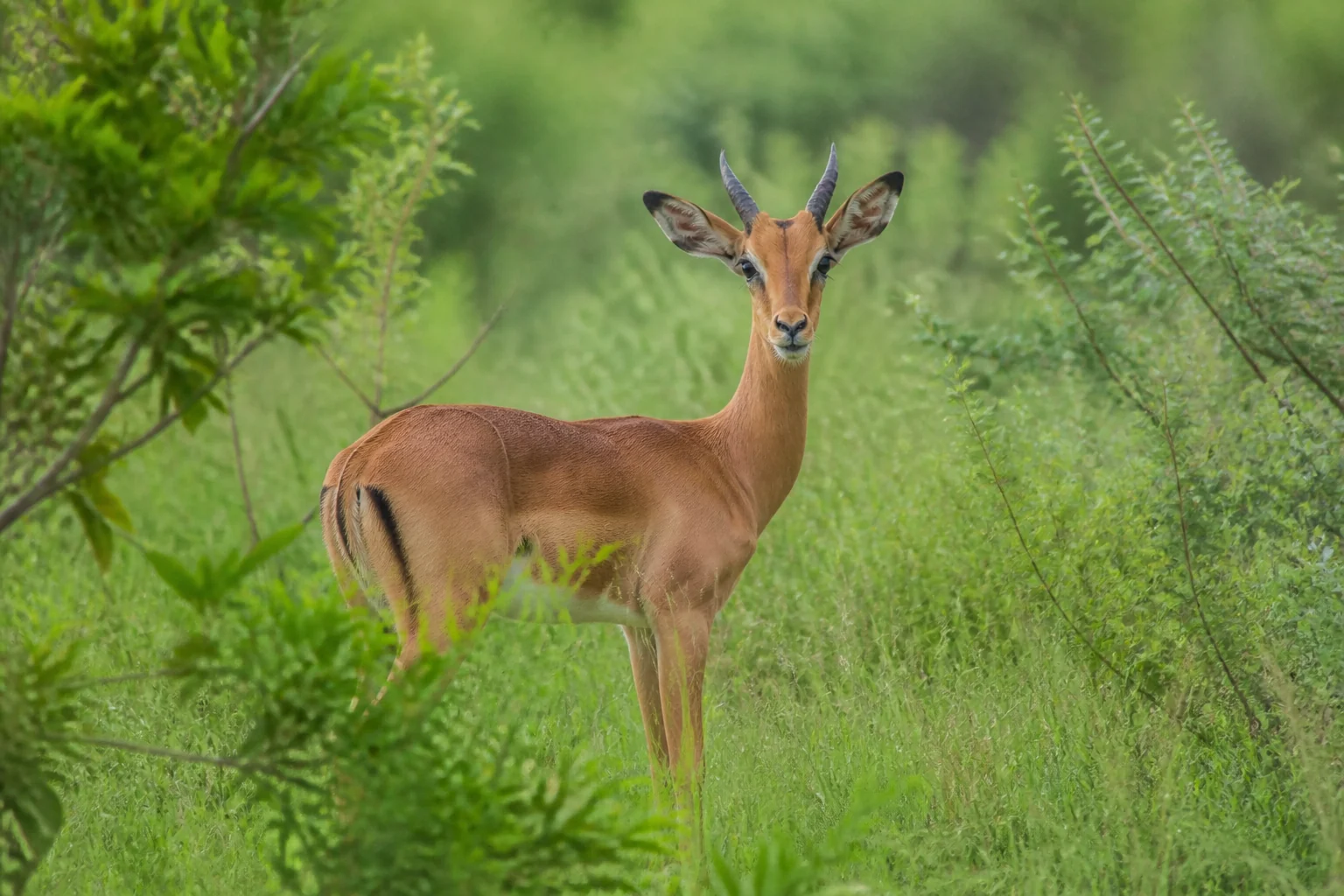
It also suits guests who accept pauses: a storm watched from the veranda, a delayed departure or a drive that follows tracks rather than a radio call. This is not passive travel. It asks for attention to small shifts—termite alates after rain, frogs calling, new grass drawing herbivores away from permanent water.
A traveller who equates luxury with uninterrupted sunshine may feel continually disappointed. The same is true for a first-time guest demanding the easiest possible long-distance visibility, a fixed catalogue of species and a tightly timed sequence of flights. Rain is not an aesthetic layer that an operator can switch off.
Families need an additional check. Minimum ages, private-vehicle requirements, camp fencing, pool supervision and malaria considerations differ by property and country. If weather restricts a drive, the lodge’s ability to engage children matters. “Family friendly” should be translated into actual room, guide and activity arrangements.
Rain changes geometry, not the value of wildlife
Short afternoon showers followed by clear light do occur, but they are not a contractual pattern. A system can produce sustained rain, local flooding or a sequence of dry days. Climate averages describe tendencies; they do not forecast one guest’s week. Packing and scheduling must accommodate the less photogenic outcome.
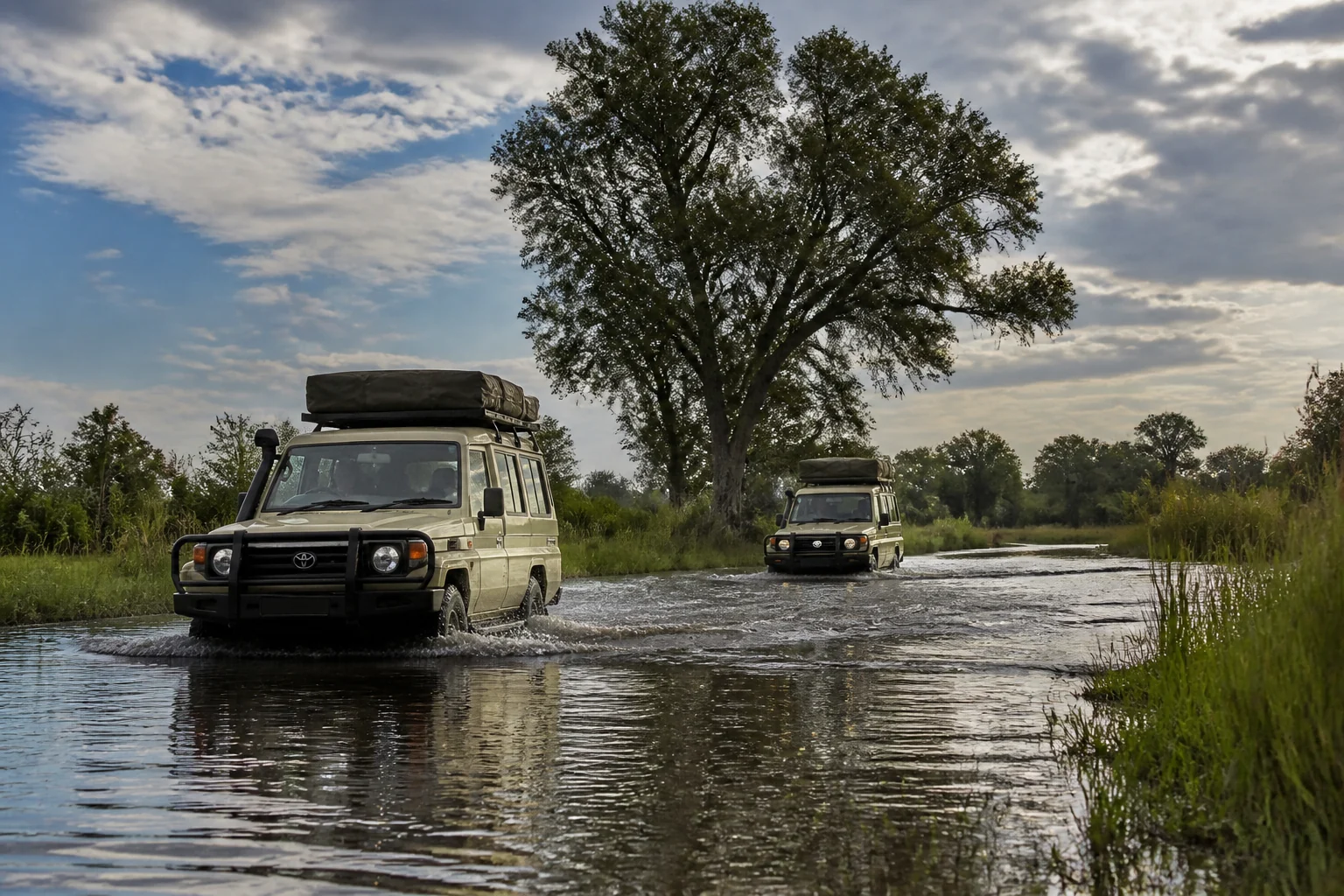
Good camps make operational decisions around safety and road preservation. A route may be changed or an activity postponed even when the sky above the lodge looks manageable. That judgement is part of responsible guiding. A guest should know beforehand what the camp can offer when the planned activity cannot proceed.
In the dry season, scarce water can concentrate animals and make viewing patterns easier to read. Once temporary water and fresh grazing return, wildlife may spread over a larger area. Dense vegetation can shorten sightlines. This may reduce the frequency of simple, open views without reducing the ecological richness of the day.
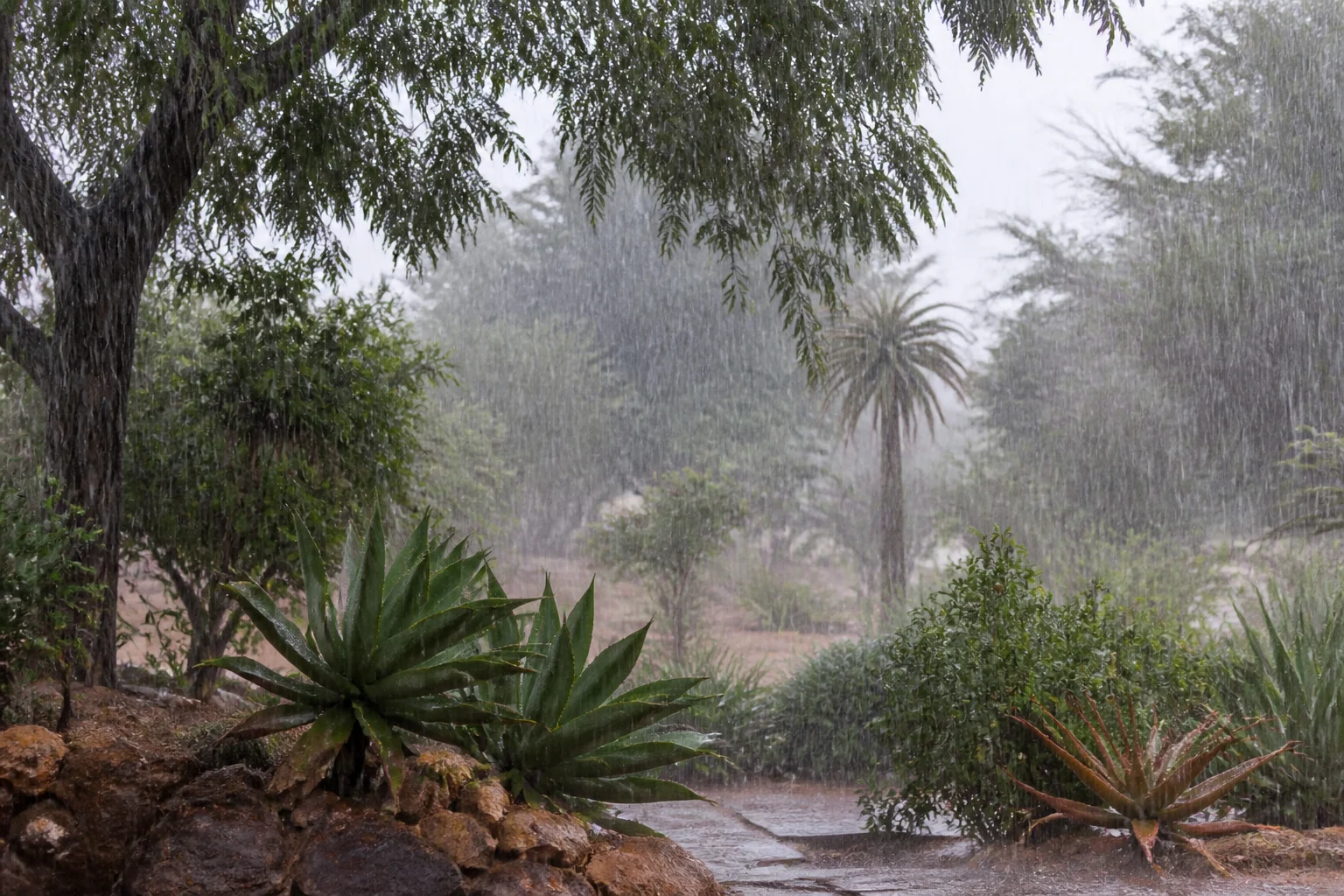
Tracking becomes more interpretive. A guide reads substrate, alarm calls, fresh growth and the relationship between prey and cover. Guests who understand this distinction avoid calling a thoughtful morning “empty” merely because it did not produce a close cat within the first hour.
Newborns, birds and photography require attention
Birth seasons can produce tender observations and intense predator-prey encounters. Neither should be stage-managed. Vehicles must not block an animal’s route, separate mother and young or pressure a hunt for the sake of a photograph. The guide and concession rules define the acceptable position.
Language matters too. New life is not simply “easy food”, and predation is not entertainment arranged for guests. A refined safari interpretation can hold vulnerability and ecological necessity together. That context is part of the value of an excellent guide.
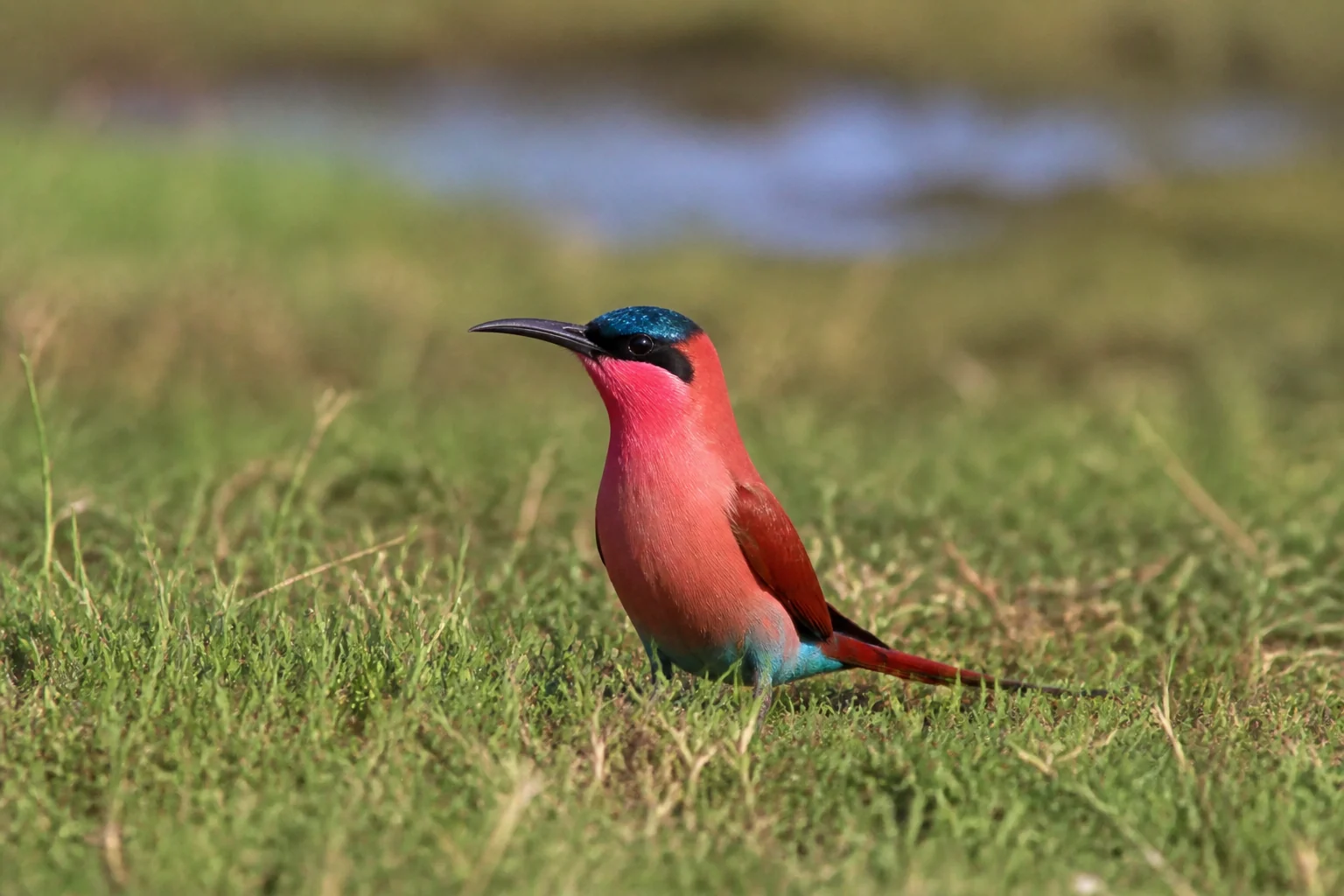
Migrants, breeding plumage, nesting behaviour and the soundscape after rain can make green season the most rewarding period for bird-focused travellers. Botswana Tourism specifically identifies the wet season as a haven for birders. This advantage remains meaningful even on a trip primarily designed around mammals.
Request a guide who genuinely enjoys birds rather than one who treats them as fillers between cat sightings. Bring binoculars that work well in low light and protection against rain. A regional field guide or offline app adds depth, but identification should not interrupt sensitive nesting behaviour.
Dark skies, wet coats, reflections and intense green create a more layered visual language. Cloud cover can soften contrast; the minutes after rain may deliver exceptional colour. At the same time, autofocus can struggle through grass, backgrounds become busy and water threatens equipment.
A private vehicle becomes especially useful when two photographers want different positions or time with a subject. Pack rain covers, absorbent cloths, dry bags and more battery capacity than expected. Do not change lenses in wind-driven rain. Above all, resist overprocessing: green season already provides saturation and drama without artificial skies.
Vehicle, flight and camp form the weather strategy
Open vehicles maximise atmosphere but expose guests and equipment. Enclosed or partially covered designs change comfort and photography. Tyres, drainage, recovery equipment, radios and the guide’s experience on wet tracks matter more than a polished drinks box. Ask how the property manages heavy rain rather than accepting “all-weather access” as an undefined phrase.
A private vehicle can protect the day’s rhythm: leave after the worst shower, wait for light or return when a child is cold. It does not override safety, concession rules or closed roads. Its value lies in flexibility within the operating framework, not permission to disregard it.
Light-aircraft sectors reduce long road transfers, yet airstrips and visibility remain exposed to conditions. Schedules can shift, and baggage restrictions depend on aircraft and operator. Soft-sided bags are common, but exact weight, dimensions, camera allowances and storage options must be confirmed for the booked itinerary.
Do not place an international departure behind a chain of fragile same-day sectors. A buffer night in a hub can be the most luxurious component of the plan because it removes anxiety. Insurance must be checked for delay, missed connection and weather-related interruption rather than assumed to cover every consequence.
Green-season comfort is practical. Covered routes, a reliable laundry and drying service, warm water, sensible heating or cooling, insect screening and a sheltered viewing area can matter more than suite size. So can staff who adjust meals and activities without making a weather change feel like failure.
Location remains decisive. Ask which habitats are reachable after sustained rain, whether the camp sits in a permanent or seasonal water system and what proportion of activities is land- or water-dependent. An elegant lodge should support the season’s reality, not conceal it in the sales material.
Humidity, insects and health need an honest plan
Lightweight quick-drying layers, a breathable rain shell and two usable pairs of footwear are more helpful than one immaculate safari wardrobe. Waterproofing should protect documents, medication and electronics separately. Neutral colours remain sensible, but technical performance and comfort take precedence over the mythology of khaki.
Insect activity may increase after rain. Screens, nets and repellent protocols vary by camp. Guests should understand what is provided and bring appropriate personal protection. Wet clothes left in luggage quickly become unpleasant; the plan for laundry and drying belongs in the pre-trip conversation.
Malaria risk, vaccination requirements and other health considerations vary by country, region, season and traveller. The CDC Yellow Book directs travellers toward country-specific information and a proper pre-travel consultation. A lodge website or magazine article cannot prescribe medication or determine individual suitability.
Discuss the full route, including transit countries and remote-camp access, with a qualified medical professional in good time. Carry medication in hand luggage and disclose allergies or conditions relevant to emergency care. Evacuation arrangements and insurance assistance numbers should be known before reaching the bush.
Better value is not the same as a cheap safari
Some lodges reduce rates or add stay incentives in wetter months, but private vehicles, charter flights, park fees, specialist guides and single supplements can remain substantial. Fewer operating camps may also limit competition in a particular area. Compare the final journey, not the headline nightly rate.
Cancellation terms deserve special attention when weather is part of the risk. A closed road or altered activity does not automatically trigger a refund. The proposal should state inclusions, local charges, park or conservation fees and the treatment of disrupted transfers. Current terms always outrank an editorial summary.
A strong itinerary leaves room for the sky
Three or four nights in one well-chosen area usually reveal more than rapid camp-hopping. Fewer transfers protect early and late light, create continuity with the guiding team and give weather time to change. A second ecosystem can add contrast, but it should contribute a distinct habitat rather than another logo.
The route needs a deliberate recovery point and a sensible final buffer. For a first safari, pairing a relatively dependable game-viewing area with a more seasonal specialist camp can balance confidence and discovery. For experienced guests, a single immersive green-season location may be the more sophisticated choice.
The final questions are operational, not romantic
Which activities are confirmed for these dates and current water levels Which roads or airstrips can fail after sustained rain Is the camp definitely open How are delays managed What is the guide-to-guest ratio, and is a private vehicle included What dries clothing and camera equipment Which health and insurance checks remain
A persuasive answer will include trade-offs, not just green landscapes and low rates. Green season is powerful when the traveller wants what the rains actually produce and the itinerary can absorb what they disrupt. Then a storm is no longer bad weather interrupting safari; it is part of the living system the journey came to understand.