
Choosing between a seaplane and a speedboat is not an afterthought to the hotel reservation. It affects when the holiday begins, how the first and last days unfold, what luggage can travel and how much uncertainty sits between an international flight and the villa. The best resort is only the right resort when its transfer fits the journey too.
The transfer is part of the hotel product
In the Maldives, arrival cannot be separated from the resort. Visit Maldives describes speedboats as the usual access to islands around Velana International Airport, while more distant properties are commonly reached by seaplane or domestic flight. Guests therefore book an entire arrival chain, not simply a villa. Distance, operating window, waiting process and physical comfort deserve the same attention as beach, reef and restaurants.
The short answer: A speedboat generally works better for late arrivals, short stays and travellers who prefer not to take another flight. A seaplane opens remote atolls and offers an extraordinary perspective, but requires daylight, tighter luggage planning and more operational flexibility. Neither is inherently more luxurious; the better solution is the one that protects the whole itinerary.
Most hotels do not offer a free choice between both modes. A North or South Malé Atoll property may use only boats, while a remote island may rely entirely on seaplane or a domestic airport followed by a boat. Even when a private alternative is technically possible, the resort must accept and coordinate it. Ask how the regular transfer works before comparing hotels, rather than trying to substitute a preferred vehicle afterwards.
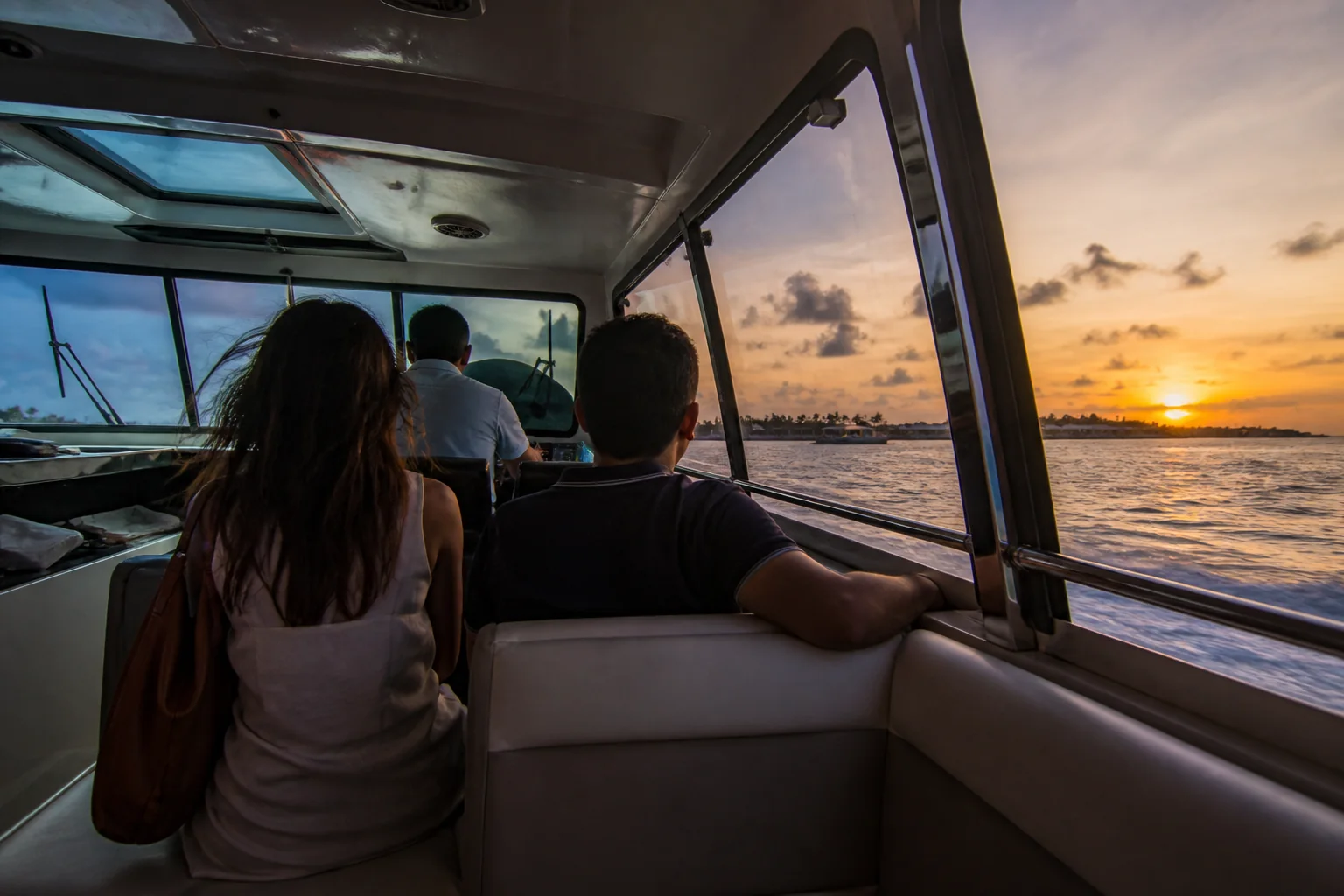
Boats are strongest when proximity and timing matter. After baggage reclaim and the airport welcome, guests may walk directly to the jetty. Some resorts run timetables, others dispatch around arriving flights, and selected luxury properties transfer around the clock. That must be confirmed in writing. For four or five nights, a late landing or an early departure, a strong speedboat resort can preserve more holiday time than a more dramatic but complicated island.
The view across atolls, reefs and lagoons is more than transport. It reveals the Maldives' geography and makes distant islands practical. Trans Maldivian Airways publishes varying flight durations according to proximity, while intermediate stops may lengthen the route. Travellers who value the aerial spectacle and remoteness gain a powerful opening scene. Those seeking maximum predictability after a long-haul flight may assess the same choreography differently.
A phrase such as “30 minutes by seaplane” usually describes only the airborne sector. Immigration, luggage, resort welcome, operator check-in, the ride to the seaplane terminal, lounge time, boarding and possible stops sit around it. Speedboats have the same distinction: quoted sailing time begins at the jetty. A robust plan calculates from scheduled international landing to realistic villa arrival, using sensible buffers rather than a marketing minimum.
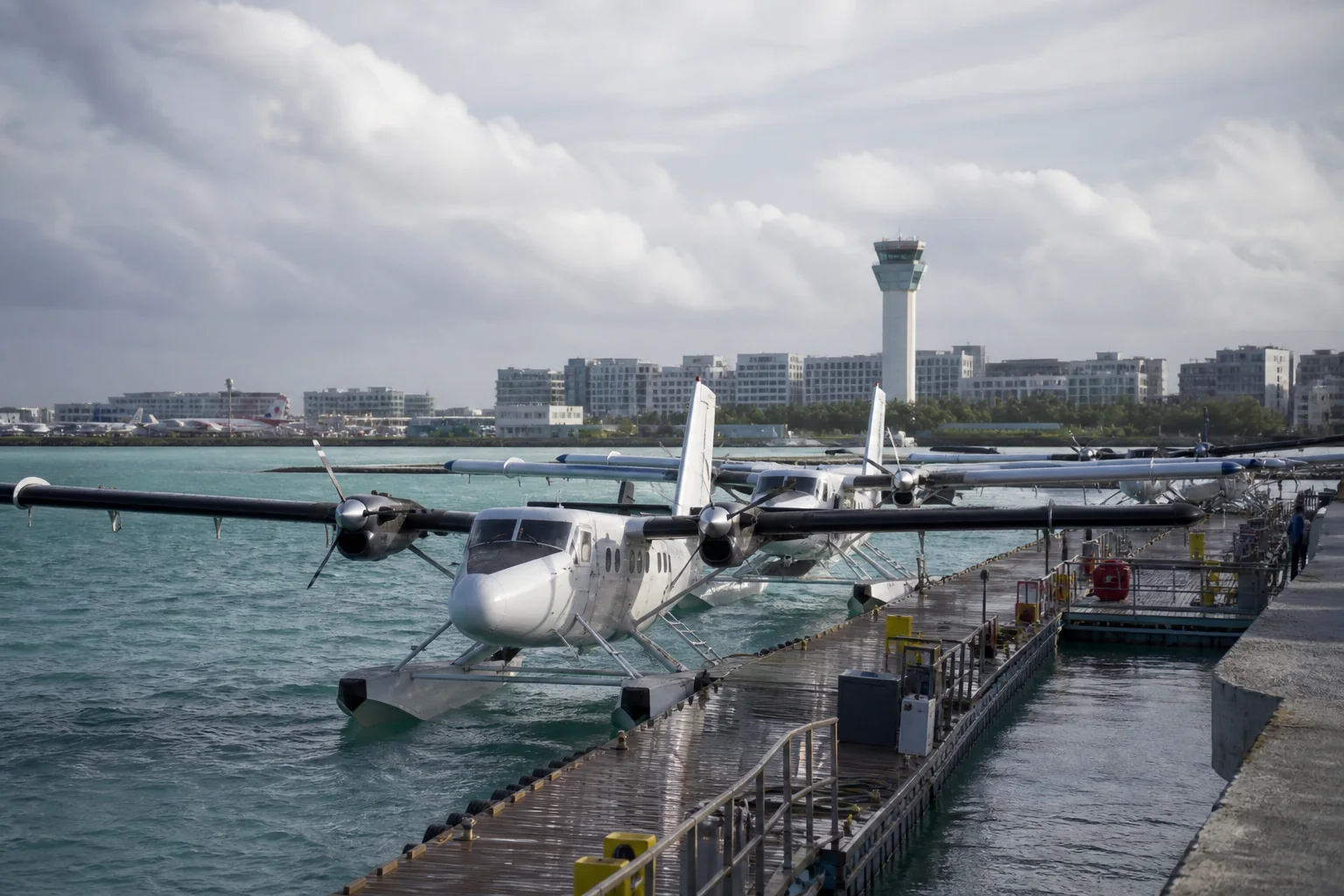
Seaplanes need daylight. TMA currently advises an arrival in the Maldives by 15:30 if guests want to reach their resort the same day. This is guidance, not a guarantee, and operator, season and hotel rules govern. A later schedule change can turn a direct first day into an airport-area night. When the connection is marginal, a speedboat-accessible alternative deserves serious consideration before a non-refundable hotel is chosen.
TMA confirms that its water take-offs and landings operate from sunrise to sunset. A delayed international service cannot simply be followed by a later night flight. A private charter does not remove that fundamental limit. Guests choosing a remote resort need written answers to three questions: what happens after missed daylight, who arranges the interim hotel, and which party carries the resulting costs.
Plan an airport-area night deliberately: With a late arrival, a night in Malé or Hulhumalé can be better than a fragile connection. Treat it as a designed element with a short transfer, a good room and a suitable check-out, not as a mishap. The island journey then starts rested the next morning. On a very short holiday, however, this extra change often argues for a resort reached directly by speedboat.
An early flight home can require a pre-dawn resort departure or even a final airport-area night. TMA currently says its normal planning accommodates guests whose international departure is after 09:00; the actual pickup follows daily operations. Night and early speedboats remain resort-specific. The useful question is not only when the international flight leaves, but when the guest must leave the villa and whether breakfast, sleep and the final evening survive.
Shared, private, chartered and waiting
A shared craft may wait for guests from another international flight or operate in scheduled windows. The airport welcome remains coordinated, but “direct” does not necessarily mean “without waiting”. Request the normal process: the intended maximum wait, potential stops and the response to a delayed inbound flight. A short crossing loses its advantage if an awkward timetable consumes the first afternoon.
A private boat can align departure with one flight, remove other passenger stops and give a family or group more space. Some properties offer yachts or premium launches; others prohibit outside transfer providers. Supplements can be substantial. Private still does not mean weather-independent: safety, visibility and sea state control the operation. Confirm cancellation, waiting time, guest capacity and luggage before committing.
The resort books seats with an operator and combines guests travelling to several islands. Routing and timings are built around international arrivals and the day's resort demand. The aircraft may therefore land elsewhere first. That stop can be scenic, but it extends the journey. Guests expecting nonstop travel need explicit confirmation or a charter; even then, daylight, payload and weather remain binding constraints.
TMA and Maldivian advertise private charter options, including VIP-configured aircraft in parts of their fleets. A charter may provide an exclusive cabin and more direct dispatch, but it is not a casual upgrade at the counter. Aircraft availability, resort platform, total payload, crew limits and operating window must align. For two guests the cost is rarely rational; for a large family or residence booking, the value of time and privacy can look different.
After check-in, guests transfer to Noovilu Seaplane Terminal. They do not necessarily board immediately, because aircraft are dispatched around arrivals, destinations, weather and the wider operation. A responsible itinerary does not promise a minute-specific departure weeks in advance. It confirms the likely range, the communication process and whether a resort representative remains reachable until guests are in the air.
TMA says access depends on the booking: certain resorts maintain private lounges, selected partner guests use TMA facilities, and other travellers can buy amenities in the terminal. Examine seating, shower, food, children's area, work space and accessibility. A polished lounge makes two hours more comfortable, but it does not turn them into resort time. On a short stay, realistic arrival at the villa matters more than branded furnishings.
Seaplanes group destinations to operate the network efficiently. A landing at another resort may turn a short airborne sector into a longer circuit, while providing an exceptional view of other atolls. Shared speedboats can also make stops, though generally less often. Ask for the normal rather than minimum duration. Any promise of a “direct transfer” should state whether that means nonstop or simply a coordinated through-service.
Baggage, cabin reality, sea state and weather
TMA currently publishes 25 kilograms per passenger: 20 checked and 5 as hand baggage. Manta Air also lists 20 plus 5 kilograms for its seaplanes, while Maldivian's seaplane page states 15 kilograms inclusive of carry-on. Values and resort contracts can change. The only dependable allowance is the written rule for the actual operator and booking, including infants, single-bag limits and excess charges.
Seaplane cabins and luggage holds are compact. TMA says oversized sporting equipment may require a charter, while excess baggage remains subject to available payload. Boats also have weight and storage limits. Report the number, dimensions and weight of all cases, plus dive, surf, photographic or medical equipment, before booking. Soft bags may help physically, but they never replace the operator's approval.
TMA explains that on rare occasions bags follow on a later flight for weight reasons and are intended to reach the destination that day. Medication, documents, valuables, swimwear and first-night clothing therefore belong in a permitted personal bag, subject to security restrictions. Guests arriving for a shoot, dive or event need a larger margin. A luxurious arrival is one that still works before the main suitcase reaches the room.
The view is singular, but the cabin can be warm, loud and compact. Hearing protection is useful; tall travellers should expect limited space. Boarding often involves steps, narrow passages and a moving platform. A VIP aircraft may improve the product but is not the default.
Guests with flight anxiety or significant mobility requirements should discuss the exact boarding sequence and available assistance before selecting the resort.
On calm water, a modern boat can glide softly and feel refreshing. In wind and swell, the same route becomes more physical. Hull, size, seat position and driving style all influence comfort. Travellers prone to motion sickness should seek medical advice and request a lower-motion position without assuming a guaranteed effect. For babies, older guests or back conditions, actual time at sea matters more than the phrase “short transfer”.
Seaplanes need suitable visibility, wind and water conditions; boats respond to waves, thunderstorms and local safety restrictions. The wetter southwest monsoon does not make every transfer problematic, but it increases the value of operational buffers. No advisor can guarantee movement. What can be built is a clear disruption plan covering alternative routing, contacts, interim accommodation, insurance and missed international connections.
Children and mobility change the calculation
A short boat ride may be perfect with tired toddlers but demanding in rough conditions. Older children often love a seaplane, although waiting, noise and controlled seating remain. TMA currently carries infants under two without a separate seat and without extra baggage allowance; other operators may differ. Confirm life jackets, child seating, shade, toilets and boarding assistance for the actual craft rather than relying on a generic family label.
Steps, floating platforms, vessel movement and narrow aircraft doors can be decisive. International airport assistance does not automatically continue onto the resort transfer. If a guest needs a wheelchair, lifting help, oxygen or special seating, airline, airport representative, transfer operator and hotel must all receive the same written information. A nearby speedboat island is not automatically accessible, but it may reduce the number of transitions. The complete boarding chain governs.
First day, total cost and the third route
A lower villa rate in a distant atoll can feel expensive if arrival and departure consume almost two holiday days. Conversely, the seaplane view may be a highlight guests consciously buy. Calculate usable resort hours as well as the transfer fare. On a four-night stay, every delay matters; over twelve nights, a remote setting may justify the effort. Time is a measurable luxury benefit.
Resorts quote transfers per person, each way, return or per charter; taxes and service may be additional. Child and infant terms vary. A private boat may become sensible for a group, whereas scheduled seaplanes are usually charged per guest. Request a written final amount with currency, supplements, baggage, cancellation and no-show rules. Only that figure can be compared honestly with the route to another resort.
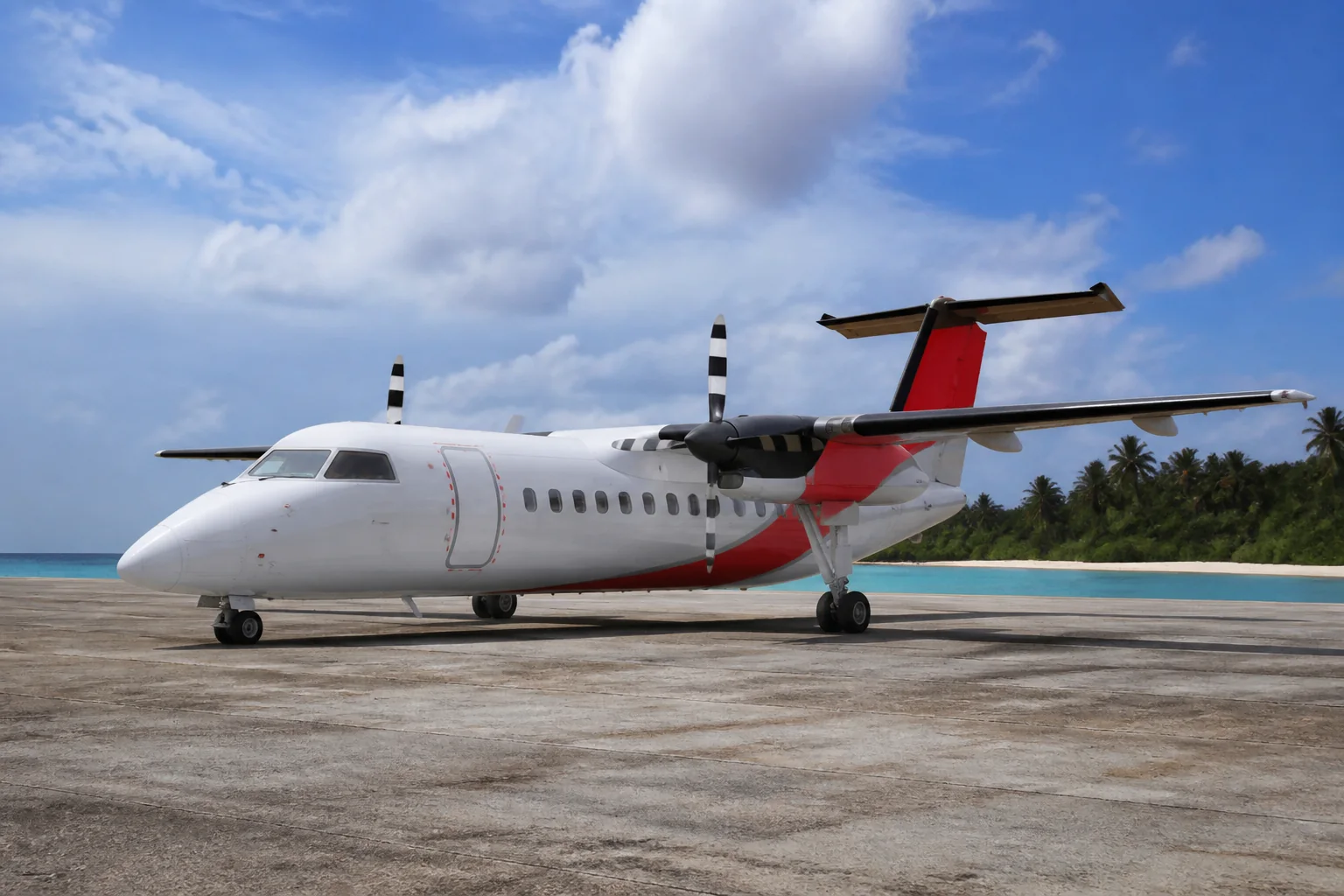
Some remote properties use a regional airport followed by a speedboat. Wheeled aircraft can operate after dark, but the onward boat and actual timetable define total flexibility. Potential advantages include air conditioning, different baggage rules and a larger cabin; disadvantages include another transition and possible waiting. A useful comparison therefore shows three complete arrival chains, not a simplified contest between boat and seaplane.
Combining a remote seaplane resort with a nearby speedboat island may protect an early flight home and create contrast. It also adds another checkout, luggage movement and perhaps a return through Malé. Direct resort-to-resort services are not automatic. Route, operating day and cost must be confirmed first. On short trips, one correctly chosen resort is usually more luxurious than an elaborate logistics performance.
Avoid mistakes and brief the transfer clearly
Recurring errors include a late international arrival, a very early departure, undeclared sports equipment, assuming a shared craft is private and confusing sailing or flying time with total travel time. A separately booked hotel can also fail if flight details never reach the resort. Transfers operate as coordinated chains. Flight numbers, changes and passenger data must reach the correct contact on time; an old proposal screenshot is not sufficient.
Record international flight numbers and times, stay length, bag dimensions, children's ages, mobility, sensitivity to boats or small aircraft and desired privacy. Then request the mode, operator, shared or private status, operating window, likely wait, possible stops, baggage allowance, lounge, total price and disruption plan. Only once those points are answered is the hotel proposal genuinely ready for a decision.
The seaplane gives the iconic perspective; the speedboat is often the more flexible connection. Yet distance, flight timing and individual comfort can reverse every general rule. Deluxetargets chooses by the most resilient holiday chain, not by prestige: fewer vulnerable hours, appropriate comfort, correct baggage and a plan for weather or delay. The finest arrival is the one after which the journey continues calmly.