
In the Maldives, “private” is one of the most misunderstood words. A private pool may be visible from the neighbouring deck, a private island may host a hundred other guests and a remote villa may face passing boats every day. Real privacy comes from island geometry, villa position, arrival and service protocol—not the category name alone.
The short privacy test
- Highest level
- Exclusive use of an entire island
- Key room question
- Sightlines to neighbours, jetty and beach
- Often overlooked
- Boats, service routes, drones and night lighting
- Beach or water villa
- Neither is automatically more private
- Before confirmation
- Review island map, villa number and current photographs
| Privacy model | Possible candidate | Strength | Decisive check |
|---|---|---|---|
| Small house/residence concept | The Nautilus Maldives | A less anonymous island operation | Exact villa position and guest rhythm |
| Small private island | Kudadoo Maldives Private Island | Compact routes and residence focus | Neighbour distance, age policy and shared zones |
| Broad villa and estate choice | Velaa Private Island | Different space and retreat models | Not every category has the same sightlines |
| Separate exclusive residence | Cheval Blanc Randheli | Potential separation from normal Maison operation | Current exclusive-use, team and transfer terms |
| Whole-island buyout | Four Seasons Voavah | Control over fellow guests and island rhythm | Occupancy, staff, yacht, airspace and inclusions |
These properties represent different forms and are not presented as a current ranking. Every specific product and condition requires fresh confirmation before publication and booking.
The Nautilus, with 26 houses, illustrates a small resort built around personal residence-style hospitality; Kudadoo, with 15 overwater residences, a compact shared private island. Velaa demonstrates how privacy can change within one resort between a villa, larger residence, boat-only product and island buyout. Randheli supplies the model of a residence separated from ordinary Maison operations, while Voavah follows the proposition of one island, one booking. Those facts define categories, not guaranteed scores.
“Private island” does not mean exclusive
Most classic Maldives resorts occupy their own island. “Private” often describes hotel ownership or control of the land, not one guest’s exclusive use. Restaurants, spa, beach, jetties and water are shared. Travellers requiring full control over audience, photography and rhythm need a genuine island buyout or clearly separated residence.
Even then, staff, deliveries, safety and environmental rules remain part of the stay. Exclusivity is not an absence of governance.
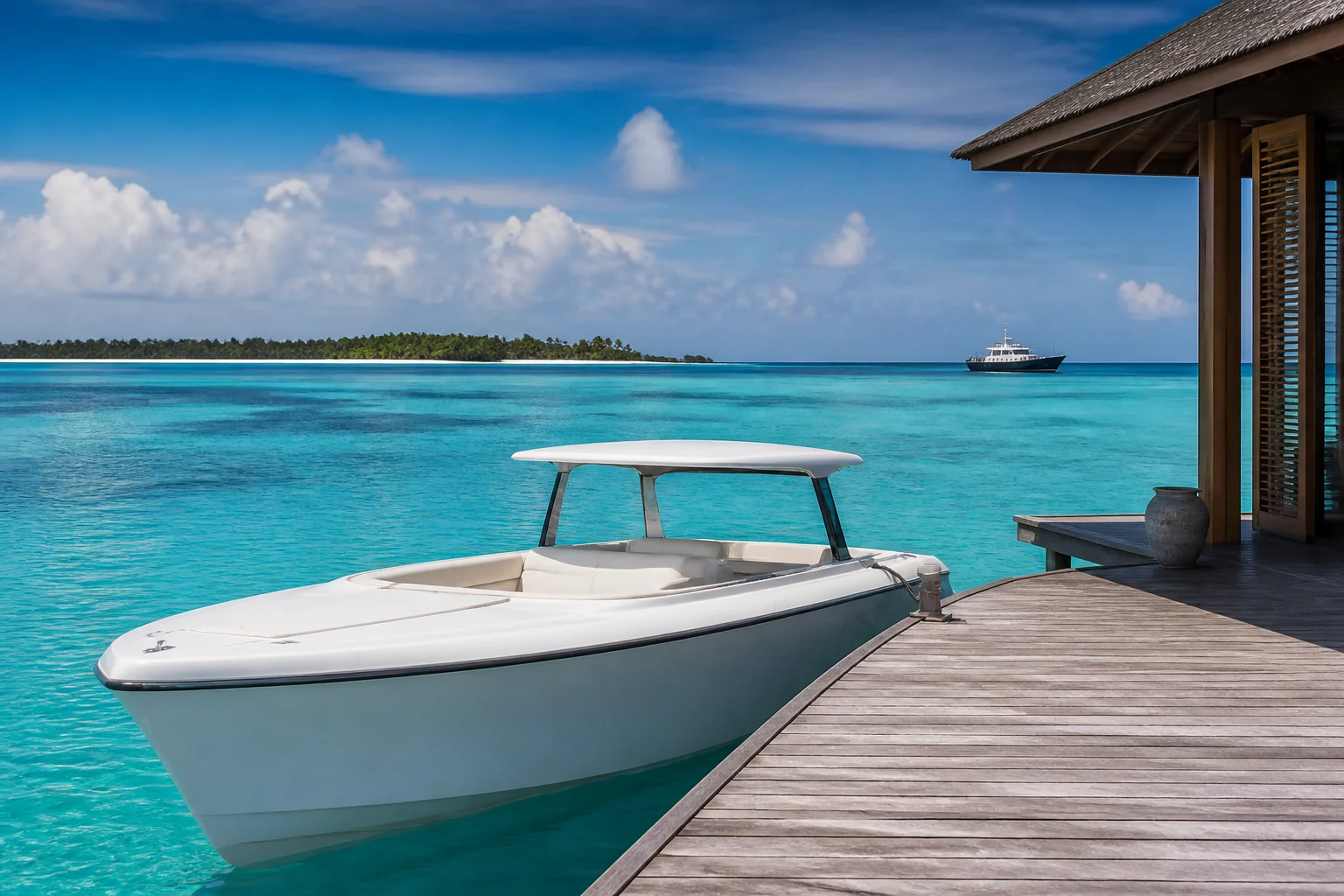
A private pool describes who uses the water, not who can see it. A residence defines space and perhaps service, not automatically an exclusive beach. Boat-only access controls the land route but not every vessel offshore. A whole-island contract must still describe which guests, staff, suppliers, vehicles, boats and facilities enter the exclusive perimeter.
Arrival is the first test
A shared seaplane can begin a highly private resort stay with a lounge, baggage limits and several stops. A private charter adds control but remains subject to daylight, weather, operations and landing point. With a speedboat, jetty, duration, sea state and traffic matter.
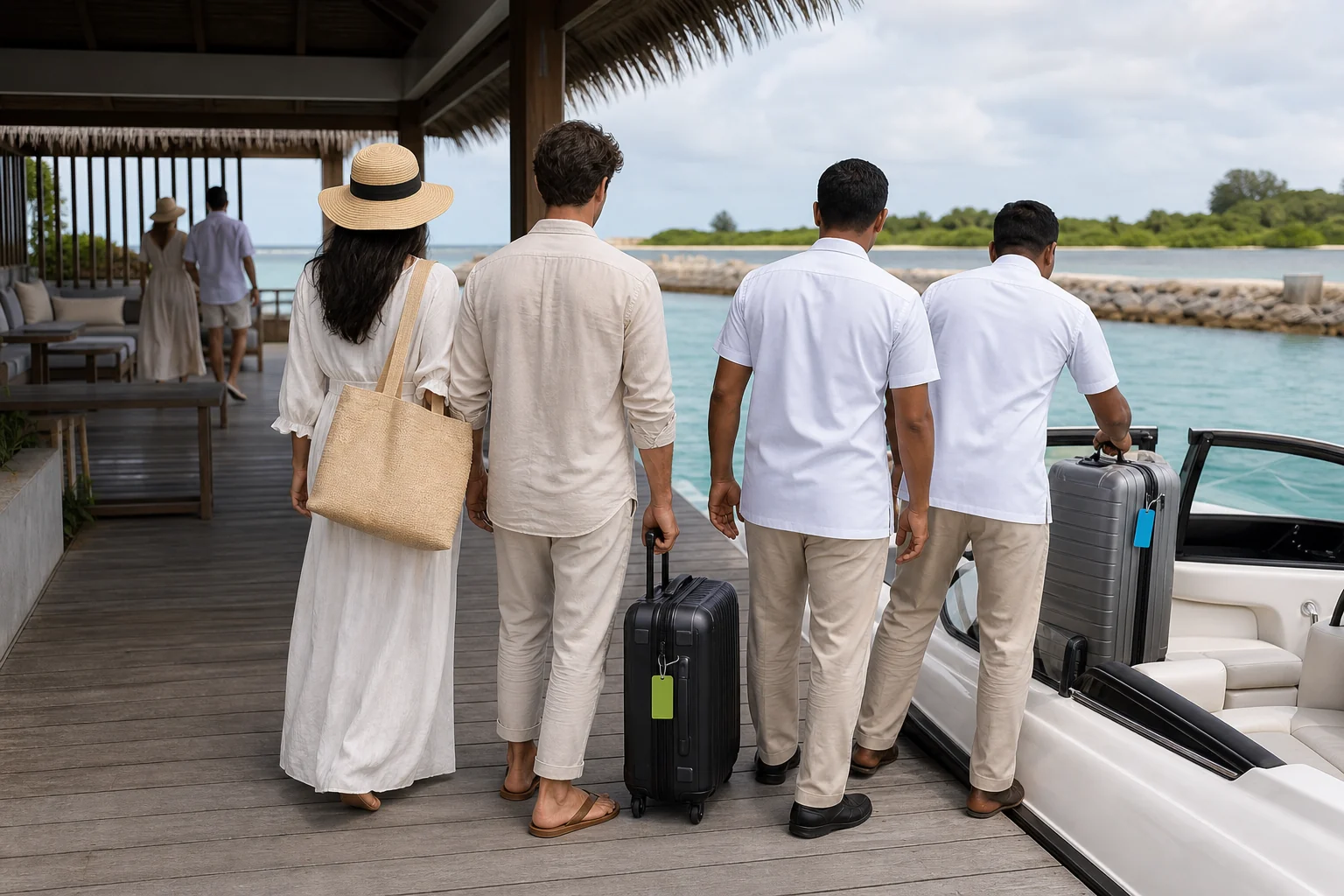
Review the journey from international gate to villa door: lounge, handover, co-passengers, luggage, photography and the person empowered to act during delay.
Ask who sees the guest’s name, whether the lounge is shared, how baggage is labelled and where waiting occurs. A private aircraft or boat creates discretion only if terminal, jetty and vehicle handover are considered too. Darkness, weather, swell or luggage can force a different mode; the contingency should pass the same privacy test before the journey begins.
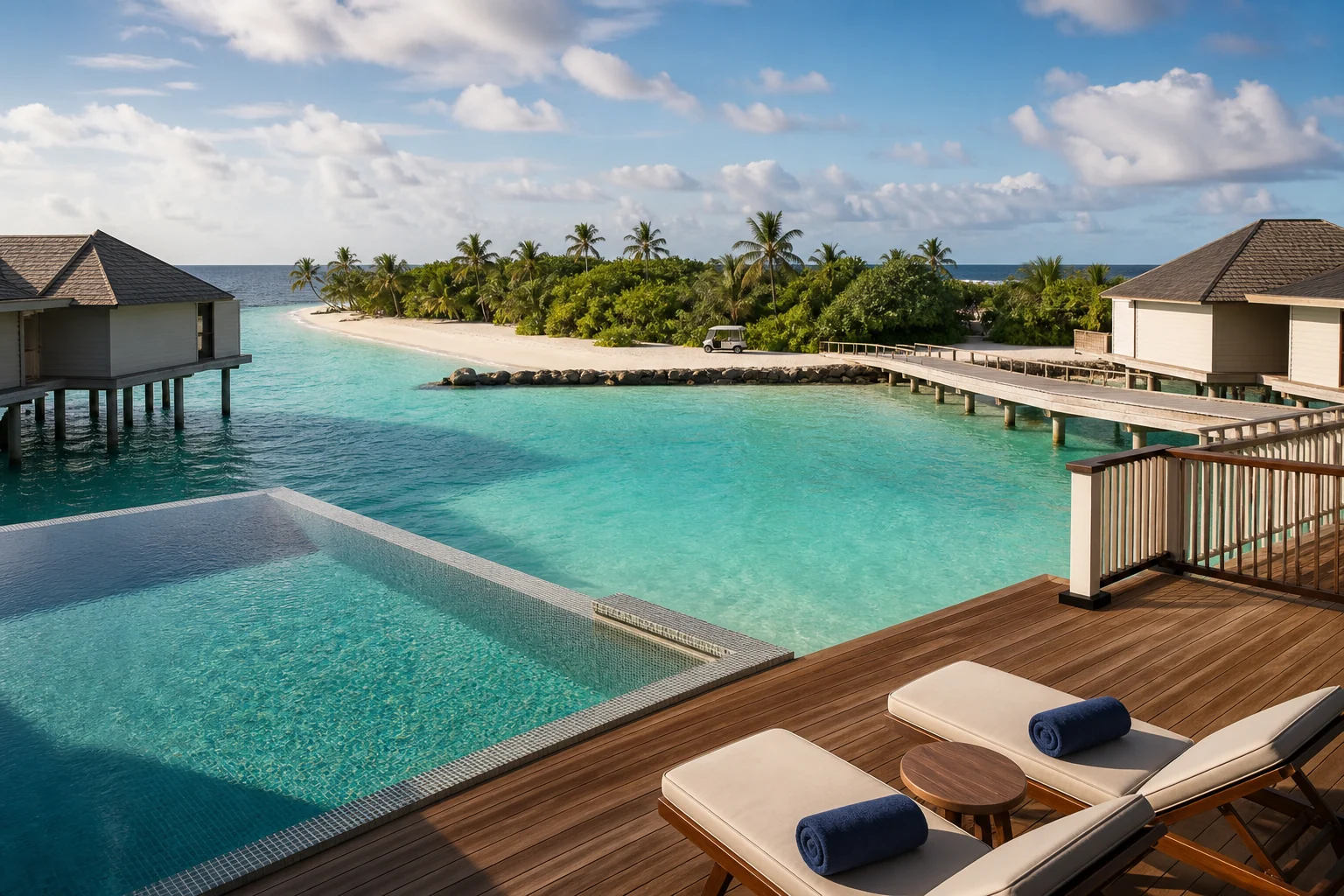
Beach villa or overwater
A beach villa can be protected by vegetation, spacing and a quiet stretch of sand, or sit on the morning walking route. An overwater villa avoids beach traffic, while neighbouring roofs, the jetty, service buggies, watersports and passing boats may be more visible or audible.
The correct answer depends on actual sightlines, not villa type. Sunrise and sunset side reveal little about quiet on their own.
For beach villas, study vegetation, usable sand, the walking line and rights of passage. For water villas, study deck angle, spacing, boat routes, wind and sea ladder. Swimming may vary with depth, current and weather. Families need a different balance between screening and supervision from a couple wishing to make its terrace as unseen as possible.
The island map matters more than floor area
A large villa near the principal restaurant, kids club or arrival jetty may be less private than a smaller category at a quiet edge. Check neighbour spacing, deck angle, views from upper floors, public paths and the direction from which staff arrive.
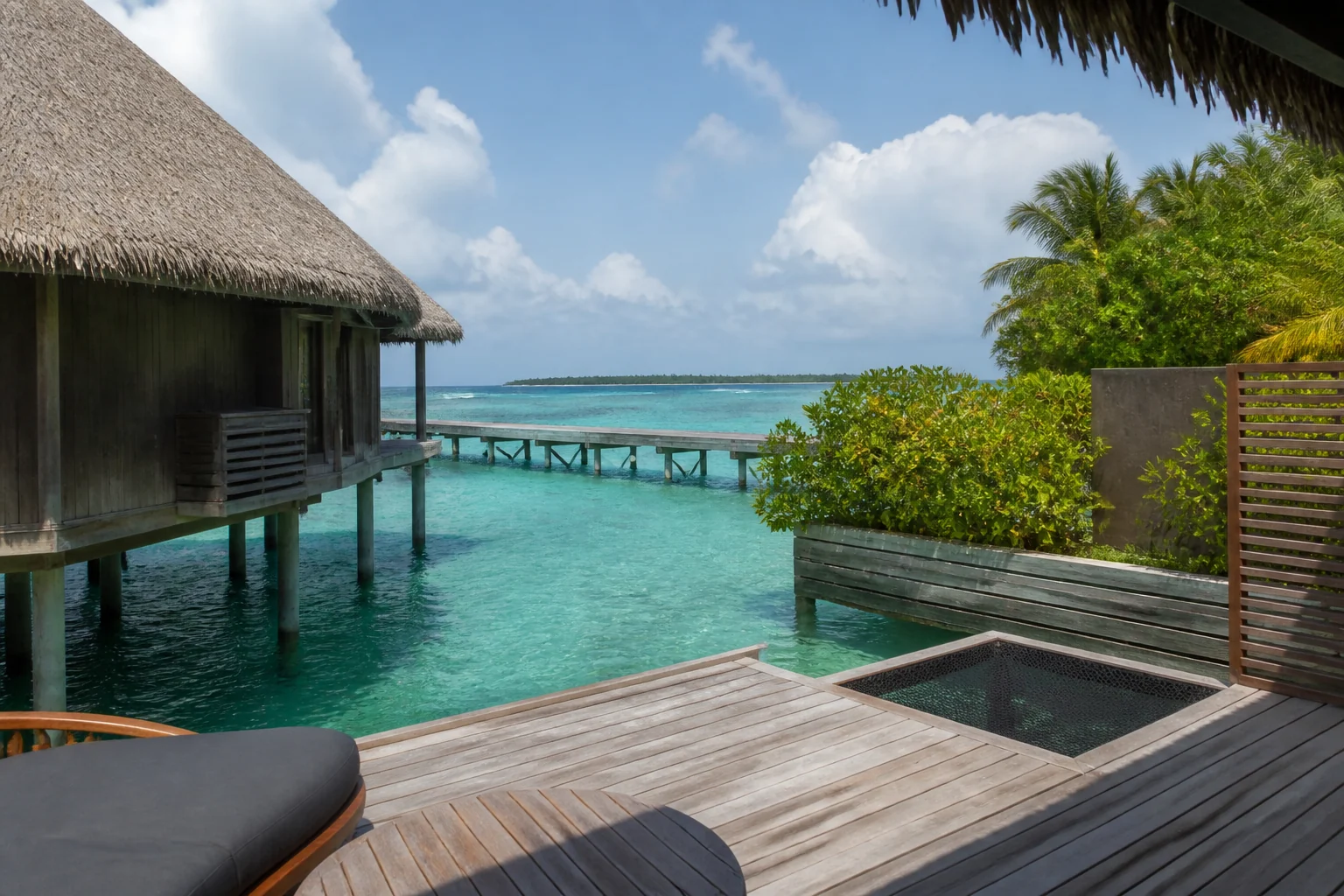
A current plan and photographs from normal eye level are more useful than an empty aerial view.
Mark the exact villa number, neighbouring decks, jetty, restaurants, watersports, spa, staff areas and back-of-house routes on that plan. Add prevailing wind and service deliveries. Floor area tells very little if the deck faces the breakfast path or supply vehicles pass behind the bedroom each morning.
Privacy by day and night
Vegetation and orientation protect by day; lighting, music, buggies and neighbouring-villa use alter the feeling after dark. An inward-facing pool may be intimate with less sea view. An open deck creates scale and visibility together.
Sound also travels over water. Distance must be judged acoustically as well as in metres.
Run the test across a full day: sunrise boats and early service, daytime beach use and maintenance, sunset photographers and buggies, then restaurant music and path lighting. Air-conditioning plant, generators or turndown routes can matter after dark. The resort should explain how the precise section of island operates, not simply how it photographs at noon.
Service without permanent presence
Butler service can protect privacy when communication, entry rules and housekeeping windows are clear. It can weaken it when staff appear unannounced or every meal becomes an operation. Strong hotels ask how much contact a guest wants.
Agree whether breakfast, minibar, turndown and maintenance happen within set windows or only on request. “Do not disturb” must work operationally.
Define a preferred communication channel, who may enter and the exceptions for safety or urgent repairs. A butler or majordome waits for a message where that is the guest’s preference; housekeeping has a window and does not knock routinely outside it. Service privacy means help remains readily available without remaining permanently visible.
Privacy for couples, families and groups
A couple may prioritise seclusion on deck and beach. A family needs internal sightlines, safe water access and a workable route to the kids club. A group needs retreat between shared spaces. The most private answer for one guest may be isolating or impractical for another.
In multi-bedroom layouts, consider building distribution, nighttime paths and whether staff cross private living areas.
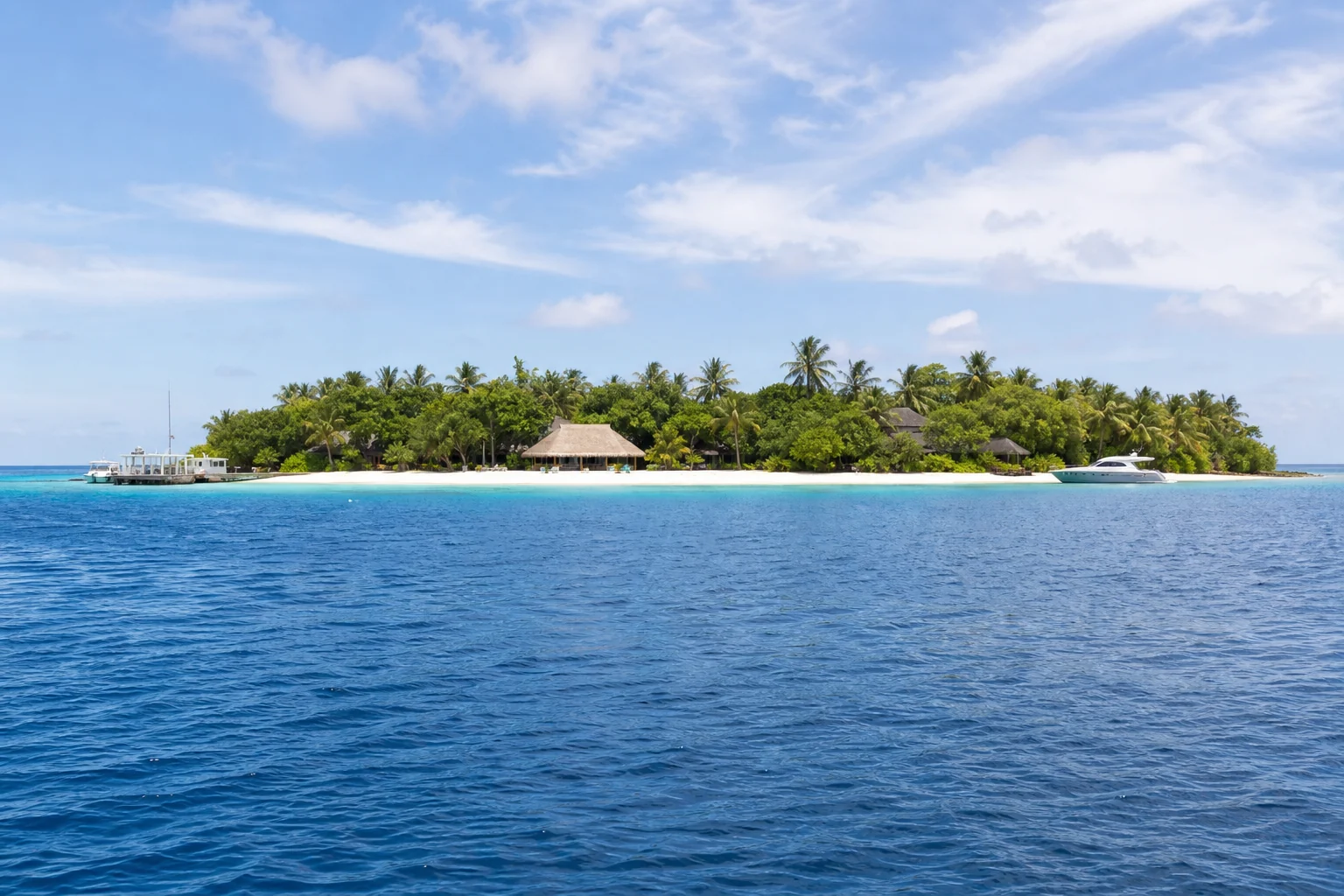
For families, balance water access, bedroom separation, doors, child supervision and the route to shared amenities against screening. Groups need generous common space but bedrooms that are not reached through the centre of social life. With a buyout, staff accommodation, the security perimeter and the zones where suppliers may appear become part of the plan.
Photography, drones and high-profile guests
Obtain written resort rules on drones, professional photography and images of other guests. A no-drone policy helps only when enforced and understood by suppliers, media and guests alike.
Higher-security travel needs a separate protocol for aliases, data access, villa number, guest list, private transfers and liaison with security.
That protocol also covers CCTV locations, retention and access, media requests, private photographers and drone launches from boats or nearby islands. No resort can promise invisibility. It can disclose which areas are monitored, who sees booking data, how staff are briefed and what response follows a breach.
Weather changes privacy
Wind and swell may make a preferred side less usable. Erosion, seasonal sandbags, vegetation and maintenance alter beach and screening. Choose a villa for the actual travel period, not a photograph used year-round.
Poor weather also concentrates guests in restaurants, spa and indoor spaces. A traveller seeking quiet needs a villa that remains pleasant through a wet day.
Wind, heavy rain, rough water and erosion can redirect both guests and service. A closed jetty may require a different landing point; maintenance or beach protection may move closer to the villa. Weather is therefore an operating condition, not merely atmosphere, and the proposal should name the most discreet workable alternative.
Questions before booking
- Which villa numbers genuinely meet the privacy brief
- What can neighbours, boats and people on the jetty see
- Which public and operational paths are nearby
- How does service enter, and can access be controlled
- What drone and photography rules apply
- Is the transfer shared, private or optionally chartered
- What does “private island” mean contractually
- Are works, erosion or construction known for the dates
The Deluxetargets recommendation
Choose privacy as a measurable attribute, not an adjective. For a couple, the right edge villa in a small resort may suffice; for a family, a well-planned estate; for maximum discretion, only a whole-island buyout. Island map, arrival, service and sightlines must tell the same story as the photograph.
The written proposal names the exact villa, or commits to an equivalent position, and attaches a map and current eye-level images. It explains neighbours, sightlines, sound, public and operating routes, transfer, service entry, exclusive rights, security and image policy, weather alternative, known works and cancellation. The resort reconfirms current operations shortly before departure.