
A small hotel may be loud and a large one remarkably calm. The number of keys matters less than how guests, staff, machinery, restaurants and the outside world move through the building. To book quiet, read the plan — and the daily operation behind it.
Quiet has four dimensions
Acoustic quiet concerns sound, visual quiet movement and sightlines, social quiet the frequency of encounters, operational quiet the disappearance of service friction. A secluded room may perform acoustically yet sit on a constant buggy route. Define which form of calm is missing.
Twenty suites around a reverberant courtyard may feel less peaceful than two hundred rooms in separated wings. Maximum occupancy, buildings, lifts, restaurants, day visitors and events matter. “Boutique” and “intimate” are not acoustic measurements.
Read the plan before the gallery
Request a current site or floor plan showing room wing, lobby, pool, spa, restaurants, bar, ballroom, arrival and plant. Photographs show surfaces; a plan shows routes. Even without a room number, it reveals which categories border active zones.
The adjacent bedroom is only one relationship. A restaurant, gym or pool deck may sit above; a bar, kitchen or loading area below. The top floor removes footsteps but can approach rooftop plant. Ask in all six directions.
Road, railway, flight path, beach club, promenade, bells, loading bay and nature sound different. “Ocean view” may include surf and pool activity; “garden side” a wedding and lawn care. Obtain the exact orientation and night-time operation.
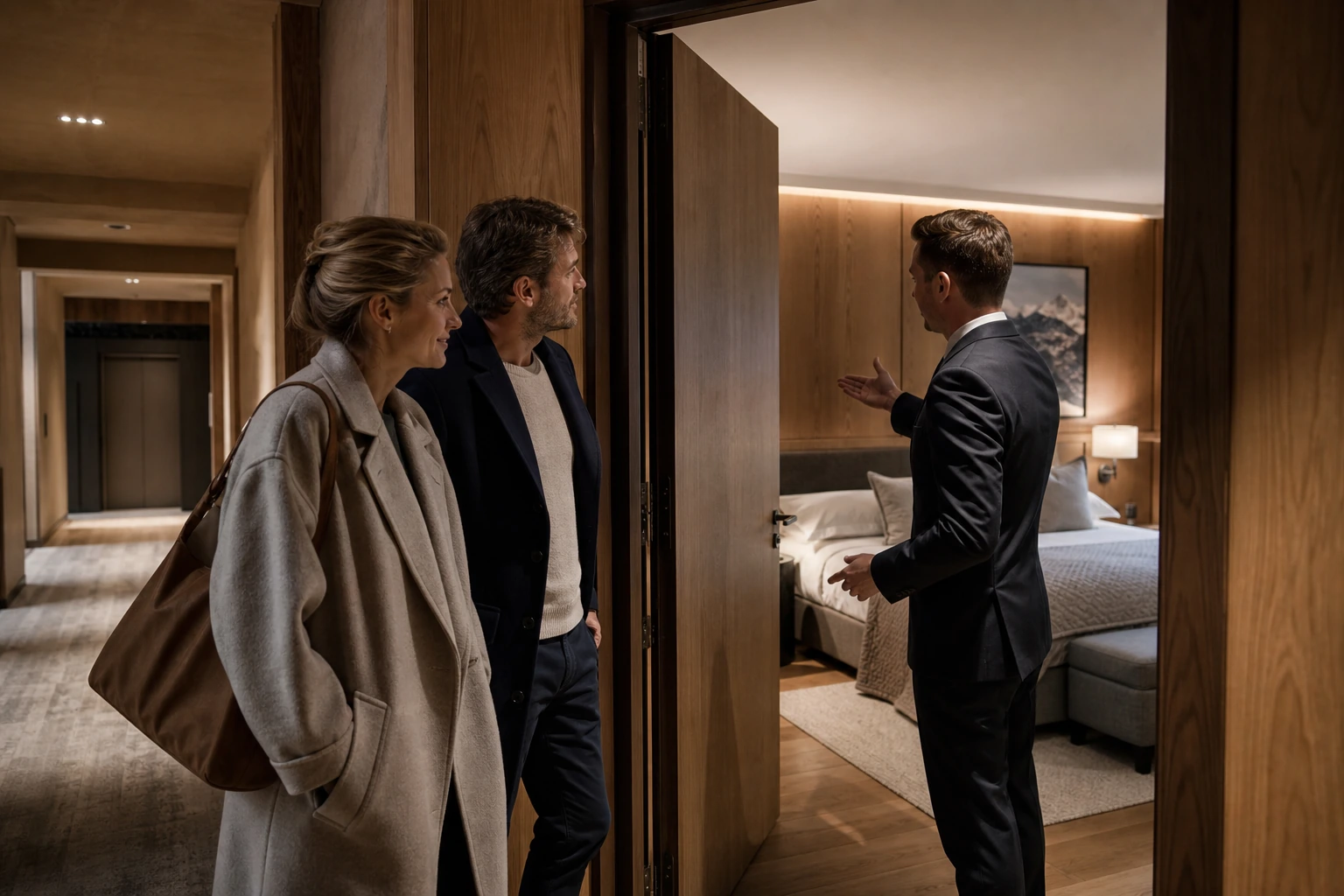
Good closed glazing may reduce traffic while making the guest dependent on air-conditioning. Someone who sleeps with a window open requires another position. Ask about opening, glass, ventilation, temperature control and external source rather than accepting “soundproof windows”.
Corridors, lifts, doors and neighbouring rooms
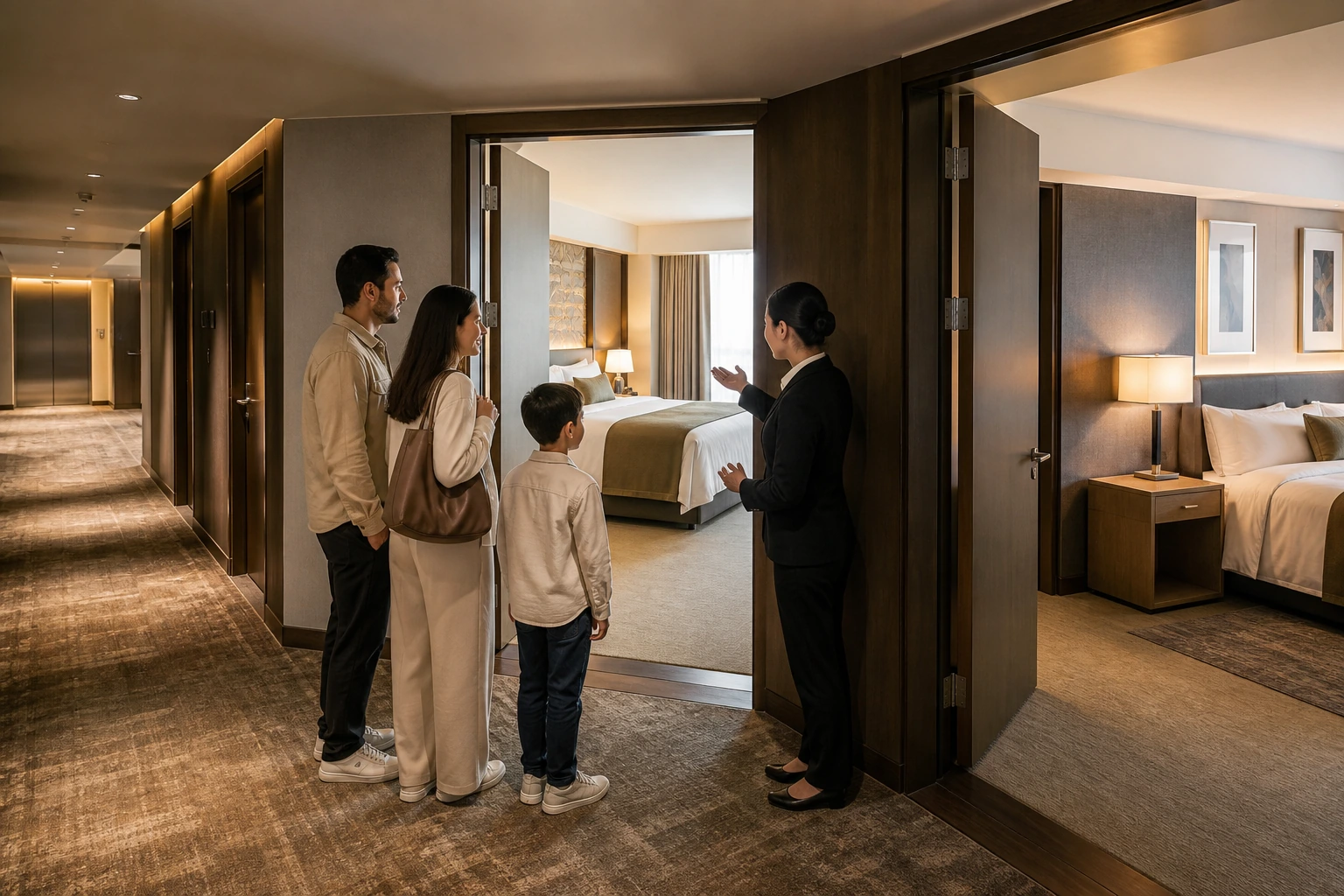
Lifts, ice stations, housekeeping cupboards, suite connections and the route to the pool generate movement. A room at the end may be quieter unless a service door sits there. Who uses the section, and when, is decisive.
Conversation, chimes, doors and machinery behave differently. “Away from the lift” is useful but incomplete. Include stairwell, service lift, machine room and the route taken by restaurant or event guests.
One slam can wake more readily than steady background noise. Self-closing doors must remain safe and functional, but should be maintained and damped correctly. A hotel must never block fire protection; it can adjust hardware responsibly.
They are valuable for families and potentially more acoustically permeable in single use. Ask explicitly for a room without one when important. Families should instead confirm a true connection; adjacent rooms are not the same product.
Two beds may share a wall, the neighbour’s television sit behind a headboard or plumbing run beside sleep. Water and flushing travel through structure. Reservations may not know construction detail, but should understand room positions and recurring trouble spots.
Building services and operational timetables
Air-conditioning, fan, minibar, pool pump, kitchen extract and lift motor create tone and vibration. Ask whether climate control can be switched individually while maintaining comfort with closed windows. A hum may be more intrusive than a higher but even background level.
Carts, linen, vacuuming, doors and conversation do not begin everywhere at the same hour. Late sleepers should avoid the housekeeping node and use “do not disturb” correctly. Evening turndown is pleasant but should not become a procession past every door.
Kitchens and hotels need goods, linen and collection. Service yards may activate early. A seemingly private rear aspect is not automatically calm. Ask about the loading bay and night or morning routes.
Restaurants, bars and events have a sound map
Short walks are convenient, while kitchen, chairs, music, guests and cleaning extend the evening. A room above breakfast starts early. Check opening, outdoor seating, private functions and the route taken by non-resident diners.
The most disruptive period may be departure rather than music: conversation, vehicles and doors. Ask about last order, closure and cleaning. Height does not necessarily protect a room from an open terrace.
A hotel can be calm midweek and social on Saturday. Calendar, build, sound check and dismantling affect hours or days. Quiet-led stays should confirm the date or use a demonstrably remote room zone.
Spa, pool, villas and nature follow their own rhythm
Day-spa users, members, treatments and pool passes increase shared occupancy. That is not inherently bad, but it changes calm. Ask about day guests, child hours, groups, music, lounger capacity and separate relaxation rooms.
Early swimmers, family midday, DJs, sunset and cleaning create distinct phases. A pool room is ideal only when the guest wants that life. Verify season, operating hours, non-resident access and events.
An adult property may host bars, weddings, groups and lively pools. A family resort may separate sleeping wings intelligently. Age threshold, exceptions, shared facilities and actual audience matter. Quiet is a plan and operation, not a demographic label.
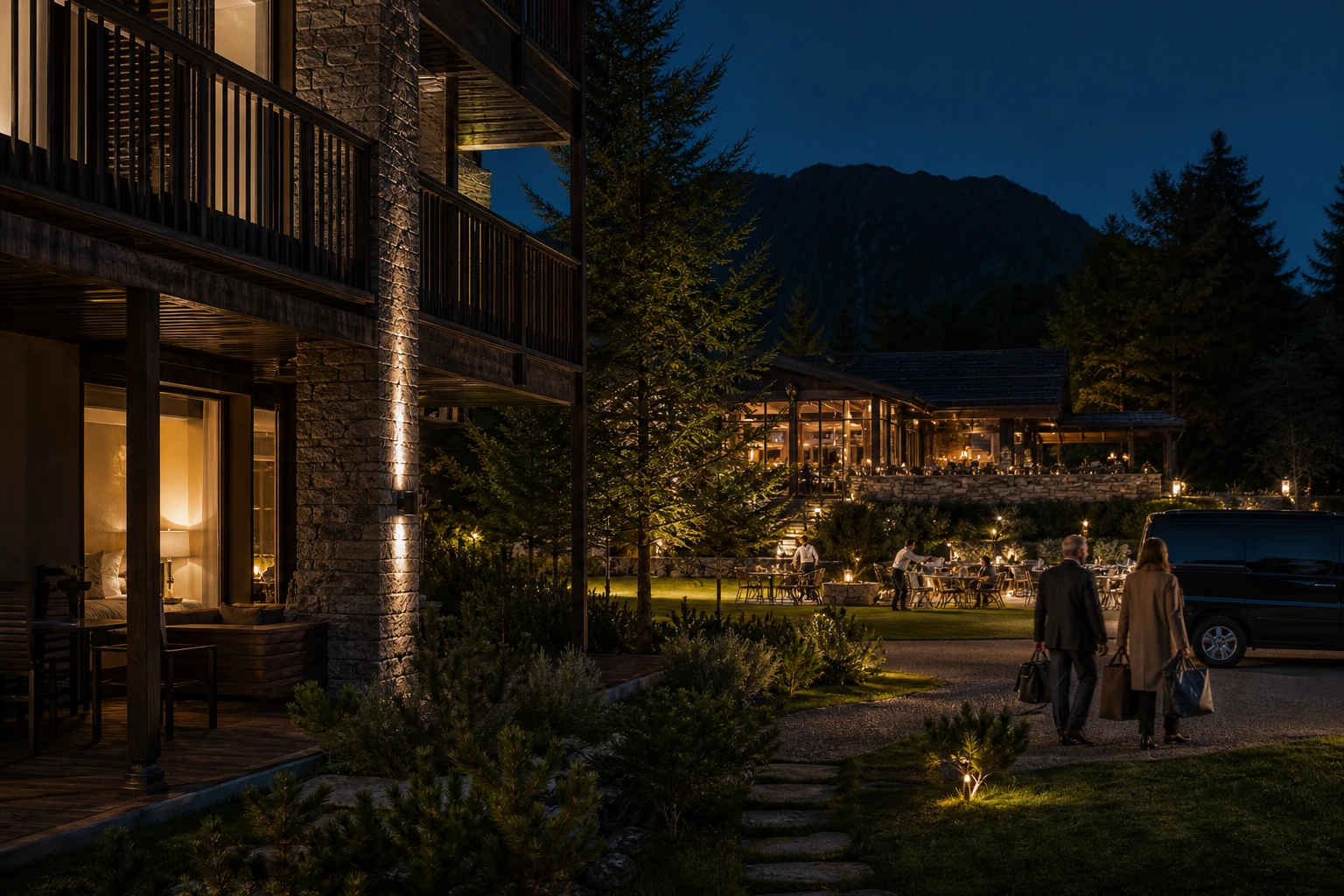
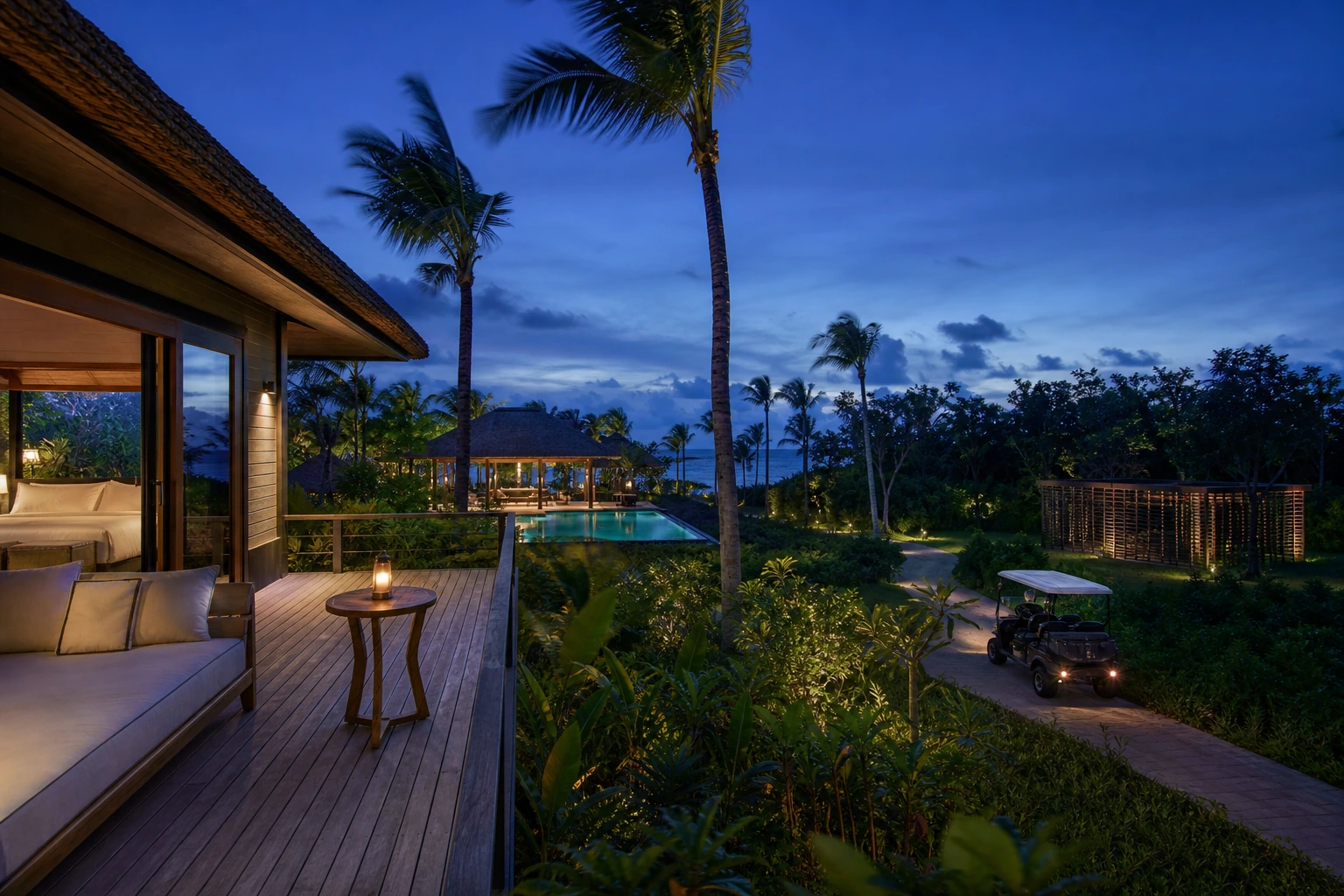
Pool pumps, air-conditioning, roof, neighbouring villa, beach, road, animals and staff routes remain. Large grounds may create buggy and service traffic. Verify true distance, screening, plant position and proximity to event zones.
Surf, wind, rain on metal, frogs, cicadas, birds and livestock can be beautiful or sleep-disrupting. “Only natural sounds” is not an objective promise. Sensitive guests should ask about material, season and typical night conditions.
Acoustics is not only loudness
Pitch, impulse, repetition, vibration, speech intelligibility and timing alter perception. One door slam may disturb more than constant ventilation. A single decibel number is therefore insufficient even when professionally measured.
Apps can record time and pattern, but without calibrated equipment and a standard method they do not form robust building or legal evidence. Note source, duration and effect. Formal assessment belongs to qualified acoustic professionals using appropriate standards.
A guest above the bar and one in a distant wing can describe the same hotel accurately and oppositely. Read reports for source, time, position and date. Repeated concrete patterns are more useful than a generic “loud” or “quiet”.
Before booking: twelve exact questions
No connecting door Distance from lift, stairs and service What sits above, below and beside Which façade Do windows open Where are bar, pool, spa, ballroom and loading bay Any event, day visitor, construction or outside music What relocation plan exists
At check-in: invest five minutes well
Listen with music and climate switched off; inspect window, connecting door, plant and corridor. Ask about the evening programme. If the room contradicts the confirmed preference, an early move is easier than one at two in the morning.
“Quiet room requested” is often not a guarantee. More useful are a specific note, priority, acceptable categories and a relocation process. At full occupancy, alternative, credit or engineering review should be clear; the booked terms govern.
They may help subjectively, but do not correct an avoidable source and will not suit everyone. Devices must not mask alarms. The property should first reduce controllable noise and offer aids only as voluntary additions.
Accessibility and quiet may collide
Accessible rooms sometimes sit near lifts or public areas, easing movement while increasing traffic. Seek a solution that protects mobility, emergency access and acoustic preference together. Quiet must never be pursued by compromising safe accessibility.
Private check-in and side entrances can reduce social exposure without compromising safety or access. Preferences, room numbers and complaint records are sensitive. A calm stay needs not only less sound but less unnecessary visibility.
The editorial formula
Do not calculate keys per hectare. Combine room position, operating routes and peak times, then add external source, plant, events and day guests. It produces no guarantee, but a far better forecast than room count, star category or an empty-pool photograph.
The editorial verdict
Hotel quiet is built, organised and recreated daily. The calmest property is not the smallest or most remote, but the one that separates people, service and machinery without losing hospitality — and can explain honestly where in its plan the night sleeps best.