
South Africa does not improve with every famous address added to the itinerary. It contains three very different worlds: Cape Town’s urban energy, the cultivated slowness of the Winelands and the alert unpredictability of safari. Luxury appears when the transitions between them are designed as carefully as the hotels.
Build one journey from three different rhythms
Cape Town likes a late start and dinner; the Winelands may let a long lunch take possession of the day; the bush issues its wake-up call before sunrise. Join those rhythms without recovery and the journey becomes a succession of transfers. A fine itinerary builds intensity, releases it and protects the hours in which nothing is required.
Four nights in Cape Town, three in the Winelands and four on safari make a persuasive core. Arrival, transition or another region need the remaining time. Below ten nights, edit decisively. Two safari camps and three city hotels are not variety at that length; they are lost afternoons, repeated packing and stays that never properly begin.
Cape Town at the beginning offers a gentler landing after the long-haul flight and several days in which to place weather-dependent plans. Safari first supplies immediate drama but asks for attention from the opening dawn. Guests reluctant to fly home directly from the bush can finish in the Winelands or city. Sleep, flights and temperament decide the order.
Book Cape Town by micro-location
The Atlantic Seaboard, City Bowl, Gardens and V&A Waterfront produce different days. Bantry Bay brings ocean, sunsets and the coastal road; the City Bowl places galleries and restaurants nearer; the Waterfront makes walking and harbour attractions easier. The finest suite at the wrong starting point charges a daily tax in time and spontaneity.
Table Mountain, Atlantic and city-light aspects are not interchangeable. Wind, cloud, sun and traffic alter the balcony, pool and night. Ask for the side, floor, shade and actual outlook of the confirmed category. An iconic panorama cannot compensate for a room in which nobody wants to spend a slow half-day.
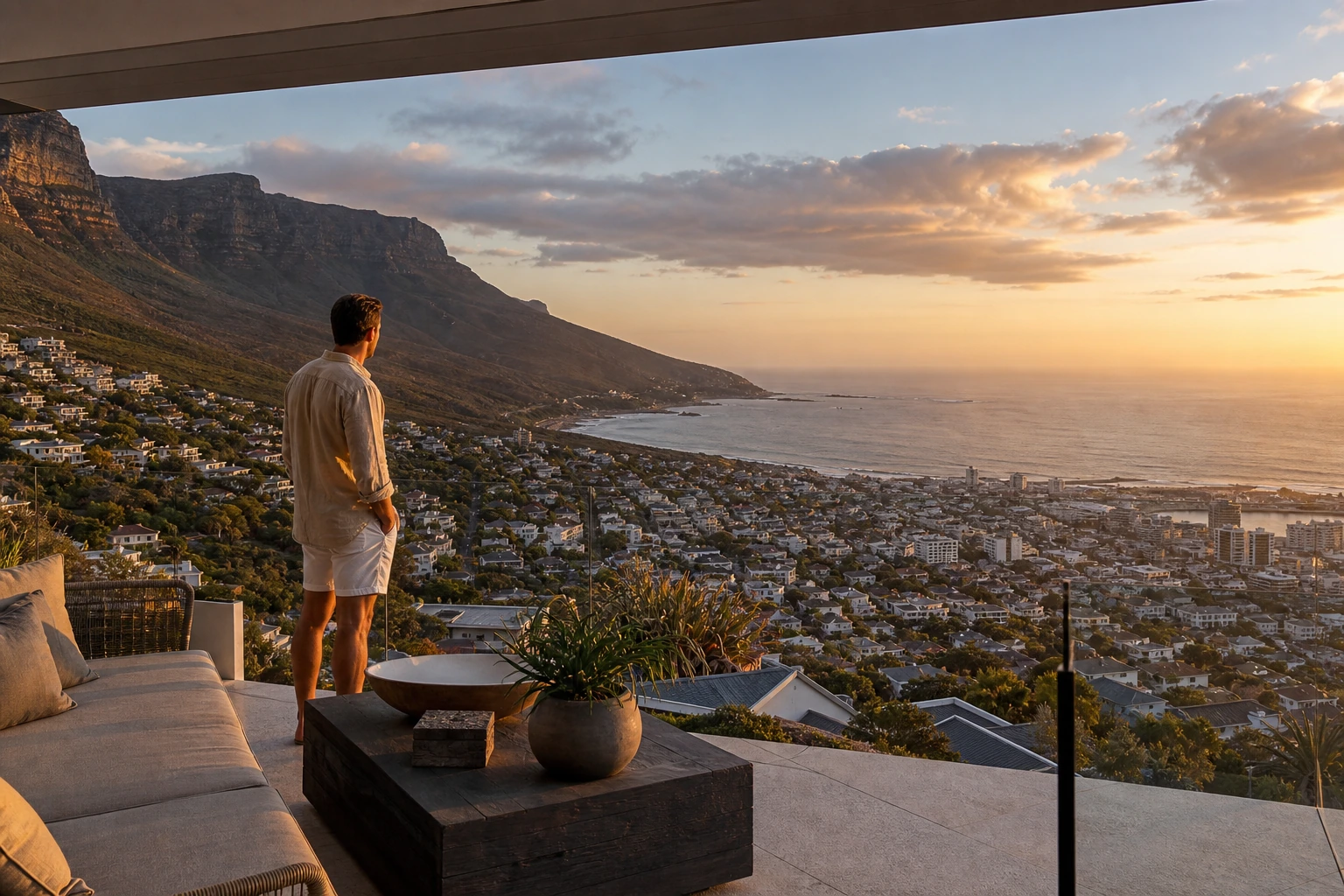
Ellerman House combines the intimacy of a Bantry Bay residence with South African art. The Silo embraces expressive architecture on the Waterfront. Mount Nelson behaves like an urban garden retreat; Cape Grace roots the stay in the harbour. None is universally “best”. Access, social density, interest in art and desired distance from the city make the choice.
A design hotel succeeds through material, light, art, craft and architecture that makes Cape Town more intelligible, not through photogenic objects in a lobby. Ask whether works are contextualised, local makers are named and rooms are truly habitable. Good design removes friction; bad design makes the guest live around furniture created for a photograph.
Cape Town beyond the postcard
The museum of contemporary art from Africa and its diaspora gives the historic grain silo a cultural present. Allow enough time for an exhibition rather than treating the building as a photograph. Opening, programme and tickets require a current check. Afterwards, the architecture and contradictions of the wider Waterfront become more legible.
The cableway and summit respond to wind, visibility and operation. Do not build the whole stay around one slot. Keep two possible windows open, consult the official status on the day and allow the guide or driver to rearrange the surrounding route. Flexibility preserves the experience; it is not the absence of planning.
The right guide connects history, contemporary life, art, coast and food without reducing the city to scenery. Brief interests, knowledge level, walking pace and sensitive subjects. Chauffeur and guide may be separate roles. Verify qualification, language, insurance, vehicle and whether the day is genuinely interpreted rather than merely transported.
The landscape is compelling and the road long. Traffic, wind, stops and wildlife do not obey the minute hand. Choose between a full coastal day and a concentrated selection. A late lunch with room to breathe is often worth more than six viewpoints followed by a return that runs directly into dinner.
The Winelands are not one destination
Franschhoek, Stellenbosch and Paarl differ in town life, scenery and daily logic. Franschhoek offers a compact gastronomic base; Stellenbosch combines a university town, architecture and many estates; Paarl opens another set of landscapes. Select a base for the days you want to live, not for the most recognisable label.
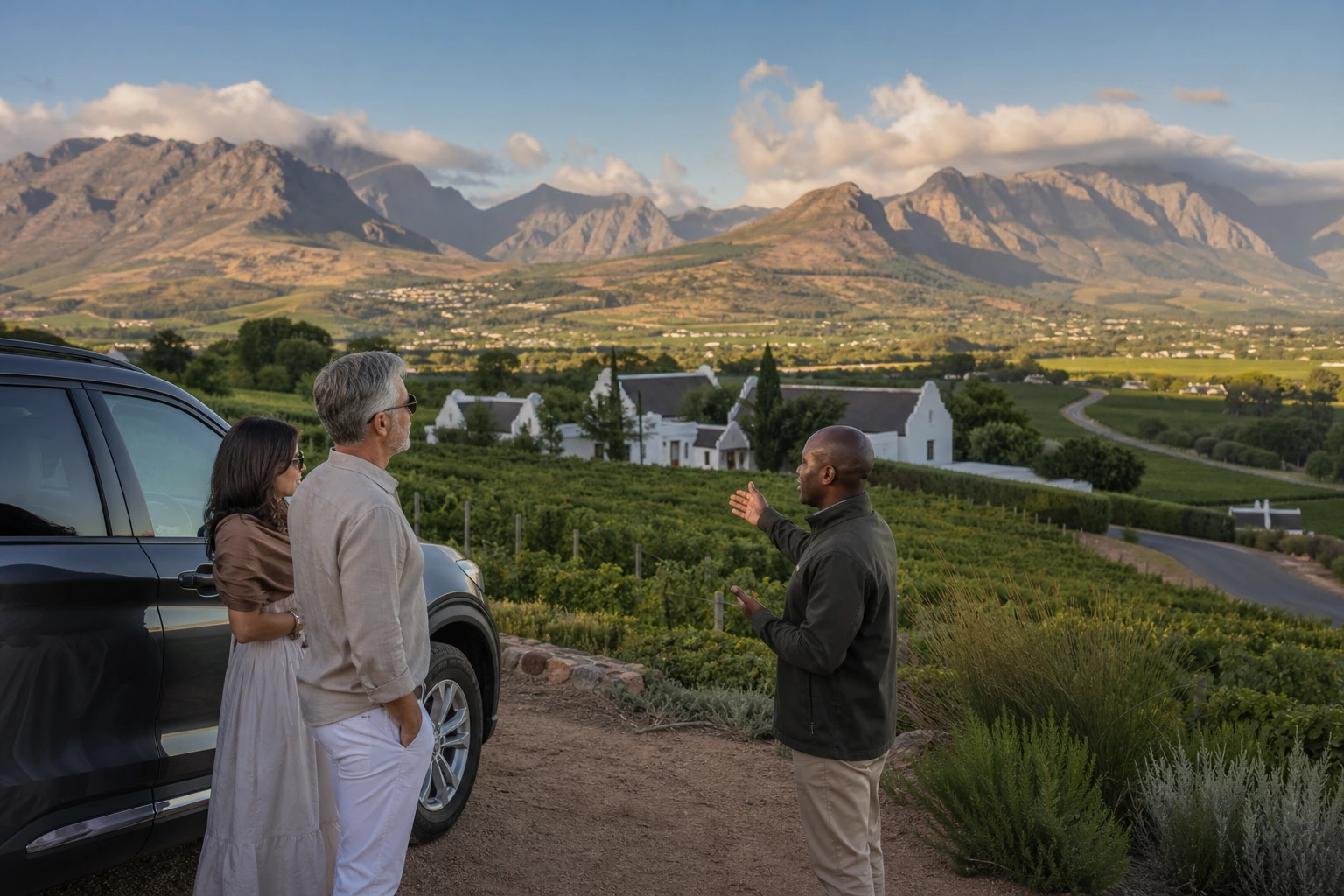
A good day contains two serious wine encounters and lunch, not five tastings. Cellar, conversation, landscape and cooking require time. The Wine Tram can be convivial and straightforward; a private driver allows more precise appointments and tempo. Guests seeking technical depth need a curated set of producers rather than the longest possible route.
Connect its historic centre with contemporary cellars and a deliberate selection of wine styles. Ask beyond prestige about grape, site, farming and the person behind the wine. A vertical tasting or cellar conversation can reveal more than an opulent pairing menu that supplies no context.
Distance, alcohol and extended lunches make self-driving a weak luxury solution. A good driver does more than wait: they understand entrances, realistic timing and alternatives. Confirm vehicle, cooling, water, luggage, overtime and return. Tastings can then be chosen for interest rather than for the person who must remain able to drive.
Three estate hotels, three ways of staying
Its position on the Banghoek Pass shapes the stay as strongly as the art, gardens, wine and lodge architecture. Residents should leave time for the estate itself. Reducing Delaire to a photographic stop misses its strength. Exact lodge position, restaurant operation, current displays and tasting format require date-specific confirmation.
It suits guests drawn to individual rooms, gardens and a slower tempo. Check the character of the exact suite, distance from shared areas and transfers into the village. A richly decorated interior is personal; it should be selected by more than one image of the property as a whole.
Garden, farming, food, wine and wellness create a programme of their own. That makes the farm persuasive for guests who wish to stay, but less efficient as a mere sleeping base for daily excursions. Day visitors affect its rhythm. Clarify resident areas, hours, transfers and experiences that require advance reservation.
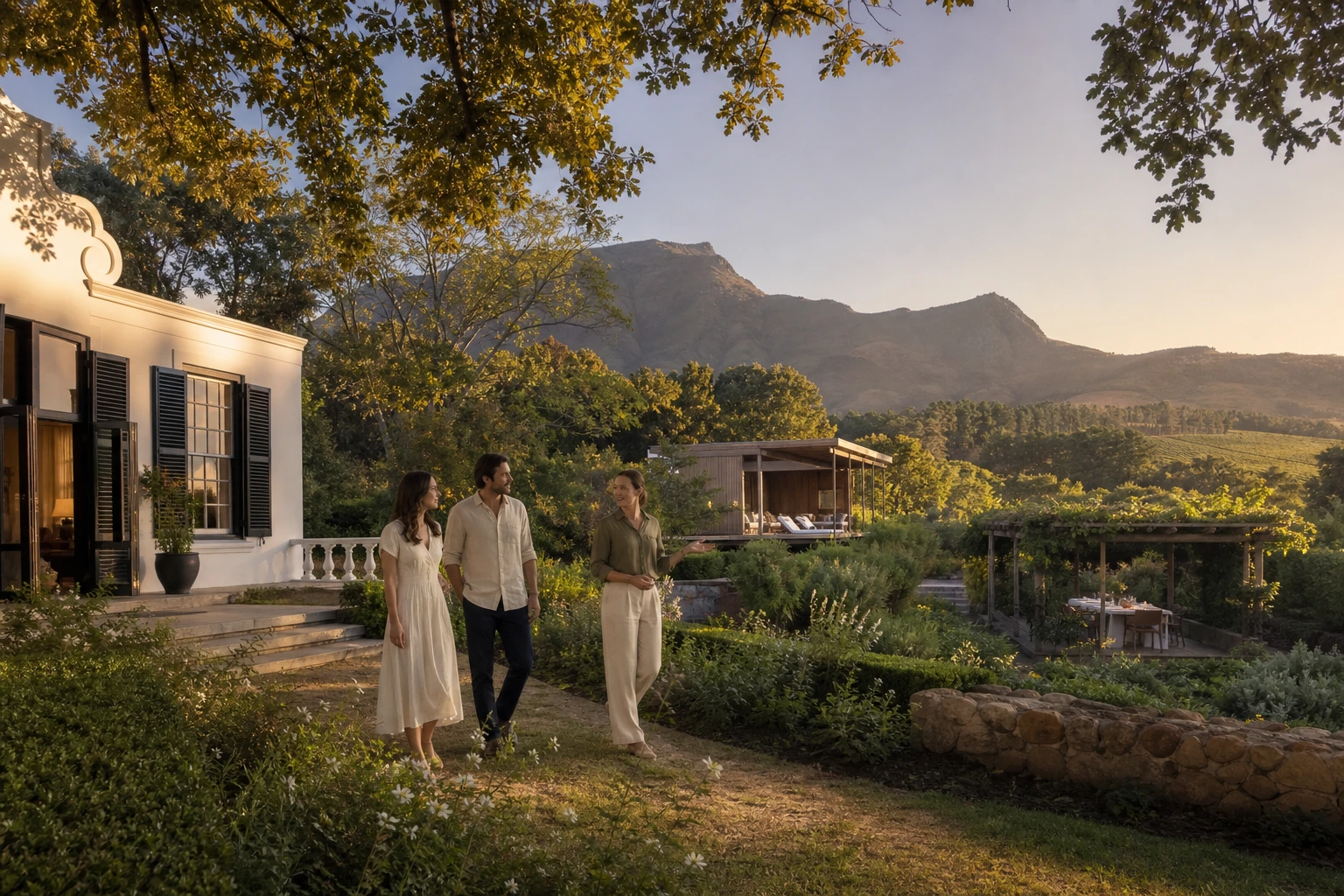
The Cape and Winelands can fill every day with important menus. After two long lunches, even excellent cooking loses force. Alternate a formal dinner, a light meal, room service and an open evening. Allergies and preferences travel ahead; chef, menu and opening remain specific to the date.
Safari is not a hotel stay with animals
Reserve, habitat, guide, tracker, vehicle policy and time at a sighting determine the experience. The suite holds the hours in between. A theatrical bathroom cannot rescue weak field operations. Begin with region, season, wildlife interests and desired activity; only then allow lodge and room to enter the decision.
Kruger National Park has public roads, gates, camps and immense spatial variety. Private reserves such as Sabi Sand structure drives, access and lodge operations differently. A shared landscape on a map does not explain vehicle density, off-road practice, traversing rights or night drives. Confirm each point for the chosen lodge and concession.
Singita Sabi Sand, Londolozi and Cheetah Plains occupy the same wider reserve landscape but differ in scale, accommodation, vehicle model and mood. Do not compare only leopard photographs. Ask about usable traversing area, reciprocal rights, guests per vehicle, continuity of guide and the camp’s relationship to river and terrain.
The guide is the essential luxury decision
An exceptional guide reads tracks, behaviour, light and the atmosphere in the vehicle. They know when to leave a sighting and when patience will reward. Ask about training, experience, tracker partnership, language and allocation. A named guide may be requested but is rarely guaranteed without explicit written confirmation.
It permits longer sightings, space for photographic equipment, flexible returns and a personal tempo for children or multigenerational parties. It guarantees neither wildlife nor freedom outside reserve rules. Confirm daily charge, capacity, guide, tracker, availability and whether transfers or specialist activities are included.
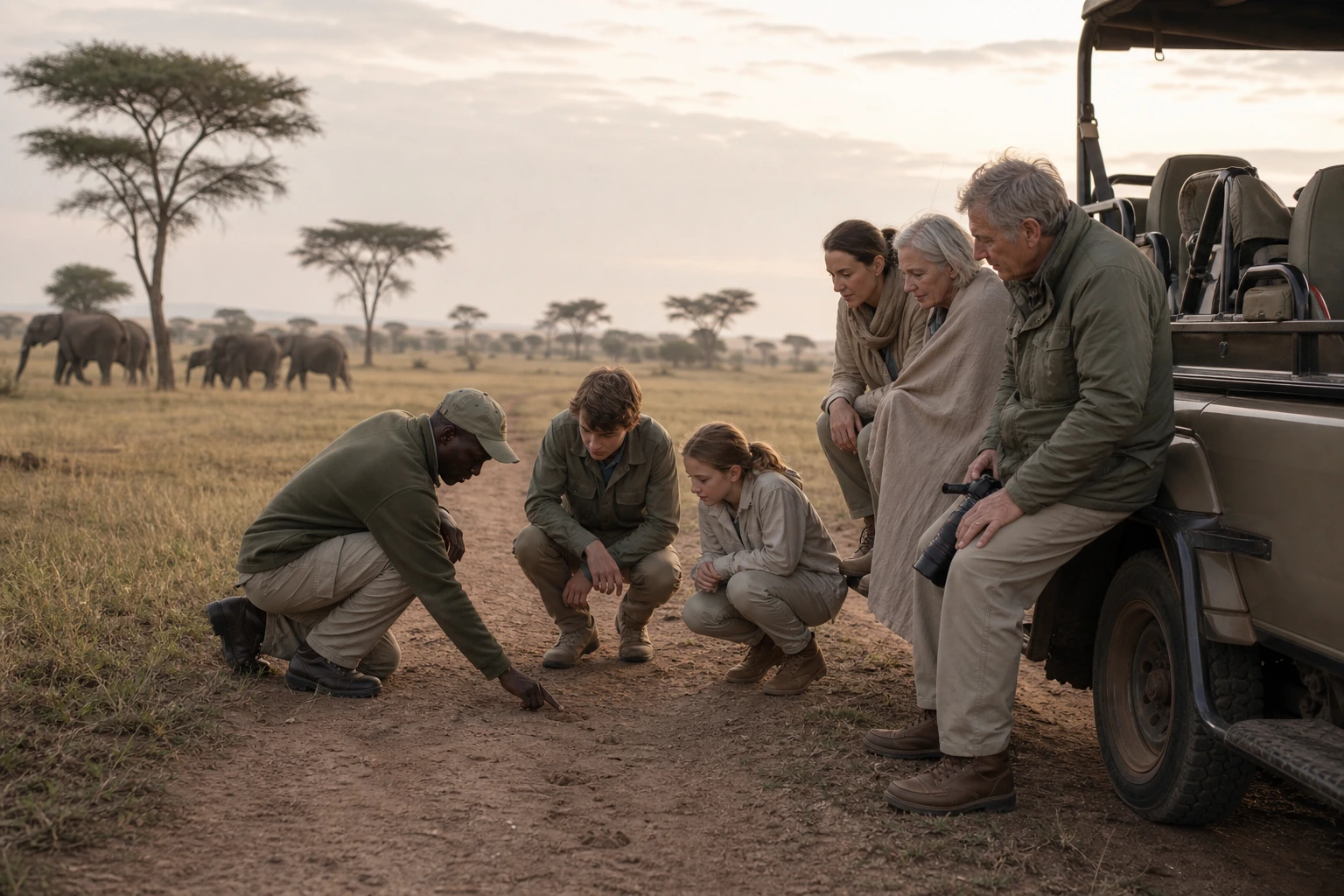
Canvas, glass villa and solid house transmit sound, temperature and darkness differently. Ask about climate control, route to the suite, escort after dark, steps, animal movement and emergency communication. Open architecture can be intensely beautiful; it is not automatically right for a guest awakened by every sound in the bush.
Arrival and departure often remove an activity each. Count usable morning and evening drives rather than calendar nights. Three nights can work in a direct combination; four allow for weather, slower sightings and a skipped drive. Two camps make sense only when habitat or style genuinely changes and the transfer does not consume the gain.
Airstrip, health, season and conservation belong to the safari
Light aircraft, luggage limit, soft bags, intermediate stops and road transfer shape the day. A short flight can include several landings; a nearby camp transfer may become a game drive. Confirm operator, schedule, baggage, assistance, vehicle time and the plan for weather or delay in writing.
Parts of north-eastern South Africa may carry malaria risk that changes by area and time. Hotel shorthand such as “malaria-free” does not replace individual advice. Travellers should take their route, season, age, pregnancy, health and medication to a qualified travel-health professional in good time and follow current authority information.
Cape Town and the Winelands follow different weather and daylight patterns from the north-east. Safari changes with water, vegetation, temperature and animal movement; the Cape with wind, rain and outdoor windows. A perfect season for the whole itinerary is rare. Weight the most important section and give the others credible alternatives.
Ask which charges are compulsory, who manages land and concession, how community partnerships work and where results are reported. Marketing vocabulary is insufficient. Strong lodges can connect protection, employment and guest experience; assess the specific effect through current reporting and identifiable responsibility.
Families need a different dramatic arc
Age, vehicle rules, children’s programme, connecting rooms, pool protection and meal times should be checked before the lodge is chosen. Dawn drives and long menus do not suit every child. A private villa and vehicle may create freedom if care, terrain and activity limits align. An adult aesthetic alone is not family hospitality.
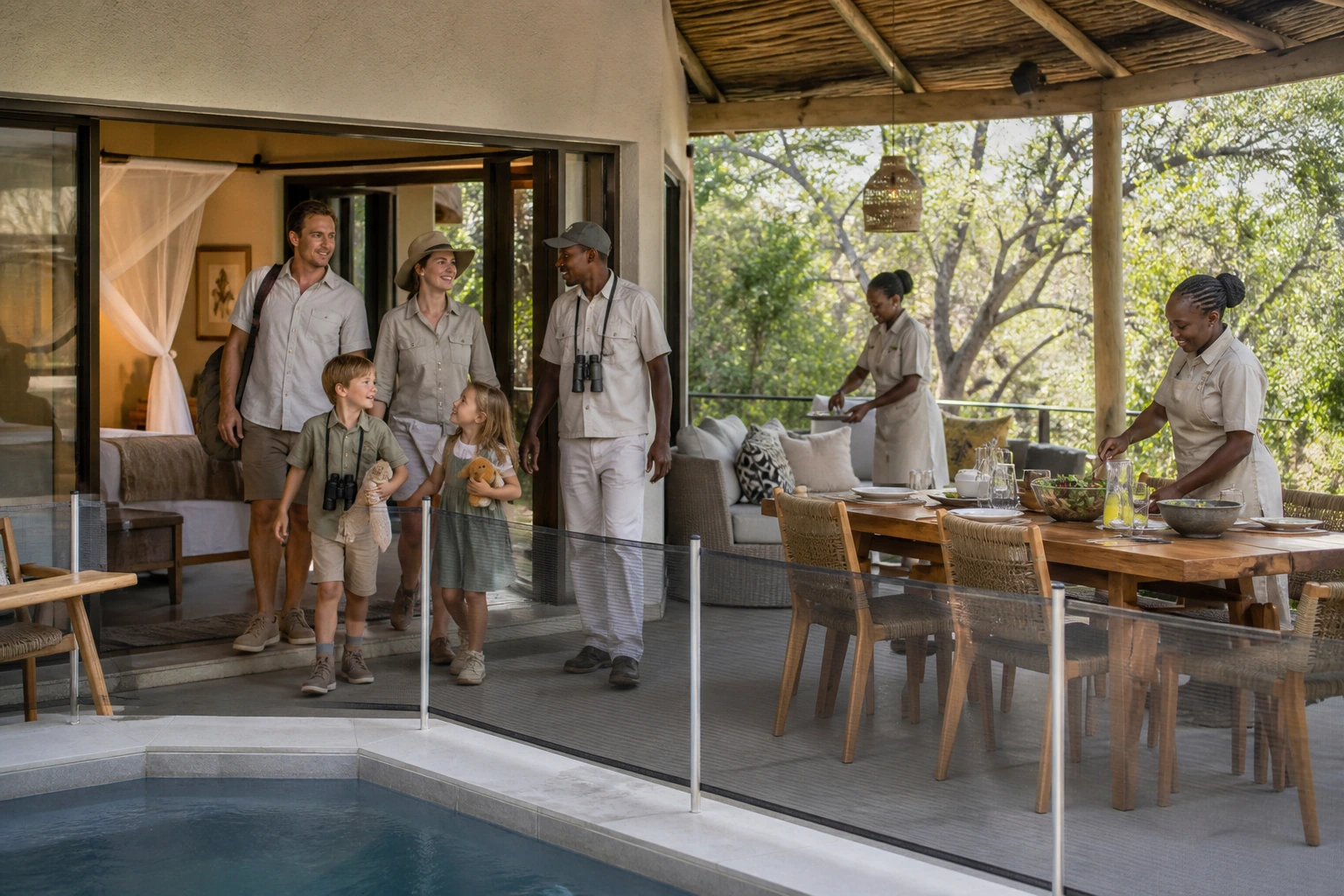
Honeymoon gestures are less valuable than a suite without passing traffic, a flexible safari day and an evening without compulsory theatre. Ask about deck position, private dining as a confirmed service and the camp’s social character. Romance comes from attention, not rose petals at every stop.
The full price lives in the transitions
Beyond hotels, count regional flights, private vehicle, driver, guides, park and concession fees, drinks, menus, gratuities, baggage solution and cancellation. Have inclusions shown by stage. A lower room rate may disappear into logistics; a more expensive base may remove hours of travel and several daily extras.
A persuasive fourteen-night route
Begin with four nights in Cape Town, move to the Winelands for three, then fly to a carefully matched safari region for four. The remaining nights allow arrival, buffer or a deliberate second Cape contrast. This is a model, not a package: flights, season and travellers determine the final order.
Confirm room or suite position, bed, transfers, baggage rules, guide, vehicle, activities, meals, drinks, fees, health/mobility notes and cancellation. Add current building work, large events, restaurant operation and emergency contact. Translate every vague “VIP” promise into a particular service, responsible party and moment.
The best South Africa journey leaves room
Plan Cape Town around weather, the Winelands around conversation and safari around patience. Choose hotels that interpret their surroundings and people who turn access into understanding. When an empty afternoon can remain part of the composition rather than a gap to be filled, the journey begins to feel truly luxurious.