
Four great wine destinations produce four entirely different journeys. Bordeaux rewards preparation and context; Tuscany joins cellar and cultural landscape; Napa refines the reserved tasting; South Africa opens an unusually broad panorama. The right choice begins not with the most famous label, but with the way one wants to travel.
The short answer
Bordeaux suits travellers who want to understand appellations, vintages and trade. Tuscany excels when wine, food, villas and art matter equally. Napa offers concentrated comfort and clearly designed tastings. South Africa combines diversity, landscape and an easy dialogue between the winelands, Cape Town and a longer journey.
Prestige, price and scores cannot say where a week will feel right. The meaningful comparison is character, access, geography, lodging, food, visitor culture, season and the friction between two good glasses.
Bordeaux: mosaic, context and a clear base
The official wine region describes six broad landscapes, including Médoc, Graves-Sauternes and Saint-Émilion-Pomerol-Fronsac. Booking “Bordeaux” therefore begins by choosing which banks, styles and histories actually matter.
Left and Right Banks are not interchangeable appointments. Bridges, city traffic and long north-south distances can turn an ambitious crossing into the centre of the day.
Classifications, négociants, family ownership, Cabernet- and Merlot-led blends, and the dry and sweet wines south of the city make an intellectually rich journey. Without a good interpreter, many of those layers remain invisible.
A celebrated château can feel formal, brief or impersonal; a quieter estate may offer the better cellar conversation. Host, format, language, duration and confirmed wines matter more than the gate.
The city works for architecture, restaurants and selected day trips. Several days on one bank often justify a second base in the vineyards. Repeated returns may cost more atmosphere than one hotel change.
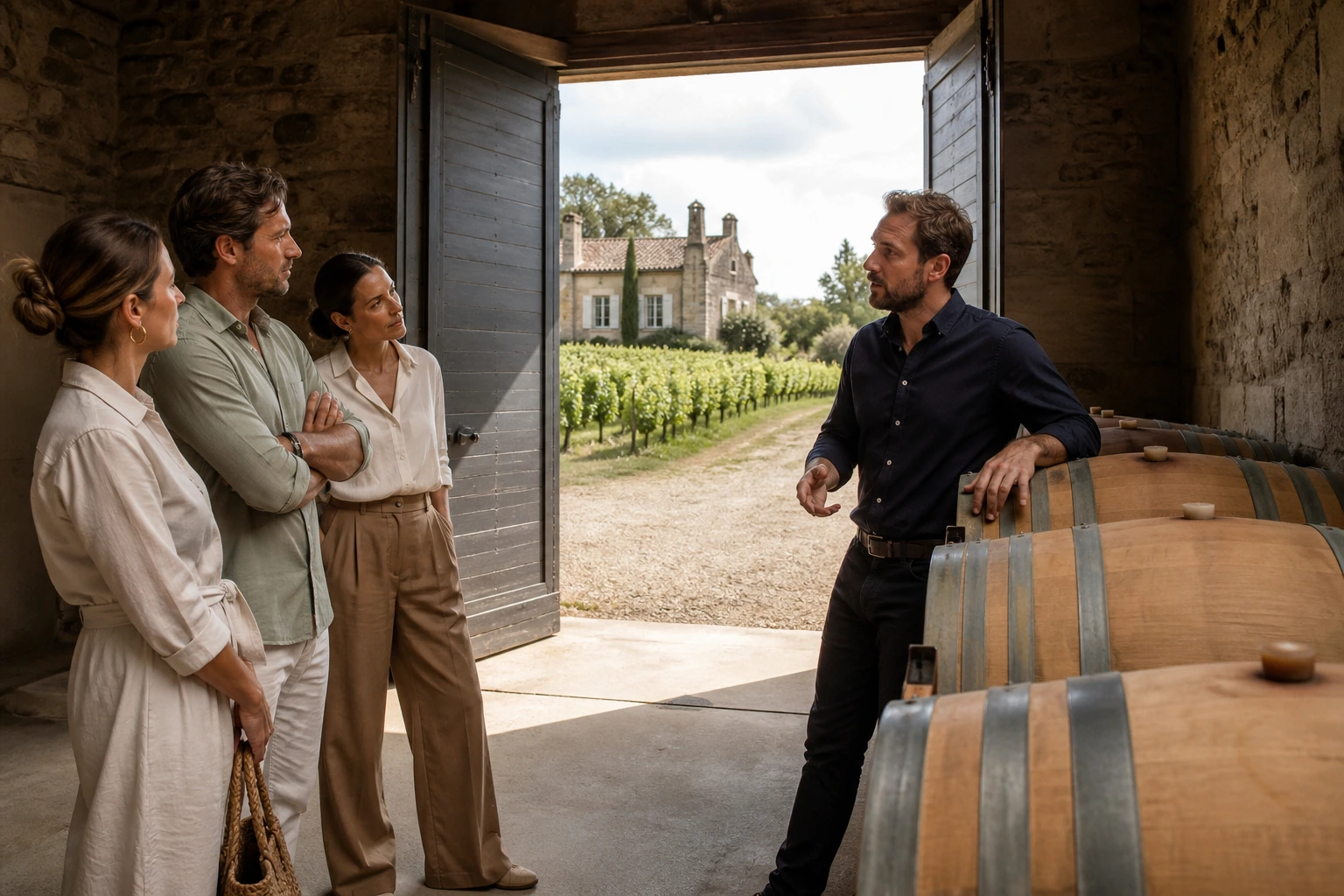
Bordeaux itself brings trade, food and urban life that a château corridor cannot explain. A thoughtful trip includes it deliberately rather than treating it as an airport or station.
Reading Bordeaux only as structured red wine misses dry whites and sweet wines with their own landscape and rhythm. That range deserves a proper day, not a hurried detour.
Collectors, curious return visitors and travellers who enjoy comparing and listening. It is less natural for those who want to drift without appointments, spend every afternoon by the pool or infer access from status.
Tuscany: wine through place and daily rhythm
Vines sit among villages, cypress, olive groves, churches and kitchens. That sensual unity is the region's advantage—and why an itinerary driven only by tastings feels impoverished.
Chianti Classico, Montalcino, Montepulciano and the coast do not form a convenient loop. Each can hold several days; stacking them gathers road miles rather than understanding.
The historic production zone links distinct elevations and communities. A journey improves when it reads topography and small towns as carefully as cellars.
Brunello appointments can be technically dense, and scattered estates require time. A calm base in or near the zone is better than a daily prestige excursion from far away.
Maritime influence, more contemporary architecture and different grapes contrast with the classic hills. It should be a distinct choice, not the final tick on an inland route.
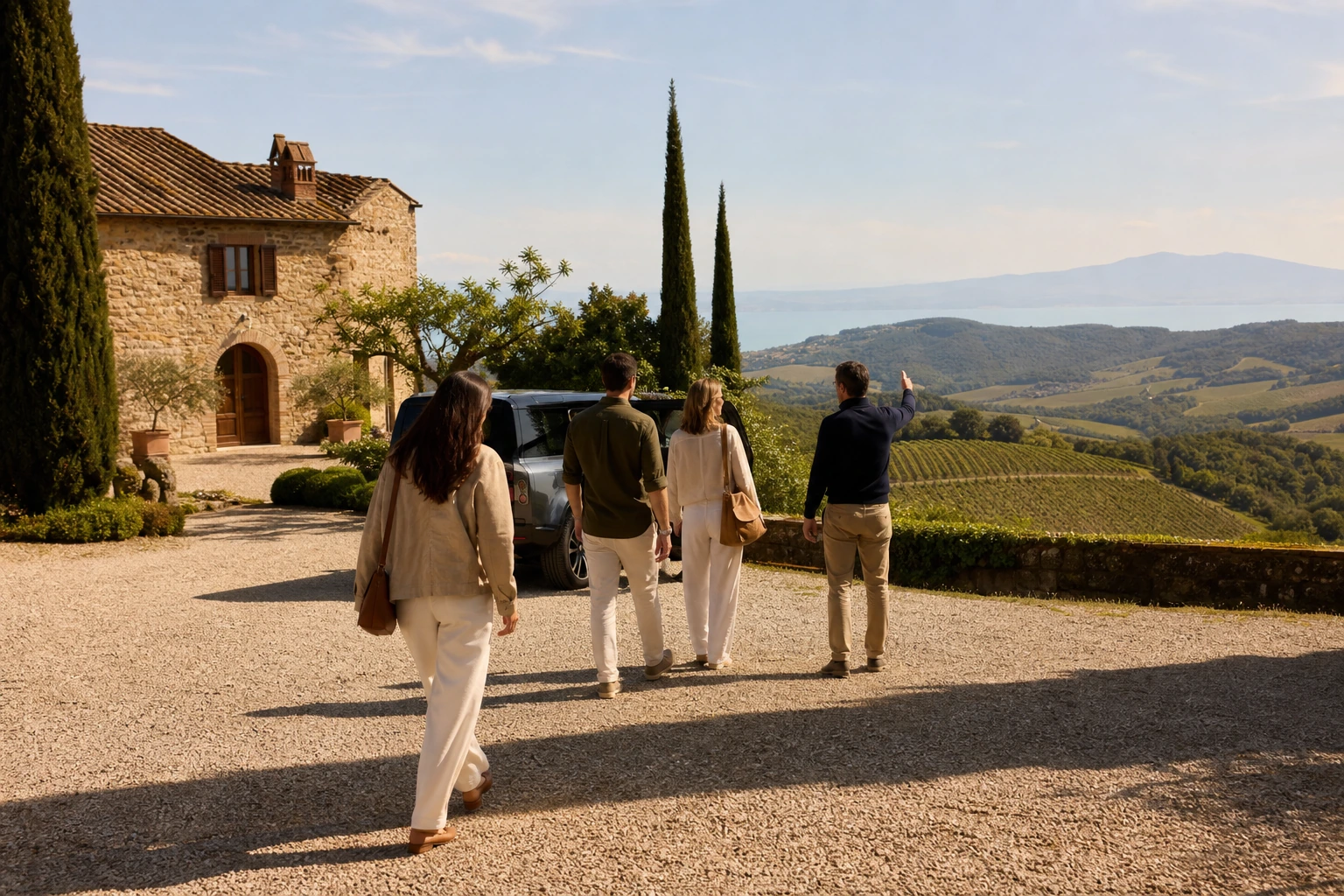
A trattoria, producer meal or long menu shapes the day as much as the cellar. Placing three tastings around a large lunch plans against the culture of the place.
Villa, borgo, wine estate and town house create different evenings and service patterns. Location, restaurant, driver access and tolerance for winding night roads matter more than the most photogenic view.
Couples, friends and multigenerational parties who want wine with food, art and slow residence. It is less suited to guests who need every visit standardised, every drive short and every evening urban.
Napa: compact, professionalised and cost-conscious
The valley looks simple on a map. Traffic, reserved windows and a huge range of products make selection more important than distance.
Intimate tastings, private cellar tours and clearly described experiences are central to the offer. Planning is easier, but it is also tempting to stack too many paid formats.
The official destination reports more than 400 wineries open for tasting and many urban tasting rooms. Choose by wine style, host, collecting interest and atmosphere—not social reach.
Tasting fees, private formats, drivers, restaurants and hotels can raise a day quickly. Purchase credits, cancellation, service charges and gratuities should be understood before the final stop.
Napa, Yountville, St Helena and Calistoga form a legible axis, but the road is not a private corridor. A base near the priority appointments prevents the chauffeur from simulating luxury in traffic.
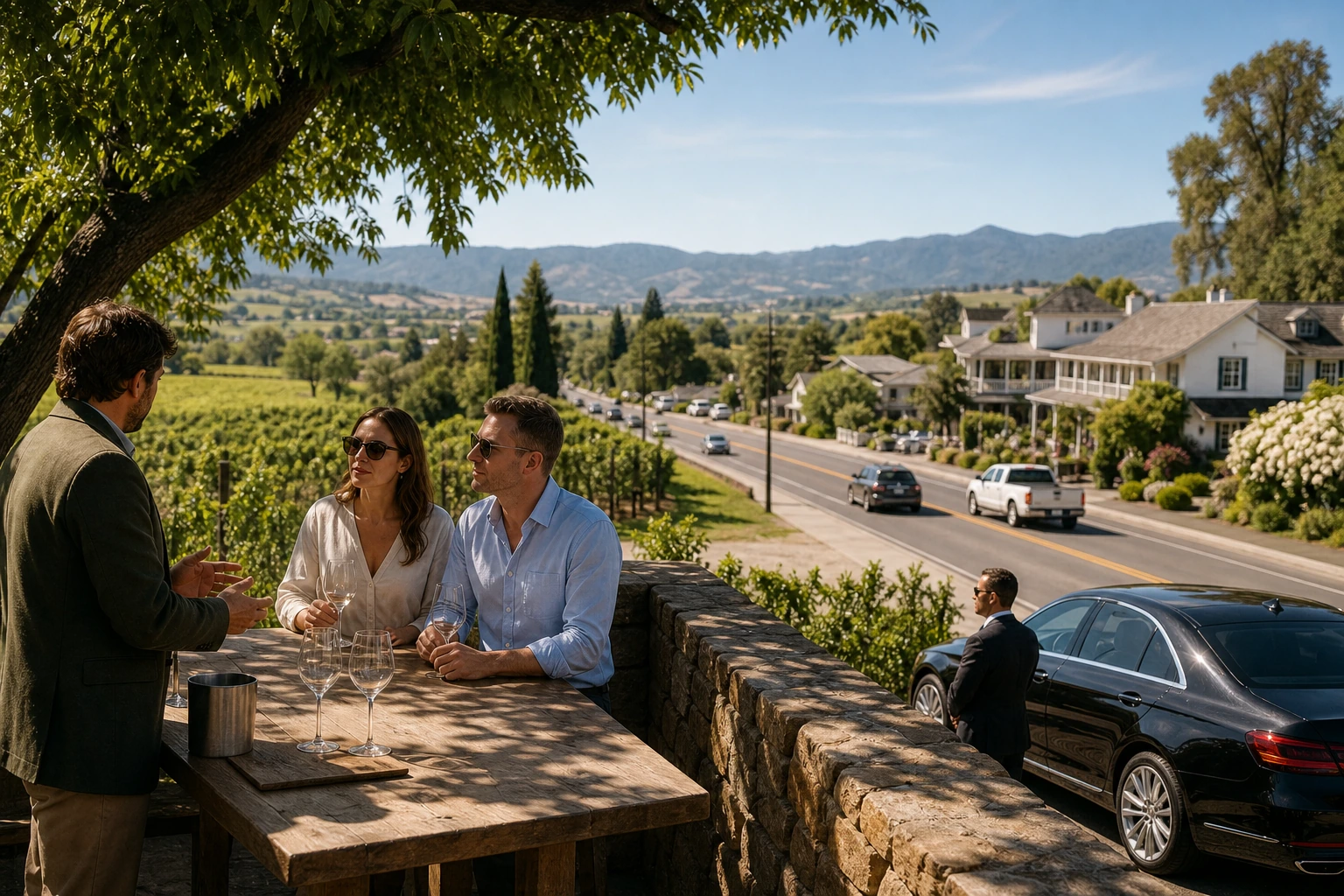
Napa can feel historic, agricultural, design-led or intensely staged. A mix of producer, cellar, landscape and hospitality matters more than repeating the same sequence at three famous addresses.
Restaurants and strong hotel kitchens can make Napa a culinary trip. Reservation times must fit long tastings; a major lunch changes the value of the afternoon appointment.
Travellers who value precise service, bookable formats, fine dining and concentrated geography. It is less ideal for spontaneous visitors, cost-sensitive groups or guests quickly fatigued by formal tastings.
South Africa: the widest story and the greatest distances
The Cape winelands stretch from coastal influence and mountain valleys far inland. The official origin system contains regions, districts and many smaller wards; “Franschhoek” alone cannot represent it.
Constantia lies close to the city, while Stellenbosch and Franschhoek justify their own stays. Urban culture and wine country combine elegantly when every zone is not reduced to a day trip.
University, research, historic estates and varied slopes create a deeper wine perspective. The town works as a living base, not merely a route label.
Landscape, hotels and restaurants form an accessible whole. That ease makes discipline essential: a handsome valley and a famous lunch do not replace producer curation.
Areas nearer the sea can show cooler influence and different varieties. Travellers with time discover a quieter second expression beyond the best-known valleys.
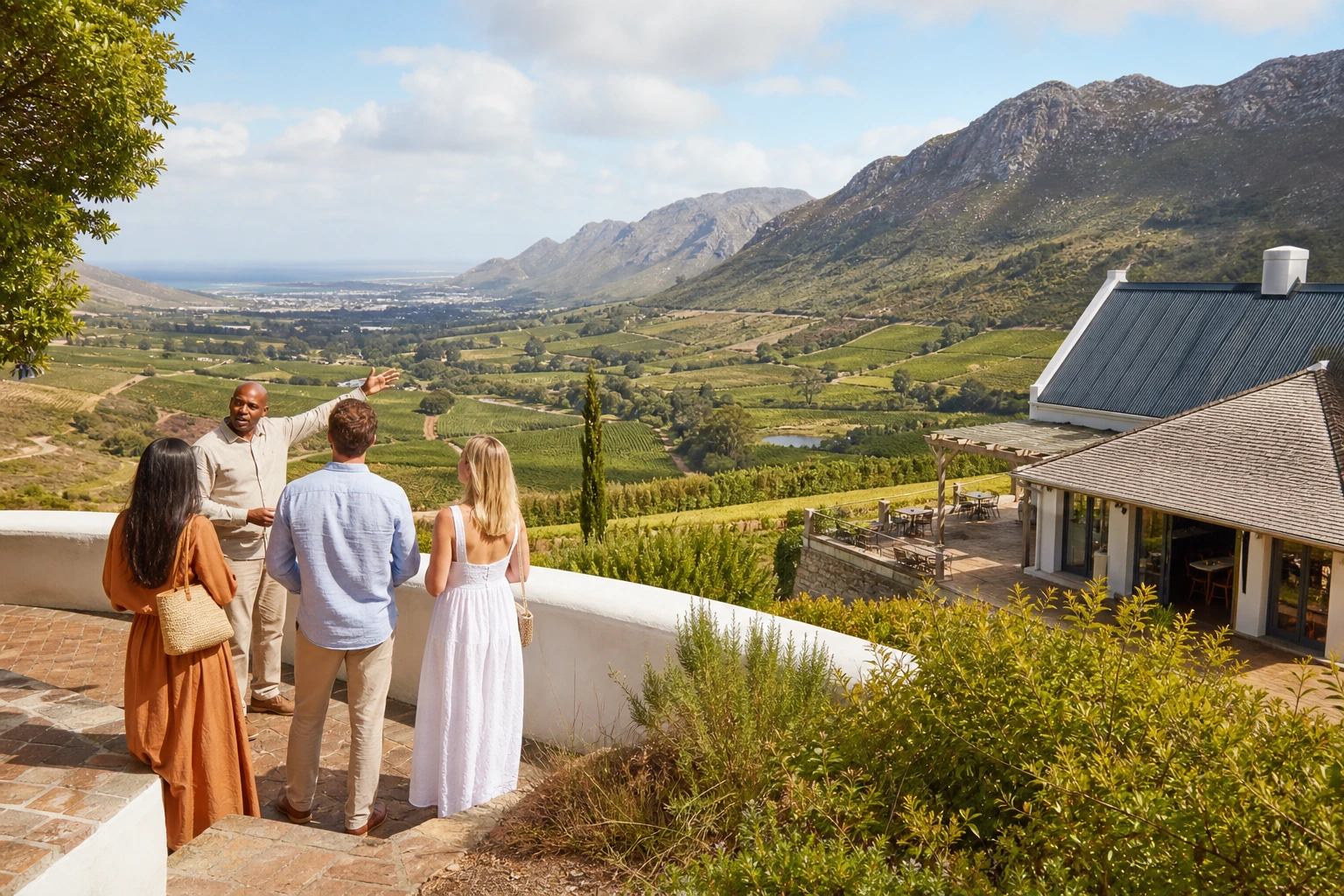
The South African winelands are not a compact theme park. A driver, two or three bases and firm editing are wiser than daily loops from Cape Town.
Food, accommodation and tastings may look attractive internationally, but currency is not a quality filter. Private transfers, leading properties, rare wines and long distances still require a full calculation.
Travellers wanting discovery, landscape, food and multiple wine styles, especially within a longer Cape itinerary. It is less suited to a short week attempting Cape Town, several valleys and distant parts of the country.
Four regions, four kinds of access, time and season
Bordeaux is relationship- and context-led; Tuscany more personal and place-bound; Napa productises many visitor formats; South Africa joins established estates with broad discovery. None should be judged by another region's service code.
Bordeaux and Tuscany reward several full days within one subregion. Napa can be read more compactly without being packed. South Africa improves markedly with extra nights and separate bases.
Spring and autumn can appeal in Europe, Napa has its own weather and harvest cycles, and South Africa is in the Southern Hemisphere. Heat, rain, fire, harvest work and access require a fresh check for the actual year.
Vintage can animate the landscape while placing teams, cellars and approaches under pressure. A visit is not better merely because grapes arrive; format and host still need confirmation.
Hotel, guide, chauffeur, buying and comparable cost
The best base cuts driving and carries the evening with good food, cellar and honest service. Famous properties are not universal winners; room, location and operating rhythm must fit the route.
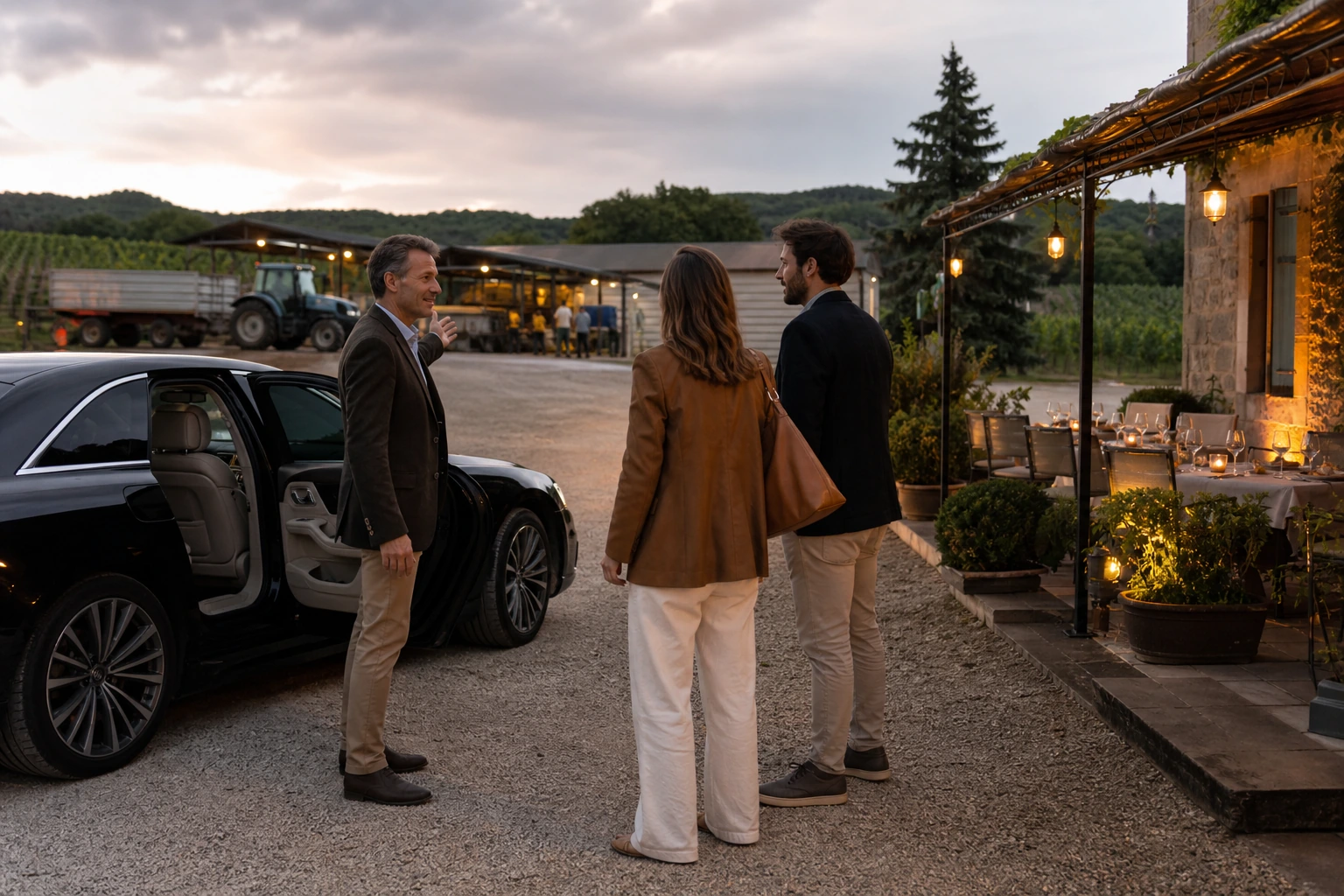
In Bordeaux a guide translates systems; in Tuscany, landscape and history; in Napa, producer styles; in South Africa, origin and social context. Expertise, language and independence deserve verification.
A driver protects time and road safety, not guests from alcohol's effects. MAG-191 addresses duty, vehicle, rests and bottle carriage in detail; here, regional route knowledge is the added criterion.
Direct sales, allocations, shipping and export vary by producer and country. Availability, price, tax, customs, insurance and temperature control require confirmation before purchase.
A daily budget includes lodging, chauffeur, guide, visits, lunch, dinner, fees, gratuity, shipping and cancellation. Only the complete figure compares Napa, Bordeaux, Tuscany and South Africa fairly.
The best combination is not automatically international
Two regions sound generous but may multiply airports and packing days. A week with two bases in one region often produces more depth than two countries receiving half the attention.
The deciding question
Do you want to understand a system, inhabit a landscape, experience a precise hospitality day or discover a wide wine world Bordeaux, Tuscany, Napa and South Africa answer one of those desires particularly well.
The verdict
Bordeaux is strongest for historical and vinous depth; Tuscany for wine joined to table and place; Napa for curated accessibility and gastronomy; South Africa for diversity and discovery. Luxury lies not in naming a winner, but in choosing the rhythm that fits the traveller.