
At a thermal hotel, the largest body of water rarely determines the best stay. What matters is who may enter when, how the room sits in relation to baths and plant, and whether the house rhythm suits the guest. A sound booking therefore reads the operating plan before it reads the spa menu.
The real product is written in the timetable
Two hotels may cite the same thermal source and deliver entirely different stays. One opens a quiet resident window before breakfast; the other admits day visitors at the same time. Treatments, cleaning, family periods and events alter the mood again. The useful comparison is not “how large?” but “which space, for whom, at what hour?”
The phrase can describe a hotel with its own spring, a property beside public baths, a multi-zone resort or simply a spa with heated water. Request a clear account of water origin, source-fed pools, treatment, temperature ranges and physical connection to the hotel. A name, logo or photograph of steam proves none of those details.
Water map, guest groups and rate
Ask for a plan separating thermal pools, conventional pools, saunas, steam rooms, relaxation spaces, treatment rooms and clinical zones. It should identify facilities that are included, reservable, age-restricted or public. “Thermal access” then becomes a testable service rather than an atmospheric phrase.
Hotel residents, day visitors, club members, local subscribers and participants in medical programmes may operate under different rules. Restaurant and event guests add movement through lobbies and lifts. Ask which group uses each zone and whether any priority exists. Bedroom count alone says little about density beside the water.
“Spa included” may mean one pool and the gym; sauna, resident-only floor or public thermal bath may cost extra. Check per person and night: admission, number of entries, robes, lockers, local cure tax, treatments and reserved windows. A higher rate can be better value when it secures the hours that actually matter.
Opening hours, maintenance and access days
A bath may operate from morning to late evening while offering residents an earlier entry or separate space. Conversely, some zones open later or require a treatment booking. Request the weekly schedule for the precise dates rather than a generic brochure. Holidays, private events and maintenance can change the pattern.
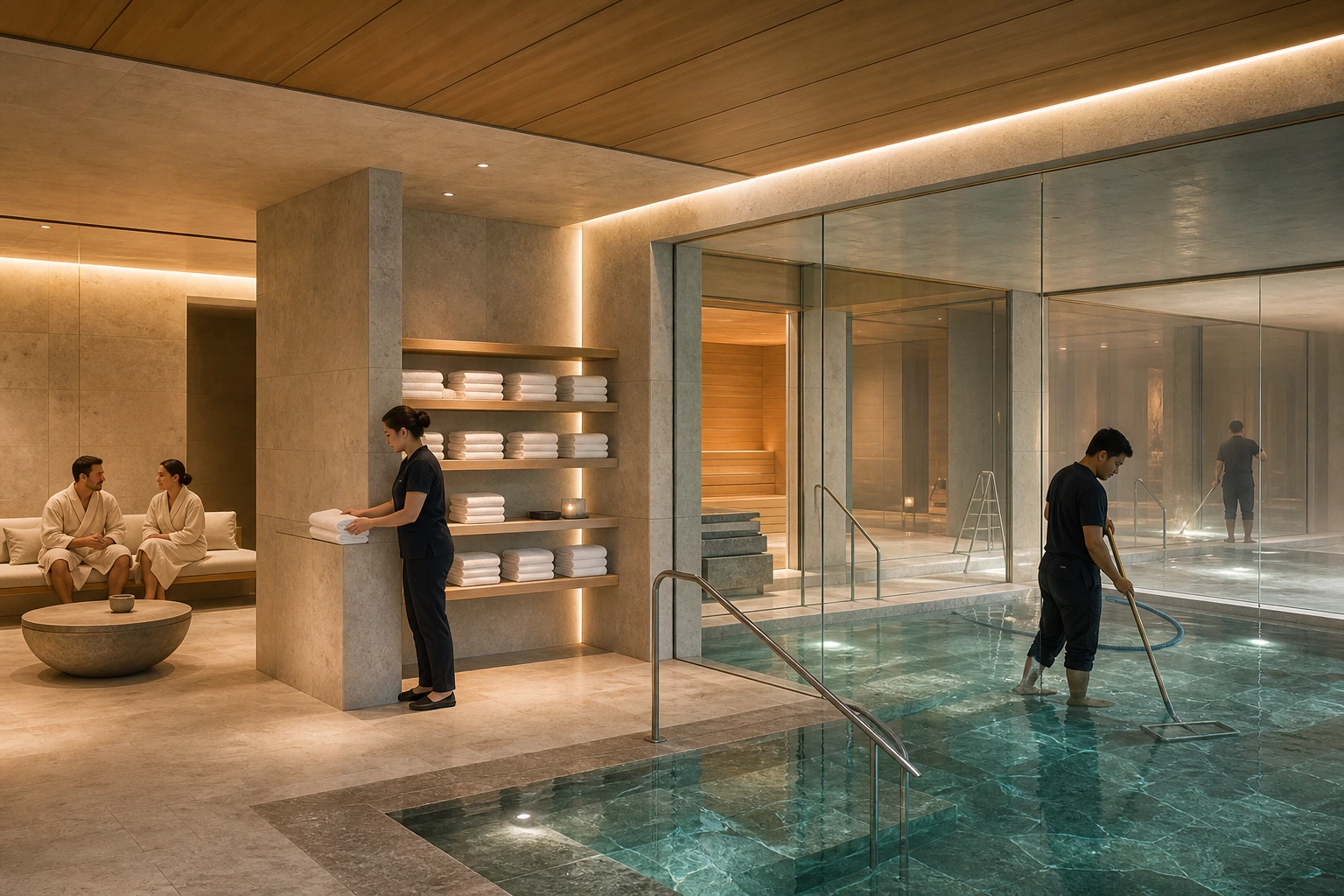
Early morning and late evening may provide the calmest water — if the booked rate genuinely includes them. Guests travelling for these windows should place breakfast, dinner and treatments around them. Sixty protected minutes can restore more than a full day in a busy principal pool.
Pool rotation, technical inspection, sauna rituals, overnight work and seasonal servicing are necessary but may close individual facilities. Ask about planned works and the alternative offered inside the property. A favourite pool being unavailable is material when it supplied the reason to book.
A 9 a.m. massage looks convenient until it occupies the quietest thermal window. Place bathing, meals and rest first, then add the few treatments worth keeping. Heat, bodywork and a rich meal need space between them. Individual suitability and dose belong with qualified health professionals.
May guests use the baths before the room is ready and after it has been released Where do luggage, valuables and dry clothes go Is there a proper changing room with shower and private locker These details decide whether arrival and departure become bathing days or hours spent waiting in the lobby.
Day guests, members, families and groups
A public thermal bath can be lively, local and architecturally important. A guest seeking retreat, however, must understand its flow. Online tickets, guaranteed entry and day-spa packages demonstrate external demand. Ask about typical peaks, capacity management and a protected relaxation space for residents.
Morning swimmers, rehabilitation groups and after-work users may not appear in weekend reviews. Staff know these rhythms. A good enquiry asks respectfully for quieter windows rather than treating local visitors as a problem. Authentic bathing culture and privacy can coexist when zones are managed intelligently.
Family periods affect changing rooms, restaurants, lifts and early dinner slots. A dedicated children’s area may ease pressure on the main pool; without one, use can concentrate. Families should verify minimum ages, depth, supervision, barriers and connecting rooms. Couples should ask for a genuinely quiet zone, not for children to be unwelcome.
Does the term cover the whole spa, one sauna, evening hours or simply a stated minimum age An adult-oriented hotel may share public baths with children; a family resort may contain an excellent silent adult floor. The label becomes useful only when zone, age, time and enforcement are set out in writing.
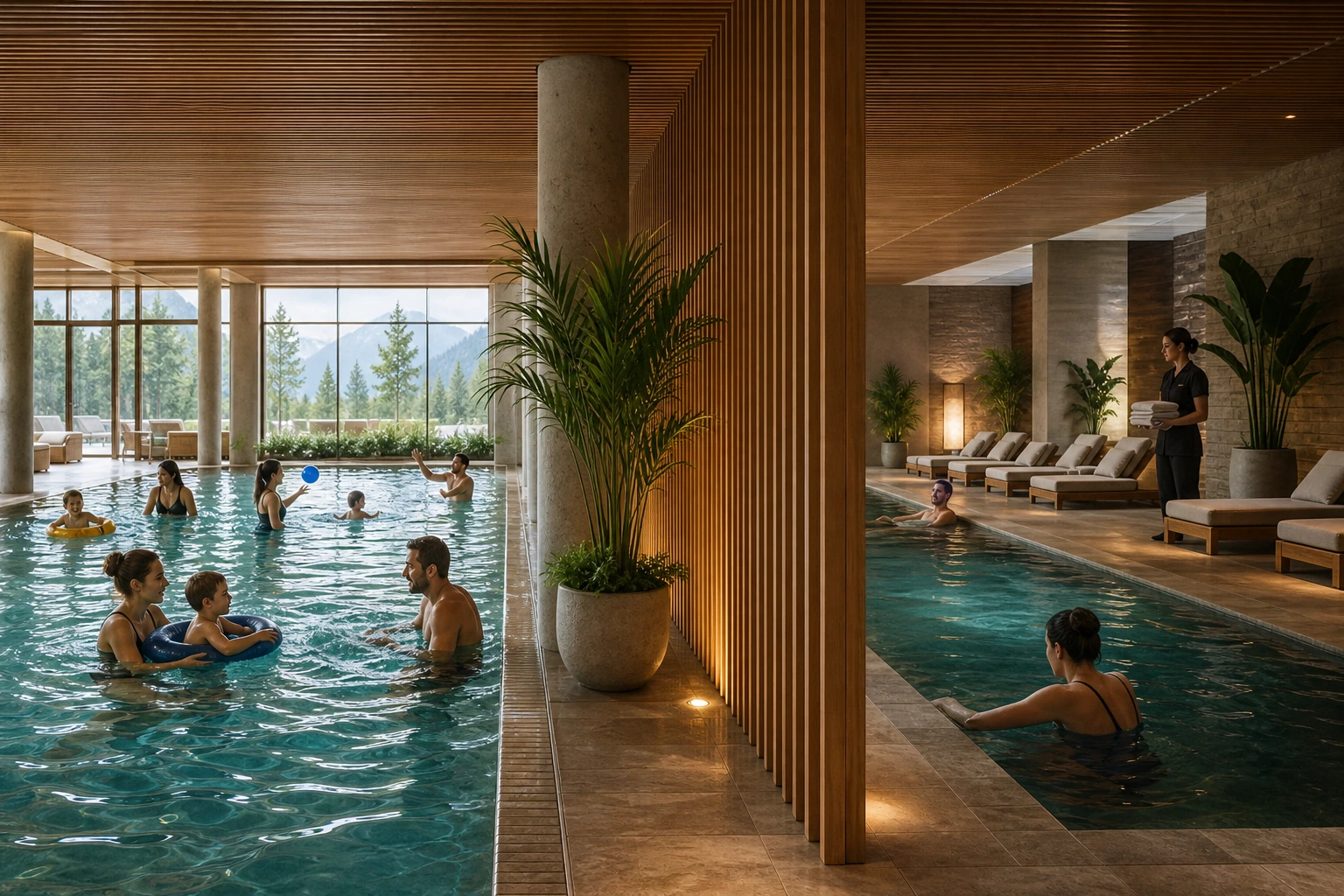
A retreat, wedding or company gathering can shift treatment availability, dining and circulation without formally closing the spa. Ask about large groups, private areas and evening events during the stay. The issue is not who the other guests are, but which spaces and hours will function differently.
Diagnostics, therapies and consultations often start early and require discretion; leisure travellers may prefer spontaneous bathing and a late breakfast. At a medically oriented property, clarify which areas are clinically managed, freely accessible or protected for confidential conversations. Hospitality and medicine may complement one another, but their language and accountability must not blur.
Textile-free saunas, swimsuits in pools, separated days, bathing caps and age limits belong to Europe’s varied bathing culture. They influence comfort and use more than many design features. Confirm the rule for every zone. Friends or partners should not discover on arrival that their expectations of modesty and bathing differ.
Room choice begins with the operating map
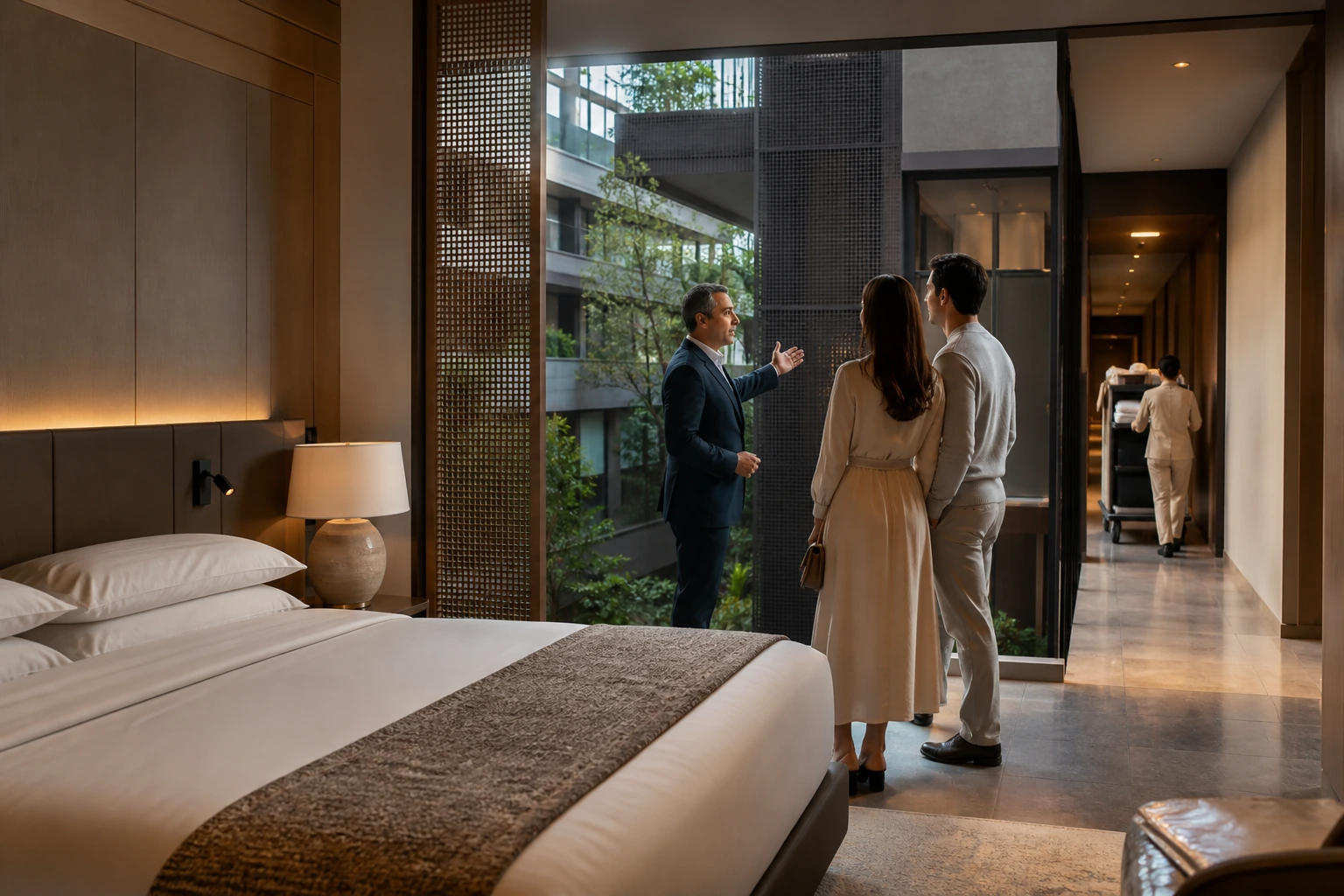
Do not ask only for “quiet” or “close to the spa”. Locate the room relative to pools, pumps, ventilation, lifts, linen, service corridors, restaurants, terraces and event rooms. Above, below and beside matter equally. The finest category in the wrong position can sleep less well than a smaller room in the right wing.
The short journey is appealing, yet plant, music, moving loungers, early cleaning or humid exhaust can make proximity less desirable. Ask what sits precisely beneath the room and when it operates. One extra floor or another wing may lengthen the robe route slightly and improve the night considerably.
Vibration, low frequency and intermittent cycling feel different from voices. Machine rooms, heat pumps, cooling and extraction can matter through substantial walls. The hotel should know where plant sits. “Soundproofed” is not a reliable promise without evidence about construction, position and operating hours.
Robes, towels, water, housekeeping and room service generate logistics. A bedroom beside a service lift may hear morning movement; one beside the guest lift receives robe traffic. Ask about doors, stores, delivery hours and the position of the headboard. Luxury often depends on routes that are managed so well they disappear.
Robe route, operating noise and building physics
An integrated hotel ideally connects room and changing area without street, public lobby or cold passage. Yet the shortest corridor may also be the busiest. Verify lift changes, steps, temperature, seating and an alternative route. For reduced mobility, the whole journey matters, not just its distance on a diagram.
Loungers are arranged, glass collected, music tested and sauna sessions announced. A water-view bedroom may purchase those sounds with the outlook. Ask when setup begins, events occur and the terrace closes. The view is right when the guest knowingly accepts its daily rhythm.
Thermal spaces produce heat and vapour; separation, dehumidification and controlled ventilation are decisive. In the bedroom, temperature, odour and condensation should remain manageable. Sensitive guests can ask about opening windows, climate control, allergy options and distance from extraction. None of this supports a general health claim.
Certain mineral profiles or treatment methods may be perceptible. Some guests read that as authenticity; others do not want it beside the bed. Ask whether odours reach rooms, corridors or textiles and whether an alternative wing exists. Personal tolerance matters more than an abstract judgement about what is “natural”.
A panorama can also face the pool, terrace, driveway or a public outlook; the rear may sit closer to delivery and plant. Test activity beyond each façade in morning, afternoon, evening and night. A real site plan says more than category names such as “Thermal View”.
The old building offers proportion, patina and centrality, but may bring steps, small lifts and long corridors. A new wing can be quieter, climatically steadier or better connected without sharing the atmosphere. Decide from the day’s movement and mobility needs. “Main building” is not always the most prestigious practical answer.
Accessibility, hygiene and individual heat load
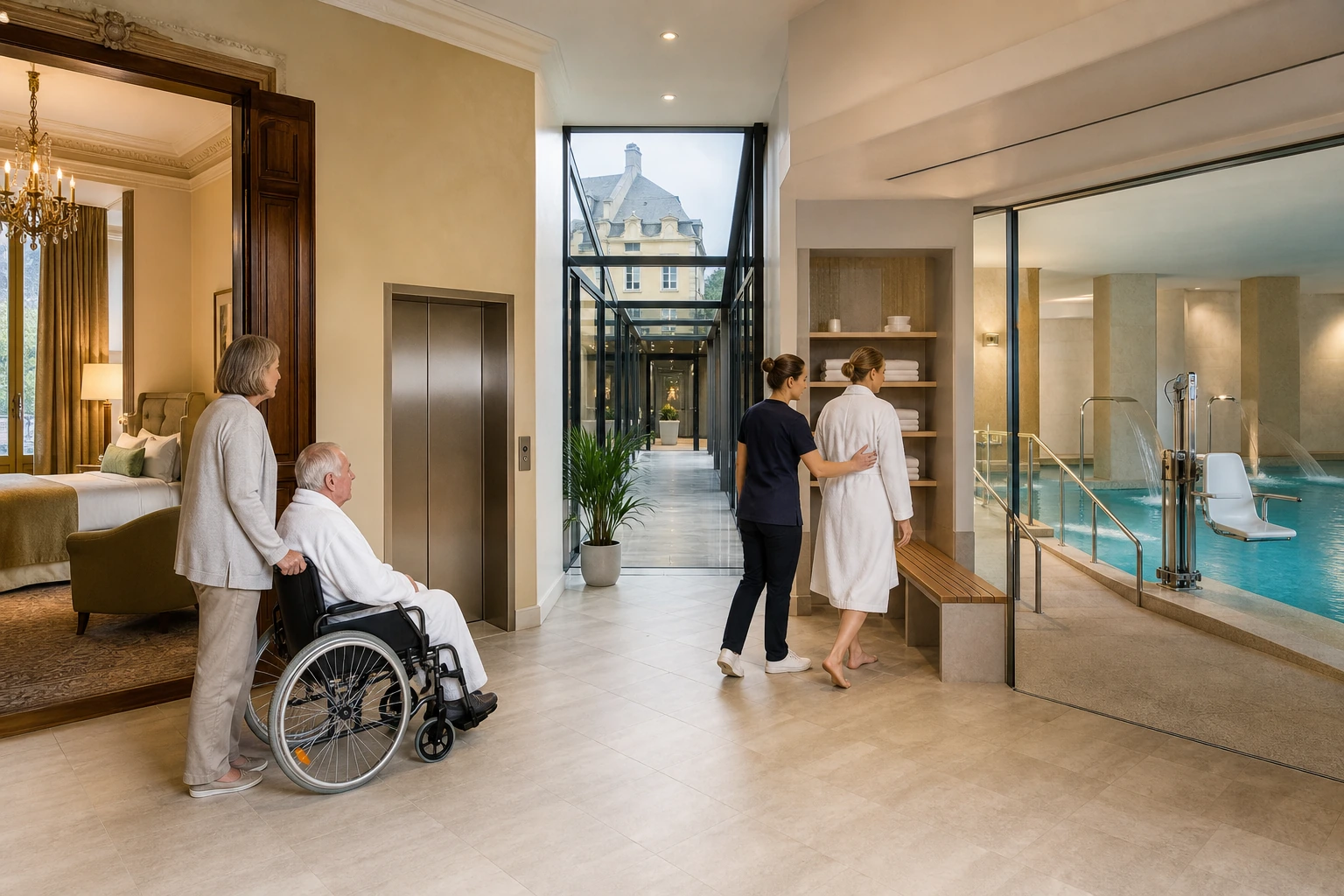
Door width, changing room, shower, non-slip surfaces, rails, pool entry, hoist, assistance and evacuation form one chain. Photographs and measurements are more useful than an icon. Qualified responsible parties must assess medical and safety suitability; no editorial checklist replaces individual coordination.
A serious operator can explain how water is monitored, treated and managed when readings fall outside requirements. Guests need not audit a laboratory, but may ask who is responsible and how closures are communicated. Visible cleanliness alone does not prove water quality; a pronounced fragrance does not prove its absence.
Very warm water, steam, sauna and temperature contrast can be unsuitable with certain health conditions, pregnancy or medication. Qualified medical advice before travel and professional guidance on site take priority. Start conservatively, drink water and rest between sessions. This article offers no medical recommendation.
Six properties, six operating models
Its official presentation connects hotel, public thermal baths, day spa and SPA 3000, described as exclusive to hotel guests. Those layers must be read separately in the rate. Beyond the familiar outdoor bowls, verify access to the resident zone, guaranteed admission, family use and the route from the exact room — all for the current dates.
Grand Resort Bad Ragaz positions spa, thermal experiences and Tamina Health within a broad resort. The arrangement can reduce movement, but it requires a clean boundary between open leisure, reserved treatment and clinically accountable programme. Even a suite with a thermal-water feature does not establish which bathing areas or hours the room rate includes.
The Alpine Spa’s official material offers day-spa entrances and publishes its own rules. A spectacular pool may therefore host a different audience as the day changes. Residents should ask about entry windows, capacity, protected rest space and events. The view says nothing about social density.
Terme di Saturnia presents hotel offers with thermal access as well as a day spa. The practical question is which pools, loungers and times belong to the booked rate. Its outdoor source landscape also makes weather, shade and robe routes more important than at an entirely indoor spa.
At 7132, stone, light, acoustics and the relationship between hotel and baths shape the experience. That makes access for the exact room and rate especially important. A calm early or late window can reveal more than another treatment. Iconic architecture is not a promise of unlimited exclusivity.
Thermae Bath Spa is a public institution with its own tickets, hours, age limits and treatment rules; accommodation is selected separately. The model sharpens the question at integrated resorts too: proximity, inclusion and priority always need evidence. A thermal destination name transfers no admission right to a hotel reservation.
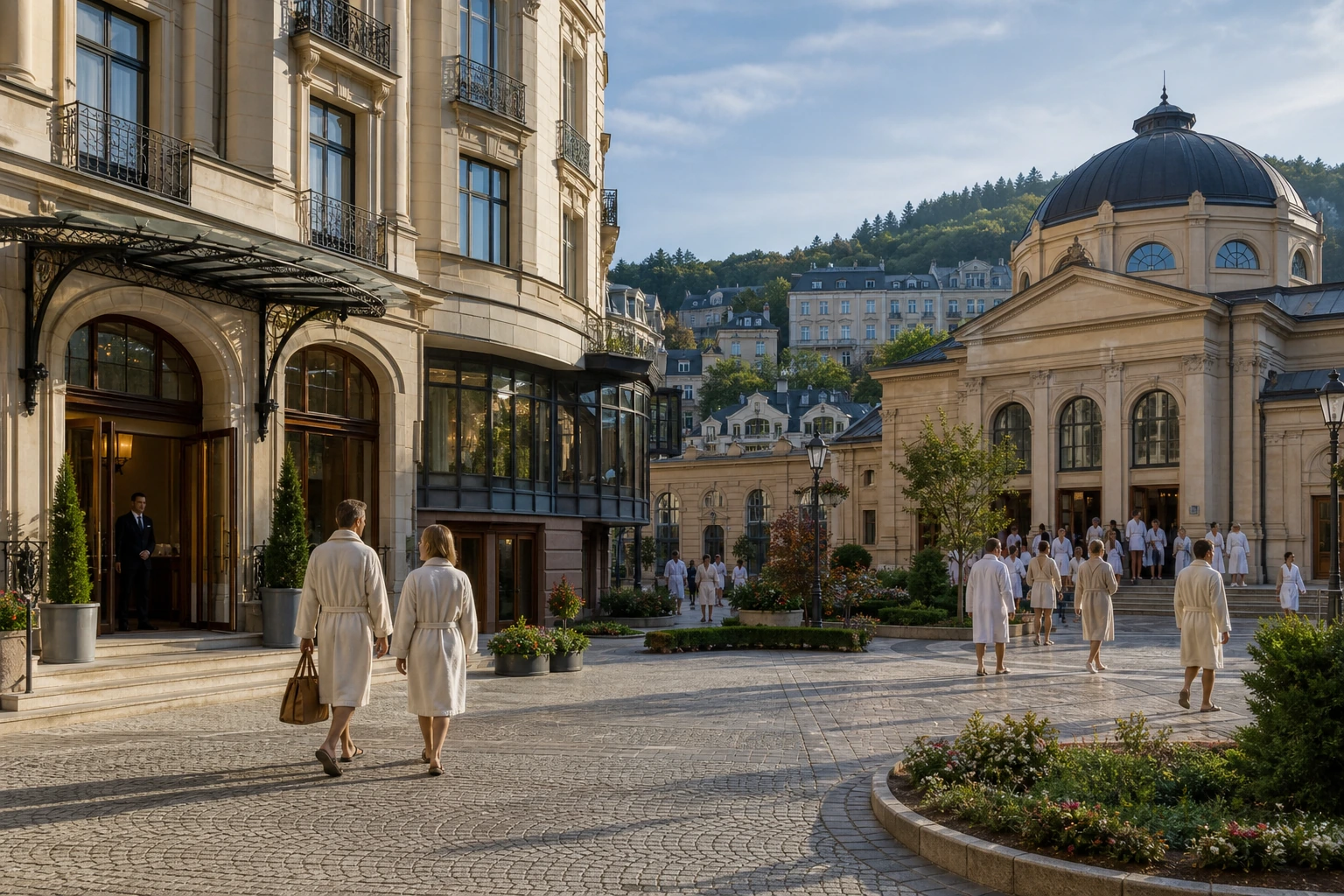
A 48-hour plan reveals the real product
Plot arrival, changing, first bath, dinner, early resident window, breakfast, treatment, rest, second bath and departure on one page. Add public peaks and closed facilities. If the plan already collides on paper, it will not become elegant on site. Remove appointments before replacing the hotel.
Ask for the current spa plan, weekly timetable, rate-inclusion list, room-position plan, and rules covering age, textiles, reservations and cancellation. Photographs of the robe route and exact distance or step counts add useful evidence. A precise courteous request usually earns a better answer than the single word “quiet”.
Add room, admission, exclusive zones, textiles, treatments, cure tax, transfers, parking and cancellation exposure. Then calculate how many desired bathing windows are genuinely usable. The nominally cheaper stay can cost more when calm access is extra or disappears on arrival and departure days.
Arrival requires orientation and one short bath. The first full day receives an early principal window and long rest. The next pairs landscape or a treatment with a second bath; departure remains light. Filling every slot confuses access with obligation. A medical programme, by contrast, follows accountable clinical planning.
Confirm the plan, inclusions, same-day closures and room position once more. Before unpacking, walk the robe route and listen in the room for plant, lifts and terrace activity. When a material difference appears, an early specific solution is easier than a general complaint after two poor nights.
The best thermal hotel aligns its operation with the guest
The longest treatment list does not decide the stay. Water, access, time, audience, room and individual tolerance must fit together. Once those six layers are clear, a lively public bath can be as rewarding as a private resident floor. Luxury here does not mean emptiness; it means a rhythm without avoidable friction.