Ryokan etiquette for travelers: onsen, dinner and rest need more than pretty pictures and big names. The actual decision lies in the route, timing, comfort, target group, costs and the question of which experience really suits the occasion.
Specific names are crucial for this topic: Ryokan, Onsen, Kaiseki, Yukata, Tatami, Hakone, Kyoto, Izu, Nikko, Privatonsen. They make the difference between inspiration and reliable travel planning. If you don't compare these points properly, you often book the best-known offer instead of the best solution.
Quick Facts on Ryokan Etiquette for Travelers
- Important names
- Ryokan, Onsen, Kaiseki, Yukata, Tatami, Hakone, Kyoto, Izu, Nikko, Privatonsen.
- Ideal duration
- So long that arrival, main moment and breaks don't work against each other.
- Planning focus
- Timing, location, convenience, cost, alternatives, target group and red lines.
- Before the request
- Which option suits the occasion, which is only known, and which alternative is quieter
Short answer to ryokan etiquette for travelers
Ryokan etiquette for travelers arises when Gion, guide, travel time, season and retreat all have the same rhythm.
Before availability, ryokan etiquette for travelers is first clarified which choice really carries: Gion, Higashiyama, Arashiyama and Aman Kyoto are read as hard filters for timing, location, cost and alternative.
The most important options in comparison
Onsen
Understand rules, washing, tattoos, nudity, rest and private bathrooms beforehand.
Kaiseki
Fixed times, seasonality, allergies and eating rhythms characterize the stay.
| Concrete choice in ryokan etiquette for travelers | When she wears | Better cross-check | Clarify before request |
|---|---|---|---|
| Gion as first choice | fits if the timing and access are in the desired week | Arashiyama is often the better choice logistically | Clarify season, transfer and cancellation before request |
| Higashiyama as a quieter alternative | strong for guests who want less visibility or less turnover | Aman Kyoto can offer more experience | Compare location, target group and daily rhythm |
| The Mitsui Kyoto with additional costs | makes sense if service really takes the strain off your day | Ritz-Carlton Kyoto is easily underestimated | Record costs, waiting times and responsibility in writing |
| Kaiseki as a risk | only accept if plan B is clear | Tea Ceremony needs reserves | Set cutoff point, weather or delay plan |
The offer should specifically mention Gion, Higashiyama, Arashiyama, Aman Kyoto, The Mitsui Kyoto, Ritz-Carlton Kyoto, Kaiseki, Tea Ceremony. When it comes to ryokan etiquette for travelers, it's the quiet cross-check that counts: Gion, Higashiyama, Arashiyama, cost framework and plan B must be supported together before the request.
Room is the alternative that many travelers only consider late. Check tatami, futon or western bed, private onsen, view and level of service. Etiquette, on the other hand, requires different planning: shoes, yukata, volume, tips and behavior in the bathroom are important.
Route also belongs in the comparison. Ryokan goes well with Hakone, Izu, Kyoto area, Nikko or Kinosaki. This breadth does not make the decision any more complicated. It makes them more honest.

Best for / not ideal
Particularly suitable for
- Travelers to Japan who are looking for peace, ritual and regional cuisine.
- Couples, cultural travelers and guests interested in onsen.
- Routes that balance city energy with retreat.
Less ideal for
- Guests who expect flexible dinner times and western hotel routine.
- Travelers with strong onsen inhibitions without a private bath.
- Very short stops with no time to arrive.
Timing, season and process
Timing changes quality greatly. A good date can have more value than a higher category. Availability, weather, local events, daylight, transfer window and target group must be read together.
The first day should remain soft. The main moment belongs in the middle of the journey. The last day needs air. When everything is trimmed for efficiency, even a very expensive experience loses its lightness.
The fuller the bar, the better the travel idea works.
Costs, incidentals and limits on ryokan etiquette for travelers
The visible price is only part. Costs arise for category, transfers, private setups, guides, service, tips, cancellation, additional nights, insurance and last-minute changes. Good planning makes these points visible before they become unpleasant.
A cheaper offer may end up being weaker if it contains too little buffer, less comfort or a worse location. Conversely, not every upgrade makes sense. The best value lies where money creates noticeably better travel quality.

Typical mistakes
The first mistake is booking according to myth. The second is too little time. The third is a category that sounds better on paper, but doesn't have the right impact on the ground. The fourth is a lack of plan B.

A good briefing identifies the reason, pace, comfort requirements, red lines and the alternative that is deliberately not chosen. Only then does a nice idea become a recommendation that has local impact.
Specific test questions
Which option suits the occasion best Which alternative is quieter Where are additional costs incurred Which target group shapes the experience How long does the trip have to be so that it doesn't seem rushed Which decision should be made before making the request
These questions are at the core of a premium level article. They turn a beautiful topic into a decision-making aid.
Air Route: Ryokan Etiquette for Travelers
Ryokan etiquette for travelers wins through rhythm. Gion, Higashiyama, Arashiyama and Aman Kyoto need travel times, guides, daylight and breaks. Too many stops turn a private trip into a list.
Local Rules: Ryokan etiquette for travelers
When it comes to ryokan etiquette for travelers, luxury does not mean isolation, but rather the right access at the right time: Gion, Higashiyama and Arashiyama need tact, not speed.
Hotel as Anchor: Ryokan Etiquette for Travelers
The right foundation in ryokan etiquette for travelers saves energy every day. Location, view, service culture and return point are more important than a famous name when Gion and Higashiyama bring a lot of impressions anyway.
Guide and Access: Ryokan etiquette for travelers
When it comes to ryokan etiquette for travelers, a strong guide decides whether places are just seen or understood. Gion and Higashiyama in particular need people who adapt the pace, language and depth to the guest.
Less is often better: ryokan etiquette for travelers
Ryokan etiquette for travelers should be consciously avoided. A boisterous place can create more quality if it makes The Mitsui Kyoto, Ritz-Carlton Kyoto or a quiet evening really work.
Information Needed Before Inquiry: Ryokan Etiquette for Travelers
Before inquiring about ryokan etiquette for travelers, we need to know trip length, pace, comfort limits, climate, travel time tolerance and priorities; Only then can Gion, Higashiyama and Arashiyama be meaningfully weighted.
What ryokan etiquette honestly needs to remain open to travelers
A good proposal respects these boundaries and, for ryokan etiquette for travelers, builds a route in which Gion, Higashiyama and Arashiyama do not feel crowded.
The better alternative to ryokan etiquette for travelers
When it comes to ryokan etiquette for travelers, one more night at Gion or Higashiyama can be more powerful than one extra stop. A missed program item can make the trip luxurious.
For ryokan etiquette for travelers: onsen, dinner and rest, we would only confirm Gion once Higashiyama, Arashiyama, cost logic, cancellation and a real plan B are checked. The better solution here is often not bigger, but more precise: fewer changes, clearer responsibilities and an alternative to Aman Kyoto if the timing, audience or journey are not right.
In Ryokan Etiquette for Travelers: Onsen, Dinner and Rest, we read Gion, Higashiyama, Arashiyama and Aman Kyoto against the specific week of travel: arrival, daily rhythm, target group, additional costs and the alternative that makes less work for the guest on site.
When ryokan etiquette is not recommended for travelers
Ryokan etiquette for travelers: onsen, dinner and rest should only be confirmed once Gion, Higashiyama, costs, timing and the realistic alternative are clarified.
- Travel times, daylight, guide, opening times or permits are only roughly planned
- Too many places are squeezed into too few days
- the most famous hotel is chosen, even though the location, route or retreat speak against it
Advisor Note on Ryokan Etiquette for Travelers
At Ryokan Etiquette for Travelers: Onsen, Dinner and Quietness, we check Gion, Higashiyama, Arashiyama, Aman Kyoto, costs, timing and the quieter alternative before making a specific request.
Ryokan etiquette checklist for travelers
- Which specific option is the favorite and why
- Which alternative would be quieter, more private or more logistically sensible?
- Which category or route makes sense, not just expensive
- Which additional costs must be visible in advance
- Which red lines must not be violated on site

How we specifically check ryokan etiquette for travelers
What we check before confirming: At Ryokan Etiquette for Travelers: Onsen, Dinner and Rest, we check Gion, Higashiyama, Arashiyama, Aman Kyoto, arrival time, target audience, service routes and the quieter alternative before confirming a category or route.
Only then is ryokan etiquette for travelers specifically requested: with Gion, Higashiyama, suitable category, realistic budget and an alternative that works more quietly on site.
What should be clear before the commitment
Before accepting, the date, duration, category, cancellation, additional costs, transfer logic, daily rhythm and responsibilities should be clear. Equally important is the question of who decides on site when the weather, availability or mood changes.
A good offer is convincing even without pictures. If the process, limits, alternatives and costs are clear, it has substance.

Arrival at the ryokan
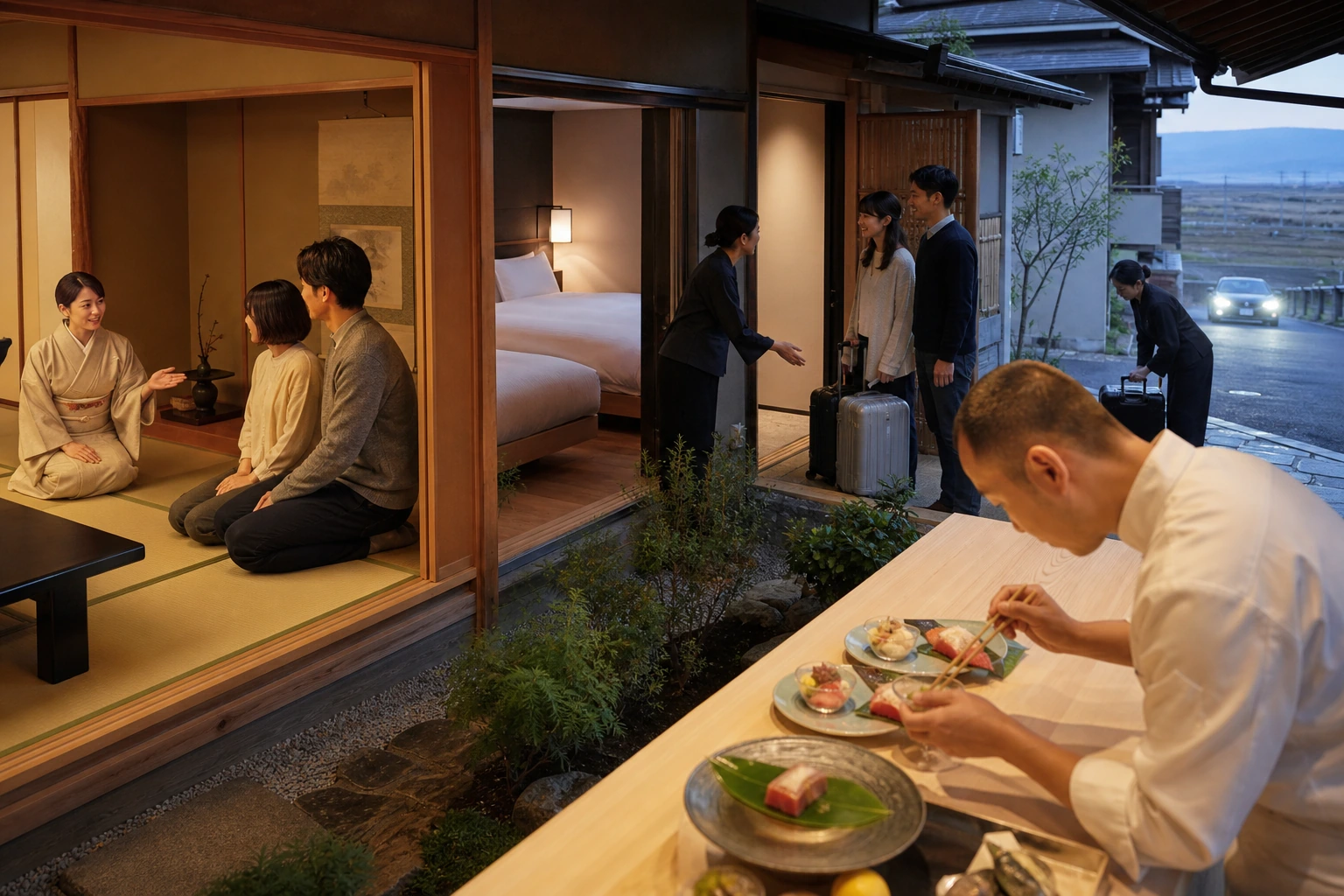
A ryokan should not be reached late in the evening. Check-in, tea, bath, yukata and dinner follow a rhythm.
If you arrive rushed, you will miss half of the experience.
Onsen without uncertainty
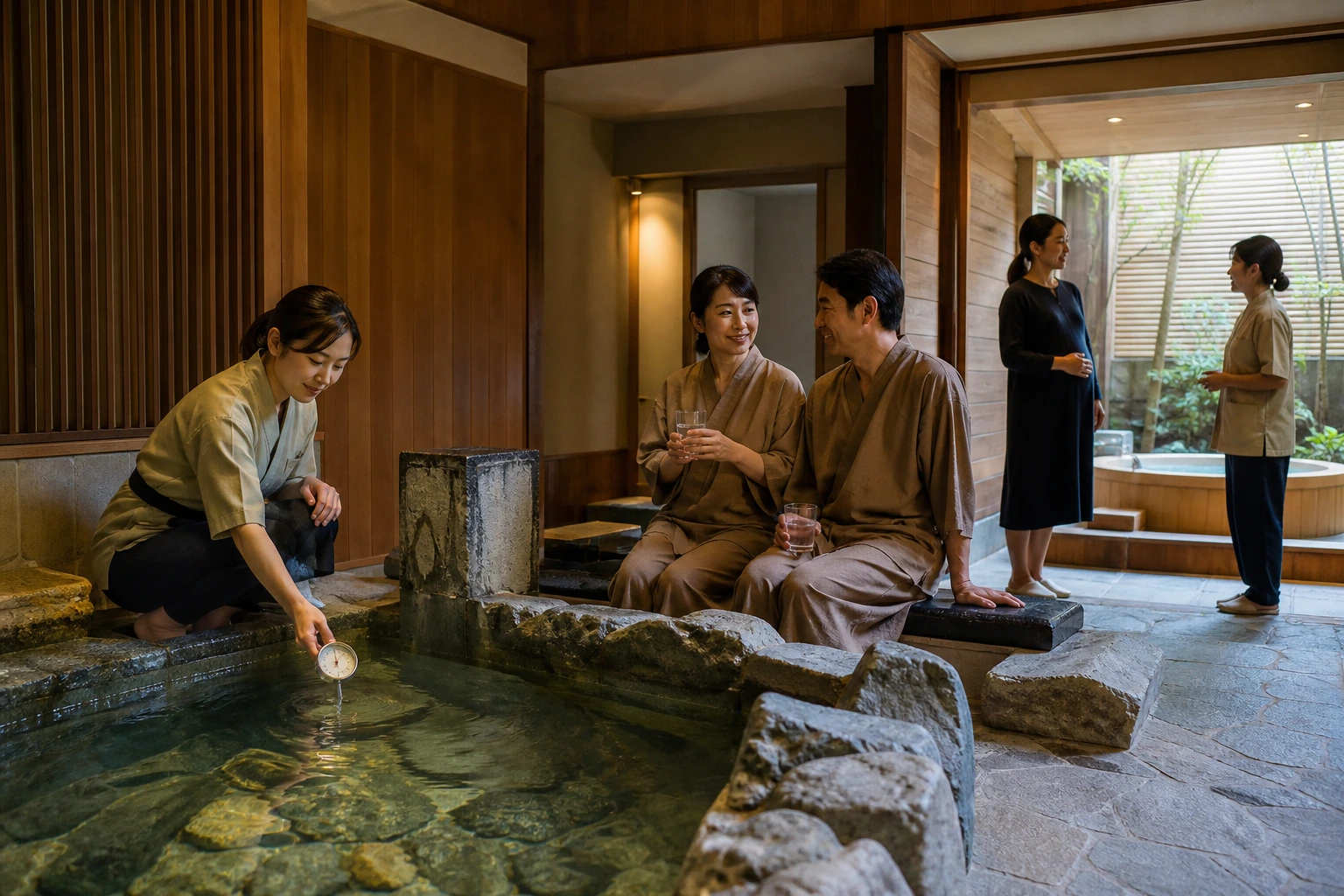
Wash thoroughly before taking a bath. There is no swimming in the water. Towels do not belong in the pool. Rest is part of etiquette.
If you feel uncomfortable, you should choose a room with private onsen.
Understanding Kaiseki
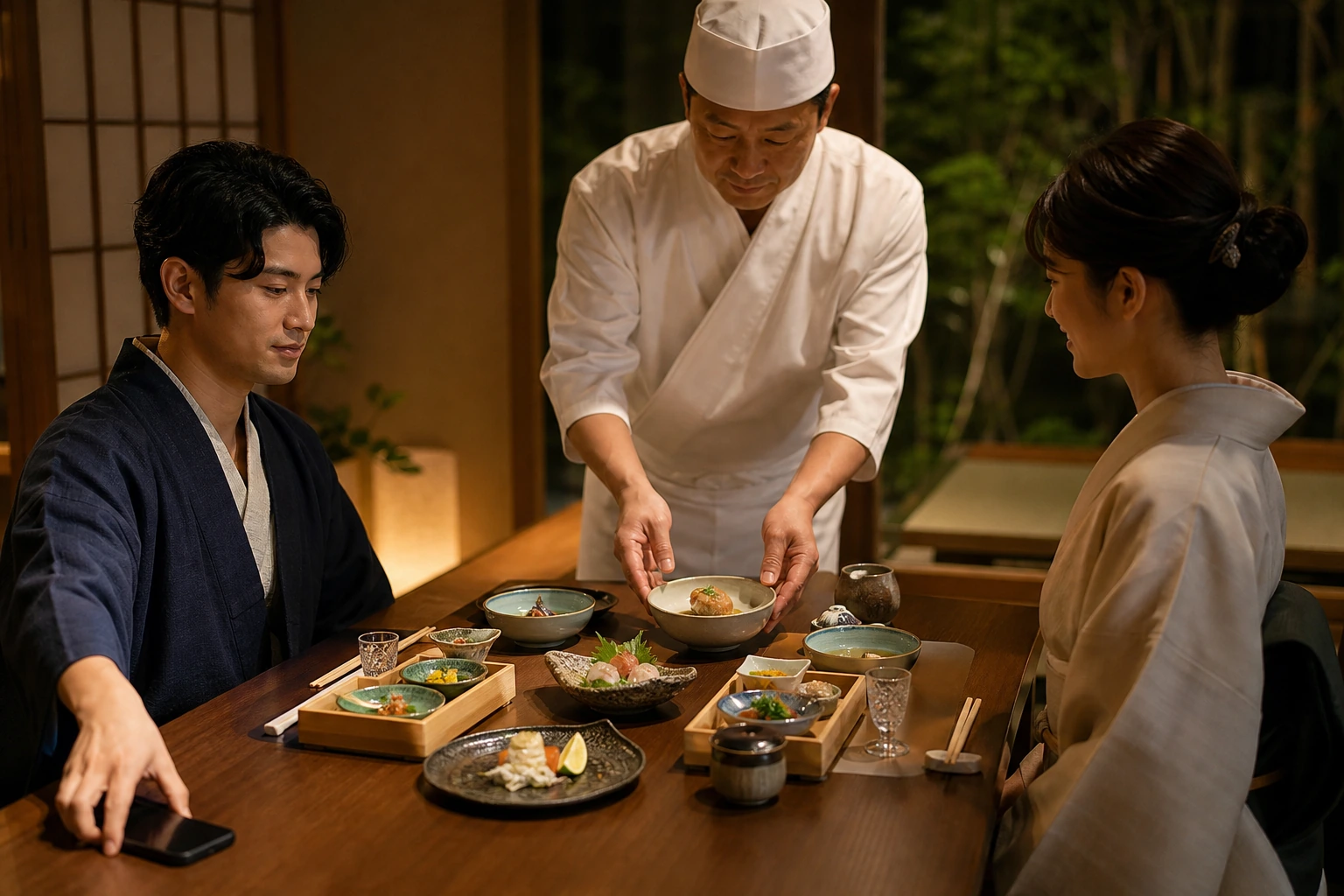
Kaiseki is not a menu, but a seasonal dramaturgy. Allergies must be mentioned early.
Spontaneous changes are more difficult in a ryokan than in a city hotel.

When is a ryokan worth it?
A ryokan is worth it if you're willing to slow down. It is not a hotel with Japanese decoration. It is a house with rhythm, rules and quiet hospitality. If you're just looking for a bed, it's better to book a city hotel.
A ryokan becomes strong after days in Tokyo, Kyoto or Osaka. Then tatami, onsen, tea and an early dinner seem like a different rhythm. Two nights are ideal. A night can be nice, but it is often too short.
Which type of ryokan should you book?
There are classic houses with tatami, futon and shared onsen. There are modern ryokan with beds, private baths and more English service. There are small, very quiet houses and larger onsen resorts with more activity.
The right choice depends on experience, sense of shame, tattoos, mobility, eating habits and desired rest. For your first trip to Japan, a room with a private onsen is often wise. It takes the pressure off the etiquette and still allows closeness to the ritual.
Onsen, tattoos and privacy
Onsen rules should be clarified before booking. Some houses allow tattoos, some only covered, some not at all in the public bathroom. A private bathroom in the room or a reservable family bathroom solves many uncertainties.

The temperature is also important. Onsen water can be very hot. Guests with circulatory problems should start slowly, bathe briefly and drink enough. Luxury here does not mean exaggeration. It means taking your own body seriously.
Dinner time and day planning
Kaiseki often begins earlier than European guests expect. Anyone who is still out and about at 7:30 p.m. will miss the rhythm. Arrival days should therefore not be overloaded with temples, shopping and long transfers.
It's best to arrive in the afternoon. Tea, room, bath, rest, dinner. After that the evening remains silent. It is precisely this simplicity that is the value. If you're still looking for a bar, music and city life, you've probably chosen the wrong place.
Room location and sleep
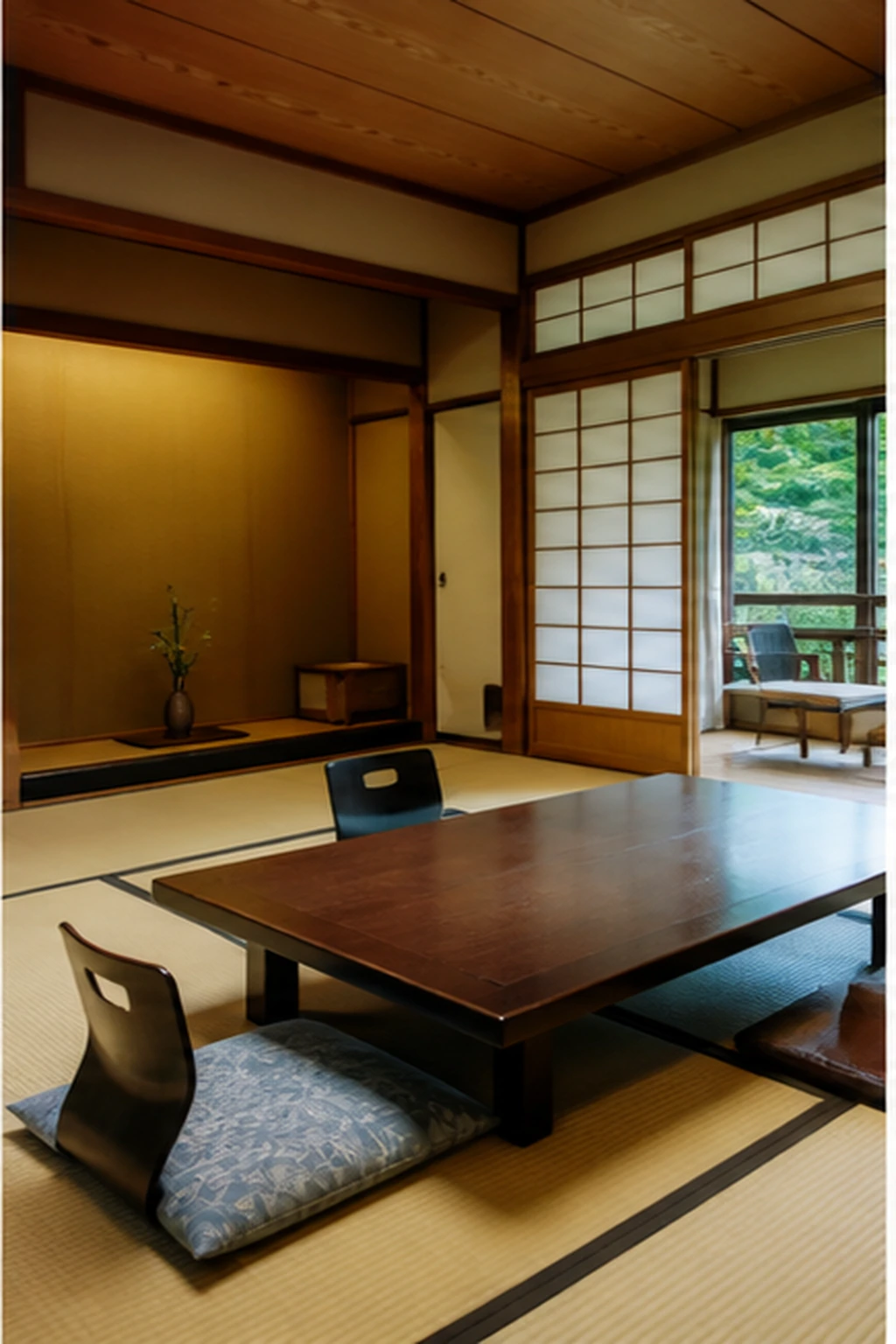
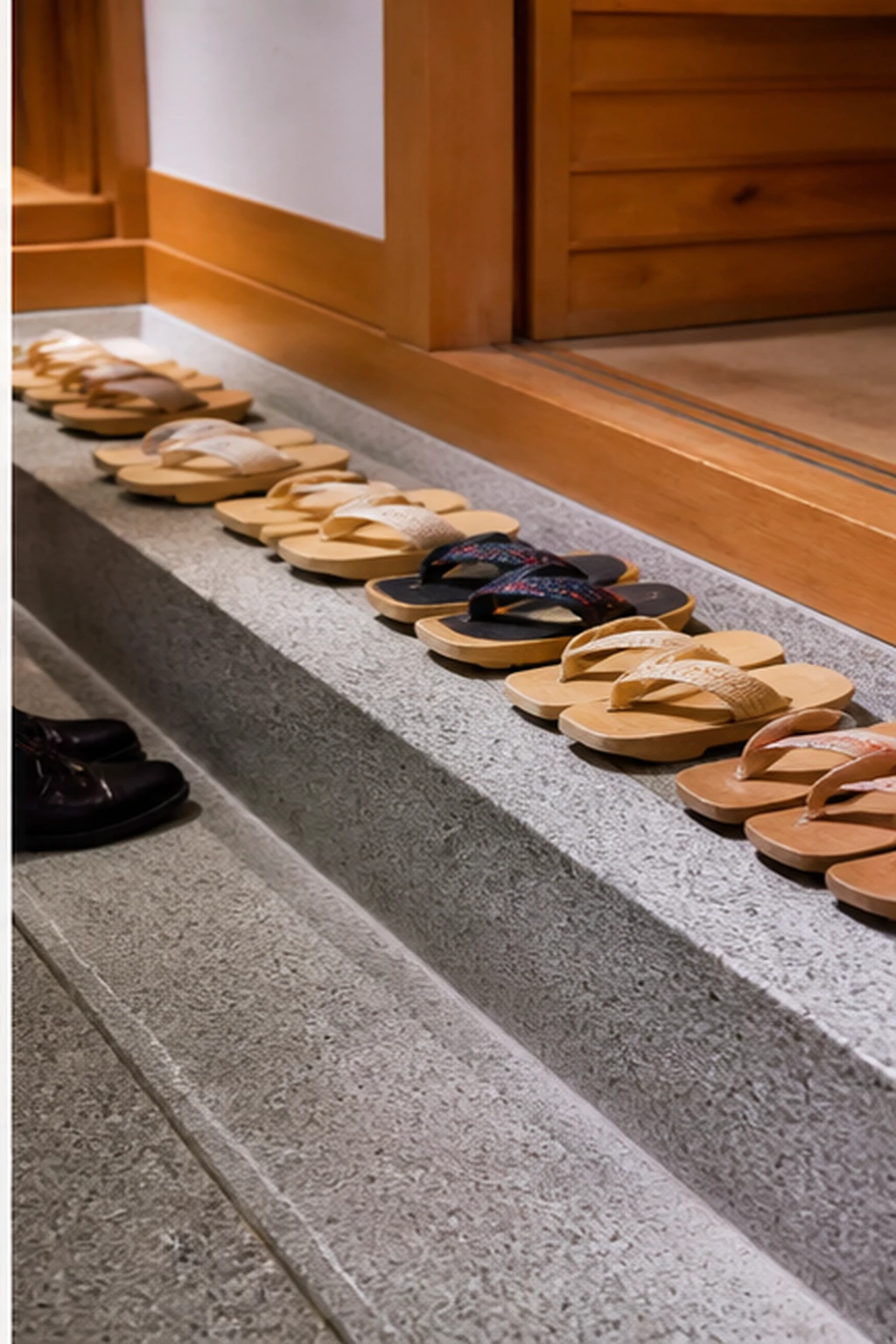
Tatami rooms are delicate. Shoes stay outside. Suitcases should not be dragged carelessly over mats. Futon sleep is wonderful for some guests, but unusual for others. Modern ryokan therefore often offer Western beds in Japanese rooms.
Rooms with a garden view are usually quieter. Rooms near the bathroom, lobby or service routes may be more practical but less quiet. For older guests, the route to the bathroom is more important than the perfect view.

What costs extra?
Many ryokan prices include dinner and breakfast. Extras can include drinks, premium sake, private baths, transfers, massage, special kaiseki ingredients and late check-out. Taxi costs to the train station should also be budgeted for.

In very good houses the price is not just the room price. It includes kitchen, staff, bathroom maintenance, garden, silence and a lot of invisible preparation. Anyone who only compares by square meter is misunderstanding the product.
Which target group fits
A ryokan suits travelers who can observe. Couples, quiet families with older children, cultural travelers and guests with a sense of ritual benefit particularly. It can be difficult for small children, loud groups or very spontaneous guests.
Honeymooners should also choose carefully. A classic ryokan can be romantic but also austere. A modern house with private onsen, good English and nice suite can be more relaxing.
Common mistakes
The most common mistake is arriving late. The second is an unreported dietary desire. The third is incorrect behavior in the bathroom. The fourth is too much baggage. Small houses often have little space.

Photos also need tact. Not every detail needs to be documented. In a good ryokan, discretion is part of the experience. Those who respect them get more in return.
The quieter alternative to ryokan etiquette for travelers
Not every Japanese experience has to be in Hakone. Kaga Onsen, Izu, Gero, Beppu, Kinosaki, Arima or small houses around Kyoto may be a better fit depending on the route. Famous places are convenient, but not always quiet.
The quieter choice is often a house that has less international names but is precisely managed. Japan feels less on display there.
How to add the ryokan to the route
The ryokan should not be sandwiched between two hectic travel days. It's ideal after Kyoto or Tokyo when your head is full and your body needs rest. After that you can go back to the city, art or train journey.
If you are traveling with a lot of luggage, you should have bags sent in advance. Japan's luggage service makes this easy. This means you can arrive with little luggage and move around the house more respectfully.
Checklist before the request
- One or two nights make more sense for rhythm and recovery
- Does the room need a private onsen or western beds
- Are tattoos, allergies and food requests clarified in advance
- Does the dinner time match the transfer and daily schedule
- Is a well known location necessary or is a quieter onsen location better
Before a release Ryokan etiquette for travelers: onsen, dinner and rest We check Gion, Higashiyama, Arashiyama, Aman Kyoto and The Mitsui Kyoto not as decorative words, but against travel date, arrival time, cancellation, target group and budget. The decisive factor is whether Ritz-Carlton Kyoto really relieves the burden on site or just increases the name on offer.
Not ideal though Ryokan etiquette for travelers: Onsen, dinner and rest are only read as a prestige decision or Gion is chosen, Higashiyama does not bring a clear advantage for the daily rhythm or Arashiyama triggers additional costs that only become visible on site. Then Kaiseki or Tea Ceremony is often the more adult, calmer choice.
Read more about ryokan etiquette for travelers
Ryokan etiquette FAQ for travelers
What is the main ryokan mistake
Arrive too late. Ryokan stays follow fixed times. Check-in, bathroom and kaiseki need peace and quiet.
Do you have to bathe naked in the onsen?
In public onsen, usually yes. If you don't want that, you should choose a room with a private sauna or private bathroom.
Are tattoos allowed in the onsen?
That depends on the house. Check in advance. Some allow coverage, others private baths.
What do you wear in the ryokan?
Yukata or home clothes are common. Shoes remain outside or are changed.
Ryokan or luxury hotel
Ryokan for ritual, cuisine and retreat. Luxury hotel for flexibility, western beds and more urban infrastructure.
Conclusion on ryokan etiquette for travelers
Ryokan Etiquette for Travelers: Onsen, Dinner and Rest reaches premium level when the article not only describes but improves a decision. Concrete names, real alternatives, cost clarity, limits and a suitable next step are mandatory.