Deluxetargets × Virgin Galactic

Virgin Galactic Flight to Space

Your journey to becoming an astronaut starts now.

750,000 USDLimited places available

Guide for future astronauts

From the runway to space—and back.

A Virgin Galactic flight is no ordinary journey from A to B. It is the culmination of an experience that begins long before take-off in New Mexico: with the decision to leave the familiar horizon behind, with personal preparation and with the question of how to take in a moment unlike almost anything in everyday life.

On flight day, the SpaceShip does not lift off from the tip of a rocket. It is carried beneath a purpose-built mothership and initially climbs from the runway at Spaceport America like an aircraft. Only high above the desert is it released. Moments later, rocket power transforms the steady climb into an ascent at approximately three times the speed of sound.

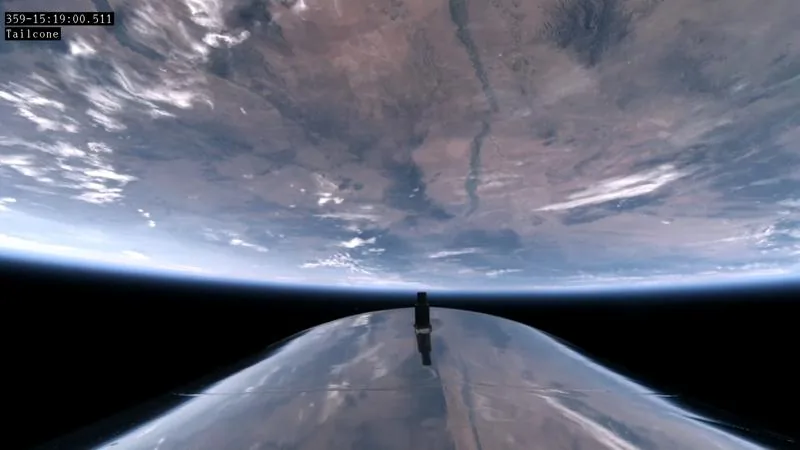
What follows is the very reason for the journey: the darkness of space, the luminous curve of Earth and a phase during which the astronauts can leave their seats. The feather system then configures the vehicle for re-entry. The SpaceShip becomes a glider once more and returns to the same runway from which the mission began.

45,000 ftstated release altitude
Mach 3stated rocket-powered ascent
Up to 6seats in the new generation
New MexicoSpaceport America

Flight profile

From the runway to space at Mach 3.

Virgin Galactic does not launch vertically like a conventional rocket. The SpaceShip takes off beneath a mothership, is released at altitude, climbs into suborbital space under rocket power and returns to the runway as a glider.

Understanding the system

An aircraft departure, a rocket ascent and a return on wings.

At departure, the SpaceShip and mothership form a single flight system. The journey into space itself begins at around 45,000 feet—approximately 13.7 kilometres. This air-launch architecture fundamentally distinguishes Virgin Galactic from capsule systems that launch vertically on a rocket and return by parachute.

The flight is suborbital: the vehicle reaches space but does not orbit Earth. The mission therefore unfolds in clearly defined phases—a controlled carrier flight, a short and intense rocket-powered ascent, a free-flight phase in space, aerodynamic re-entry and a gliding landing.

Chapter 01

The long journey to 45,000 feet.

On the morning of the mission, the SpaceShip is already attached to the mothership. The two vehicles taxi to the runway as one. The astronauts are secured in the cabin; the pilots work above them while Mission Control follows every stage from the ground. The departure is deliberately more familiar than a vertical rocket launch: the system accelerates along a runway and lifts into the vast New Mexico sky.

The carrier flight is not simply a period of waiting. It takes the crew out of the dense lower atmosphere to an environment in which the SpaceShip can begin its rocket-powered ascent efficiently. At the same time, it gives the astronauts space to focus on what lies ahead: the communication from the cockpit, the view over the desert and the instant when two connected aircraft become two independent vehicles.
Chapter 02

Release. Ignition. Mach 3.

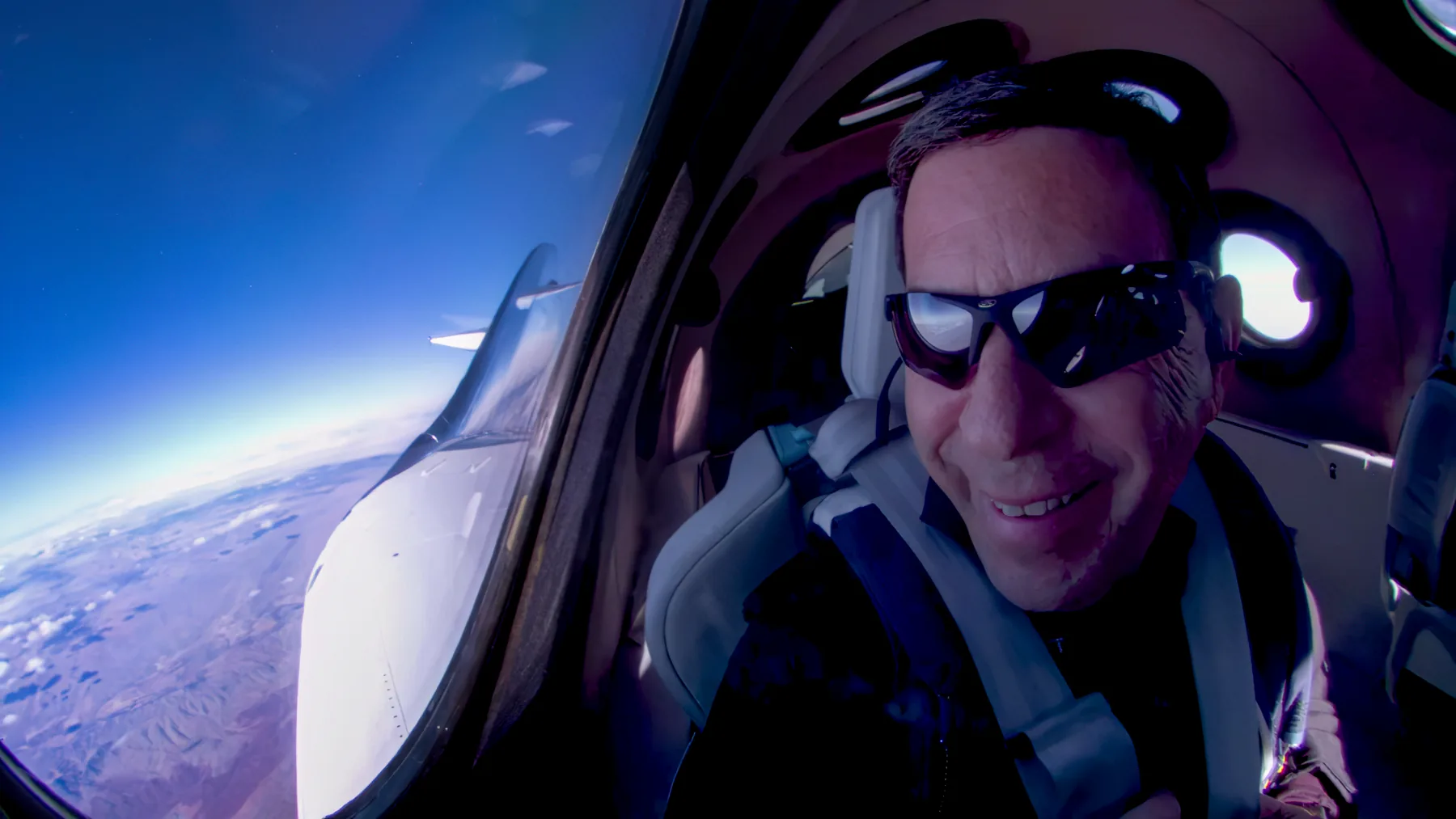
At approximately 45,000 feet—around 13.7 kilometres above sea level—the SpaceShip is released. For a brief interval it flies without the support of the mothership. The pilots stabilise the vehicle and prepare for ignition. Then comes the mission’s most dramatic contrast: the controlled, relatively calm climb gives way to rocket-powered ascent.

The hybrid rocket system accelerates the SpaceShip to approximately Mach 3. The astronauts remain in their seats and experience the highest acceleration forces of the flight. Through the windows, the horizon changes quickly; the blue atmosphere thins and the sky darkens. The rocket motor operates only during the powered portion of the ascent.

The vehicle then continues upwards on its momentum along a suborbital trajectory—not into Earth orbit, but on an arc that leads back to New Mexico.

Chapter 03

Silence above Earth—and the journey home.

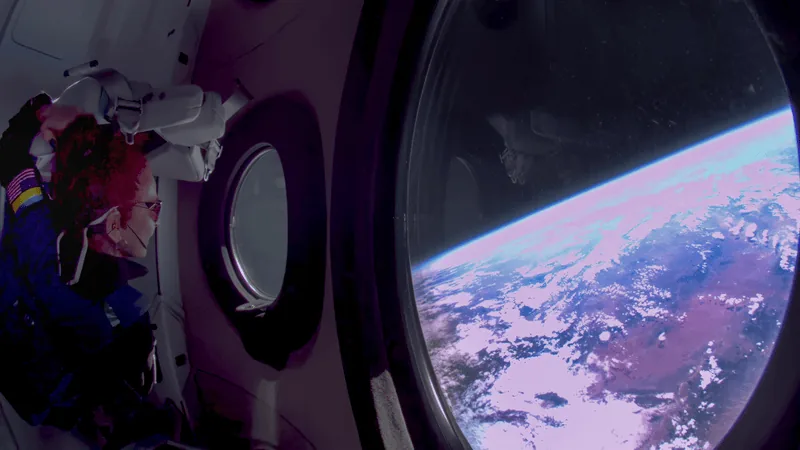
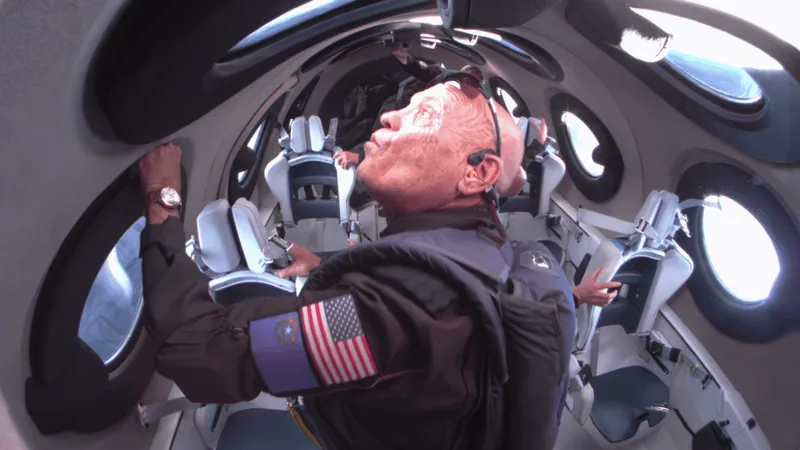
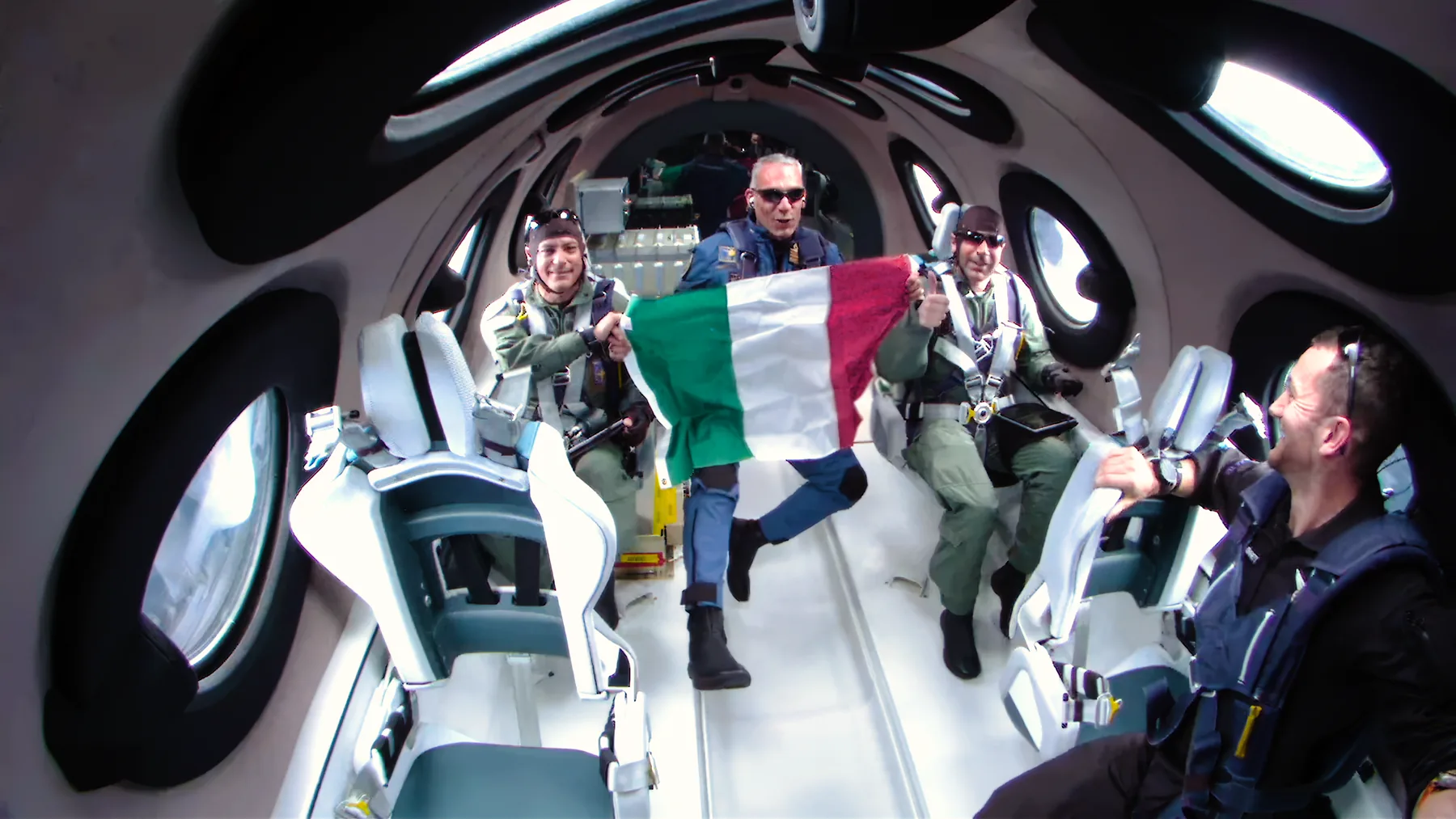
As the rocket-powered ascent ends, the cabin changes for a second time. The pressure of acceleration gives way to microgravity. The astronauts can unstrap and move through the space between the seats and large windows. Before them is not merely a landscape seen from great altitude, but Earth as a whole: a bright, curved surface edged by the thin blue of the atmosphere and the darkness of space.

Virgin Galactic’s published flight profile describes several minutes of microgravity and a peak altitude approaching 300,000 feet—around 91 kilometres. The phase is brief, which is why it forms part of the preparation. Movement, positions at the windows and the return to the seat are rehearsed beforehand so that precious time is not lost finding one’s bearings. Exact mission parameters are confirmed before flight.

As the SpaceShip descends towards denser atmosphere, the feather system is activated. The tail booms rotate upwards, giving the vehicle a stable aerodynamic configuration for re-entry. The surfaces then return to their gliding position. Without renewed rocket power, the SpaceShip makes its approach and touches down on the runway at Spaceport America. The circle closes where it began—yet for those on board, it is no longer quite the same place.

Mission duration, peak altitude, time in microgravity and individual flight requirements are personally confirmed for the current programme.

View of Earth from a Virgin Galactic SpaceShip

The defining view

Earth, framed by space.

Technology carries the SpaceShip into space. Yet the meaning of the journey reveals itself at the window: continents and clouds lose their familiar scale, the horizon becomes a curve and the atmosphere appears as a narrow, luminous boundary.

The cabin is designed for this moment to be experienced beyond the seat. During the microgravity phase, astronauts can unstrap, move between the windows and choose their own perspective. Preparation also means deciding beforehand where one wishes to move—so that a few extraordinary minutes become a clear and conscious memory.

SpaceShip Delta Class

What is flying now—and what comes next.

VSS Unity is Virgin Galactic’s proven prototype and has returned to glide-flight activity to prepare pilots and operating teams for the new test programme. The next commercial phase is planned around a new generation of SpaceShips.

Virgin Galactic states that the new vehicles are being designed for up to six passengers, two flights per week and a service life of more than 500 missions. These are development targets, not a commitment for any individual departure.

ArchitectureAir launch

A mothership and reusable rocket-powered SpaceShip.

CabinDesigned for people

Seats for ascent and return, with freedom of movement during the space phase.

ReturnRunway

Feathered re-entry followed by a gliding approach and landing.

Mission typesPrivate research

Private astronauts, human-tended research, payloads and charter missions.

Programme status · updated 7 August 2026

The return to commercial flights into space.

Virgin Galactic’s published timetable contains forward-looking statements and may change. We verify the latest position again during every consultation.

VSS Unity returns

Glide flights support pilot proficiency and operational preparation for the new SpaceShip test programme.

New SpaceShip glide tests

The company plans to begin flight testing of the first new-generation vehicle in the third quarter.

Rocket and space tests

Virgin Galactic currently expects powered testing and the first flight into space by the new generation in the fourth quarter.

Research and education

Purdue 1 and OP-01 illustrate the planned use for human-tended research missions.

This overview does not guarantee a departure date. Flight order, availability and reservation status require official confirmation.

The story of Virgin Galactic

From a 2004 vision to a new SpaceShip generation.

When Virgin Galactic was founded in 2004, the idea of a privately bookable flight into space still belonged almost entirely to the future. Over many years, that idea became a pilot-controlled system comprising a mothership and a reusable SpaceShip—an architecture deliberately closer to aviation than to a conventional launch rocket.

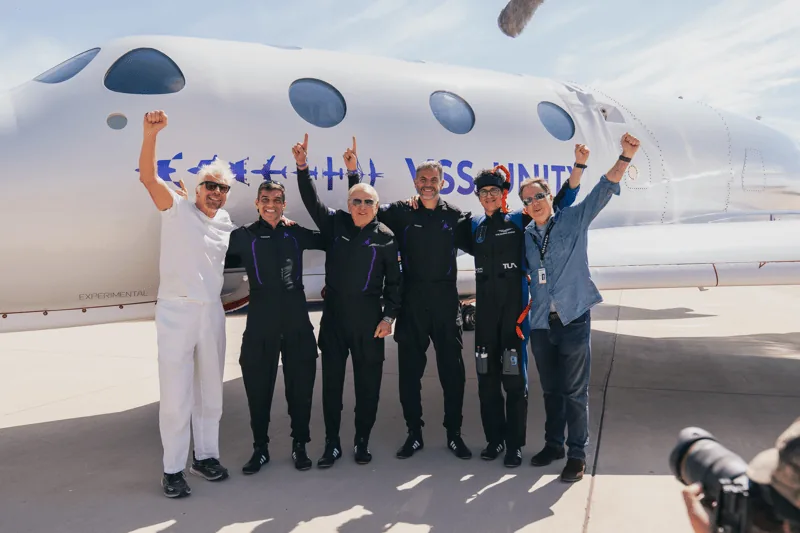
VSS Unity became the flying prototype of that vision. Test flights, Unity 22 with Richard Branson and the first commercial mission, Galactic 01, demonstrated step by step that private individuals and researchers could reach suborbital space with this system. Up to the pause following Galactic 07, Virgin Galactic records a total of twelve suborbital spaceflights and 37 passengers and crew flown.

The present phase is not simply a restart of the former operation. Virgin Galactic is transferring the lessons from Unity into a new generation of SpaceShips designed to fly more frequently and carry more people. Unity’s current glide flights therefore serve not to sell former missions, but to maintain pilot proficiency and build the operational system for what comes next.

Founded

Virgin Galactic begins developing a commercial system for human flights into space.

Unity 22

Richard Branson and his crew fly aboard VSS Unity on a fully crewed mission.

Commercial service

Galactic 01 opens the company’s first commercial flight phase.

Galactic 07

The final commercial Unity flight before the focus shifts to the new vehicle generation.

Testing resumes

Unity glide flights prepare operations for tests of the new SpaceShip.

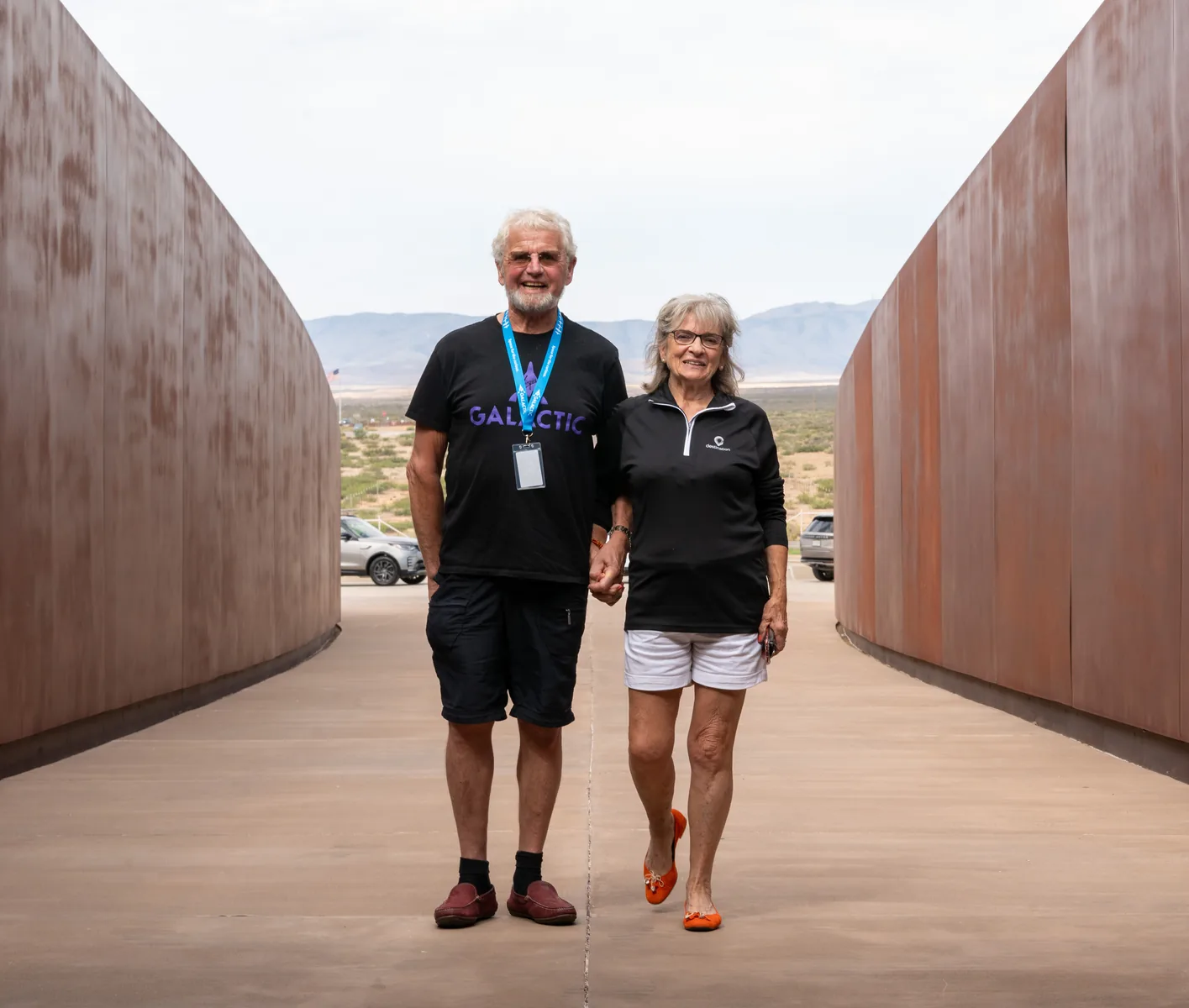
Future astronauts at Spaceport America in New Mexico

Spaceport preparation

The experience begins before flight day.

Spaceport America sits amid the vast New Mexico desert. Designed by Foster + Partners, it is far more than a terminal: beneath its roof are the astronaut areas, the large SpaceShip hangar and Mission Control. Here, future astronauts meet the people who will plan, train, fly and monitor their mission from the ground.

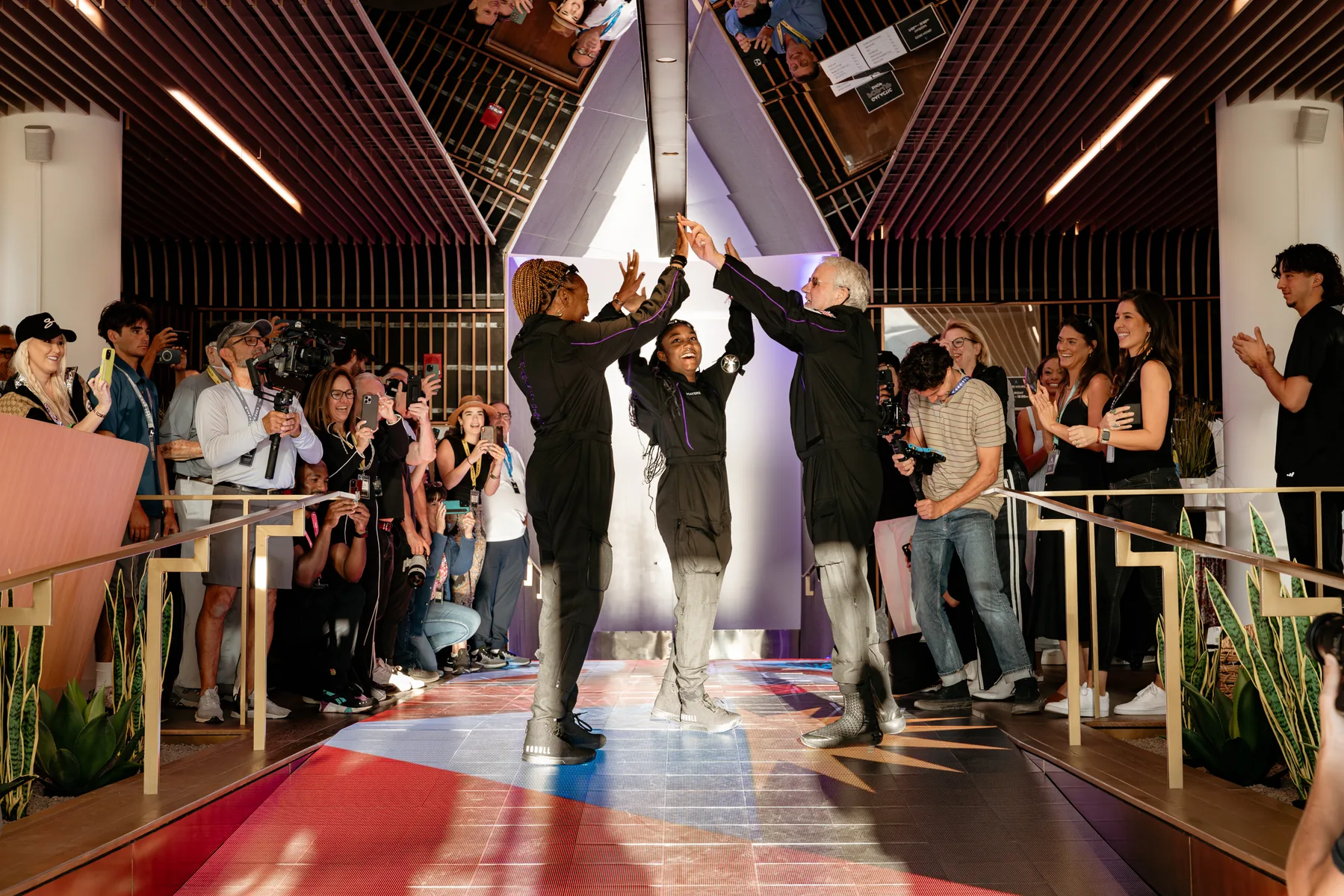
Virgin Galactic describes preparation as a multi-day process. Medical information and current fitness to fly are reviewed; briefings explain the vehicle and mission sequence. Training prepares astronauts for the sensation of acceleration, when to remain strapped in, how to move through the cabin in microgravity and how to return to the seat in time for re-entry.

Optional experiences such as zero-gravity or centrifuge training may form part of individual preparation; the precise scope is aligned with the current programme.

Mental preparation matters just as much. A future astronaut should not be surprised on flight day by every sound, command or movement. The more familiar the sequence becomes, the more attention remains for the experience itself. Family and friends are not merely spectators at the edge of the journey: Virgin Galactic provides experiences for accompanying guests around the mission so that departure and return can be shared.

Deluxetargets connects the astronaut journey with every element of private travel planning. International travel, private aviation or scheduled flights, hotels, transfers and a New Mexico itinerary are arranged so that the mission is never lost among ordinary travel components. The flight into space remains the centrepiece—everything before and after creates calm, time and the right setting.

Understanding the flight

Suborbital is not orbital.

Virgin Galactic is designed for a journey from the runway into space and back within the same mission—not for orbiting Earth or remaining in orbit.

Virgin Galactic

Suborbital flight into space

Air launch, rocket ascent, microgravity, a view of Earth and return to the runway at the same spaceport.

Orbital mission

Earth orbit

Higher velocity and a flight profile for circling Earth, with a different launch, vehicle and recovery architecture.

Beyond private astronaut journeys

A laboratory above the atmosphere.

Virgin Galactic also opens the same flight architecture to research. The decisive difference from an uncrewed payload is that scientists can operate, observe and, when necessary, adjust their experiments themselves during microgravity.

A suborbital flight cannot replace long-duration research in orbit. It does, however, offer repeatable access to acceleration, microgravity and re-entry within a compact mission. Medical sensors, materials, fluids and new technologies can therefore be tested under genuine conditions encountered during a flight into space. Training, integration and working procedures are tailored to each experiment.

Autonomous payloads

Experiments and technology tests can fly in modular lockers or racks without a researcher being present in the cabin.

Human-tended research

For experiments operated in person, the researcher is prepared for the sequence under acceleration and microgravity. Wearables and free-floating experimental arrangements can form part of such a mission.

Private charter

Institutions, governments, universities and companies can design a mission for their own programme. The flight profile, cabin configuration and training are aligned with the confirmed research objective.

Price reservation

A rare decision deserves precise answers.

750,000 USD

A private consultation is the right first step.

  • Current availability is checked individually
  • Programme status and a realistic timeframe are explained
  • Eligibility, payment schedule and contract are supplied through official documentation
  • Travel for the astronaut and accompanying guests is planned around the mission

Why Deluxetargets

Your flight into space, personally orchestrated.

A reservation is only the beginning. Between first interest and the flight, the schedule, vehicle status and personal travel plans may evolve. Our role is to hold that long journey together: informed enough for a significant decision, discreet enough for a private matter and personal enough for an experience that cannot be treated like a standardised product.

01

Private briefing

The first conversation is not a sales pitch, but an assessment. We discuss motivation, expectations, health considerations, preferred timing and the people who should accompany the journey. This creates a realistic picture of the next steps.

02

Official pathway

Programme status, available places, payment schedule and contractual terms are clarified using the latest confirmed documentation. Where dates remain targets, we identify them as targets—without turning development plans into a guaranteed departure date.

03

Travel to the mission

New Mexico is more than the departure point. International travel, private aviation or scheduled flights, hotel, transfers and a considered pre- and post-mission programme are connected so that there is sufficient time for training, accompanying guests and unforeseen changes.

04

Continuity

One dedicated advisor accompanies the journey over what may be a long period. They keep programme changes, personal preferences and every travel component in view, so that decisions do not begin again with each new stage of development.

Virgin Galactic FAQ

Questions future astronauts ask.

How much does a Virgin Galactic flight cost

Limited reservations are currently stated at 750,000 USD per person. Availability, payment milestones, refunds and contractual terms are confirmed through the official reservation documentation.

When will Virgin Galactic fly commercially again

Virgin Galactic stated in May 2026 that glide flights of the new SpaceShip were targeted for the third quarter and powered testing and a flight into space for the fourth quarter of 2026. These are company targets, not guaranteed passenger departure dates.

Where does Virgin Galactic depart from

Flights operate from Spaceport America near Truth or Consequences, New Mexico. The SpaceShip is air-launched and returns to the runway.

Is Virgin Galactic an orbital flight

No. It is a suborbital flight into space: the vehicle reaches space and returns without orbiting Earth.

What happens during the flight

The published profile comprises the mothership climb, release at around 45,000 feet, rocket-powered ascent at approximately Mach 3, microgravity, re-entry and landing.

How long are the flight and microgravity phase

The precise current mission duration and usable microgravity time must be confirmed for the booked flight. We deliberately do not apply older figures to the new SpaceShip generation without verification.

Who can fly and what medical requirements apply

Eligibility, health assessment, mobility and preparation are determined through the current official process. A personal review is required; this page does not provide medical clearance.

Can family and friends take part

Virgin Galactic describes a shared wider experience for accompanying guests. Guest numbers, access and the exact programme are confirmed for each mission.

Can the flight be used for research

Yes. Virgin Galactic offers autonomous payloads, human-tended research and charter. Purdue 1 and OP-01 are among the research missions announced for 2027.

What does Deluxetargets arrange

We guide the reservation conversation and coordinate scheduled or private flights, hotels, transfers, New Mexico and a bespoke journey before or after the flight into space.

Updated August 2026

Private enquiry

Your journey to becoming an astronaut starts now.

Tell us what you would like to understand or achieve. A Deluxetargets advisor will contact you personally and discreetly.