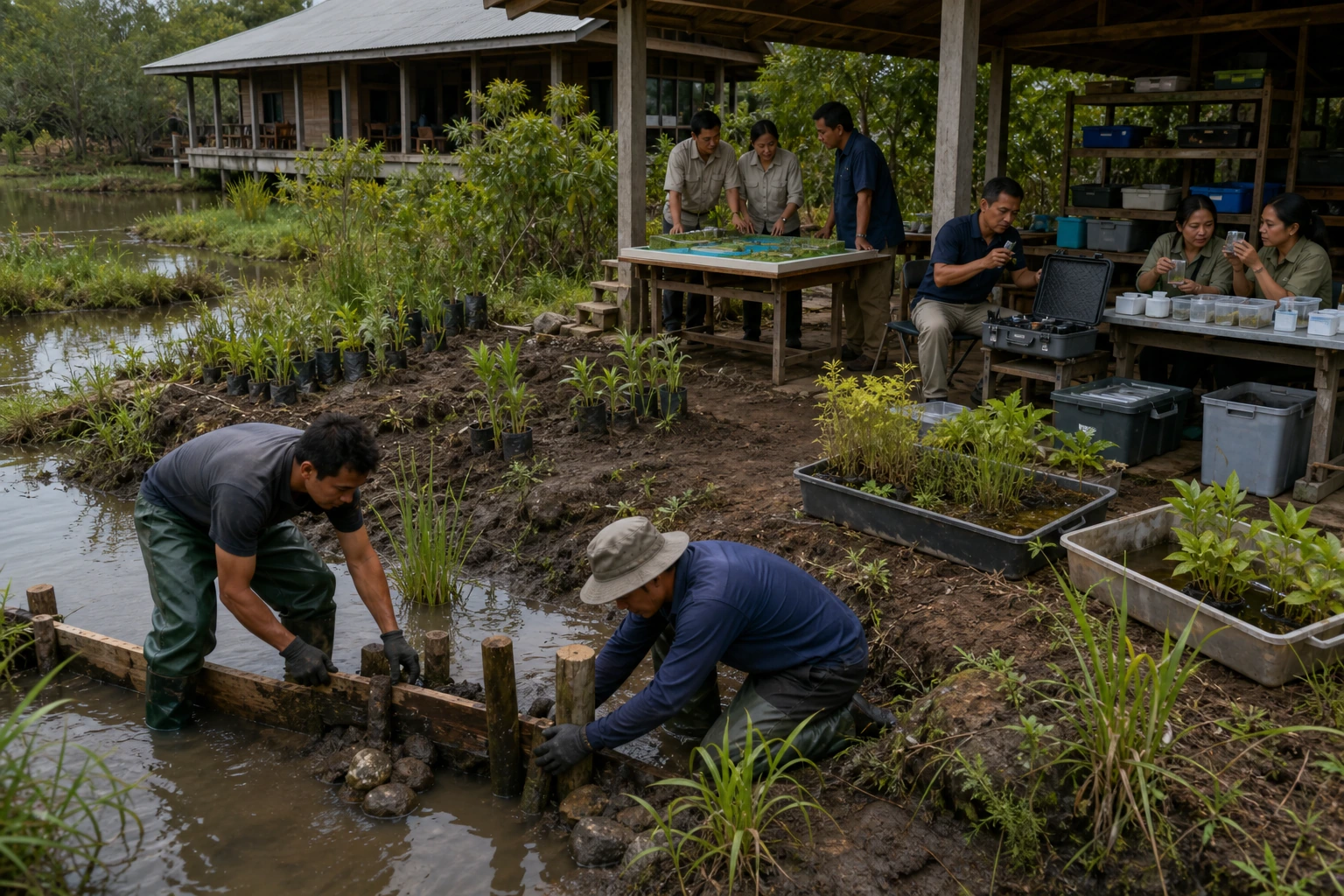
Regenerative Travel: The Future of Travel need more than pretty pictures and big names. The actual decision lies in the route, timing, comfort, target group, costs and the question of which experience really suits the occasion.
Specific names are crucial for this topic: Conservation Fees, Community Ownership, Rewilding, Lodge Impact, Local Guides, Carbon Accounting, Biodiversity, Anti-Greenwashing. They make the difference between inspiration and reliable travel planning. If you don't compare these points properly, you often book the best-known offer instead of the best solution.
Quick Facts about Regenerative Travel
- Important names
- Conservation Fees, Community Ownership, Rewilding, Lodge Impact, Local Guides, Carbon Accounting, Biodiversity, Anti-Greenwashing.
- Ideal duration
- So long that arrival, main moment and breaks don't work against each other.
- Planning focus
- Timing, location, convenience, cost, alternatives, target group and red lines.
- Before the request
- Which option suits the occasion, which is only known, and which alternative is quieter
Short answer to Regenerative Travel
Regenerative travel occurs when route, guide, travel time, season and retreat have the same rhythm.
Before availability, Regenerative Travel first clarifies which choice really matters: route, guide, hotel location and travel times are read as hard filters for timing, location, costs and alternative.
The most important options in comparison
Conservation
Strong when fees are transparent and protected areas are actually financed.
Community
Relevant when local jobs, ownership, training and sourcing are visible.
| Concrete choice at Regenerative Travel | When she wears | Better cross-check | Clarify before request |
|---|---|---|---|
| Route as first choice | fits if the timing and access are in the desired week | A quiet room location is often the better choice | Clarify season, transfer and cancellation before request |
| Guide as a quieter alternative | strong for guests who want less visibility or less turnover | Travel times can offer more experience | Compare location, target group and daily rhythm |
| Seasonal window with additional costs | makes sense if service really takes the strain off your day | PrivateUpgrades is easily underestimated | Record costs, waiting times and responsibility in writing |
| Driver as a risk | only accept if plan B is clear | Access requires reserves | Set cutoff point, weather or delay plan |
The offer should expressly include route, guide, hotel location, travel times, seasonal window, private upgrades, driver and access. For Regenerative Travel, we first check the route, guide, hotel location, service limits, cancellation logic and the alternative that creates the least pressure on site.
Lodge operation is the alternative that many travelers only consider late. Important for energy, water, waste, construction, supply chains and personnel. Wildlife and land, on the other hand, requires different planning: serious if biodiversity, monitoring and long-term programs are proven.
The risk of greenwashing is also included in the comparison. High if only vague words like conscious, sustainable or local appear. This breadth does not make the decision any more complicated. It makes them more honest.

Best for / not ideal
Particularly suitable for
- Travelers who don't see impact and luxury as opposites.
- Safari, island and expedition trips with sensitive ecosystems.
- Guests who are willing to ask better questions.
Less ideal for
- Claims without proof.
- Projects that guests only use as a marketing backdrop.
- Compensation logic as a license for every emission.
Timing, season and process
Timing changes quality greatly. A good date can have more value than a higher category. Availability, weather, local events, daylight, transfer window and target group must be read together.
The first day should remain soft. The main moment belongs in the middle of the journey. The last day needs air. When everything is trimmed for efficiency, even a very expensive experience loses its lightness.
The fuller the bar, the better the travel idea works.
Costs, additional costs and limits for Regenerative Travel
The visible price is only part. Costs arise for category, transfers, private setups, guides, service, tips, cancellation, additional nights, insurance and last-minute changes. Good planning makes these points visible before they become unpleasant.
A cheaper offer may end up being weaker if it contains too little buffer, less comfort or a worse location. Conversely, not every upgrade makes sense. The best value lies where money creates noticeably better travel quality.

Typical mistakes
The first mistake is booking according to myth. The second is too little time. The third is a category that sounds better on paper, but doesn't have the right impact on the ground. The fourth is a lack of plan B.
A good briefing identifies the reason, pace, comfort requirements, red lines and the alternative that is deliberately not chosen. Only then does a nice idea become a recommendation that has local impact.

Specific test questions
Which option suits the occasion best Which alternative is quieter Where are additional costs incurred Which target group shapes the experience How long does the trip have to be so that it doesn't seem rushed Which decision should be made before making the request
These questions are at the core of a premium level article. They turn a beautiful topic into a decision-making aid.
Air route: Regenerative Travel
Regenerative travel wins through rhythm. For regenerative travel, the better choice is one where conservation fees, community ownership and rewilding create less friction than the better-known name. Too many stops turn a private trip into a list.
Local Rules: Regenerative Travel
At Regenerative Travel, luxury does not mean isolation, but rather the right access at the right time: route, guide and hotel location need tact, not speed.
Hotel as an anchor: Regenerative Travel
The right basis for Regenerative Travel saves energy every day. At Regenerative Travel: The Future of Travel we first examine conservation fees, community ownership, rewilding, arrival logic and additional costs before deciding on availability or category.
Guide and access: Regenerative Travel
In Regenerative Travel, a strong guide decides whether places are only seen or understood. Regenerative travel becomes strong when conservation fees, community ownership and rewilding do not remain decorative, but rather serve as clear filters for timing, budget and alternatives.
Less is often better: Regenerative Travel
Regenerative travel should be deliberately eliminated. At Regenerative Travel: The Future of Travel we first examine conservation fees, community ownership, rewilding, arrival logic and additional costs before deciding on availability or category.
Information required before inquiry: Regenerative Travel
Before making an inquiry about Regenerative Travel, we need travel duration, pace, comfort limits, climate, travel time tolerance and priorities; Only then can the route, guide and hotel location be meaningfully weighted.
Which honestly needs to be left open at Regenerative Travel
A good suggestion respects these boundaries and creates a route for Regenerative Travel in which the route, guide and hotel location do not appear crowded.
The better alternative to Regenerative Travel
With Regenerative Travel, an extra night of route or guide can be more powerful than an additional stop. A missed program item can make the trip luxurious.
For Regenerative Travel: The Future of Travel, we would only confirm the route once the guide, hotel location, cost logic, cancellation and a real plan B have been checked. The better solution for regenerative travel is often more precise rather than larger: fewer changes, clear responsibility and an alternative to rewilding if the timing or audience changes.
At Regenerative Travel: The Future of Travel we read the route, guide, hotel location and travel times against the specific travel week: arrival, daily rhythm, target group, additional costs and the alternative that makes less work for the guest on site.
When Regenerative Travel is not recommended
Regenerative Travel: The Future of Travel should only be confirmed once the route, guide, costs, timing and the realistic alternative have been clarified.
- Travel times, daylight, guide, opening times or permits are only roughly planned
- Too many places are squeezed into too few days
- the most famous hotel is chosen, even though the location, route or retreat speak against it
Advisor Note on Regenerative Travel
At Regenerative Travel: The Future of Travel we check the route, guide, hotel location, travel times, costs, timing and the quieter alternative before making a specific request.
Checklist for Regenerative Travel
- Which specific option is the favorite and why
- Which alternative would be quieter, more private or more logistically sensible?
- Which category or route makes sense, not just expensive
- Which additional costs must be visible in advance
- Which red lines must not be violated on site

How we specifically examine regenerative travel
What we check before confirming: At Regenerative Travel: The Future of Travel we check route, guide, hotel location, travel times, arrival time, target group, service routes and the quieter alternative before confirming a category or route.
Only then is Regenerative Travel specifically requested: with a route, guide, suitable category, realistic cost framework and an alternative that works more quietly on site.
What should be clear before the commitment
Before accepting, the date, duration, category, cancellation, additional costs, transfer logic, daily rhythm and responsibilities should be clear. Equally important is the question of who decides on site when the weather, availability or mood changes.
A good offer is convincing even without pictures. If the process, limits, alternatives and costs are clear, it has substance.
Which evidence counts?
Reputable regenerative trips mention local partners, ownership structure, conservation fees, monitoring and long-term goals. Vague claims are not enough.

Good lodges explain where money goes. They also show what is not yet perfect.
Community is more than folklore
Local culture should not be a backdrop. What is crucial are jobs, training, fair contracts, local procurement and a real say.
A visit only makes sense if it preserves dignity for both sides.
Luxury and impact
High comfort is not a problem if operations, density and financing are clean. Luxury becomes problematic when it consumes resources and only claims to have an effect.
The best provider makes an impact without moral pressure.
Read Conservation Fees correctly
Conservation fees make sense if it is clear who collects them, where they go and what they finance. Protected areas, rangers, anti-poaching, monitoring and community projects should not only be mentioned, but explained.

A fee is not proof of impact. It's just a hint. Good providers show what happens with the money.
Ownership and local value creation
Regenerative travel becomes stronger when local people are not only employed but involved. Ownership, management, training and procurement count. Anyone who integrates vegetables, crafts, guides and service locally creates more impact than a house with an imported luxury bubble.
This is noticeable for guests. Local hosts tell different stories. They give the place more dignity and less scenery.
Greenwashing questions
What data is measured Are there independent partners How is water used Where does energy come from How is waste treated How many local employees are in leadership roles These questions are better than any sustainability label.
If a provider only talks about conscious travel but doesn't give any numbers, the claim remains weak.

Safari, island or cultural trip
On safari, regenerative impact is often visible through land use, wildlife protection and community concessions. On islands, reef protection, water, energy, waste and construction matter. What matters when it comes to cultural trips is whether local guides, craftsmen and family businesses are fairly involved.
The best regenerative trip looks different depending on the type of trip. A uniform standard would be too simple.
What luxury travelers can contribute
The guest does not have to behave morally. But he can ask better questions, stay longer, choose more local providers, accept reasonable fees and take photos respectfully. Fewer changes in location can also have an effect.
Regenerative travel doesn’t start with doing without. It starts with awareness of consequences.
State boundaries honestly
Long-distance travel remains resource-intensive. A luxury resort doesn't automatically become good because it uses local herbs. A safari camp is not automatically regenerative because it is located in nature. Honesty is part of the standard.
A strong article cannot hide this tension. That's exactly what makes him seem credible.

When is regenerative travel really worth it?
It is particularly worthwhile for trips that lead to sensitive areas: savannah, rainforest, reef, desert, mountain village or small island. The question there is not just where to sleep. The question is whether the money burdens or strengthens the place.
A four-night stay may make more sense than two nights with a heavy transfer. Seven nights in a locally sourced lodge often works better than a quick route with three camps. Time is not a luxury detail here. She decides about pressure, personnel planning, purchasing and real encounters.

What additional costs arise?
Regenerative trips sometimes seem more expensive because they make costs visible that other offers hide. Conservation fees, parking fees, community taxes, private guides, local transfers and project visits may appear separately. That's not automatically bad.
It becomes problematic when fees remain unclear. Before booking, it should be clear which donations are mandatory, which donations remain voluntary and whether a visit to the project will disrupt people's everyday lives. Good planning makes these points calm. Poor planning sells a good feeling without substance.
The better alternative may be quieter
Not every famous lodge is the best choice. Sometimes a smaller camp in a lesser-known concession is stronger. Sometimes a private guide with a local network is better than a resort with a big sustainability promise. And sometimes a longer trip to a single area is better than a short collection of highlights.

The second option is therefore important for guests with high demands. Which route is quieter Which lodge works more closely with the location Which island really protects its reef Which cultural trip leaves time for conversations instead of just photo stops
The first booking mistake at Regenerative Travel
The most common mistake is to treat regenerative travel like a label. The word sounds good. However, it does not replace an examination. The second mistake is too much program. If you plan a project, a village, a guide and a dinner every day, you create pressure again.
The third mistake is false expectations. Regenerative journeys are not always smooth. A local operation can be more personal but less standardized. A protected area may have stricter rules. A real project also shows open construction sites. That's exactly what makes the journey believable.
Briefing before the request
Before making an inquiry, it should be clear which impact really counts: wildlife, reef protection, local ownership, culture, education, crafts, agriculture or less traffic. Then you can search specifically.
This means different questions for a safari than for an island. For a cultural trip in Peru, Japan or Oman other than for a lodge in Botswana. The more precise the briefing, the less likely you end up with interchangeable sustainability phrases.
Before a release Regenerative Travel: The Future of Travel We check route, guide, hotel location, travel times and seasonal windows not as decorative words, but against travel date, arrival time, cancellation, target group and budget. What matters with Regenerative Travel is whether conservation fees really relieve the burden on site or are just offered as a nice name.
Not ideal though Regenerative Travel: The future of travel is only read as a prestige decision or route is chosen, guide does not bring a clear advantage for the daily rhythm or hotel location triggers additional costs that only become visible on site. Then Driver or Access is often the more mature, calmer choice.
Read more about Regenerative Travel
Regenerative Travel FAQ
What does Regenerative Travel mean?
Travel that not only aims to cause less harm, but also measurably strengthen nature, community or local structures.
How to recognize greenwashing
Of vague claims without numbers, ownership structure, local employment, conservation evidence or transparent fees.
Regenerative travel is becoming more and more expensive
Not always. Reputable programs often cost more because of funding for protection, training, local procurement, and small density.
Which trips are particularly suitable?
Safaris, island resorts, wilderness lodges, expeditions and locally guided cultural tours.
What should be asked before booking
Where does money flow Who benefits locally What impact is measured What independent evidence is there?
Conclusion on Regenerative Travel
Regenerative Travel: The future of travel reaches premium level when the article not only describes but improves a decision. Concrete names, real alternatives, cost clarity, limits and a suitable next step are mandatory.