
The best yacht itinerary in the western Mediterranean is not a list of celebrated bays; it is a route with room to breathe. Between the Côte d’Azur, Corsica and Sardinia lie glamorous harbours, protected seagrass meadows and passages where an unfavourable wind can redraw the day. Promise the most famous quay every evening and the plan works against the sea. Allow two weeks, a strong captain and genuine alternatives, and the coast reveals its proper rhythm.
The route in six stages
- Embarkation
- Antibes – technically capable and close to Nice airport
- Riviera
- Lérins, Cannes and Saint-Tropez – culture, restaurants and early reservations
- Open passage
- French mainland to Corsica – only in a suitable weather window
- Western Corsica
- Calvi, Girolata and Bonifacio – dramatic coast rather than a rapid checklist
- Protected waters
- La Maddalena archipelago – permits and disciplined anchoring
- Finale
- Costa Smeralda and Porto Cervo – sheltered harbour and useful end logistics
Ten to fourteen nights are the real luxury
The distance is easier to draw on a map than to enjoy at sea. Ten nights are an energetic minimum; fourteen allow weather days, longer lunches and an extra night somewhere unexpectedly persuasive. With seven nights, choose either the Riviera and northern Corsica or southern Corsica and northern Sardinia – not the entire sequence.
A one-way charter is logical but not automatically cost-neutral. The yacht must be available in the agreed start and finish ports, and delivery or redelivery charges may apply. Establish that before signing the contract, not after falling in love with the route.
| Stage | Best reason | Main risk | Plan B |
|---|---|---|---|
| Antibes | Service, provisioning and airport access | Organisation consumes day one | Hotel the night before; embark next day |
| Saint-Tropez | Evening ashore and iconic harbour | Berth remains unconfirmed | Anchorage or quieter coastal stop |
| Corsica passage | Shift from Riviera to wild coast | Wind and sea state | Mainland day or earlier/later crossing |
| Bonifacio | Natural harbour and old town | August demand and weather | Catena bay or another southern Corsica night |
| La Maddalena | Islands, water and short hops | Permit and anchoring rules | Legal buoy or another authorised site |
| Porto Cervo | Technical support, crew logistics and finale | Peak season and events | Neighbouring harbour with transfer |
Antibes, Cannes and Saint-Tropez: a disciplined beginning
Port Vauban describes itself as less than 20 minutes from Nice airport and offers 1,500 berths alongside substantial technical and concierge services. That makes Antibes a more capable embarkation point than a prettier but awkward harbour. Provisioning, water toys and last technical details can be settled here.
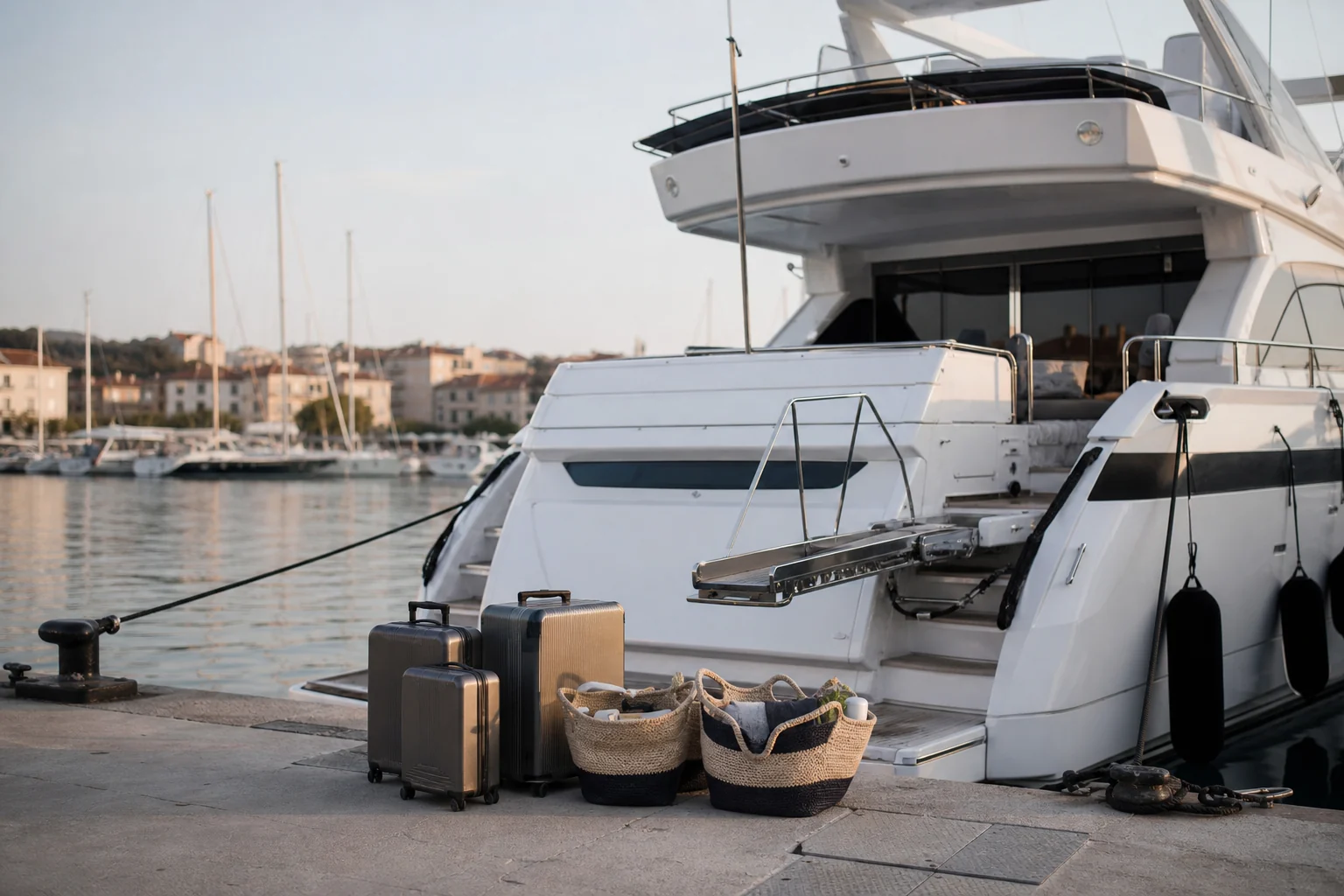
The contractual first day often begins in the afternoon and quickly fills with the safety briefing and unpacking. Expecting an immediate long run to Saint-Tropez wastes quality. A hotel night beforehand, calm embarkation and a short first evening near Antibes or the Îles de Lérins is more elegant.
The Riviera is at its best when every name is not treated as compulsory. A morning swim, lunch aboard and one deliberate evening in Cannes or Saint-Tropez create more than three tender transfers. Saint-Tropez uses different booking channels according to yacht length; for larger yachts, an online request becomes a reservation only when conditions and deposit have been met.
A harbour preference is therefore not a promise. Restaurant, car and table bookings follow the confirmed berth or anchorage plan. Mistral or traffic may make the captain move the stop. Preserve the occasion rather than insisting on a single postcode.
Porquerolles and the Corsica crossing shape the transition
Before the open passage to Corsica, an island off Provence can soften the pace. Porquerolles brings bicycles, pine scent, early swimming and less social theatre. Local environmental and anchoring rules still apply; the crew chooses among authorised options according to yacht size and conditions.
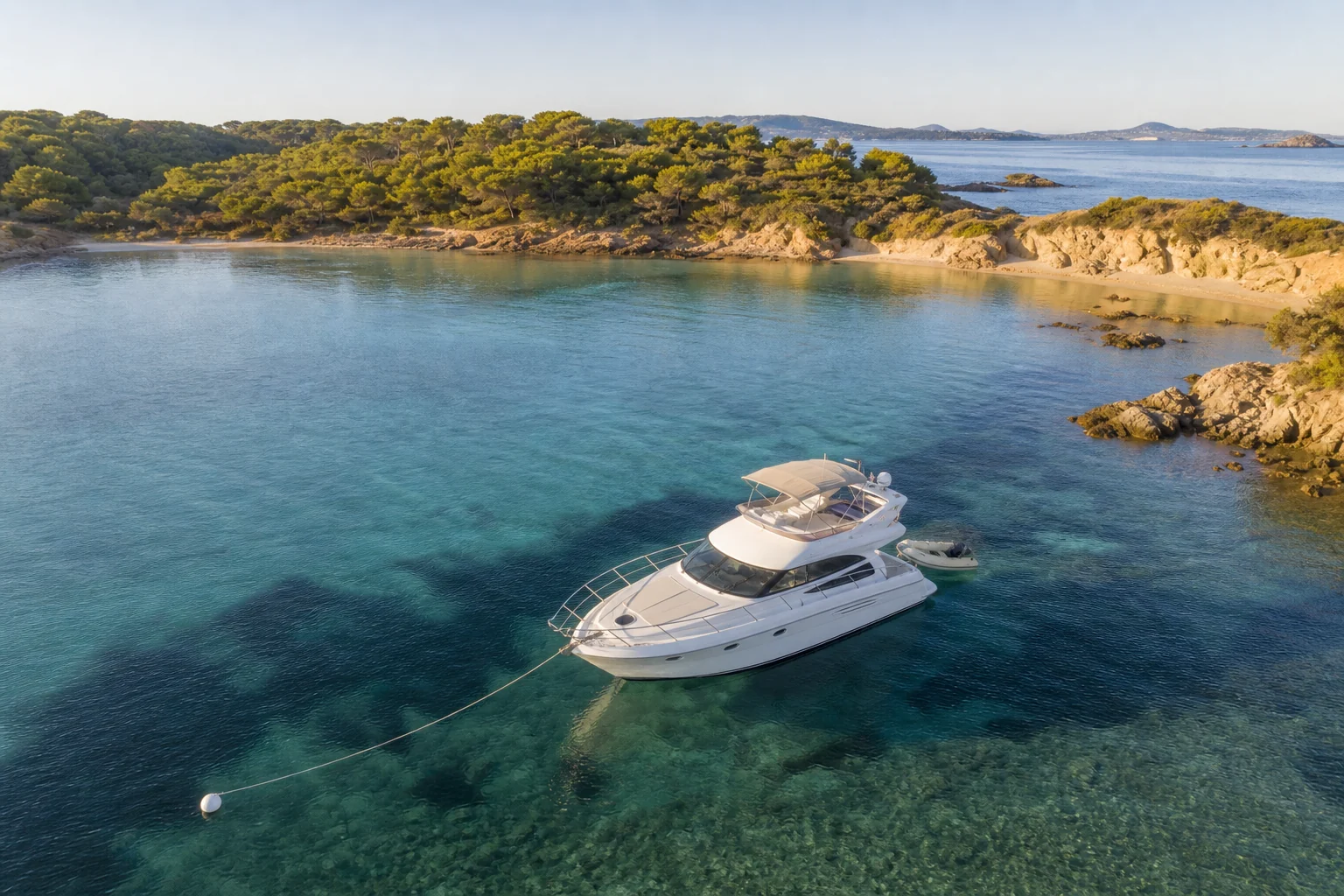
It is not an obligatory stop. It earns its place when weather and guests need a transitional day. With a tight window, the captain may cross directly once the forecast is favourable.
The Corsica crossing governs the diary
Wind, wave and swell are not negotiable over breakfast. Météo-France supplies specialist marine information on wind, sea state, swell and routing; the captain combines it with the vessel, stabilisation, guest profile and refuge options. The crossing may be brought forward, delayed or replaced.
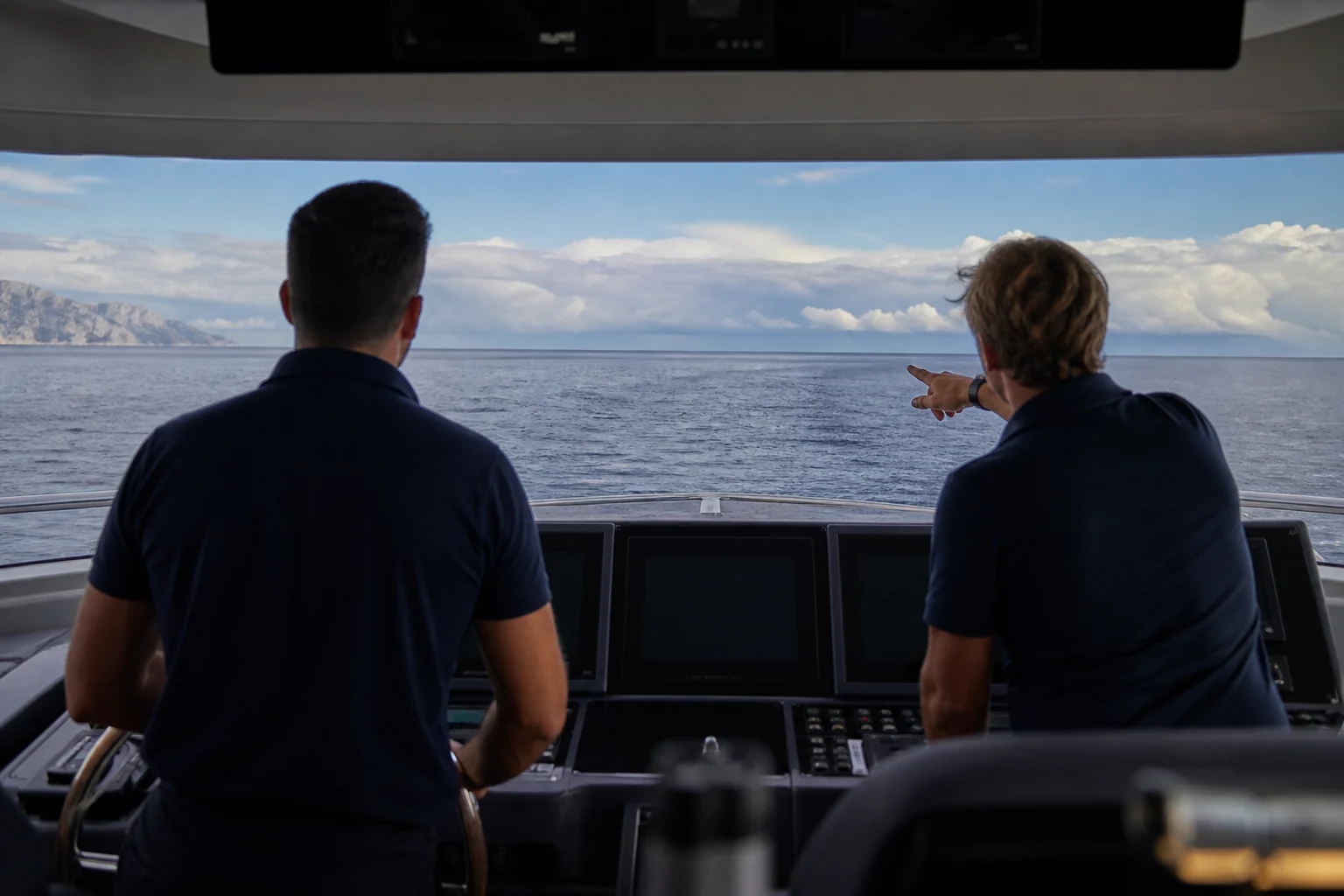
Guests prone to seasickness should seek medical advice before travelling and brief the crew. Cabin choice, light food and an early departure may help, but none replaces a sensible weather call. A private flight on the final day is never a reason to force an unsafe window.
Calvi, Girolata and Bonifacio: western Corsica over mileage
Corsica’s strength is the movement between granite, maquis, small harbours and near-empty coast. Calvi provides a more urban opening; farther south, Girolata and the Scandola area become a nature day. Protected-zone rules, access and visitor management are checked by captain and local agent for the actual dates.
A good yacht here is not the one that leaves fastest, but the one on which an unscheduled afternoon feels complete. Tender, kayak and swimming are used only where legal and safe. Drones, noisy toys and careless anchoring sit badly with both landscape and regulation.
Bonifacio combines limestone cliffs, an old town and a long natural harbour. The marina states that it has 170 short-stay berths and identifies August as its busiest period; additional short-stay spaces may be offered in Catena bay. Helpful capacity is not a guarantee of the desired position.
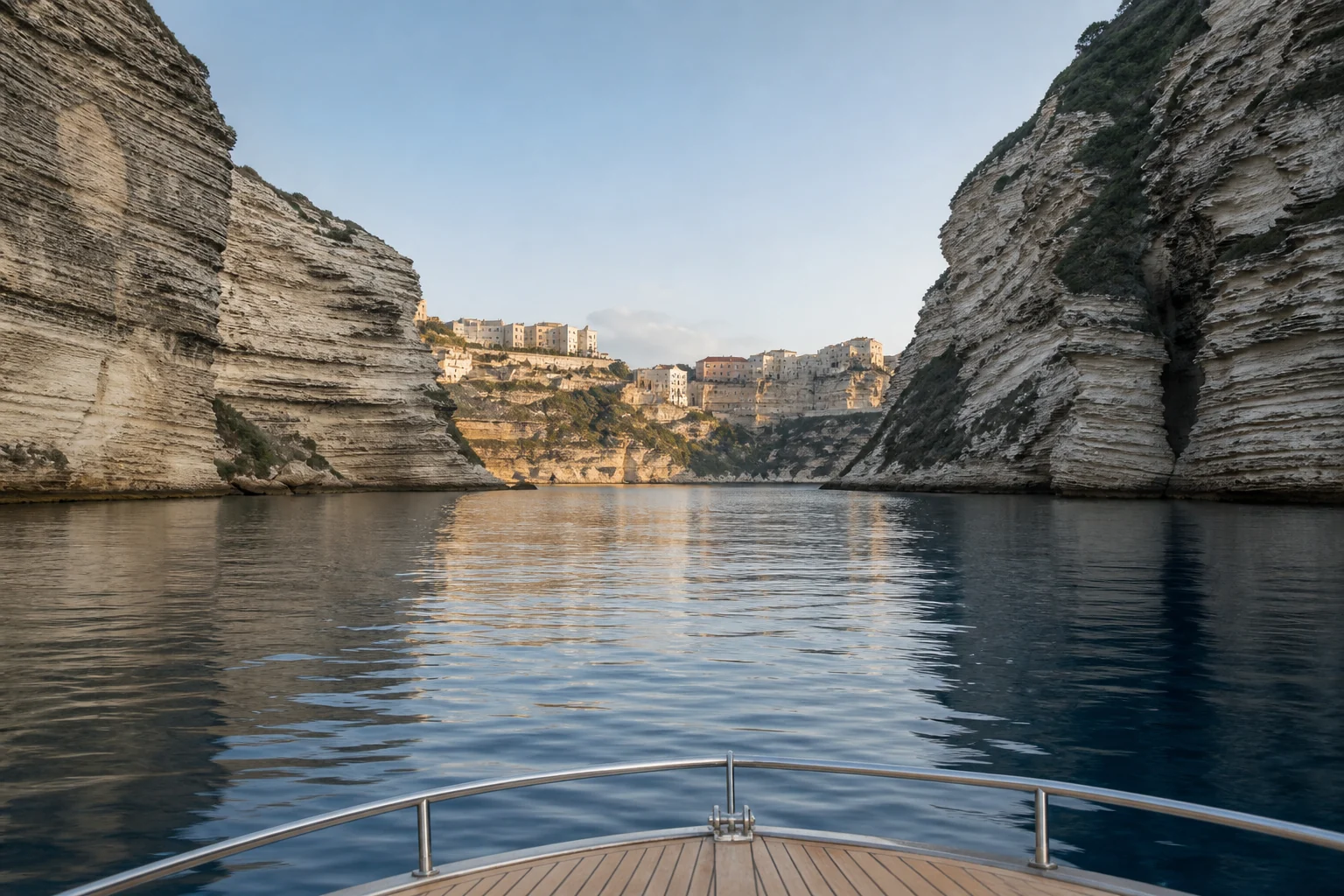
The strait between Corsica and Sardinia can be windy and busy. Arrival, harbour manoeuvres and the next crossing remain the captain’s decisions. Treat Bonifacio as a photo stop and one misses the pleasure of evening or early morning after the day visitors have left.
La Maddalena and Costa Smeralda: beauty, rules and contrast
Every activity in La Maddalena National Park requires a permit or ticket. The park’s official guidance expressly includes sailing, mooring and anchoring within 300 metres of the coast; fees are partly related to vessel length. The crew arranges authorisation and legal sites before entry.
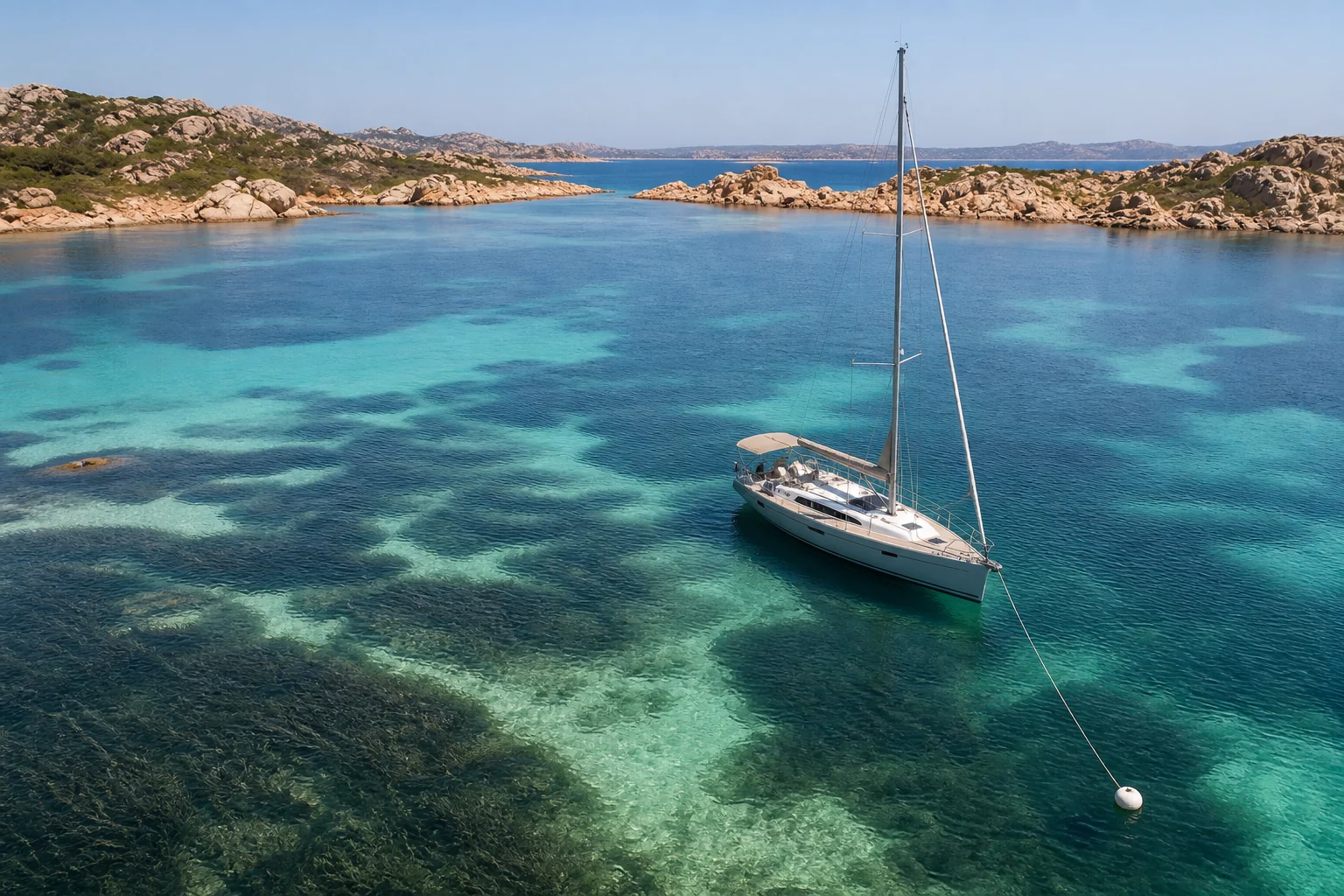
The most sophisticated privilege here is to leave no damage. Posidonia seagrass is not a convenient anchoring surface in either France or Italy. Existing buoys, authorised sand and official instruction take precedence over the best lunch view.
After nature-led days in La Maddalena, Porto Cervo may be deliberately social. Its marina lists 700 berths, including 100 for megayachts, as well as fuel, shipyard, customs and immigration. It is strong for crew changes, maintenance and departure logistics, not merely shopping and restaurants.
A regatta or event can add energy while changing availability, traffic and cost. Guests seeking calm may sleep in a neighbouring bay or harbour and come ashore selectively. The final evening should not disappear into the longest transfer of the trip.
June and September, cost and the right yacht rhythm
July and August bring warm water, long evenings and the widest restaurant opening. They also bring traffic, high demand, full harbours and less spontaneity. June and September are often more balanced for experienced charter guests, without ever guaranteeing weather.
The specific event calendar matters. Film festivals, regattas and society weeks can enhance a destination or conceal its real character. Choose dates for the desired energy, not from a temperature table alone.
What a yacht charter actually costs
The published charter rate is not the final figure. Depending on contract, VAT, an Advance Provisioning Allowance, fuel, berths, food and drink, local fees, transfers and delivery costs sit outside it. The APA is an advance reconciled against actual expenditure, not an all-inclusive promise.
Crew gratuity is separate and reflects service and accepted practice. Before signature, clarify currency, tax basis, payment schedule, cancellation, insurance, cruising area and accounting. A credible total budget protects the atmosphere aboard.
The yacht must fit the daily rhythm
More length does not automatically mean more comfort. At-anchor stabilisation, cabin acoustics, stairs, shade, tender, swim platform and crew numbers influence life more than another salon. Families need different rail safety and watersports supervision from a group of couples.
The chef matters enormously. Allergies, children’s meals, restaurant days and preferred lunch style belong in a detailed preference sheet. “Mediterranean” is not a culinary brief. Precision before arrival produces freedom once aboard.
The Deluxetargets view
Begin in Antibes, give the Riviera two purposeful evenings, cross only in a sound weather window and resist turning Bonifacio, La Maddalena and Costa Smeralda into a checklist. Fourteen nights are ideal; ten work with firm priorities. Deluxetargets coordinates yacht, route, hotels, transfers and reservations, while the captain retains final authority at sea. That division does not diminish luxury; it is what makes the journey good.