The Cyclades, chosen with intention
A Greek island journey becomes luxurious when the island fits the traveller—not when the itinerary collects the most recognisable names. Santorini offers volcanic theatre; Mykonos, a sophisticated social stage. Paros, Milos, Sifnos, Tinos, Naxos and Folegandros answer different desires and deserve to be chosen on their own terms.
Popularity is not a traveller profile
Santorini and Mykonos are famous because they offer genuinely distinctive experiences, not merely because social media made them visible. Yet fame does not make either island universally suitable. A caldera suite can feel sublime to one guest and confined to another; a Mykonos beach club may be the point of the trip or the precise atmosphere someone wants to avoid.
Begin with the day the traveller wants to live. Is the priority a private terrace, long beach, boat, restaurants, walking, archaeology, craft, family ease or late-night energy Once that answer is honest, the correct island often becomes obvious—and it is not always the most expensive one.
Late spring, early summer, peak August and September can feel like different destinations. Hotel openings, direct flights, ferry frequency, restaurant hours, sea temperature, wind and crowds all move on separate calendars. A “quiet island” in August may be intensely busy, while a celebrated address in October may operate with reduced services or already be closed.
May and June often appeal to guests who value walking, fresher landscapes and less pressure; September can combine warm sea with a calmer rhythm. These are tendencies, not guarantees. The actual property, transport and desired activities must be checked for the exact dates.
Santorini and Mykonos: caldera or social instrument
Visit Greece defines Santorini through its active volcanic setting, caldera settlements, coloured volcanic shores, vines and local produce. The island’s most singular luxury is the relationship between architecture and geological scale: waking above the flooded crater, watching light move across Thirasia and understanding that the view is the destination.
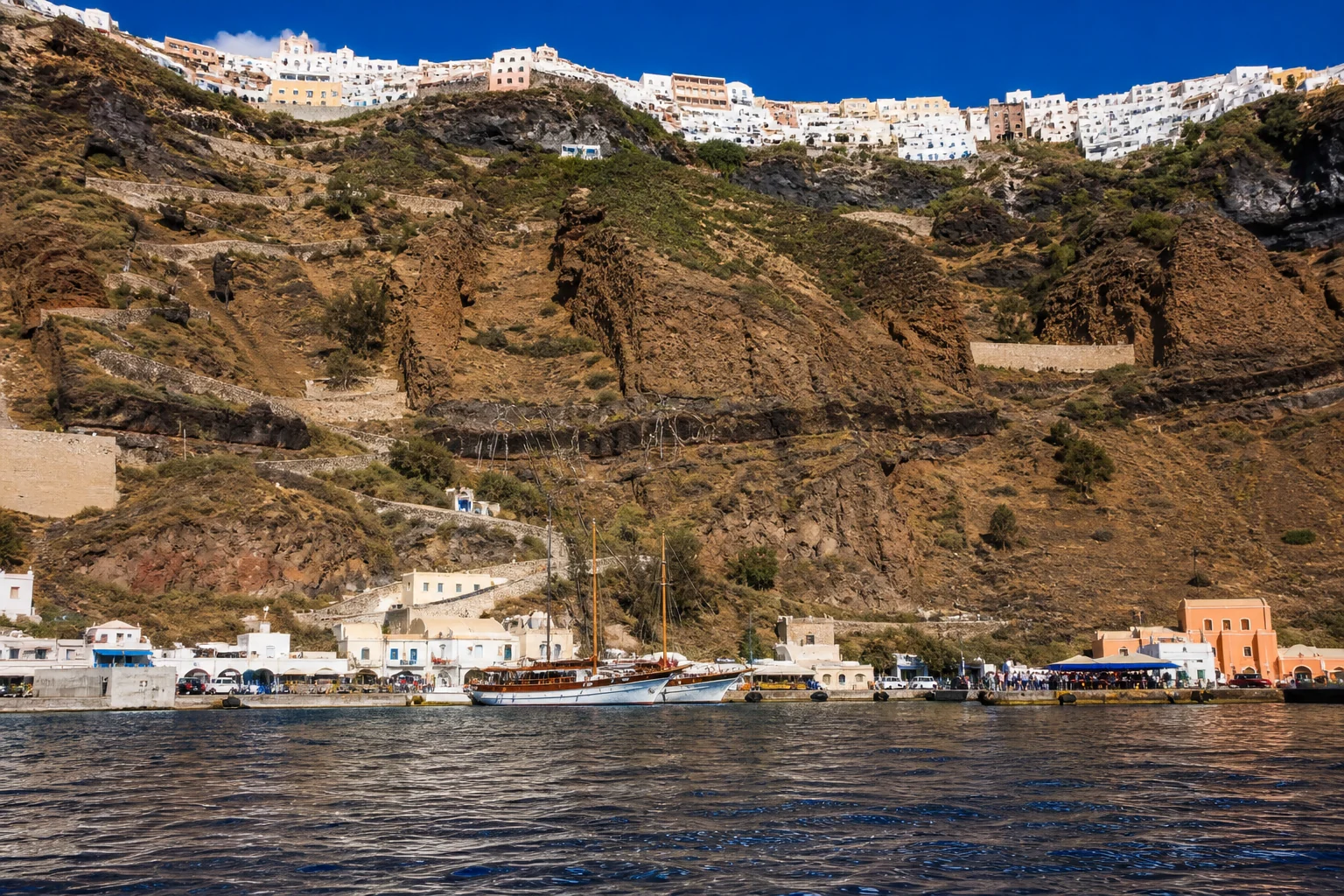
Travellers seeking wide, soft-sand swimming as the main event may be better served elsewhere. Santorini’s beaches are geologically interesting but not the central reason to pay for a cliff address. A well-designed journey makes room for wine, archaeology, village life and the volcanic landscape instead of reducing the island to one sunset queue.
Oia, Imerovigli and Fira do not provide the same rhythm. The celebrated sunset side may carry heavy pedestrian traffic; a more withdrawn caldera position can feel calmer but less convenient for a spontaneous evening. Room exposure, terrace privacy and the exact line of sight matter more than a broad “caldera view” label.
Steps are a serious planning factor. Historic cliff architecture can involve steep, uneven access, porter dependence and little vehicle proximity. Guests with limited mobility, young children or vertigo need exact room-to-road information. A plunge pool may be exposed to passing paths, and a beautiful terrace can lose value if privacy has not been verified.
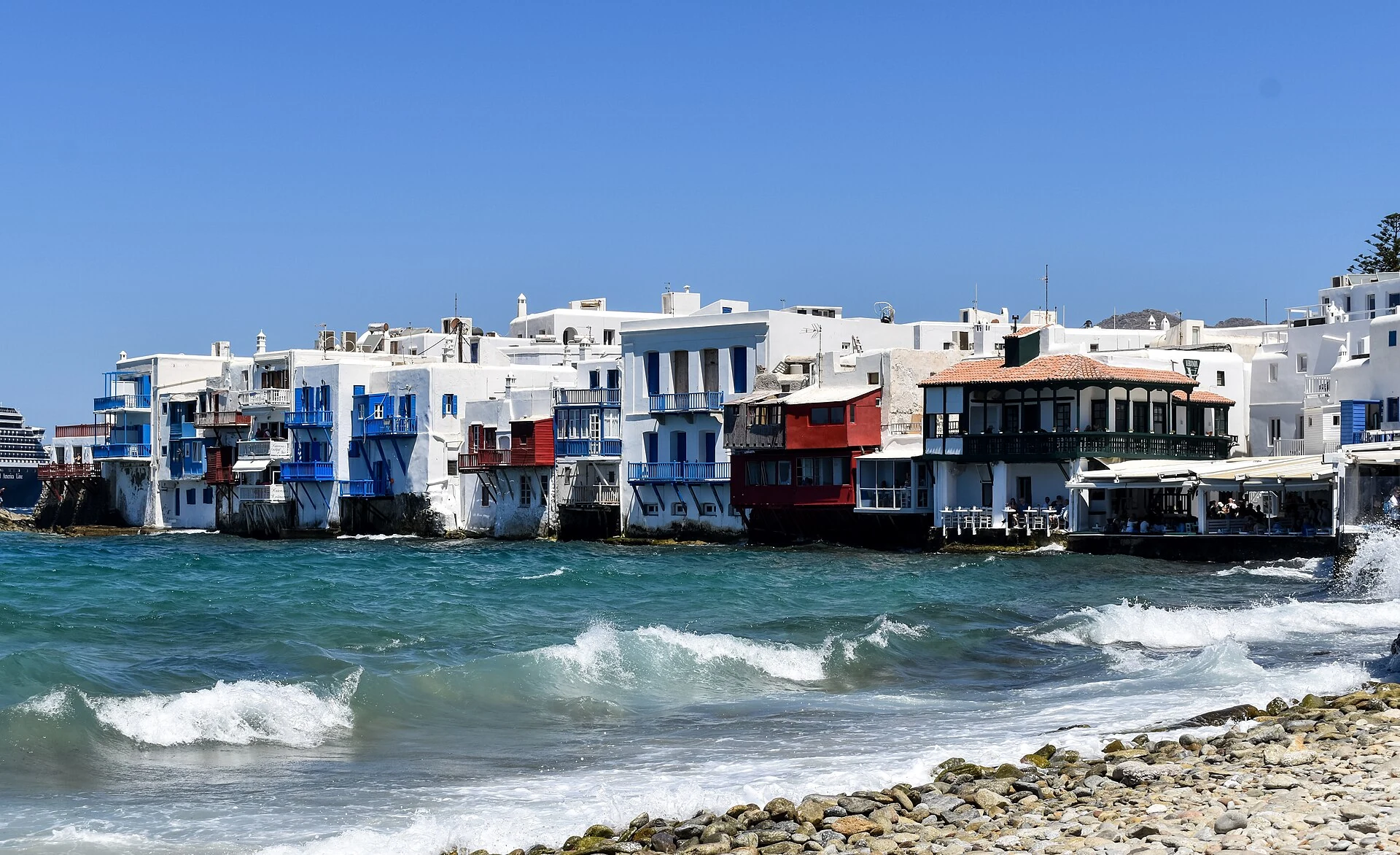
The official island profile pairs nightlife, beach clubs, shopping and art with Cycladic townscape and strong beach culture. That range is precisely its strength. Mykonos works exceptionally well when a guest wants choice: lunch becoming an afternoon, dinner beginning late, friends arriving from different yachts and a polished hospitality network capable of handling complicated plans.
It is less persuasive for someone expecting anonymous serenity at peak time. Traffic, restaurant demand, music and the choreography of being seen are part of the product. Rejecting that reality while booking its most social addresses creates the wrong kind of friction.
Mykonos can deliver privacy, but not by accident. Town proximity, beach-club adjacency, road access and wind exposure change the experience. A secluded villa may require patient driving to dinner; a fashionable southern beach can bring music and boat traffic; a northern setting may feel wilder and more weather-exposed.
The transport plan belongs with the room choice. Confirm driver availability, realistic evening travel, villa staffing and what happens when wind affects a tender or private boat. A private pool and distant horizon do not by themselves create a seamless stay if every movement is improvised.
Paros and Antiparos: balance and small social worlds
Visit Greece describes Paros as both cosmopolitan and traditional, with sandy beaches, villages, gastronomy, sailing and windsurfing. Its appeal lies in breadth. Naoussa can provide restaurants and an evening scene, while Lefkes and inland villages add a slower, more rooted dimension. Beaches and water sports make the island easier to inhabit for several days.
Paros is not “Mykonos without the price”. In peak weeks it can be busy and socially visible in its own right. Its advantage is the ability to calibrate: choose village access, beach life, villa privacy or an inland base, then decide how much evening energy belongs in the journey.
Antiparos sits close to Paros but should not be treated as a bedroom suburb. Its compact town, villa landscape and easy relationship with the sea suit guests who want informality and privacy without total isolation. It can work beautifully for families or groups when the house, beach access and staffing are resolved.
Small scale also means finite infrastructure. The best villa is not automatically the one with the boldest photographs; access, wind, nearby construction, generator noise, housekeeping and the journey to dinner need checking. Transfers to Paros airport or port involve an additional crossing and deserve buffer time.
Milos, Sifnos, Tinos and Naxos: four island characters
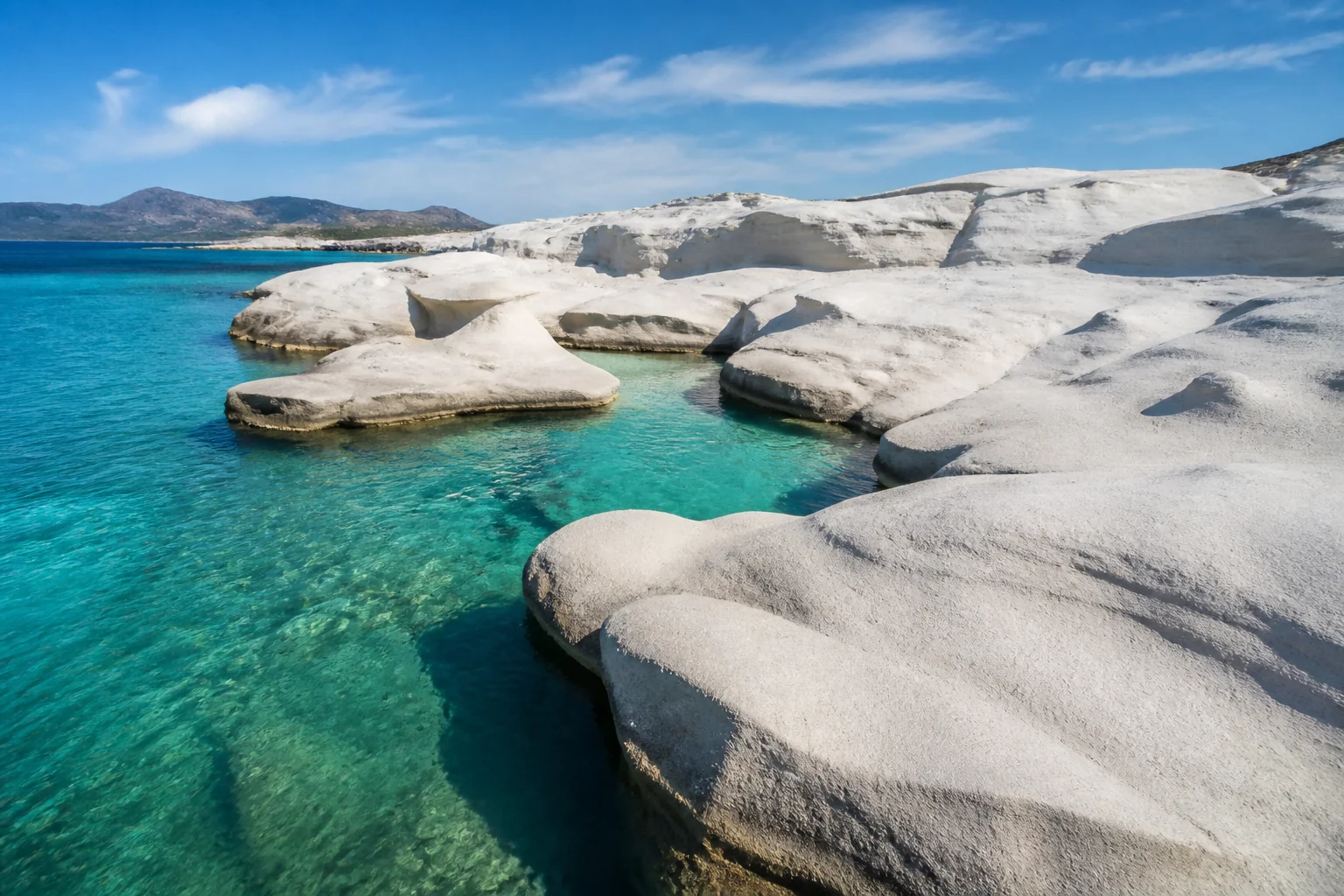
The official profile emphasises volcanic formations, caves, colourful rock, fishing villages and an unusually varied coastline. Milos is strongest for travellers who want to explore rather than occupy one fashionable address. A well-run boat day may become the defining experience because it reveals coast that roads cannot interpret in the same way.
That makes weather central. Wind and sea state can alter route, departure point or the entire day; no cove or landing should be guaranteed. Hotel inventory and service styles are not as uniform as the island’s popularity might suggest. Match comfort expectations carefully and leave enough days for the coastline to reveal itself.
Visit Greece calls Sifnos an island of harmony and moderation, shaped by gastronomy, pottery, villages, festivals and old walking routes. It suits the traveller who measures luxury through a long lunch, a conversation with a maker, an evening in Apollonia and a path that ends at a chapel or cove.
The island is not designed around an endless inventory of grand resorts. That is an advantage for the right guest and a limitation for someone needing extensive facilities, multiple restaurants and round-the-clock resort service. Room quality, transfer logistics and walking access should be judged individually rather than inferred from a star category.
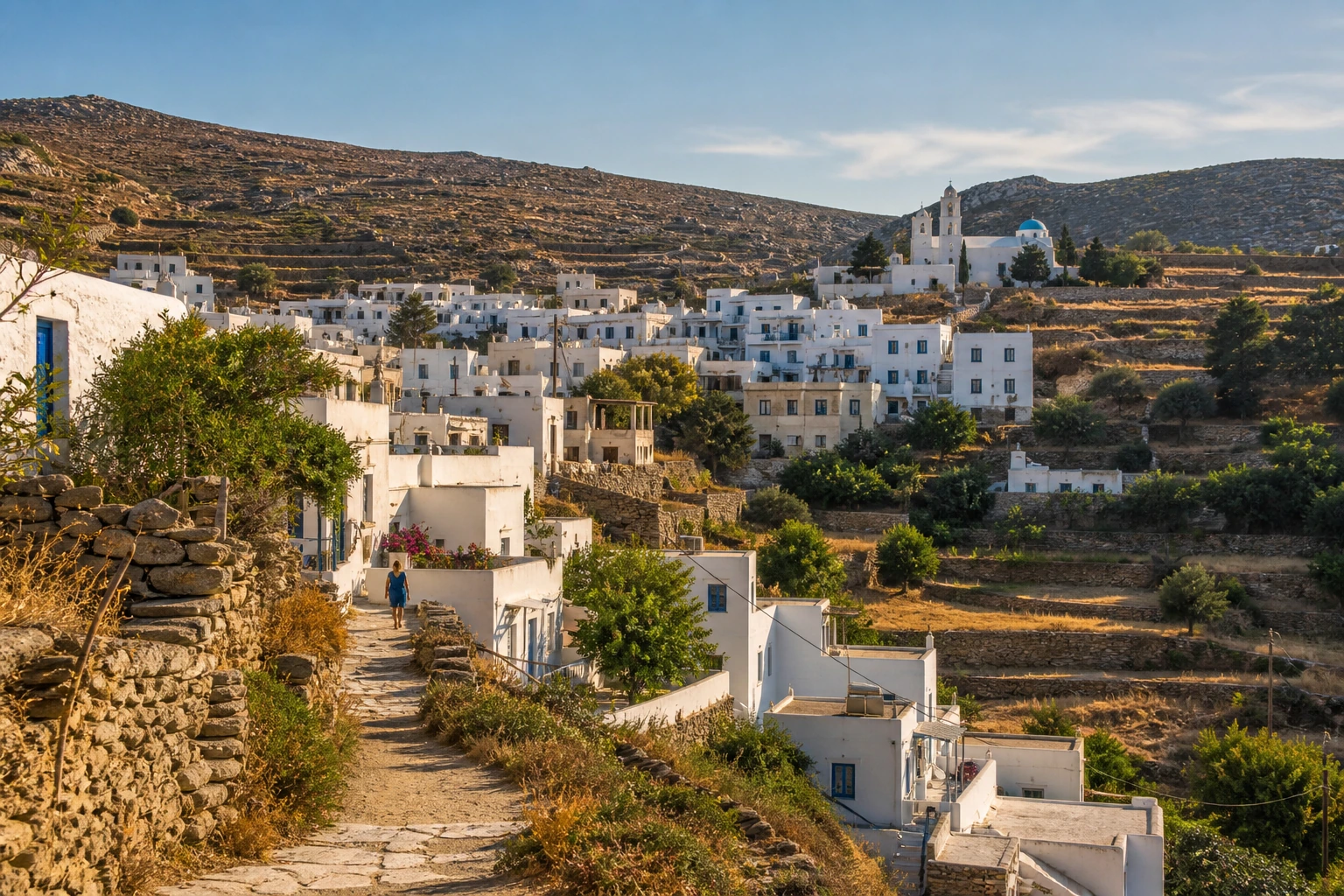
Tinos combines pilgrimage with a deep tradition of marble craftsmanship, art, dovecotes, terraced hills, gastronomy and roughly forty villages. Its luxury is distributed across the landscape. A private guide who can connect architecture, faith, food and contemporary makers may add more than a larger suite.
Wind is part of the island’s identity, and distances between villages, beaches and restaurants require planning. Tinos suits guests comfortable with discovery and uneven terrain. It is less appropriate when the expectation is a self-contained resort where every pleasure sits within a short, polished corridor.
As the largest and most fertile Cycladic island, Naxos combines long sandy beaches with mountains, agricultural valleys, historic villages, Venetian layers and a strong local pantry. That breadth makes it unusually adaptable: younger children can have straightforward beach days while other family members walk, visit producers or explore the interior.
Scale is the trade-off. Driving times can be longer than a map first suggests, and a beach address may sit far from the villages that give the island depth. Luxury inventory varies in style and polish. The best plan chooses a base around the family’s daily priorities rather than trying to cover the whole island.
Folegandros and Syros: limits or urban Cycladic culture
Folegandros is defined by cliffs, an elevated Hora, walking paths and quiet coves. Its smallness gives the island clarity: evenings gather around the village squares, landscape remains close and the pace slows naturally. For a couple seeking a few beautiful days with little appetite for spectacle, that can feel exceptionally refined.
Limited scale means limited redundancy. Ferry disruption, room inventory, beach access and restaurant capacity carry more weight. Some coves require walking or boat access. Folegandros should be chosen because the guest wants its constraints as much as its beauty, not because it has been labelled an undiscovered Santorini.
Syros changes the visual grammar. Ermoupoli brings neoclassical architecture, civic life and a year-round capital atmosphere rather than a pure resort island. It can suit travellers interested in culture, design and a more inhabited urban rhythm, or serve as a contrasting stop between beach-led islands.
Those seeking the familiar whitewashed-village fantasy may need their expectations reset. The pleasure lies in streets, theatres, cafés and layered history. As with every island, current hotel quality and transport must be assessed precisely; cultural interest is not a substitute for a room that meets the brief.
Not every attractive island pair forms a good itinerary
Two names that look close on a map may require awkward ferry days, a return through Athens or unreliable seasonal connections. Each change consumes packing, port waiting, transfer and orientation. Three islands in seven nights is usually a collection, not a holiday.
A strong pairing creates contrast without logistical punishment: social and quiet, caldera and beach, geology and gastronomy. Four or five nights per main island often produces more value than accumulating check-ins. The route should be tested against the actual operating week, not a generic summer timetable.
Ferry, yacht and helicopter solve different problems
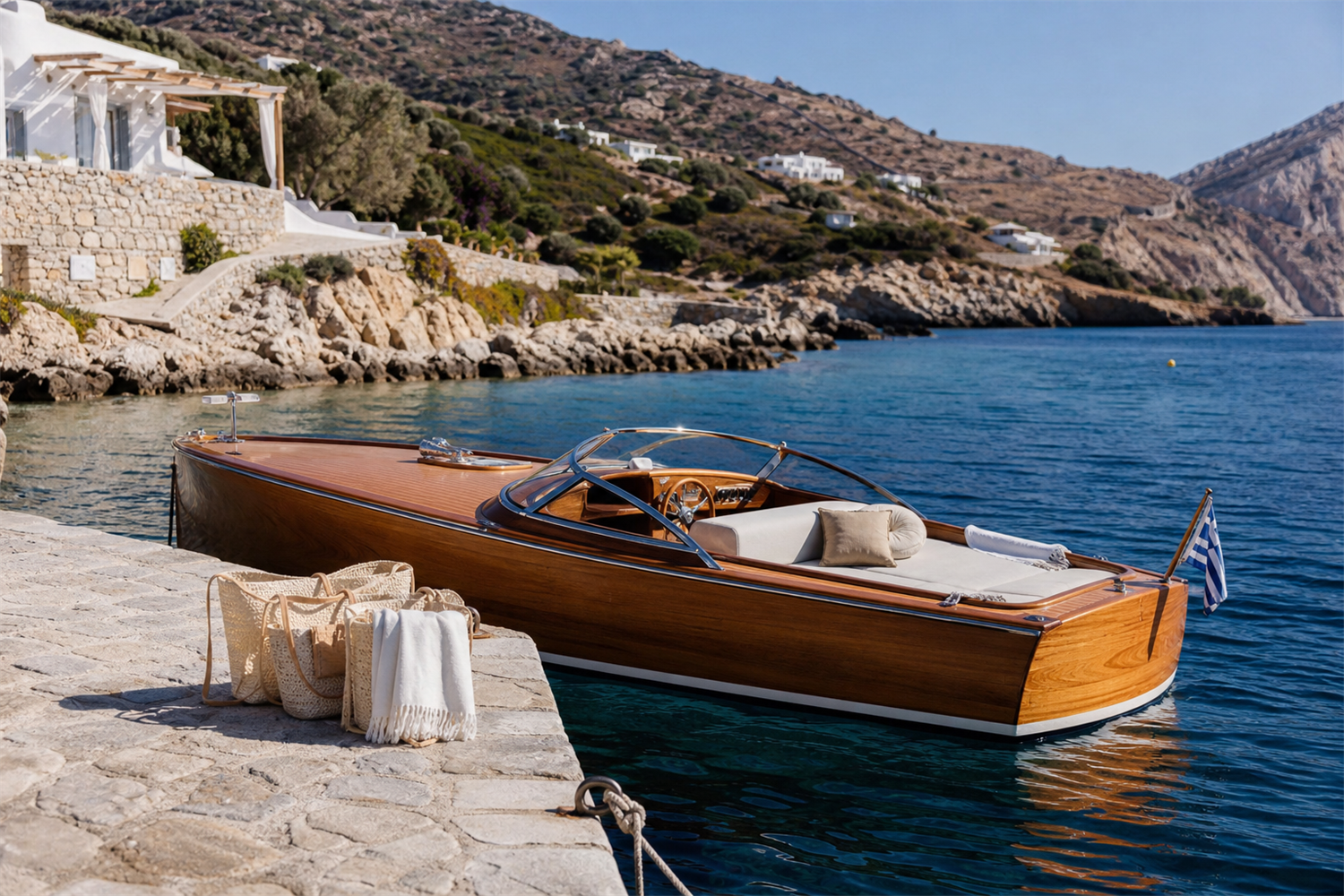
A ferry is efficient when schedule, cabin or seat category, port and transfer align. A private yacht turns travel into a day on the water but remains subject to wind, sea state and berth or tender conditions. A helicopter can compress distance, yet baggage, landing permissions, availability and weather still govern.
None is inherently the luxury answer. The right mode protects time and nervous-system calm. Port assistance, shaded waiting, vehicle positioning and luggage handling may matter more than headline speed. Every private movement needs a conventional fallback that is acceptable to the guest.
The Meltemi is not background decoration
Strong northerly summer winds can cool the Cyclades and animate water sports, but they can also alter swimming, boat routes, ferry comfort and outdoor dining. Exposure differs by island, coast and property. A sheltered bay may be calm while another side of the same island is difficult.
Ask how the chosen hotel actually experiences wind, not whether the island is “windy”. The answer should address terrace usability, pool comfort, beach conditions and transfer operations. No advisor can promise a calm sea; good planning gives the guest worthwhile alternatives when it is not calm.
The room can be more decisive than the island
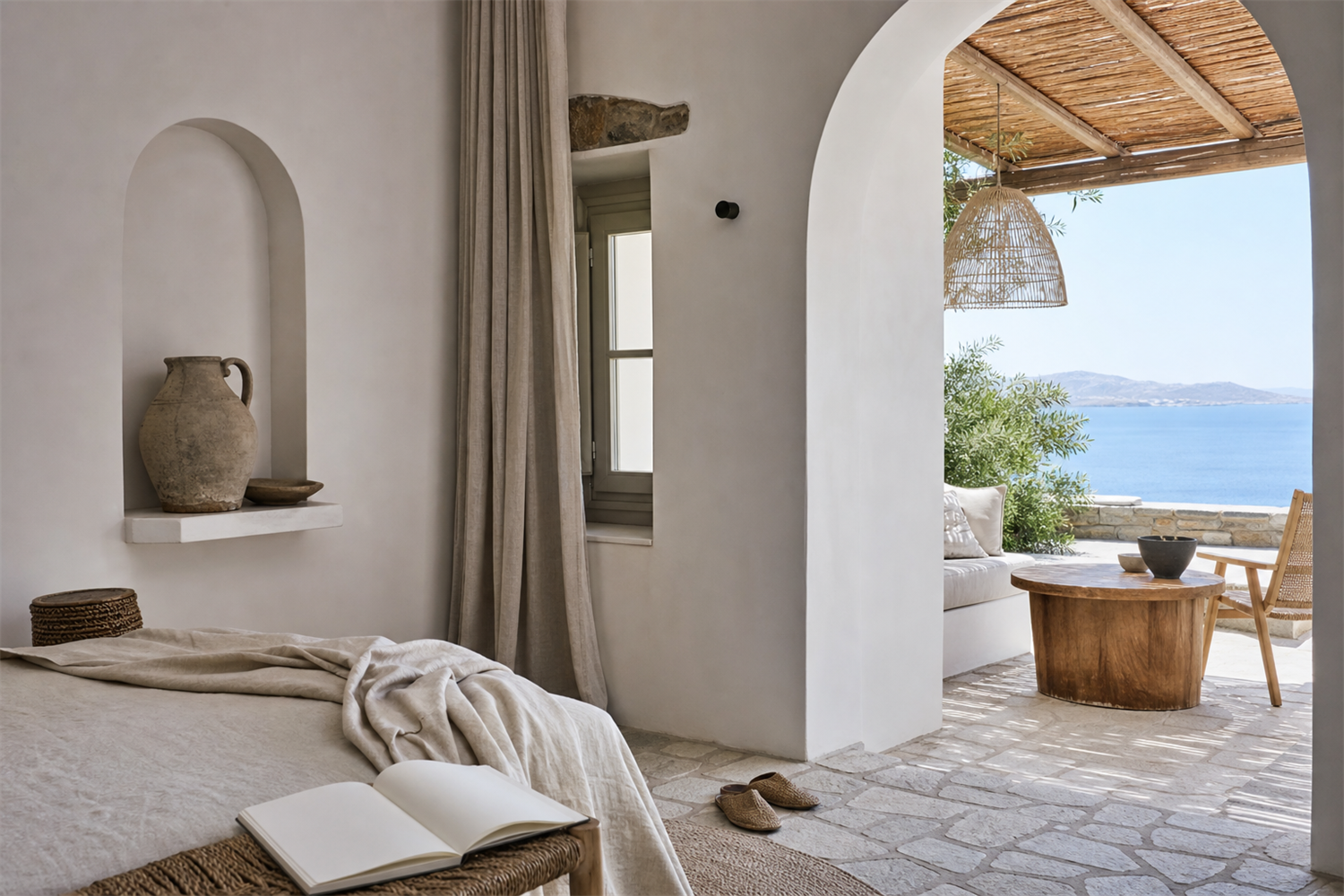
On the Cyclades, stairs, slope, terrace exposure, road noise and walking distance can define a stay. Room categories within one hotel may differ radically in privacy and access. “Sea view” may mean a distant wedge; “private pool” may sit in shade or beside a public path.
Request the actual room position when mobility, honeymoon privacy or family safety matters. Villas require equal scrutiny: staffing, breakfast, pool heating, air conditioning, power resilience and daily transport should be explicit. Beautiful architecture is only luxurious when it supports the way the guest will live.
Beach, boat, gastronomy, children and mobility
Sand texture, entry depth, waves, shade and service vary widely. A guest who swims for an hour each morning needs different advice from someone who wants one photogenic lunch by the sea. Santorini’s geological beaches, Naxos’s long sands and Milos’s sculptural coves do not substitute for one another.
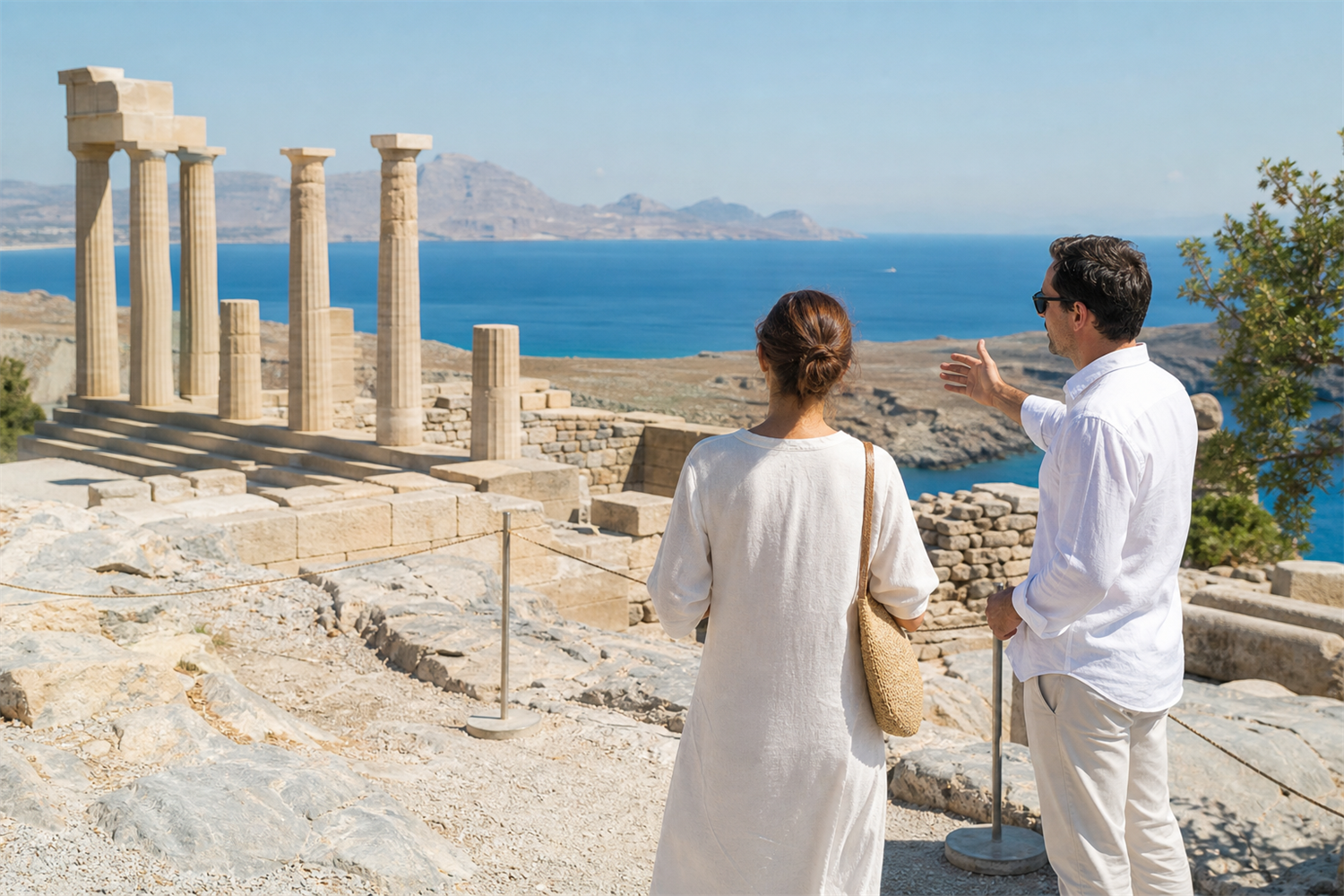
For boats, define the purpose: swimming, coast exploration, Delos, lunch, sailing or efficient transfer. UNESCO’s Delos deserves time and interpretation, not a rushed photo stop. Current archaeological opening, ticketing and authorised access must be checked independently from the yacht booking.
A celebrated restaurant across the island can create ninety minutes of traffic at peak time. Lunch on a boat day, dinner after a ferry arrival and breakfast before an early departure all need practical sequencing. Reservations should support the rhythm, not turn every evening into a deadline.
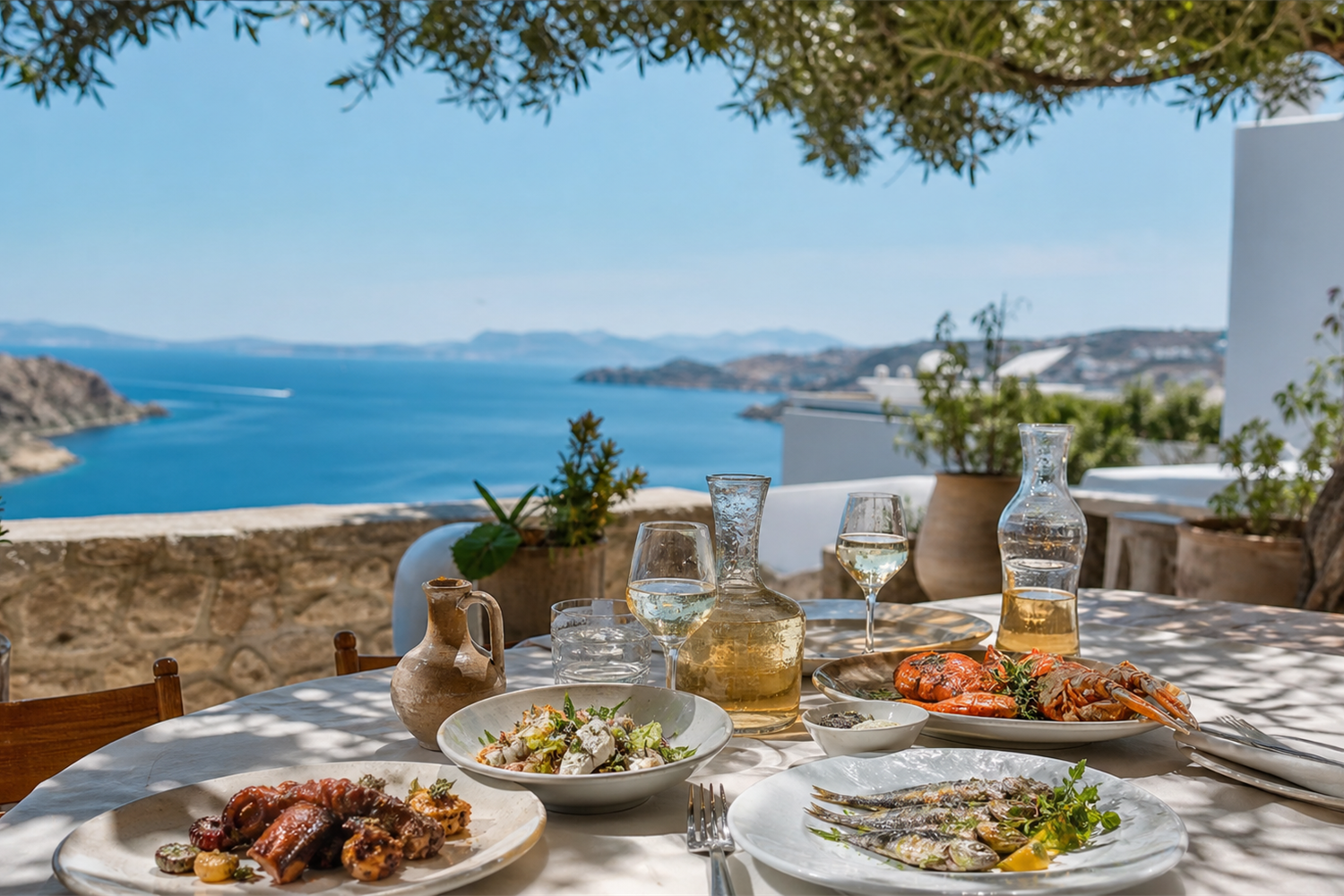
The islands also reward local specificity: Santorini’s volcanic agriculture and wines, Sifnos’s cooking tradition, Tinos’s producers and Naxos’s fertile pantry. A private food experience is valuable when it introduces place and people. It is less meaningful when it merely reproduces an international tasting menu.
Children and mobility expose weak planning quickly
Cliff steps, unprotected pools, strong wind, tender boarding and cobbled lanes are not minor details. Families need room adjacency, shade, beach entry, child seats, realistic meal times and a plan for a cancelled boat. Travellers with reduced mobility need exact gradients, vehicle access and bathroom configuration.
The most famous view may be the wrong choice if reaching it drains the guest twice daily. Naxos or Paros can offer greater beach ease; a carefully selected Mykonos or Santorini property may still work if access is verified. Island stereotypes never replace a physical audit of the actual stay.
The final choice should fit one sentence
Choose Santorini for volcanic theatre and a room oriented to the caldera; Mykonos for social range and polished movement; Paros or Antiparos for balance and villa life; Milos for coast and geology; Sifnos for food and measured elegance; Tinos for villages and craft; Naxos for breadth; Folegandros for deliberate limitation.
Then test the sentence against dates, access, wind, room position and the guest’s tolerance for crowds. If the recommendation needs only superlatives, it is not finished. The right Greek island is the one whose trade-offs the traveller actively wants—not the one they have been told they must see.